Energy security, infra investments top on agenda during PM Modi’s UAE visit

Agencies
February 8, 2018

Dubai, Feb 8: Prime Minister Narendra Modi has said that India's energy security and infrastructural investments from the UAE will be the key topics of his discussions with the Gulf nation's top leadership this week.

In an interview to Gulf News' XPRESS ahead of his two-day visit to the United Arab Emirates from Saturday, Modi said that he will meet Shaikh Mohammad Bin Rashid Al Maktoum, vice-president and Prime Minister of the UAE and Ruler of Dubai Shaikh Mohammad Bin Zayed Al Nahyan, Abu Dhabi Crown Prince and Deputy Supreme Commander of the UAE Armed Forces.

Modi said energy security and infrastructural investments in India will be the key topics that he will discuss with the UAE's leadership.

The investment from UAE to India exceeds USD 11 billion.

A number of initiatives taken during his earlier visit to the UAE in August 2015 and during the visit of Shaikh Mohammad Bin Zayed last year when he was the Chief Guest at India's Republic Day celebrations have come to fruition, he said.

"It is a matter of even greater happiness that new Government-to-Government and business-to-business initiatives promise to add even more strength and depth to the bilateral cooperation in various areas of economic activity," Modi said.

The prime minister noted that the UAE was home to over three million people of Indian origin. "The Indian community has acted as a bridge between the two countries and I hope my visit will further strengthen these ties," he said.

When asked whether he has had a holiday, Modi told the paper: "I have not been on a holiday either as Chief Minister or now as Prime Minister. However, my work does require me to travel across India and interact with people, learn about their joys, sorrows and aspirations. This is refreshing and rejuvenating for me."

On a question about his sleep habits and daily routine, the 67-year-old prime minister said, "My sleep cycle varies from four to six hours, depending on the workload. But I get a sound sleep every night. In fact, I fall asleep minutes after hitting the bed.

"I do not take any worry with me and wake up fresh every morning and welcome the new day in my life," he said.

Modi said his day begins with yoga.

"It refreshes me and keeps me agile through the day," he said, adding that he scans the newspapers, checks e-mails and makes a round of phone calls.

"I also spend time reading some comments and feedback shared by citizens on the 'Narendra Modi Mobile App' which he said was "a wonderful way to remain connected with people across India."

"Before hitting the bed, I read the documents sent to me during the day. I also prepare for the next day meetings and engagements," he said.

Asked about his favourite dish, Modi said, "I am not much of a foodie. I enjoy a simple vegetarian meal every day."

On his favourite day of the week, he said, "Today is my favourite day of the week! I believe in a simple tenet - make the most of today, live life to the fullest. Today is the only day on our hands to work hard and make things happen."

 He said he was a firm believer in the power of technology as it empowers people.

When asked the one person who inspires him the most, the prime minister replied that several people inspired him and listed Swami Vivekananda, Mahatma Gandhi, Sardar Vallabhbhai Patel, Bhagat Singh, Dr. Babasaheb Ambedkar as well as Benjamin Franklin, one of the founding fathers of the United States.

Comments

Add new comment

  • Coastaldigest.com reserves the right to delete or block any comments.
  • Coastaldigset.com is not responsible for its readers’ comments.
  • Comments that are abusive, incendiary or irrelevant are strictly prohibited.
  • Please use a genuine email ID and provide your name to avoid reject.
News Network
December 7,2025

envoy.jpg

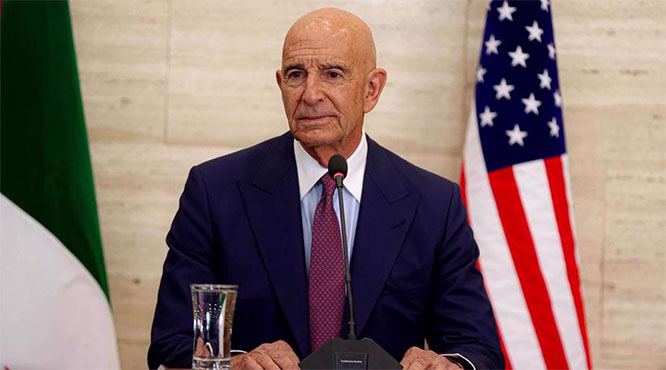
Since 1946, the United States has attempted 93 coups or “regime change” operations across the world — including two in Iran, US Special Envoy for Syria Tom Barrack has admitted.

Speaking to the UAE-based IMI Media Group, in remarks published by The National, Barrack said Washington tried twice to overthrow the Iranian government but failed both times. 

“For (Trump) then to be imputed with regime change — we had two regime changes in Iran already. Neither one worked. So I think wisely leave it to the region to solve,” said Barrack, who also serves as the US ambassador to Turkey.

His comments come six months after the US joined Israel in airstrikes against Iran during ongoing indirect nuclear negotiations between Tehran and Washington.

On June 13, Israel launched an attack on Iran that killed at least 1,064 people and hit civilian infrastructure. Days later, the United States targeted three nuclear facilities — Fordow, Natanz and Isfahan — in what Iran called a clear violation of international law. Iranian retaliation eventually forced a halt to the assault on June 24.

Barrack further claimed that US President Donald Trump and Foreign Secretary Marco Rubio are “not into regime change” and prefer a regional approach driven by Middle Eastern countries themselves. According to him, regional dialogue and non-interference by outside powers offer a more durable path forward.

He added that Washington is still open to an agreement with Tehran if Iranian authorities show “seriousness” and willingness to engage constructively.

However, Iran maintains the US has not shown readiness for meaningful talks. In an interview with Japan’s Kyodo News, Iranian Foreign Minister Abbas Araghchi said negotiations could advance only if Washington acknowledges Iran’s right to peaceful nuclear energy and lifts unilateral sanctions.

Comments

Add new comment

  • Coastaldigest.com reserves the right to delete or block any comments.
  • Coastaldigset.com is not responsible for its readers’ comments.
  • Comments that are abusive, incendiary or irrelevant are strictly prohibited.
  • Please use a genuine email ID and provide your name to avoid reject.
News Network
December 6,2025

indigoticket.jpg

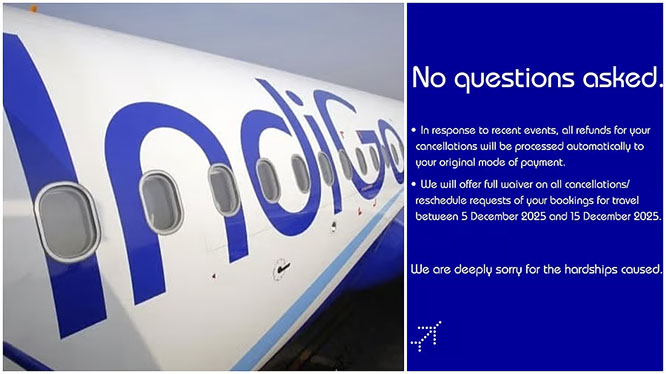
With IndiGo flight disruptions impacting thousands of passengers, the airline on Saturday said that it will offer full waiver on all cancellations/reschedule requests for travel bookings between December 5, 2025 and December 15, 2025.

Earlier in the day, the civil aviation ministry had directed the airline to complete the ticket refund process for the cancelled flights by Sunday evening, as well as ensure baggage separated from the travellers are delivered in the next two days.

In a post on X, titled 'No questions asked', IndiGo wrote, "In response to recent events, all refunds for your cancellations will be processed automatically to your original mode of payment."

"We are deeply sorry for the hardships caused," it further added.

Several passengers, however, complained of not getting full refund as promised by the airline.

Netizens have shared screenchots of getting charged for airline cancellation fee and convenience fee.

"Please tell me why u have did this airline cancellation charges when u say full amount will be refunded (sic)," a user wrote sharing a screenshot of the refund page.

"Well, but you have still debited the convenience charges," wrote another.

Passengers have also raised concerns about the "cancel" option being disabled on the IndiGo app. "First enable the 'Cancel' button on your App & offer full refund on tickets cancelled by customers between the said dates," wrote a user.

A day after the country's largest airline, IndiGo, cancelled more than 1,000 flights and caused disruptions for the fifth day on Saturday, the ministry said that any delay or non-compliance in refund processing will invite immediate regulatory action.

The refund process for all cancelled or disrupted flights must be completed by 8 pm on Sunday, the ministry said in a statement.

"Airlines have also been instructed not to levy any rescheduling charges for passengers whose travel plans were affected by cancellations," it said.

On Saturday, more than 400 flights were cancelled at various airports.

IndiGo has also been instructed to set up dedicated passenger support and refund facilitation cells.

Comments

Add new comment

  • Coastaldigest.com reserves the right to delete or block any comments.
  • Coastaldigset.com is not responsible for its readers’ comments.
  • Comments that are abusive, incendiary or irrelevant are strictly prohibited.
  • Please use a genuine email ID and provide your name to avoid reject.
News Network
December 6,2025

pilot.jpg

New Delhi: IndiGo, India’s largest airline, faced major operational turbulence this week after failing to prepare for new pilot-fatigue regulations issued by the Directorate General of Civil Aviation (DGCA). The stricter rules—designed to improve flight safety—took effect in phases through 2024, with the latest implementation on November 1. IndiGo has acknowledged that inadequate roster planning led to widespread cancellations and delays.

Below are the key DGCA rules that affected IndiGo’s operations:

1. Longer Mandatory Weekly Rest

Weekly rest for pilots has been increased from 36 hours to 48 hours.

The government says the extended break is essential to curb cumulative fatigue. This rule remains in force despite the current crisis.

2. Cap on Night Landings

Pilots can now perform only two night landings per week—a steep reduction from the earlier limit of six.

Night hours, defined as midnight to early morning, are considered the least alert period for pilots.

Given the disruptions, this rule has been temporarily relaxed for IndiGo until February 10.

3. Reduced Maximum Night Flight Duty

Flight duty that stretches into the night is now capped at 10 hours.

This measure has also been kept on hold for IndiGo until February 10 to stabilize operations.

4. Weekly Rest Cannot Be Replaced With Personal Leave

Airlines can no longer count a pilot’s personal leave as part of the mandatory 48-hour rest.

Pilots say this closes a loophole that previously reduced actual rest time.

Currently, all airlines are exempt from this rule to normalise travel.

5. Mandatory Fatigue Monitoring

Airlines must submit quarterly fatigue reports along with corrective actions to DGCA.

This system aims to create a transparent fatigue-tracking framework across the industry.

The DGCA has stressed that these rules were crafted to strengthen flight safety and align India with global fatigue-management standards. The temporary relaxations are expected to remain until February 2025, giving IndiGo time to stabilise its schedules and restore normal air travel.

Comments

Add new comment

  • Coastaldigest.com reserves the right to delete or block any comments.
  • Coastaldigset.com is not responsible for its readers’ comments.
  • Comments that are abusive, incendiary or irrelevant are strictly prohibited.
  • Please use a genuine email ID and provide your name to avoid reject.