



‘Gandhi injected religion into politics, furthered divide & rule policy’

March 10, 2015

New Delhi, Mar 10: Press Council chairman Justice Markandey Katju on Tuesday stirred another controversy by calling Mahatma Gandhi a British agent in his latest blog post.
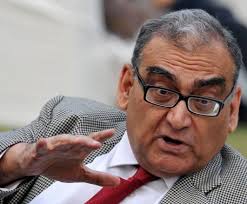
katju
"I submit that Gandhi was objectively a British agent who did great harm to India," he wrote.

Katju said Gandhi did great harm to India by injecting religion into politics. "By constantly injecting religion into politics continuously for several decades, Gandhi furthered the British policy of divide and rule," Katju said in his blog.

"He advocated self sufficient village communities, though everybody knows that these communities were totally casteist and in the grip of landlords and money lenders. Gandhi was against industrialization, and preached handspinning by charkha and other such reactionary nonsense. Similarly, his ' trusteeship ' theory was all nonsense, and an act of deceiving the people," he added.

Here is the full text:

Gandhi---A British Agent

This post is bound to draw a lot of flak at me, but that does not matter as I am not a popularity seeker I have often said things knowing that initially that will make me very unpopular, and I will be vilified and denounced by many. Nevertheless I say such things as I believe they must be said in my country's interest.

I submit that Gandhi was objectively a British agent who did great harm to India.

These are my reasons for saying this:

1. India has tremendous diversity, so many religions, castes, races, languages, etc (see my article ' What is India ?' on my blog justicekatju.blogspot.in). Realizing this the British policy was of divide and rule (see online ' History in the Service of Imperialism ', which is a speech delivered by Prof. B.N. Pande in the Rajya Sabha).

By constantly injecting religion into politics continuously for several decades, Gandhi furthered the British policy of divide and rule.

If we read Gandhi's public speeches and writings (e.g. in his newspapers 'Young India', ' Harijan ', etc) we find that ever since Gandhi came to India from South Africa in 1915 or so till his death in 1948, in almost every speech or article he would emphasize Hindu religious ideas e.g. Ramrajya, Go Raksha (cow protection), brahmacharya (celibacy), varnashram dharma (caste system), etc (see Collected Works of Mahatma Gandhi).

Thus Gandhi wrote in ' Young India ' on 10.6.1921 " I am a Sanatani Hindu. I believe in the varnashram dharma. I believe in protection of the cow ". In his public meetings the Hindu bhajan ' Raghupati Raghav Raja Ram ' would be loudly sung.

Now Indians are a religious people, and they were even more religious in the first half of the 20th century. A sadhu or swamiji may preach such ideas to his followers in his ashram, but when they are preached day in and day out by a political leader, what effect will these speeches and writings have on an orthodox Muslim mind ? It would surely drive him towards a Muslim organization like the Muslim League, and so it did. Was this not serving the British policy of divide and rule ? By constantly injecting religion into politics for several decades, was Gandhi not objectively acting as a British agent ?

2. In India a revolutionary movement against British rule had started in the early 20th century under the Anushilan Samiti, Jugantar, and revolutionaries like Surya Sen, Ramprasad Bismil ( who wrote the song ' Sarfaroshi ki tamanna ab hamare dil mein hai ), Chandrashekhar Azad, Ashfaqulla, Bhagat Singh, Rajguru, etc ( who were all hanged by the British ). Gandhi successfully diverted the freedom struggle from this revolutionary direction to a harmless nonsensical channel called Satyagrah. This also served British interests.

3. Gandhi's economic ideas were thoroughly reactionary. He advocated self sufficient village communities, though everybody knows that these communities were totally casteist and in the grip of landlords and money lenders..Gandhi was against industrialization, and preached handspinning by charkha and other such reactionary nonsense. Similarly, his ' trusteeship ' theory was all nonsense, and an act of deceiving the people

Some people praise Gandhi's bravery in going to Noakhali, etc to douse the communal violence at the time of Partition. But the question is why did he help setting the house on fire in the first place by preaching religious ideas in public political meetings for several decades, which were bound to divide the Indian people on religious lines? First you set the house on fire, and then you do the drama of trying to douse the flames.

Comments

Add new comment

  • Coastaldigest.com reserves the right to delete or block any comments.
  • Coastaldigset.com is not responsible for its readers’ comments.
  • Comments that are abusive, incendiary or irrelevant are strictly prohibited.
  • Please use a genuine email ID and provide your name to avoid reject.
News Network
December 4,2025

Udupi: A 40-year-old NRI from Udupi has reportedly lost more than Rs 12.25 lakh in an online investment scam operated through Telegram.

According to a complaint filed at the CEN police station, Leo Jerome Mendonsa, who has been working in Dubai for the past 15 years in computer accessories sales, maintains NRI accounts in Karkala and Nitte.

On November 12, 2025, Mendonsa was added to a Telegram group called Instaflow Earnings by unknown individuals. Users identified as Priya and Dipannita persuaded him to invest in “Revenue Tasks.” Initially, Mendonsa transferred Rs 1,100 multiple times and received the promised returns, encouraging him to continue.

On November 14, another user, Nishmitha Shetty, directed him to register on a website, digitvisionuoce.cc, and invest Rs 4 lakh in various shares. Over the next few days, he made multiple transfers totaling Rs 12,25,000, including Rs 50,000 via Google Pay, believing the scheme was legitimate.

After receiving the money, the alleged handlers stopped responding, and neither the invested amount nor the promised profits were returned.

The CEN police have registered a case under Sections 66(C) and 66(D) of the IT Act and Section 318(4) of the Bharatiya Nyaya Sanhita (BNS), and investigations are ongoing.

Comments

Add new comment

  • Coastaldigest.com reserves the right to delete or block any comments.
  • Coastaldigset.com is not responsible for its readers’ comments.
  • Comments that are abusive, incendiary or irrelevant are strictly prohibited.
  • Please use a genuine email ID and provide your name to avoid reject.
News Network
December 2,2025

Puttur: The long-cherished dream of a government medical college in Puttur has moved a decisive step closer to reality, with the Karnataka State Finance Department granting its official approval for the construction of a new 300-bed hospital.

Puttur MLA Ashok Kumar Rai announced the crucial development to reporters on Monday, confirming that the official communication from the finance department was issued on November 27. This 300-bed facility is intended to be the cornerstone for the establishment of the government medical college, a project announced in the state budget.

Fast-Track Implementation

The MLA outlined an aggressive timeline for the project:

•    A Detailed Project Report (DPR) for the hospital is expected to be ready within 45 days.

•    The tender process for the construction will be completed within two months.

Following the completion of the tender process, Chief Minister Siddaramaiah is scheduled to lay the foundation stone for the project.

"Setting up a medical college in Puttur is a historical decision by the Congress government in Karnataka," Rai stated. The project has an estimated budget allocation of Rs 1,000 crore for the medical college.

Focus on Medical Education Department

The MLA highlighted a key strategic move: requesting the government to implement the hospital construction through the Medical Education Department instead of the Health and Family Welfare Department. This is intended to streamline the entire process of establishing the full medical college, ensuring the facilities—including labs, operation theatres, and other necessary infrastructure—adhere to the strict guidelines set by the Medical Council of India (MCI). The proposed site for the project is in Bannur.

Rai also took the opportunity to address political criticism, stating that the government has fulfilled its promise despite "apprehensions" and "mocking and criticising" from opposition parties who had failed to take similar initiatives when they were in power. "Chief Minister Siddaramaiah has kept his word," he added.

Comments

Add new comment

  • Coastaldigest.com reserves the right to delete or block any comments.
  • Coastaldigset.com is not responsible for its readers’ comments.
  • Comments that are abusive, incendiary or irrelevant are strictly prohibited.
  • Please use a genuine email ID and provide your name to avoid reject.
News Network
December 7,2025

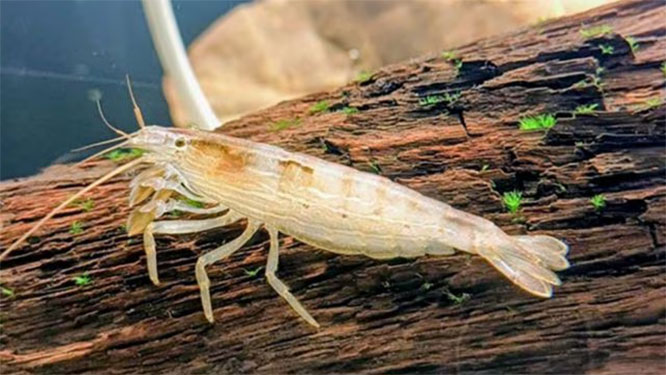
SHRIMP.jpg

Mangaluru, Dec 7: A rare bamboo shrimp has been rediscovered on mainland India more than 70 years after it was last reported, confirming for the first time the presence of Atyopsis spinipes in the country. The find was made by researchers from the Centre for Climate Change Studies at Sathyabama Institute of Science and Technology, Chennai, during surveys in Karnataka and Odisha.

The team — shrimp expert Dr S Prakash, PhD scholar K Kunjulakshmi, and Mangaluru-based researcher Maclean Antony Santos — combined field surveys, ecological assessments and DNA analysis to identify the elusive species. Their findings, published in Zootaxa, resolve decades of taxonomic confusion stemming from a 1951 report that misidentified the species as Atyopsis moluccensis without strong evidence.

The shrimp has now been confirmed at two locations: the Mulki–Pavanje estuary near Mangaluru and the Kuakhai River in Bhubaneswar. Historical specimens from the Andaman Islands, previously labelled as A. moluccensis, were also found to be misidentified and actually belong to A. spinipes.

The rediscovery began after an aquarium hobbyist in Odisha spotted a shrimp in 2022, prompting systematic surveys across Udupi, Karwar and Mangaluru. Four female specimens were collected in Mulki and one in Odisha, all genetically matching.

Researchers warn the species may exist in very small, vulnerable populations as freshwater habitats face increasing pressure from pollution, sand mining and infrastructure development. All verified specimens have been deposited with the Zoological Survey of India for future reference.

Comments

Add new comment

  • Coastaldigest.com reserves the right to delete or block any comments.
  • Coastaldigset.com is not responsible for its readers’ comments.
  • Comments that are abusive, incendiary or irrelevant are strictly prohibited.
  • Please use a genuine email ID and provide your name to avoid reject.