Ganga water unfit for direct drinking, bathing: CPCB

Agencies
May 30, 2019

New Delhi, May 30: The Ganga River water is absolutely unfit for "direct drinking" and only seven spots from where it passes can be consumed after disinfection, the Central Pollution Control Board (CPCB) has said.
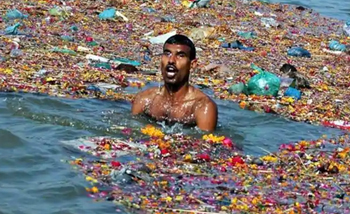
According to the latest data with the CPCB, most of the Ganga River water in the Uttar Pradesh-West Bengal stretch is unfit for drinking and bathing.

A map released by the Central Pollution Control Board (CPCB) shows a high level of coliform bacteria in the river.

Out of 86 live monitoring stations installed in as many locations, only seven areas have been found to be fit for drinking after the disinfection process while 78 have been found unfit.

The data has been collected by live monitoring stations in the Ganga basin across the country to check the quality of the river water.

In the country where scores of people flock to take a dip in the Ganga, which is considered as the lifeline of India, the CPCB says the river water is so polluted that it is unfit for bathing, let alone drinking.

Only 18 spots have been found to be fit for bathing while 62 areas from where it flows have been found unfit.

Some stretches in Uttarakhand and two spots in West Bengal are marked in green indicating water can be consumed after disinfection while the rest of the river water is unfit for drinking or bathing the whole way till it drains into the Bay of Bengal.

The 78 monitoring stations where the river water was found unfit for drinking and bathing include Gomati river in Bhusaula-Bihar, Kanpur, Gola Ghat in Varanasi, Dalmau in Raebareli, Sangam in Allahabad, Ghazipur, Buxar, Patna, Bhagalpur, Howrah-Shivpur in West Bengal and others.

The six spots which were found fit for consumption under class A- fit for drinking after disinfection- are Bhagirathi at Gangotri, Rudraprayag, Devprayag, Raiwala- Uttarakhand, Rishikesh, Bijnor and Diamond Harbour in West Bengal.

The areas found fit for bathing under class B in river Ganga include - Bhagirathi at Gangotri, Rudraprayag, Devprayag, Raiwala- Uttarakhand, Gharmukhteshwar, Rishikesh, Bijnor, Aligarh and others, including four spots in West Bengal.

Despite several plans in place to clean the river and directions of the National Green Tribunal to tackle river pollution, it seems to be a far fetched reality.

The ministry of environment, which is also involved with the cleaning of the river along with the ministry of water resources, said industrial pollution has been checked as industrial units are now not discharging in the river.

"Namami Gange is a very ambitious programme initiated by the Ministry of Water Resources and is implementing it. Let us take Ganga for example, two types of elements are there- industrial waste and sewage waste. River pollution is due to 30 percent industrial waste and the rest of it is sewage.

"On the banks of River Ganga, there are over 1100 industrial units which discharge their waste into the river. Today, not a single industry is discharging black waste in the river. That is the level to which we have brought it," Union Environment Secretary C K Mishra said.

Mishra also said that the situation was not a "happy" one but efforts were on.

"Sewage is a big issue. Work is going on it will take a little while and at least every day we monitor the water quality. I am sure nobody is happy with the situation and no one should be happy about the current state of affairs, but efforts are on," he said when asked about river cleaning.

However, environmental activist and lawyer Vikrant Tongad, who also filed an RTI regarding the condition of the river, said though government's efforts were appreciable, it was not enough to tackle the situation.

"Efforts can be lauded but certain other measures including public participation and managing agricultural waste generated after using pesticides are also required. The government had planned to clean the river by 2020 but it cannot be achieved till 2025," he said.

The CPCB map 'Sustainability of River Ganga Water' uses the criteria of dissolved oxygen (more than 6 mg/litre), biochemical oxygen demand (less than 2 mg/litre), total coliform levels (5000 per 100 ml) and pH (range between 6.5 and 8.5) to assess the health of the river.

Most of the polluted and unfit Ganga water has been found with high faecal coliform bacteria at 50,000 and above levels.


Comments

Add new comment

  • Coastaldigest.com reserves the right to delete or block any comments.
  • Coastaldigset.com is not responsible for its readers’ comments.
  • Comments that are abusive, incendiary or irrelevant are strictly prohibited.
  • Please use a genuine email ID and provide your name to avoid reject.
News Network
December 3,2025

arrival.jpg

Mangaluru, Dec 3: A group of Congress workers gathered at the Mangaluru International Airport on Wednesday to welcome AICC general secretary K C Venugopal, but the reception quickly turned into a display of support for Deputy Chief Minister D K Shivakumar.

Venugopal arrived in the city to participate in the centenary commemoration of the historic dialogue between Mahatma Gandhi and Narayana Guru. The event, organised by the Sivagiri Mutt, Varkala, in association with the Mangalore University Sri Narayana Guru Study Chair, is being held on the university’s Konaje campus.

KPCC general secretary Mithun Rai and several party workers had assembled at the airport to receive Venugopal. However, the moment he stepped out, workers began raising slogans backing Shivakumar.

The university programme will be inaugurated by Chief Minister Siddaramaiah.

This show of support comes just a day after Siddaramaiah remarked that Shivakumar would lead the government “when the high command decides.” The chief minister made the comment after a breakfast meeting at Shivakumar’s residence—another public display of camaraderie between the two leaders amid ongoing attempts by the party high command to downplay their leadership rivalry.

Comments

Add new comment

  • Coastaldigest.com reserves the right to delete or block any comments.
  • Coastaldigset.com is not responsible for its readers’ comments.
  • Comments that are abusive, incendiary or irrelevant are strictly prohibited.
  • Please use a genuine email ID and provide your name to avoid reject.
News Network
December 2,2025

DKSsiddu.jpg

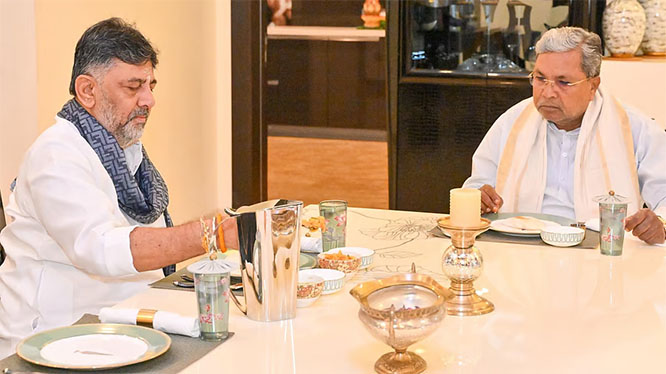
Bengaluru: 'Nati koli saaru' (country chicken curry) considered one of Chief Minister Siddaramaiah’s favourites along with steaming hot idlis was on the breakfast menu at Deputy CM D K Shivakumar’s residence on Tuesday, according to official sources.

The spread also included 'nati koli' fry, vada and pongal, among other items, they said.

In an apparent show of unity, Siddaramaiah visited Shivakumar’s residence for breakfast, just days after the two leaders shared a meal amid a simmering power tussle in the state Congress.

Siddaramaiah drove to the Deputy CM’s residence in Sadashivanagar, where he was received by Shivakumar and his brother D K Suresh, who is a former Congress MP.

Suresh and Kunigal MLA H D Ranganath, a relative of Shivakumar, joined them for breakfast, which featured a mix of vegetarian and non-vegetarian dishes.

Speaking to reporters later, Siddaramaiah said Shivakumar had invited him during his visit to the CM’s residence for breakfast on Saturday.

Asked about the difference between the two meals, the chief minister said, "At his (Shivakumar’s) house it was non-veg, while at my house it was veg. He is a vegetarian, I am a non-vegetarian. I had not prepared non-veg. I told DK to get chicken from the village as you won’t get the original in Bengaluru."

Shivakumar said he had initially invited Siddaramaiah to his residence, but the CM had suggested visiting his place first and reciprocating later. "It was a vegetarian breakfast at the CM’s house on Saturday," he noted.

"Today, I invited him (the CM) to my house. He enjoyed the breakfast, which had his Mysuru taste," Shivakumar added. At this point, Siddaramaiah remarked that Shivakumar’s wife is also from Mysuru.

Saturday’s breakfast at Siddaramaiah’s official residence, held as part of efforts by the Congress high command to ease tensions in the leadership dispute between the two, reportedly included idlis and sambar, according to official sources.

Comments

Add new comment

  • Coastaldigest.com reserves the right to delete or block any comments.
  • Coastaldigset.com is not responsible for its readers’ comments.
  • Comments that are abusive, incendiary or irrelevant are strictly prohibited.
  • Please use a genuine email ID and provide your name to avoid reject.
News Network
December 6,2025

pilot.jpg

New Delhi: IndiGo, India’s largest airline, faced major operational turbulence this week after failing to prepare for new pilot-fatigue regulations issued by the Directorate General of Civil Aviation (DGCA). The stricter rules—designed to improve flight safety—took effect in phases through 2024, with the latest implementation on November 1. IndiGo has acknowledged that inadequate roster planning led to widespread cancellations and delays.

Below are the key DGCA rules that affected IndiGo’s operations:

1. Longer Mandatory Weekly Rest

Weekly rest for pilots has been increased from 36 hours to 48 hours.

The government says the extended break is essential to curb cumulative fatigue. This rule remains in force despite the current crisis.

2. Cap on Night Landings

Pilots can now perform only two night landings per week—a steep reduction from the earlier limit of six.

Night hours, defined as midnight to early morning, are considered the least alert period for pilots.

Given the disruptions, this rule has been temporarily relaxed for IndiGo until February 10.

3. Reduced Maximum Night Flight Duty

Flight duty that stretches into the night is now capped at 10 hours.

This measure has also been kept on hold for IndiGo until February 10 to stabilize operations.

4. Weekly Rest Cannot Be Replaced With Personal Leave

Airlines can no longer count a pilot’s personal leave as part of the mandatory 48-hour rest.

Pilots say this closes a loophole that previously reduced actual rest time.

Currently, all airlines are exempt from this rule to normalise travel.

5. Mandatory Fatigue Monitoring

Airlines must submit quarterly fatigue reports along with corrective actions to DGCA.

This system aims to create a transparent fatigue-tracking framework across the industry.

The DGCA has stressed that these rules were crafted to strengthen flight safety and align India with global fatigue-management standards. The temporary relaxations are expected to remain until February 2025, giving IndiGo time to stabilise its schedules and restore normal air travel.

Comments

Add new comment

  • Coastaldigest.com reserves the right to delete or block any comments.
  • Coastaldigset.com is not responsible for its readers’ comments.
  • Comments that are abusive, incendiary or irrelevant are strictly prohibited.
  • Please use a genuine email ID and provide your name to avoid reject.