Ganga water unfit for direct drinking, bathing: CPCB

Agencies
May 30, 2019

New Delhi, May 30: The Ganga River water is absolutely unfit for "direct drinking" and only seven spots from where it passes can be consumed after disinfection, the Central Pollution Control Board (CPCB) has said.
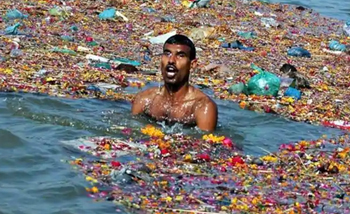
According to the latest data with the CPCB, most of the Ganga River water in the Uttar Pradesh-West Bengal stretch is unfit for drinking and bathing.

A map released by the Central Pollution Control Board (CPCB) shows a high level of coliform bacteria in the river.

Out of 86 live monitoring stations installed in as many locations, only seven areas have been found to be fit for drinking after the disinfection process while 78 have been found unfit.

The data has been collected by live monitoring stations in the Ganga basin across the country to check the quality of the river water.

In the country where scores of people flock to take a dip in the Ganga, which is considered as the lifeline of India, the CPCB says the river water is so polluted that it is unfit for bathing, let alone drinking.

Only 18 spots have been found to be fit for bathing while 62 areas from where it flows have been found unfit.

Some stretches in Uttarakhand and two spots in West Bengal are marked in green indicating water can be consumed after disinfection while the rest of the river water is unfit for drinking or bathing the whole way till it drains into the Bay of Bengal.

The 78 monitoring stations where the river water was found unfit for drinking and bathing include Gomati river in Bhusaula-Bihar, Kanpur, Gola Ghat in Varanasi, Dalmau in Raebareli, Sangam in Allahabad, Ghazipur, Buxar, Patna, Bhagalpur, Howrah-Shivpur in West Bengal and others.

The six spots which were found fit for consumption under class A- fit for drinking after disinfection- are Bhagirathi at Gangotri, Rudraprayag, Devprayag, Raiwala- Uttarakhand, Rishikesh, Bijnor and Diamond Harbour in West Bengal.

The areas found fit for bathing under class B in river Ganga include - Bhagirathi at Gangotri, Rudraprayag, Devprayag, Raiwala- Uttarakhand, Gharmukhteshwar, Rishikesh, Bijnor, Aligarh and others, including four spots in West Bengal.

Despite several plans in place to clean the river and directions of the National Green Tribunal to tackle river pollution, it seems to be a far fetched reality.

The ministry of environment, which is also involved with the cleaning of the river along with the ministry of water resources, said industrial pollution has been checked as industrial units are now not discharging in the river.

"Namami Gange is a very ambitious programme initiated by the Ministry of Water Resources and is implementing it. Let us take Ganga for example, two types of elements are there- industrial waste and sewage waste. River pollution is due to 30 percent industrial waste and the rest of it is sewage.

"On the banks of River Ganga, there are over 1100 industrial units which discharge their waste into the river. Today, not a single industry is discharging black waste in the river. That is the level to which we have brought it," Union Environment Secretary C K Mishra said.

Mishra also said that the situation was not a "happy" one but efforts were on.

"Sewage is a big issue. Work is going on it will take a little while and at least every day we monitor the water quality. I am sure nobody is happy with the situation and no one should be happy about the current state of affairs, but efforts are on," he said when asked about river cleaning.

However, environmental activist and lawyer Vikrant Tongad, who also filed an RTI regarding the condition of the river, said though government's efforts were appreciable, it was not enough to tackle the situation.

"Efforts can be lauded but certain other measures including public participation and managing agricultural waste generated after using pesticides are also required. The government had planned to clean the river by 2020 but it cannot be achieved till 2025," he said.

The CPCB map 'Sustainability of River Ganga Water' uses the criteria of dissolved oxygen (more than 6 mg/litre), biochemical oxygen demand (less than 2 mg/litre), total coliform levels (5000 per 100 ml) and pH (range between 6.5 and 8.5) to assess the health of the river.

Most of the polluted and unfit Ganga water has been found with high faecal coliform bacteria at 50,000 and above levels.

Comments

Add new comment

  • Coastaldigest.com reserves the right to delete or block any comments.
  • Coastaldigset.com is not responsible for its readers’ comments.
  • Comments that are abusive, incendiary or irrelevant are strictly prohibited.
  • Please use a genuine email ID and provide your name to avoid reject.
News Network
December 3,2025

indigo.jpg

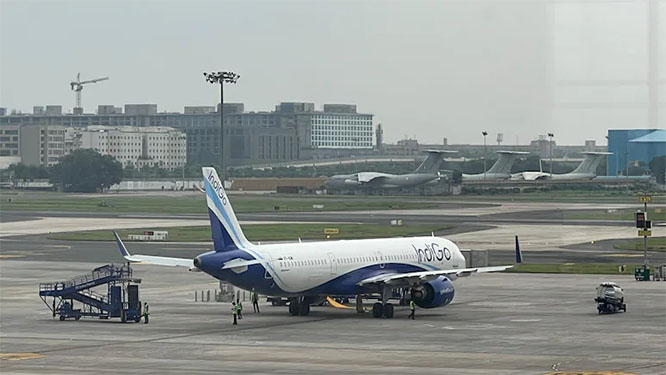
IndiGo, India’s largest airline, is battling one of its worst operational disruptions in recent years, with hundreds of delays and cancellations throwing domestic travel into chaos.

Government data on Tuesday showed its on-time performance plunging to 35%, an unusual dip for a carrier long associated with punctuality.

By Wednesday afternoon, airports in Delhi, Mumbai, Bengaluru and Hyderabad had collectively reported close to 200 cancellations, stranding travellers across the country.

Crew Shortage After New Duty Norms

A major trigger behind the meltdown is a severe crew shortage, especially among pilots, following the rollout of revised Flight Duty Time Limitation (FDTL) norms last month.

The rules mandate longer rest hours and more humane rosters — a shift IndiGo has struggled to incorporate across its vast network.

Sources said several flights were grounded due to lack of cabin crew, while some delays stretched upwards of eight hours.

With IndiGo controlling over 60% of India’s domestic aviation market, the ripple effect has impacted airports nationwide.

IndiGo Issues Apology, Lists “Compounding Factors”

In a statement, IndiGo acknowledged the large-scale disruption:

“We sincerely apologise to customers. A series of unforeseen operational challenges — technology glitches, winter schedule changes, adverse weather, system congestion and updated FDTL norms — created a compounding impact that could not have been anticipated.”

To stabilise operations, the airline has begun calibrated schedule adjustments for the next 48 hours, aiming to restore punctuality. Affected passengers are being offered refunds or alternate travel arrangements, IndiGo said.

What the FDTL Rules Require

The FDTL norms, designed to reduce pilot fatigue, cap duty and flying hours as follows:
•    Maximum 8 hours of flying per day
•    35 hours per week
•    125 hours per month
•    1,000 hours per year

Crew must also receive rest equalling twice the flight duration, with a minimum 10-hour rest period in any 24-hour window.

The DGCA introduced these limits to enhance flight safety.

Hyderabad: 33 Flights Cancelled, Long Queues Reported

Hyderabad’s Rajiv Gandhi International Airport saw heavy early-morning crowds as 33 IndiGo flights (arrivals and departures) were cancelled.

The airport clarified on X that operations were normal, advising passengers to contact IndiGo directly for latest flight status.

Cancellations included flights to and from Visakhapatnam, Goa, Ahmedabad, Delhi, Bengaluru, Chennai, Madurai, Hubli, Bhopal and Bhubaneswar.

Bengaluru: 42 Flights Disrupted

Bengaluru’s Kempegowda International Airport recorded 42 cancellations — 22 arrivals and 20 departures — affecting routes to Delhi, Mumbai, Chennai, Hyderabad, Goa, Kolkata and Lucknow.

Passengers Vent on Social Media

Irate travellers took to X to share their experiences. One passenger stranded in Hyderabad wrote: “I have been here since 3 a.m. and missed an important meeting.”

Another said: “My flight was pushed from 1:55 PM to 2:55 PM and now 4:35 PM. I was informed only three minutes before entering the airport.”

Delhi Airport Hit by Tech Glitch

At Delhi Airport, the disruption deepened due to a slowdown in the Amadeus system — used for reservations, check-ins and departure control.

The technical issue led to longer queues and sluggish processing, adding to delays already worsened by staff shortages.

Comments

Add new comment

  • Coastaldigest.com reserves the right to delete or block any comments.
  • Coastaldigset.com is not responsible for its readers’ comments.
  • Comments that are abusive, incendiary or irrelevant are strictly prohibited.
  • Please use a genuine email ID and provide your name to avoid reject.
News Network
December 4,2025

Udupi: A 40-year-old NRI from Udupi has reportedly lost more than Rs 12.25 lakh in an online investment scam operated through Telegram.

According to a complaint filed at the CEN police station, Leo Jerome Mendonsa, who has been working in Dubai for the past 15 years in computer accessories sales, maintains NRI accounts in Karkala and Nitte.

On November 12, 2025, Mendonsa was added to a Telegram group called Instaflow Earnings by unknown individuals. Users identified as Priya and Dipannita persuaded him to invest in “Revenue Tasks.” Initially, Mendonsa transferred Rs 1,100 multiple times and received the promised returns, encouraging him to continue.

On November 14, another user, Nishmitha Shetty, directed him to register on a website, digitvisionuoce.cc, and invest Rs 4 lakh in various shares. Over the next few days, he made multiple transfers totaling Rs 12,25,000, including Rs 50,000 via Google Pay, believing the scheme was legitimate.

After receiving the money, the alleged handlers stopped responding, and neither the invested amount nor the promised profits were returned.

The CEN police have registered a case under Sections 66(C) and 66(D) of the IT Act and Section 318(4) of the Bharatiya Nyaya Sanhita (BNS), and investigations are ongoing.

Comments

Add new comment

  • Coastaldigest.com reserves the right to delete or block any comments.
  • Coastaldigset.com is not responsible for its readers’ comments.
  • Comments that are abusive, incendiary or irrelevant are strictly prohibited.
  • Please use a genuine email ID and provide your name to avoid reject.
News Network
December 7,2025

SHRIMP.jpg

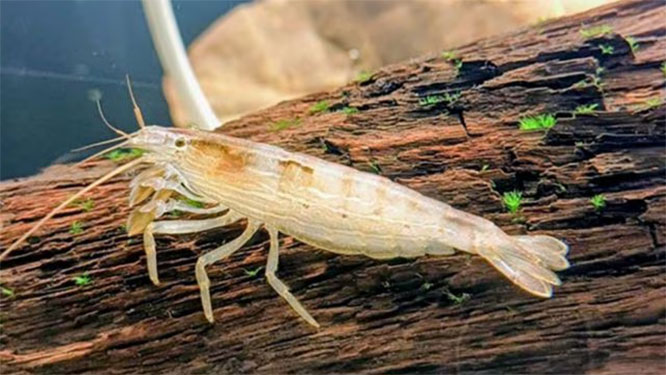
Mangaluru, Dec 7: A rare bamboo shrimp has been rediscovered on mainland India more than 70 years after it was last reported, confirming for the first time the presence of Atyopsis spinipes in the country. The find was made by researchers from the Centre for Climate Change Studies at Sathyabama Institute of Science and Technology, Chennai, during surveys in Karnataka and Odisha.

The team — shrimp expert Dr S Prakash, PhD scholar K Kunjulakshmi, and Mangaluru-based researcher Maclean Antony Santos — combined field surveys, ecological assessments and DNA analysis to identify the elusive species. Their findings, published in Zootaxa, resolve decades of taxonomic confusion stemming from a 1951 report that misidentified the species as Atyopsis moluccensis without strong evidence.

The shrimp has now been confirmed at two locations: the Mulki–Pavanje estuary near Mangaluru and the Kuakhai River in Bhubaneswar. Historical specimens from the Andaman Islands, previously labelled as A. moluccensis, were also found to be misidentified and actually belong to A. spinipes.

The rediscovery began after an aquarium hobbyist in Odisha spotted a shrimp in 2022, prompting systematic surveys across Udupi, Karwar and Mangaluru. Four female specimens were collected in Mulki and one in Odisha, all genetically matching.

Researchers warn the species may exist in very small, vulnerable populations as freshwater habitats face increasing pressure from pollution, sand mining and infrastructure development. All verified specimens have been deposited with the Zoological Survey of India for future reference.

Comments

Add new comment

  • Coastaldigest.com reserves the right to delete or block any comments.
  • Coastaldigset.com is not responsible for its readers’ comments.
  • Comments that are abusive, incendiary or irrelevant are strictly prohibited.
  • Please use a genuine email ID and provide your name to avoid reject.