



Gold amnesty scheme soon to overcome limited success of earlier IDS

Agencies
October 31, 2019

New Delhi, Oct 31: The government may soon announce an amnesty scheme for gold to bring hordes of black money used in buying the yellow metal considered a safe investment option in India.
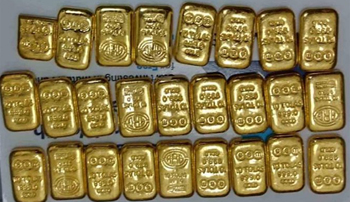
According to sources, the new amnesty scheme would allow gold hoarders to come clean on investment made using black money by declaring their possession and paying tax on it.

The tax will have to be paid on entire value of gold declared by an individual that has been purchased without any receipt.

Though the rate of tax is yet to be worked out by the government, sources indicated that the thinking is to keep the rate at around 30 per cent level with an effective rate of around 33 per cent including education cess.

The new scheme is being considered as yet another attempt to unearth lakhs of crores of black money still lying in the system in the form of unaccounted gold.

It would also try to overcome limited success of an earlier amnesty scheme Pradhan Mantri Garib Kalyan Yojana (PMGKY), also known as IDS-II, launched in 2017, post the demonetisation exercise.

"The idea of the scheme is good but its effective implementation is difficult. People have amassed gold over times and on many occasions the yellow metal has been inherited leaving no transactional details.

"It would be hard to push people to declare if they have lost almost a third of the value," said an analyst who did not wish to be named as he was not aware of contours of the amnesty scheme.

Also, there is fear that after declaration of the wealth, an individual may be prone to harassment by tax officials.

It happened during the last two income declaration schemes (IDS) where tax officials were found to be seeking response from people making declarations to explain their source of income. In fact, lakhs of SMSs were sent by tax officials seeking response from cash depositors during the time of demonetisation.

The industry had suggested a new model for gold amnesty scheme to ensure its success as paying up front taxes on the value assets would attract few takers.

It had said that in return for declared gold, the government could issue 10 year zero coupon bonds with yield on it lower than prevailing rates. The gap in yield could take care of the tax that the declarer has not paid on the black money used to buy gold.

Just like the Income Tax amnesty scheme, this gold amnesty scheme is also expected to be open for a definite time period.

It is being worked out as part of a comprehensive gold policy that is being worked upon per Niti Aayog's suggestions two years ago.

It is estimated that the total stock of gold held by Indians will be in the region of 20,000 tonne. However the actual holding after taking into account unaccounted imports, ancestral holdings etc should actually be in the region of 25,000-30,000 tonne.

The value of this gold at current prices will be in excess of $1 trillion and $1.5 trillion respectively.

One of the charges that the Opposition levelled against the Modi government in this year's general elections was about failure of the Centre on bringing back black money.

The gold scheme would be yet another attempt to channelise a large portion of undeclared wealth into normal channels.

The Modi government has taken a slew of decisions ever since it came to power to clamp down on black money -- one of the main planks in General Election of 2014.

It has brought amnesty schemes for both black money held in foreign countries and domestically. The fight in November 2016 culminated to demonetising the high value Rs 500 and Rs 1,000 notes.

The government hoped that time that out of Rs 15.4 lakh crore of these notes being in circulation, about Rs 2-3 lakh crore may not be deposited in bank accounts as this was black money.

However, this never happened as almost entire quota of outlawed notes were deposited in bank accounts casting doubts over efficacy of the move.

The government is unperturbed from it and plans to take more measures to clamp down on black money. In the case of gold, it is expected to go a lot softer on holders of unaccounted wealth.

Comments

Add new comment

  • Coastaldigest.com reserves the right to delete or block any comments.
  • Coastaldigset.com is not responsible for its readers’ comments.
  • Comments that are abusive, incendiary or irrelevant are strictly prohibited.
  • Please use a genuine email ID and provide your name to avoid reject.
News Network
December 2,2025

DKSsiddu.jpg

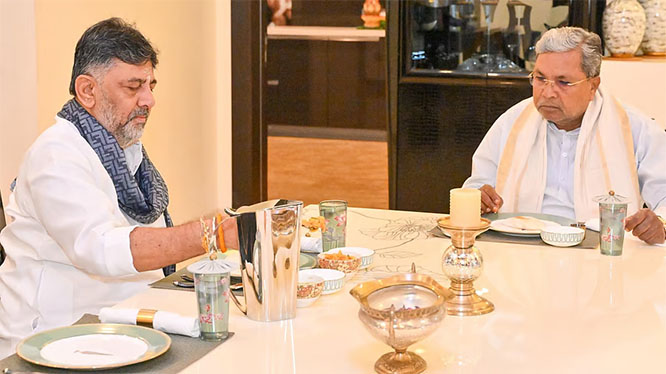
Bengaluru: 'Nati koli saaru' (country chicken curry) considered one of Chief Minister Siddaramaiah’s favourites along with steaming hot idlis was on the breakfast menu at Deputy CM D K Shivakumar’s residence on Tuesday, according to official sources.

The spread also included 'nati koli' fry, vada and pongal, among other items, they said.

In an apparent show of unity, Siddaramaiah visited Shivakumar’s residence for breakfast, just days after the two leaders shared a meal amid a simmering power tussle in the state Congress.

Siddaramaiah drove to the Deputy CM’s residence in Sadashivanagar, where he was received by Shivakumar and his brother D K Suresh, who is a former Congress MP.

Suresh and Kunigal MLA H D Ranganath, a relative of Shivakumar, joined them for breakfast, which featured a mix of vegetarian and non-vegetarian dishes.

Speaking to reporters later, Siddaramaiah said Shivakumar had invited him during his visit to the CM’s residence for breakfast on Saturday.

Asked about the difference between the two meals, the chief minister said, "At his (Shivakumar’s) house it was non-veg, while at my house it was veg. He is a vegetarian, I am a non-vegetarian. I had not prepared non-veg. I told DK to get chicken from the village as you won’t get the original in Bengaluru."

Shivakumar said he had initially invited Siddaramaiah to his residence, but the CM had suggested visiting his place first and reciprocating later. "It was a vegetarian breakfast at the CM’s house on Saturday," he noted.

"Today, I invited him (the CM) to my house. He enjoyed the breakfast, which had his Mysuru taste," Shivakumar added. At this point, Siddaramaiah remarked that Shivakumar’s wife is also from Mysuru.

Saturday’s breakfast at Siddaramaiah’s official residence, held as part of efforts by the Congress high command to ease tensions in the leadership dispute between the two, reportedly included idlis and sambar, according to official sources.

Comments

Add new comment

  • Coastaldigest.com reserves the right to delete or block any comments.
  • Coastaldigset.com is not responsible for its readers’ comments.
  • Comments that are abusive, incendiary or irrelevant are strictly prohibited.
  • Please use a genuine email ID and provide your name to avoid reject.
News Network
December 13,2025

New Delhi: School-going children are picking up drug and smoking habits and engaging in consumption of alcohol, with the average age of introduction to such harmful substances found to be around 13 years, suggesting a need for earlier interventions as early as primary school, a multi-city survey by AIIMS-Delhi said.

The findings also showed substance use increased in higher grades, with grade XI/XII students two times more likely to report use of substances when compared with grade VIII students. This emphasised the importance of continued prevention and intervention through middle and high school.

The study led by Dr Anju Dhawan of AIIMS's National Drug Dependence Treatment Centre, published in the National Medical Journal of India this month, looks at adolescent substance use across diverse regions.

The survey included 5,920 students from classes 8, 9, 11 and 12 in urban government, private and rural schools across 10 cities -- Bengaluru, Chandigarh, Delhi, Dibrugarh, Hyderabad, Imphal, Jammu, Lucknow, Mumbai, and Ranchi. The data were collected between May 2018 and June 2019.

The average age of initiation for any substance was 12.9 (2.8) years. It was lowest for inhalants (11.3 years) followed by heroin (12.3 years) and opioid pharmaceuticals (without prescription; 12.5 years).

Overall, 15.1 per cent of participants reported lifetime use, 10.3 per cent reported past year use, and 7.2 per cent reported use in the past month of any substance, the study found.

The most common substances used in the past year, after tobacco (4 per cent) and alcohol (3.8 per cent), were opioids (2.8 per cent), followed by cannabis (2 per cent) and inhalants (1.9 per cent). Use of non-prescribed pharmaceutical opioids was most common among opioid users (90.2 per cent).

On being asked, 'Do you think this substance is easily available for a person of your age' separately for each substance category, nearly half the students (46.3 per cent) endorsed that tobacco products and more than one-third of the students (36.5 per cent) agreed that a person of their age can easily procure alcohol products.

Similarly, for Bhang (21.9 per cent), ganja/charas (16.1 per cent), inhalants (15.2 per cent), sedatives (13.7 per cent), opium and heroin (10 per cent each), the students endorsed that these can be easily procured.

About 95 per cent of the children, irrespective of their grade, agreed with the statement that 'drug use is harmful'.

The rates of substance use (any) among boys were significantly higher than those of girls for substance use (ever), use in the past year and use in the past 30 days. Compared to grade VIII students, grade IX students were more likely, and grade XI/XII students were twice as likely to have used any substance (ever).

The likelihood of past-year use of any substance was also higher for grade IX students and for grade XI/XII students as compared to grade VIII students.

About 40 per cent of students mentioned that they had a family member who used tobacco or alcohol each. The use of cannabis (any product) and opioid (any product) by a family member was reported by 8.2 per cent and 3.9 per cent of students, respectively, while the use of other substances, such as inhalants/sedatives by family was 2-3 per cent, the study found.

A relatively smaller percentage of students reported use of tobacco or alcohol among peers as compared to among family members, while a higher percentage reported inhalants, sedatives, cannabis or opioid use among peers.

Children using substances (past year) compared to non-users reported significantly higher any substance use by their family members and peers.

There were 25.7 per cent students who replied 'yes' to the question 'conflicts/fights often occur in your family'. Most students also replied affirmatively to 'family members are aware of how their time is being spent' and 'damily members are aware of with whom they spend their time'.

Comments

Add new comment

  • Coastaldigest.com reserves the right to delete or block any comments.
  • Coastaldigset.com is not responsible for its readers’ comments.
  • Comments that are abusive, incendiary or irrelevant are strictly prohibited.
  • Please use a genuine email ID and provide your name to avoid reject.
News Network
December 4,2025

Udupi: A 40-year-old NRI from Udupi has reportedly lost more than Rs 12.25 lakh in an online investment scam operated through Telegram.

According to a complaint filed at the CEN police station, Leo Jerome Mendonsa, who has been working in Dubai for the past 15 years in computer accessories sales, maintains NRI accounts in Karkala and Nitte.

On November 12, 2025, Mendonsa was added to a Telegram group called Instaflow Earnings by unknown individuals. Users identified as Priya and Dipannita persuaded him to invest in “Revenue Tasks.” Initially, Mendonsa transferred Rs 1,100 multiple times and received the promised returns, encouraging him to continue.

On November 14, another user, Nishmitha Shetty, directed him to register on a website, digitvisionuoce.cc, and invest Rs 4 lakh in various shares. Over the next few days, he made multiple transfers totaling Rs 12,25,000, including Rs 50,000 via Google Pay, believing the scheme was legitimate.

After receiving the money, the alleged handlers stopped responding, and neither the invested amount nor the promised profits were returned.

The CEN police have registered a case under Sections 66(C) and 66(D) of the IT Act and Section 318(4) of the Bharatiya Nyaya Sanhita (BNS), and investigations are ongoing.

Comments

Add new comment

  • Coastaldigest.com reserves the right to delete or block any comments.
  • Coastaldigset.com is not responsible for its readers’ comments.
  • Comments that are abusive, incendiary or irrelevant are strictly prohibited.
  • Please use a genuine email ID and provide your name to avoid reject.