



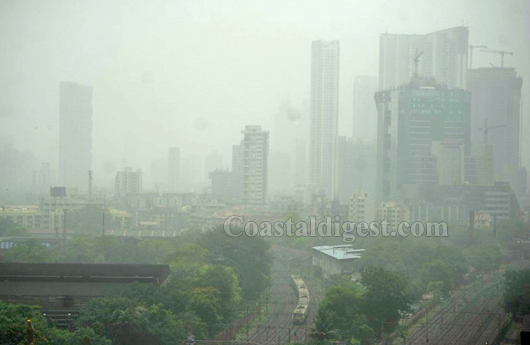
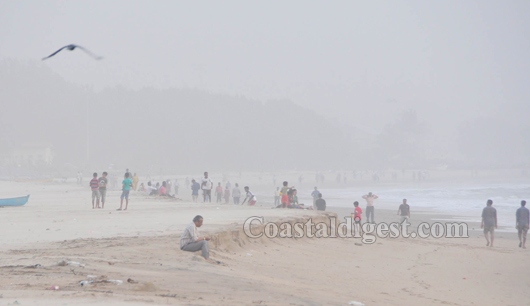
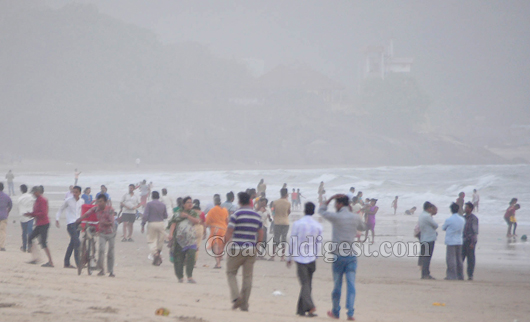
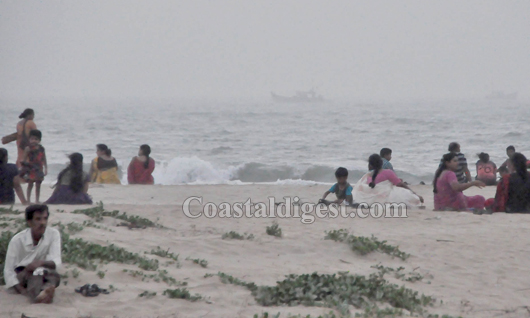
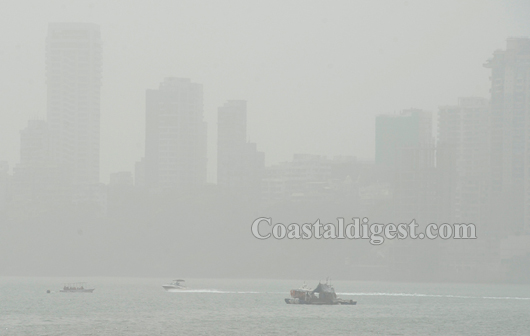
Karwar/Mumbai, Apr 8: Parts of Maharashtra, Goa and coastal Karnataka suffered low visibility for a couple of days due to the after-effects of last week’s major sandstorm in the Gulf region.
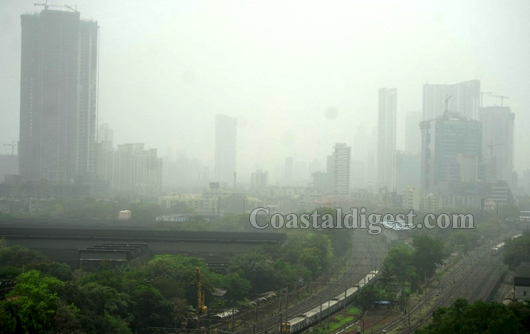
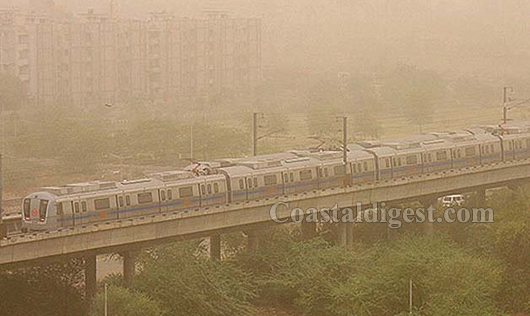
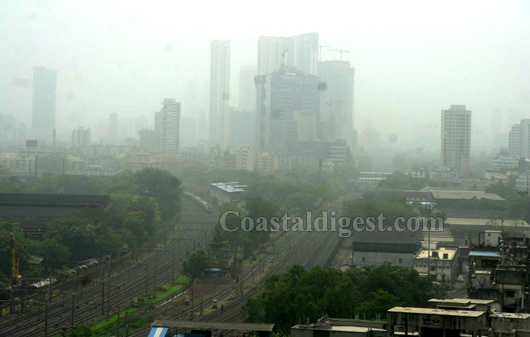
The effects of the ‘haboob’ (Arabic for intense dust storm) were felt across West Coast of India, according to meteorologists. The north coastal and north western parts, which include Mumbai and Nashik, were hit hard as visibility was markedly affected.
Pune-Mumbai highway traffic has been partially affected due to low visibility. The dust storm crossed the Arabian Sea and its remnants affected some parts of India.
“The haze seen over Mumbai, Pune, Nashik and Karwar is the residual element of the Gulf sandstorm which has now crossed the Arabian Sea,” said a senior scientist at the Indian Institute of Tropical Meteorology (IITM).
Though this is not the first time the India has experienced dust storm, It is an occasional occurrence.
The phenomenon has alarmed physicians who are worried that the pollution may trigger asthma attacks and set off respiratory ailments.
Mumbai most polluted city
Mumbai has trounced Delhi as India's most polluted city on two consecutive days starting Sunday.
The US embassy's air quality index (AQI) readings for the area around its embassy in New Delhi and consulate in Mumbai at 10am on Sunday showed that particulate matter in Mumbai stood at 183 as against 173 in Delhi. Monday's readings were 201 in Mumbai compared to 197 in Delhi.
But this "dangerous" reading is likely to be temporary as it was caused by the remnants of a dust storm that originated in the Arabian Peninsula and crossed the Arabian Sea into Mumbai.
Experts say the resulting haze over the city most possibly contained PM2.5—the term for particulate matter, or particles, whose diameter is less than 2.5 micrometres. PM2.5 is considered dangerous because it could worsen the plight of patients suffering from heart diseases, respiratory problems such as asthma, or lung cancer.
AQI has emerged in recent times as an indicator of a city's overall air quality. Last year, Beijing and New Delhi made headlines for their poor AQI (on Monday, Beijing's AQI stood at a moderate 53).
Mumbai is likely to limp back to normalcy within a day, said experts. But antipollution activists like Sumaira Abdulali said Monday's readings should make Mumbaikars realize that the sea cannot always drive away pollutants. "The sea does help in keep air pollution low, but it can only help so much. The pollutants, moreover, come back in the form of water vapour or rain and get into our food chain," she said.

Comments
Add new comment