Highlights of Union Budget 2019 presented by Nirmala Sitharaman

News Network
July 5, 2019

* From 1.85 trillion dollars in 2014, the economy has reached 2.7 trillion US dollars; We can very well reach 5 trillion dollars in the next few years. The Indian economy will grow to become a 3 trillion dollar economy this year itself.

* The plan to reach $5 trillion economy will involve development of heavy investment in infrastructure, digital economy and job creation.

Employment

* 80 Livelihood business incubators and 20 technology business incubators to be set up in 2019-20 under ASPIRE to develop 75,000 skilled entrepreneurs in agro-rural industries.

* Increase focus on skill sets required by the youth to apply for job opportunities abroad like language skills and artificial intelligence (AI).

* We propose to start a television programme on DD National, exclusively for startups. This programme will be designed and executed by startup's themselves.

Banks

* Government considering to go below 51% to an appropriate level of ownership stake in non-financial public sector undertakings on case by case basis.

* Public Sector Banks (PSBs) to be provided Rs 70,000 crore to boost capital and improve credit.

* PSBs will use technology, enabling customer of one PSB to access service across all PSBs as well.

* For purchase of high-rated pooled assets of financially sound Non Banking Finance Companies (NBFCs) amounting to Rs 1 lakh crore during 2019-20, one-time six-month partial credit guarantee to be given to PSBs.

* Proposals for strengthening regulatory authority of RBI over NBFCs have been made.

* Regulation authority over housing finance sector to be returned from National Housing Bank to RBI.

Railways

* Railway infra would need an investment of 50 lakh crores between 2018 and 2030; PPP to be used to unleash faster development and delivery of passenger freight services.

* Railways to be encouraged to invest more in suburban railways through Special Purpose Vehicles (SPV) structures such as Rapid Regional Transport System (RRTS); more Public Private Partner (PPP) initiatives to be encouraged in rail sector.

* Massive programme of railway station modernization to be launched in 2019.

GST

* Rs 350 crore allocated for 2% interest subvention for all GST-registered MSMEs on fresh or incremental loans.

* Government has already moved GST council to lower the GST rate on electric vehicles (EV) from 12% to 5%. Also to make EVs affordable for consumers our government will provide additional income tax deduction of Rs 1.5 lakh on the interest paid on the loans taken to purchase EVs.

Connectivity

* FAME II scheme aims to encourage faster adoption of electric vehicles by right incentives and charging infrastructure. Comprehensive restructuring of National Highways Programme to be done, to ensure creation of National Highways Grid of desirable capacity. Government envisions using rivers for cargo transportation, which will also decongest roads and railways.

* 657 km of metro rail network has become operational in the country.

* The government has given a massive push to all forms of physical connectivity via PMGSY, Industrial corridors, Dedicated freight corridors, Bharatmala, Sagarmala, Jal Marg vikas and UDAN schemes.

Swachh Bharat Mission

* Proposal to expand Swachh Bharat mission to undertake solid waste management in every village.

* India to be open defecation free (ODF) by October 2 2019. To mark this occasion, Rashtriya Swachhata Kendra to be inaugurated at Raj Ghat, on the same day.

Gandhi-pedia

* 'Gandhi-pedia' too to be developed on the lines of Encyclopedia to help promote Gandhian school of thought.

Education and research

* Establish a National Research Foundation to fund, to coordinate and to promote research in the country.

* National Research Foundation to be set up to strengthen overall research ecosystem in the country; funds available under all Ministries to be integrated with NRF.

* New National Educational Policy to be brought in to transform Indian educational system; major changes in higher as well as school system to be introduced.

* Rs 400 crore under head, World Class Institutions in 2019-20, more than three times the revised estimates of previous year. 'Study In India' to be started to bring in foreign students into Indian higher education system.

'Naari tu Narayaani'

* I draw attention to the women of India, 'Naari tu Narayaani'. This government believes that we can progress, with greater women participation.

* To further encourage women entrepreneurship, Women Self-help Groups (SHGs) Interest Subvention Programme to be expanded to all districts in India.

* An overdraft of Rs 5,000 will be allowed for every verified woman SHG member having a Jan Dhan account.

* One woman in every SHG shall be made eligible for a loan of 1 lakh rupees under MUDRA scheme.

Rural

* By 2022, every single rural family except those who are unwilling to take the connection, will have an electricity and a clean cooking facility.

* In second phase of PMAY-Gramin, 1.95 crore houses to be provided to eligible beneficiaries, during 2019-20 to 2021-22; they will have amenities such as LPG, electricity and toilets.

Pension

* Pension benefit to be extended to around 3 crore retail traders and shopkeepers with an annual turnover less than Rs 1.5 crore under Pradhan Mantri Karam Yogi Man Dhan Scheme.

Space

* To harness India's space ability commercially, a public sector enterprise, New Space India Limited (NSIL) has been incorporated to tap the benefits of Isro.

Social stock exchange

* Electronic fundraising platform, a social stock exchange, to be set up to list social enterprises and voluntary organizations working for social welfare objectives.

NRIs

* Aadhaar card for NRIs with Indian passports to be issued after their arrival in India, without waiting for the mandatory 180 days.

* To provide NRIs seamless access to Indian equities, NRI portfolio investment route to be merged with foreign portfolio investment route.

Bahi-khata

* Sitharaman departed from the 'colonial' practice of bringing the Budget documents in a leather briefcase and instead switched to a four-fold red-cotton cloth called a 'bahi-khata'.

* This is the 89th Union Budget, which is the financial statement of the government, detailing its revenue and expenditure in the past, as well as estimated spending and projections for the coming year.

Comments

Add new comment

  • Coastaldigest.com reserves the right to delete or block any comments.
  • Coastaldigset.com is not responsible for its readers’ comments.
  • Comments that are abusive, incendiary or irrelevant are strictly prohibited.
  • Please use a genuine email ID and provide your name to avoid reject.
News Network
December 19,2025

Saudi Arabia has abolished fees on expatriate workers employed in licensed industrial establishments, signaling a strong push to empower national factories and enhance the Kingdom’s global industrial competitiveness. The move reflects the leadership’s commitment to building a sustainable and resilient industrial economy under Saudi Vision 2030.

The decision was approved by the Council of Ministers, chaired by Crown Prince and Prime Minister Mohammed bin Salman, following a recommendation from the Council of Economic and Development Affairs (CEDA). It forms part of a broader strategy to support, modernize, and strengthen the industrial sector.

By removing fees on foreign workers, industrial establishments gain greater operational flexibility and relief from financial pressures. This is expected to help factories expand production, improve efficiency, and compete more effectively in international markets, while reinforcing long-term sustainability.

The initiative aligns closely with Saudi Vision 2030, which identifies industry as a key pillar of economic diversification. A competitive and resilient industrial base is viewed as essential for driving innovation, attracting investment, and sustaining long-term economic growth.

Overall, the fee exemption underscores the Kingdom’s commitment to creating a supportive environment for industrial development and ensuring that Saudi factories remain globally competitive and capable of leading the nation’s economic transformation.

Comments

Add new comment

  • Coastaldigest.com reserves the right to delete or block any comments.
  • Coastaldigset.com is not responsible for its readers’ comments.
  • Comments that are abusive, incendiary or irrelevant are strictly prohibited.
  • Please use a genuine email ID and provide your name to avoid reject.
News Network
December 6,2025

indigoticket.jpg

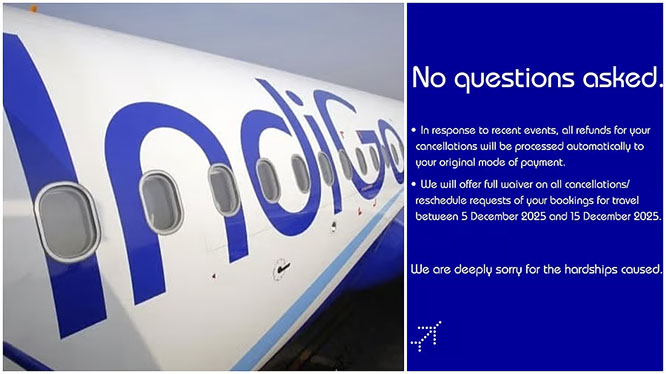
With IndiGo flight disruptions impacting thousands of passengers, the airline on Saturday said that it will offer full waiver on all cancellations/reschedule requests for travel bookings between December 5, 2025 and December 15, 2025.

Earlier in the day, the civil aviation ministry had directed the airline to complete the ticket refund process for the cancelled flights by Sunday evening, as well as ensure baggage separated from the travellers are delivered in the next two days.

In a post on X, titled 'No questions asked', IndiGo wrote, "In response to recent events, all refunds for your cancellations will be processed automatically to your original mode of payment."

"We are deeply sorry for the hardships caused," it further added.

Several passengers, however, complained of not getting full refund as promised by the airline.

Netizens have shared screenchots of getting charged for airline cancellation fee and convenience fee.

"Please tell me why u have did this airline cancellation charges when u say full amount will be refunded (sic)," a user wrote sharing a screenshot of the refund page.

"Well, but you have still debited the convenience charges," wrote another.

Passengers have also raised concerns about the "cancel" option being disabled on the IndiGo app. "First enable the 'Cancel' button on your App & offer full refund on tickets cancelled by customers between the said dates," wrote a user.

A day after the country's largest airline, IndiGo, cancelled more than 1,000 flights and caused disruptions for the fifth day on Saturday, the ministry said that any delay or non-compliance in refund processing will invite immediate regulatory action.

The refund process for all cancelled or disrupted flights must be completed by 8 pm on Sunday, the ministry said in a statement.

"Airlines have also been instructed not to levy any rescheduling charges for passengers whose travel plans were affected by cancellations," it said.

On Saturday, more than 400 flights were cancelled at various airports.

IndiGo has also been instructed to set up dedicated passenger support and refund facilitation cells.

Comments

Add new comment

  • Coastaldigest.com reserves the right to delete or block any comments.
  • Coastaldigset.com is not responsible for its readers’ comments.
  • Comments that are abusive, incendiary or irrelevant are strictly prohibited.
  • Please use a genuine email ID and provide your name to avoid reject.
News Network
December 7,2025

envoy.jpg

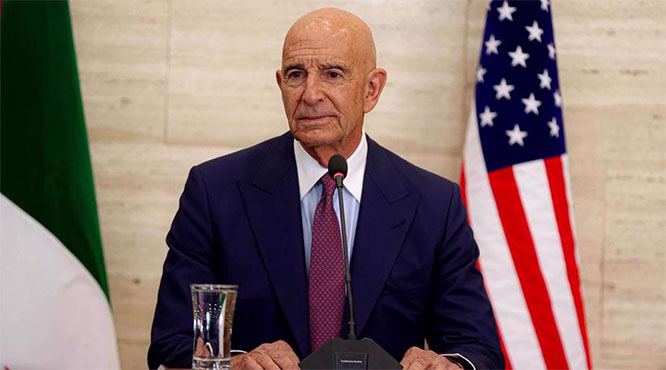
Since 1946, the United States has attempted 93 coups or “regime change” operations across the world — including two in Iran, US Special Envoy for Syria Tom Barrack has admitted.

Speaking to the UAE-based IMI Media Group, in remarks published by The National, Barrack said Washington tried twice to overthrow the Iranian government but failed both times. 

“For (Trump) then to be imputed with regime change — we had two regime changes in Iran already. Neither one worked. So I think wisely leave it to the region to solve,” said Barrack, who also serves as the US ambassador to Turkey.

His comments come six months after the US joined Israel in airstrikes against Iran during ongoing indirect nuclear negotiations between Tehran and Washington.

On June 13, Israel launched an attack on Iran that killed at least 1,064 people and hit civilian infrastructure. Days later, the United States targeted three nuclear facilities — Fordow, Natanz and Isfahan — in what Iran called a clear violation of international law. Iranian retaliation eventually forced a halt to the assault on June 24.

Barrack further claimed that US President Donald Trump and Foreign Secretary Marco Rubio are “not into regime change” and prefer a regional approach driven by Middle Eastern countries themselves. According to him, regional dialogue and non-interference by outside powers offer a more durable path forward.

He added that Washington is still open to an agreement with Tehran if Iranian authorities show “seriousness” and willingness to engage constructively.

However, Iran maintains the US has not shown readiness for meaningful talks. In an interview with Japan’s Kyodo News, Iranian Foreign Minister Abbas Araghchi said negotiations could advance only if Washington acknowledges Iran’s right to peaceful nuclear energy and lifts unilateral sanctions.

Comments

Add new comment

  • Coastaldigest.com reserves the right to delete or block any comments.
  • Coastaldigset.com is not responsible for its readers’ comments.
  • Comments that are abusive, incendiary or irrelevant are strictly prohibited.
  • Please use a genuine email ID and provide your name to avoid reject.