IIT scientists use waste onion skin to generate electricity

Agencies
December 18, 2017

New Delhi, Dec 18: Scientists at IIT Kharagpur have used waste onion skins to develop an inexpensive device that can generate 'green' electricity from body movements and may power pacemakers, smart pills and wearable electronics.

The non-toxic, biodegradable and biocompatible device takes advantage of the suitable piezoelectric properties of the onion skin, researchers said.

Piezoelectric materials have the ability to convert energy from everyday mechanical motions into electricity.

"This homespun inexpensive innovative finding can be a breakthrough scientific research in a new direction; even common people can generate energy in any circumstances using this simple novel cost-effective idea," Bhanu Bhusan Khatua, a professor at Indian Institute of Technology (IIT) Kharagpur in West Bengal said.

Increasing population, industrialisation, and ubiquitous use of electronics and vehicles are playing a huge role in destroying the environment day by day.

The rising burden on fossil fuels and depletion of natural resources has made the development of sustainable and alternative green energy technologies a pressing requirement in current energy deficiency world, researchers said.

Piezoelectric materials can be used to convert simple body movements into green energy without adding any pollution to our environments.

However, piezoelectric nanogenerators are difficult to synthesise and are often very expensive. They are also usually highly toxic or pose environmental hazards, which means their use in real life application remains limited.

These drawbacks prompted researchers at IIT Kharagpur and Pohang University of Science and Technology in South Korea to develop a non-toxic, biodegradable and biocompatible piezoelectric nanogenerator (BPNG).

Among various cellulose containing bio-materials, onion skin is the most abundant bio-waste, said Khatua.

"This motivated us to study the piezoelectric coefficient of the onion skin and its suitability as a bio- piezoelectric material," Khatua said.

"The uniqueness of our work lies in the novelty of utilising naturally abundant biocompatible and biodegradable onion skin directly as efficient piezoelectric material, which is thrown as tonne-scale garbage in every day worldwide," he said.

The device could be used in various biomedical applications such as pacemakers powered by heartbeats or edible devices that can track health from inside the body.

Researchers estimate that the device could be manufactured easily at a cost of less than a rupee, with existing technologies. This would make the system accessible to people the economically weaker sections of the society.

To build the device, the researchers coated an onion skin with a thin layer of gold and added copper wires with silver paste. It was then encapsulated in polymers.

The nanogenerator is capable of harvesting several types of mechanical energies, including body movements, wind flow and even machine vibrations.

The device developed by researchers has an output of 18 volts and can turn on 30 green LEDs under repeated human finger touch response, according to the study published in the journal NanoEnergy.

The device could withstand repeated cycles of pressing and releasing for up to five months. The voltage generated remained almost unchanged even after long cycles, indicating good mechanical stability of the device for bio-medical applications, researchers said.

"We also studied the durability of the device under sewing machine vibration for 10,000 cycles. From the result it can easily be said that the device had enough mechanical durability and chemical stability for realistic applications," Khatua said.

The researchers, including Sumanta Kumar Karan and Sandip Maiti from IIT, are optimistic about commercialising the technology soon, although more research is required before it can be realised in practical applications.

Comments

Add new comment

  • Coastaldigest.com reserves the right to delete or block any comments.
  • Coastaldigset.com is not responsible for its readers’ comments.
  • Comments that are abusive, incendiary or irrelevant are strictly prohibited.
  • Please use a genuine email ID and provide your name to avoid reject.
News Network
December 2,2025

DKSsiddu.jpg

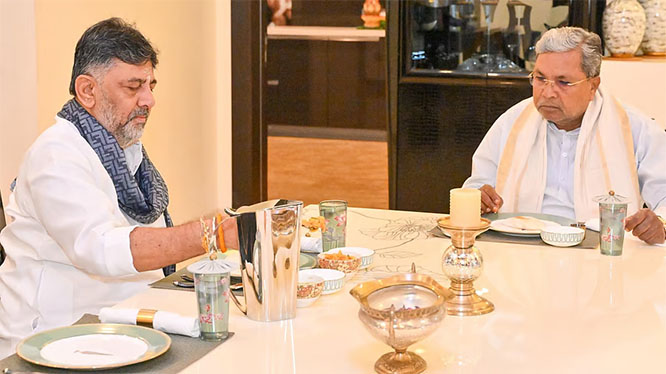
Bengaluru: 'Nati koli saaru' (country chicken curry) considered one of Chief Minister Siddaramaiah’s favourites along with steaming hot idlis was on the breakfast menu at Deputy CM D K Shivakumar’s residence on Tuesday, according to official sources.

The spread also included 'nati koli' fry, vada and pongal, among other items, they said.

In an apparent show of unity, Siddaramaiah visited Shivakumar’s residence for breakfast, just days after the two leaders shared a meal amid a simmering power tussle in the state Congress.

Siddaramaiah drove to the Deputy CM’s residence in Sadashivanagar, where he was received by Shivakumar and his brother D K Suresh, who is a former Congress MP.

Suresh and Kunigal MLA H D Ranganath, a relative of Shivakumar, joined them for breakfast, which featured a mix of vegetarian and non-vegetarian dishes.

Speaking to reporters later, Siddaramaiah said Shivakumar had invited him during his visit to the CM’s residence for breakfast on Saturday.

Asked about the difference between the two meals, the chief minister said, "At his (Shivakumar’s) house it was non-veg, while at my house it was veg. He is a vegetarian, I am a non-vegetarian. I had not prepared non-veg. I told DK to get chicken from the village as you won’t get the original in Bengaluru."

Shivakumar said he had initially invited Siddaramaiah to his residence, but the CM had suggested visiting his place first and reciprocating later. "It was a vegetarian breakfast at the CM’s house on Saturday," he noted.

"Today, I invited him (the CM) to my house. He enjoyed the breakfast, which had his Mysuru taste," Shivakumar added. At this point, Siddaramaiah remarked that Shivakumar’s wife is also from Mysuru.

Saturday’s breakfast at Siddaramaiah’s official residence, held as part of efforts by the Congress high command to ease tensions in the leadership dispute between the two, reportedly included idlis and sambar, according to official sources.

Comments

Add new comment

  • Coastaldigest.com reserves the right to delete or block any comments.
  • Coastaldigset.com is not responsible for its readers’ comments.
  • Comments that are abusive, incendiary or irrelevant are strictly prohibited.
  • Please use a genuine email ID and provide your name to avoid reject.
News Network
December 6,2025

pilot.jpg

New Delhi: IndiGo, India’s largest airline, faced major operational turbulence this week after failing to prepare for new pilot-fatigue regulations issued by the Directorate General of Civil Aviation (DGCA). The stricter rules—designed to improve flight safety—took effect in phases through 2024, with the latest implementation on November 1. IndiGo has acknowledged that inadequate roster planning led to widespread cancellations and delays.

Below are the key DGCA rules that affected IndiGo’s operations:

1. Longer Mandatory Weekly Rest

Weekly rest for pilots has been increased from 36 hours to 48 hours.

The government says the extended break is essential to curb cumulative fatigue. This rule remains in force despite the current crisis.

2. Cap on Night Landings

Pilots can now perform only two night landings per week—a steep reduction from the earlier limit of six.

Night hours, defined as midnight to early morning, are considered the least alert period for pilots.

Given the disruptions, this rule has been temporarily relaxed for IndiGo until February 10.

3. Reduced Maximum Night Flight Duty

Flight duty that stretches into the night is now capped at 10 hours.

This measure has also been kept on hold for IndiGo until February 10 to stabilize operations.

4. Weekly Rest Cannot Be Replaced With Personal Leave

Airlines can no longer count a pilot’s personal leave as part of the mandatory 48-hour rest.

Pilots say this closes a loophole that previously reduced actual rest time.

Currently, all airlines are exempt from this rule to normalise travel.

5. Mandatory Fatigue Monitoring

Airlines must submit quarterly fatigue reports along with corrective actions to DGCA.

This system aims to create a transparent fatigue-tracking framework across the industry.

The DGCA has stressed that these rules were crafted to strengthen flight safety and align India with global fatigue-management standards. The temporary relaxations are expected to remain until February 2025, giving IndiGo time to stabilise its schedules and restore normal air travel.

Comments

Add new comment

  • Coastaldigest.com reserves the right to delete or block any comments.
  • Coastaldigset.com is not responsible for its readers’ comments.
  • Comments that are abusive, incendiary or irrelevant are strictly prohibited.
  • Please use a genuine email ID and provide your name to avoid reject.
coastaldigest.com news network
December 2,2025

karkala.jpg

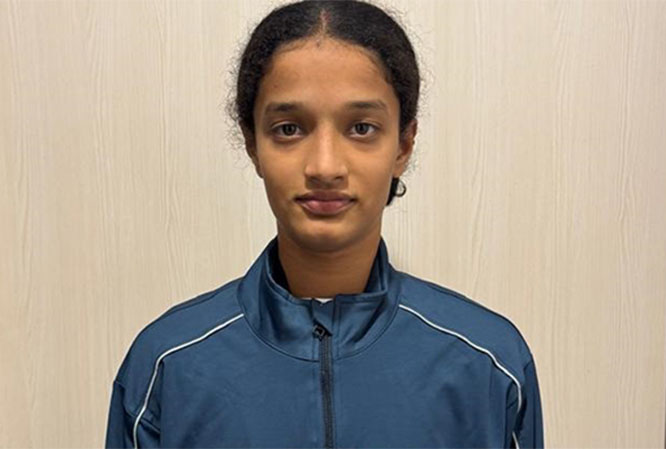
Udupi, Dec 2: A wave of regional pride is sweeping through Udupi district as Shagun S Verma Hegde, a talented Class 9 student from Christ King English Medium High School, Karkala, has been named the captain of the Indian National Team for the Under-15 Girls’ Volleyball Championship.

Shagun holds the unique distinction of being the sole player from Karnataka selected to represent the country in the prestigious international tournament. The championship, organized by the School Games Federation, is scheduled to take place in Shangluo, China, from December 3 to 13, where Shagun will lead the national squad.

A Remarkable Journey to the Top

Shagun’s selection is a testament to her dedication and exceptional skill on the court. Her journey included several rigorous rounds of selection:

•    She was the only player from Udupi district to qualify for the state-level selection camp.

•    Out of eight players from Karnataka who advanced to the national selection camp in Pune, Maharashtra, Shagun was the only one to secure a place in the final national squad.

•    The national camp saw participation from approximately 200 players, which was shortlisted to 23. Shagun not only made the final cut but was also ranked as the second-best player overall, solidifying her leadership role.

Shagun, who is the daughter of Sandesh Verma and Shruthiraj of Kallotte, Karkala, has trained under experienced coaches Santosh D’Souza, Jeevan D’Silva, Jairaj Poojary, and Ramesh. Her selection as the team captain has brought profound honour to her family, school, the Udupi district, and the entire state of Karnataka.

Comments

Add new comment

  • Coastaldigest.com reserves the right to delete or block any comments.
  • Coastaldigset.com is not responsible for its readers’ comments.
  • Comments that are abusive, incendiary or irrelevant are strictly prohibited.
  • Please use a genuine email ID and provide your name to avoid reject.