



India 'absolutely needed' as permanent UN Security Council members: France

Agencies
May 7, 2019

United Nations, May 7: India and nations like Germany, Brazil and Japan are "absolutely needed" as permanent members of a reformed and enlarged UN Security Council to better reflect contemporary realities and the addition of these key members to the UN high-table is among France's "strategic" priorities, the French envoy to the UN has said.
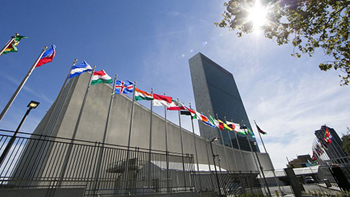
"In terms of policy, France and Germany have strong policy which is to work together to enlarge the Security Council and to succeed in terms of the negotiations that should lead to the enlargement of the Security Council that we consider absolutely needed to better reflect the world as it is. There is no question about it," France's Permanent Representative to the UN Francois Delattre told reporters here last week.

Speaking along side German envoy to the UN Christoph Heusgen at the end of Germany's Presidency of the Council for April, Delattre emphasised that France considers that "Germany, Japan, India, Brazil and a fair representation of Africa in particular are absolutely needed at the table to get towards a fairer representation of the Security Council. This is for us a matter of priority."

He underlined that Paris believes the enlargement of the Security Council with the addition of a few key members is "one of our strategic priorities."

Noting that when France and Germany launched their alliance for multi-materialism, he said it signifies that the two nations strongly believe in the UN as the core of today's global governance and that they strongly believe in "multi-lateralism and means that we are actively working to reform and in some respects to refound, reinvent multi-lateralism so that it is really efficient for the decades to come."

India is at the forefront of efforts at the UN to push for the long-pending reform of the Security Council, emphasising that it rightly deserves a place at the UN high table as a permanent member.

India's Permanent Representative to the UN Ambassador Syed Akbaruddin, speaking at the informal meeting of the Plenary on the Intergovernmental negotiations on the question of equitable representation on and increase in the membership of the Security Council earlier this year, had said that on the issue of 'Categories of Membership', a total of 113 Member States, out of 122 who submitted their positions in the Framework Document, support expansion in both of the existing categories specified in the Charter.

"In short, more than 90 per cent of the written submissions in the document are in favour of expansion in both categories of membership specified in the Charter," he had said.

Akbaruddin had said that while reform at the UN is a process rather than an event, "there is no process known to us here that has traversed winding pathways in the manner as this process of the Reform of the Security Council."

"In terms of inertia too, it has no peer. While the world is not what it was when we began the process, the objections to moving forward remain the same. While the global challenges of the 21st century have multiplied, we remain divided even about the process to adopt in order to move forward," he had said.

France has maintained that if the crises of recent times have confirmed the centrality of the UN, they have also reinforced the need to make the organisation more effective and more representative of the current balances in the world.

"That is why France pushes for the expansion of the Security Council by supporting the accession to a permanent seat of Germany, Brazil, India, Japan, as well as a greater presence of African countries," according to the Permanent Mission of France.

Comments

Add new comment

  • Coastaldigest.com reserves the right to delete or block any comments.
  • Coastaldigset.com is not responsible for its readers’ comments.
  • Comments that are abusive, incendiary or irrelevant are strictly prohibited.
  • Please use a genuine email ID and provide your name to avoid reject.
News Network
December 15,2025

Udupi, Dec 15: What was meant to be a post-pilgrimage gathering turned tragic in Padukere village of Brahmavar taluk, Udupi district, late Sunday night, when a clash among youths escalated into a fatal assault, leaving one man dead.

The victim has been identified as 30-year-old Santosh Mogaveera, a resident of Padukere.

According to preliminary information, the incident took place during a late-night drinking party involving a group of local youths who had recently returned after completing their pilgrimage to the Sabarimala shrine. An argument reportedly broke out among the group and soon escalated into a violent confrontation.

During the ensuing brawl, Santosh Mogaveera was allegedly assaulted and collapsed at the spot after sustaining serious injuries. He was rushed by local residents to a private hospital in Brahmavar, where doctors declared him dead.

On receiving information, senior police officials, including Brahmavar Circle Inspector Gopikrishna, Kota Police Sub-Inspector Praveen Kumar T, Station ASI Manthesh Jabagoudar, and head constables Pradeep and Ashok, visited the spot and conducted an inspection.

Police have taken four youths into custody in connection with the incident. A case has been registered at the Kota police station, and further investigation is underway to ascertain the exact sequence of events leading to the death.

Comments

Add new comment

  • Coastaldigest.com reserves the right to delete or block any comments.
  • Coastaldigset.com is not responsible for its readers’ comments.
  • Comments that are abusive, incendiary or irrelevant are strictly prohibited.
  • Please use a genuine email ID and provide your name to avoid reject.
coastaldigest.com news network
December 20,2025

Mangaluru, Dec 20: City Police Commissioner Sudheer Kumar Reddy has issued a high-alert warning to vehicle owners regarding a surge in cyber fraud targeting those looking to pay traffic violation fines. Fraudsters are reportedly exploiting recent government discount schemes on traffic penalties to deceive citizens.

The Scam: How Fraudsters Strike

Criminals are using SMS, WhatsApp, and social media to circulate suspicious links and APK files (Android application packages). They claim these apps allow users to pay e-challans at a discount.

•    Device Hacking: Downloading these unauthorized apps gives hackers full access to the victim's smartphone.

•    Financial Theft: Once the phone is compromised, fraudsters intercept OTPs and personal data to drain bank accounts.

•    Phishing Sites: Fake websites mimicking official portals are also being used to harvest banking credentials.

Already, two residents within Mangaluru city limits have reported significant financial losses after falling victim to these fraudulent apps.

Comments

Add new comment

  • Coastaldigest.com reserves the right to delete or block any comments.
  • Coastaldigset.com is not responsible for its readers’ comments.
  • Comments that are abusive, incendiary or irrelevant are strictly prohibited.
  • Please use a genuine email ID and provide your name to avoid reject.
News Network
December 13,2025

New Delhi: School-going children are picking up drug and smoking habits and engaging in consumption of alcohol, with the average age of introduction to such harmful substances found to be around 13 years, suggesting a need for earlier interventions as early as primary school, a multi-city survey by AIIMS-Delhi said.

The findings also showed substance use increased in higher grades, with grade XI/XII students two times more likely to report use of substances when compared with grade VIII students. This emphasised the importance of continued prevention and intervention through middle and high school.

The study led by Dr Anju Dhawan of AIIMS's National Drug Dependence Treatment Centre, published in the National Medical Journal of India this month, looks at adolescent substance use across diverse regions.

The survey included 5,920 students from classes 8, 9, 11 and 12 in urban government, private and rural schools across 10 cities -- Bengaluru, Chandigarh, Delhi, Dibrugarh, Hyderabad, Imphal, Jammu, Lucknow, Mumbai, and Ranchi. The data were collected between May 2018 and June 2019.

The average age of initiation for any substance was 12.9 (2.8) years. It was lowest for inhalants (11.3 years) followed by heroin (12.3 years) and opioid pharmaceuticals (without prescription; 12.5 years).

Overall, 15.1 per cent of participants reported lifetime use, 10.3 per cent reported past year use, and 7.2 per cent reported use in the past month of any substance, the study found.

The most common substances used in the past year, after tobacco (4 per cent) and alcohol (3.8 per cent), were opioids (2.8 per cent), followed by cannabis (2 per cent) and inhalants (1.9 per cent). Use of non-prescribed pharmaceutical opioids was most common among opioid users (90.2 per cent).

On being asked, 'Do you think this substance is easily available for a person of your age' separately for each substance category, nearly half the students (46.3 per cent) endorsed that tobacco products and more than one-third of the students (36.5 per cent) agreed that a person of their age can easily procure alcohol products.

Similarly, for Bhang (21.9 per cent), ganja/charas (16.1 per cent), inhalants (15.2 per cent), sedatives (13.7 per cent), opium and heroin (10 per cent each), the students endorsed that these can be easily procured.

About 95 per cent of the children, irrespective of their grade, agreed with the statement that 'drug use is harmful'.

The rates of substance use (any) among boys were significantly higher than those of girls for substance use (ever), use in the past year and use in the past 30 days. Compared to grade VIII students, grade IX students were more likely, and grade XI/XII students were twice as likely to have used any substance (ever).

The likelihood of past-year use of any substance was also higher for grade IX students and for grade XI/XII students as compared to grade VIII students.

About 40 per cent of students mentioned that they had a family member who used tobacco or alcohol each. The use of cannabis (any product) and opioid (any product) by a family member was reported by 8.2 per cent and 3.9 per cent of students, respectively, while the use of other substances, such as inhalants/sedatives by family was 2-3 per cent, the study found.

A relatively smaller percentage of students reported use of tobacco or alcohol among peers as compared to among family members, while a higher percentage reported inhalants, sedatives, cannabis or opioid use among peers.

Children using substances (past year) compared to non-users reported significantly higher any substance use by their family members and peers.

There were 25.7 per cent students who replied 'yes' to the question 'conflicts/fights often occur in your family'. Most students also replied affirmatively to 'family members are aware of how their time is being spent' and 'damily members are aware of with whom they spend their time'.

Comments

Add new comment

  • Coastaldigest.com reserves the right to delete or block any comments.
  • Coastaldigset.com is not responsible for its readers’ comments.
  • Comments that are abusive, incendiary or irrelevant are strictly prohibited.
  • Please use a genuine email ID and provide your name to avoid reject.