India bans onion exports; subcontinent has eye-watering prices

Agencies
October 3, 2019

Mumbai, Oct 3: From Kathmandu to Colombo, it's a kitchen nightmare: Onion prices have gone crazy.
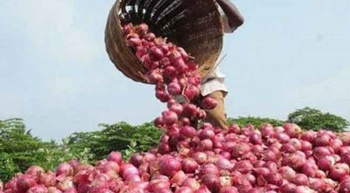
That's because India, the world's biggest seller of the Asian diet staple, has banned exports after extended Monsoon downpours delayed harvests and supplies shrivelled. And dedicated buyers across the region, like Nepalese housewife Seema Pokharel, are flummoxed.

"This is a terrible increase," said Pokharel, out shopping for vegetables in Kathmandu. "Onion prices have more than doubled in the last month alone."

Whether it's Pakistani chicken curry, Bangladeshi biryani or Indian sambar, Asian consumers have developed a serious dependence on Indian onion supplies for go-to dishes. Shorter shipment times than from rival exporters like China or Egypt play a crucial role in preserving the taste of the perishable commodity.

But last Sunday New Delhi banned all exports from India after local prices jumped to 4,500 rupees ($63.30) per 100 kg, their highest in nearly six years, due to the delay in summer-sown crop arrivals triggered by longer, heavier rains than usual.

Since the ban, countries such as Bangladesh have turned to the likes of Myanmar, Egypt, Turkey and China to increase supplies in a bid bring prices down, government officials and traders said.

But the hefty volumes lost will be hard to replace.

India exported 2.2 million tonnes of fresh onions in the 2018/19 fiscal year ended March 31, according to data from India's Agricultural and Processed Food Products Export Development Authority. That's more than half of all imports by Asian countries, traders estimate.

'TAKING ADVANTAGE'

Rising prices of alternative supplies will add to the headache for importers trying to get the vegetable from elsewhere, said Mohammad Idris, a trader based in Dhaka. In the Bangladesh capital, consumers are now being asked to pay 120 taka ($1.42) per kilogramme for their prized onions - twice the price a fortnight ago and the highest since December, 2013.

"Prices are going up elsewhere in Asia and Europe," said Idris. "Other exporting countries are taking advantage of the Indian ban" to raise their asking price.

In response to the crisis, the government of Bangladesh has initiated sales of subsidised onions through the state-run Trading Corporation of Bangladesh (TCB).

"We are looking for all possible options to import onions. Our target is to import in the shortest possible time," said TCB spokesman Humayun Kabir.

But the shipments from elsewhere - Iran and Turkey are also potential suppliers - that authorities in countries across the region are investigating will all take time.

"It takes one month when it comes from Egypt and about 25 days from China, while it takes only a few days from India," said Dhaka trader Idris.

The need for alternative imports is so severe, though, that countries like Sri Lanka have already placed orders with Egypt and China, said G Rajendran, president of the Essential Food Commodities, Importers and Traders Association.

Onion prices in Sri Lanka have risen by 50% in a week, to 280-300 Sri Lankan rupees ($1.7) per kilogramme.

'DOUBLE THE PRICE'

For other countries, there may be little option but to sit tight and hope for the best.

Malaysia, the second-biggest buyer of Indian onions, expects the ban to be temporary and sees no reason to panic, said Sim Tze Tzin, deputy minister of agriculture.

But even India has been importing onions from Egypt in an effort to calm prices. And there won't be any meaningful drop in prices before summer-sown crops start to hit the market, said Ajit Shah, president of the Mumbai-based Onion Exporters' Association.

That's not expected until mid-November, meaning the export ban isn't going away in the near term.

"India could resume exports once prices drop, but it will take time," said Shah. "Until India resumes exports, supplies will remain limited in Asia."

For now, consumers like Kathmandu shopper Pokharel are having to change habits across Asia.

"I went to buy 5 kilogrammes of onions for our five-member family but ended up buying only 3 kilogrammes due to higher prices," said Afroza Mimi, a Dhaka housewife on a shopping expedition the day after India imposed the export ban.

"They (traders) are selling old stock nearly at double the price. This is crazy."

($1 = 71.0900 Indian rupees) ($1 = 84.4900 Bangladesh taka) ($1 = 182.2000 Sri Lankan rupees)

Comments

Add new comment

  • Coastaldigest.com reserves the right to delete or block any comments.
  • Coastaldigset.com is not responsible for its readers’ comments.
  • Comments that are abusive, incendiary or irrelevant are strictly prohibited.
  • Please use a genuine email ID and provide your name to avoid reject.
coastaldigest.com news network
December 20,2025

Mangaluru, Dec 20: City Police Commissioner Sudheer Kumar Reddy has issued a high-alert warning to vehicle owners regarding a surge in cyber fraud targeting those looking to pay traffic violation fines. Fraudsters are reportedly exploiting recent government discount schemes on traffic penalties to deceive citizens.

The Scam: How Fraudsters Strike

Criminals are using SMS, WhatsApp, and social media to circulate suspicious links and APK files (Android application packages). They claim these apps allow users to pay e-challans at a discount.

•    Device Hacking: Downloading these unauthorized apps gives hackers full access to the victim's smartphone.

•    Financial Theft: Once the phone is compromised, fraudsters intercept OTPs and personal data to drain bank accounts.

•    Phishing Sites: Fake websites mimicking official portals are also being used to harvest banking credentials.

Already, two residents within Mangaluru city limits have reported significant financial losses after falling victim to these fraudulent apps.

Comments

Add new comment

  • Coastaldigest.com reserves the right to delete or block any comments.
  • Coastaldigset.com is not responsible for its readers’ comments.
  • Comments that are abusive, incendiary or irrelevant are strictly prohibited.
  • Please use a genuine email ID and provide your name to avoid reject.
News Network
December 20,2025

train.jpg

At least seven elephants were killed and one calf injured after a herd collided with the Sairang-New Delhi Rajdhani Express in Assam's Hojai on Saturday morning, leading to disruption of rail services. 

The Sairang-New Delhi Rajdhani Express struck a herd of elephants, resulting in the derailment of the locomotive and five coaches. No passenger casualties or injuries were reported, officials said.

The New Delhi-bound train met with the accident around 2.17 am, PTI reported. The Sairang-New Delhi Rajdhani Express connects Mizoram's Sairang (near Aizawl) to Anand Vihar Terminal (Delhi). 

Railway has issued helpline numbers at the Guwahati Railway Station:-

•    0361-2731621
•    0361-2731622
•    0361-2731623

The accident site is located about 126 km from Guwahati. Following the incident, accident relief trains and railway officials rushed to the spot to initiate rescue operations.

Train Services Disrupted

Sources said that due to the derailment and elephant body parts scattered on the tracks, train services to Upper Assam and other parts of the Northeast were affected.

Passengers from the affected coaches were temporarily accommodated in vacant berths available in other coaches of the train. Once the train reaches Guwahati, additional coaches will be attached to accommodate all passengers, after which the train will resume its onward journey.

The incident occurred at a location that is not a designated elephant corridor. The loco pilot, upon spotting the herd on the tracks, applied emergency brakes. Despite this, the elephants dashed into the train, leading to the collision and derailment.

Last month, an elephant was killed after being hit by a train in Dhupguri in West Bengal's Jalpaiguri district. The incident took place on November 30. 

The adult elephant was killed on the spot, and a calf was discovered lying injured beside the tracks. 

Over 70 Elephants Killed In Train Collisions Over Last 5 Years

At least 79 elephants have died in train collisions across the country in the last five years, the Environment Ministry had informed Parliament in August.

In a written reply in the Lok Sabha, Minister of State for Environment Kirti Vardhan Singh had said the figure is based on reports from state governments and Union Territory administrations for the period 2020-21 to 2024-25.

He said that the ministry does not maintain consolidated data on the deaths of other wild animals on railway tracks, including in designated elephant corridors.

Singh confirmed that three elephants, including a mother and her calf, were killed on July 18 this year after being hit by a speeding express train on the Kharagpur-Tatanagar section in West Bengal's Paschim Midnapore district. The incident took place near Banstala between Jhargram and Banstala stations.

The minister said several measures have been taken jointly by the Environment Ministry and the Railways to prevent such accidents.

These include imposing speed restrictions in elephant habitats, pilot projects such as seismic sensor-based detection of elephants near tracks and construction of underpasses, ramps and fencing at vulnerable points.

The Wildlife Institute of India, in consultation with the ministry and other stakeholders, has also issued guidelines titled 'Eco-friendly Measures to Mitigate Impacts of Linear Infrastructure' to help agencies design railways and other projects in ways that reduce human-animal conflicts.

Singh added that capacity-building workshops were conducted for railway officials at the Wildlife Institute of India in 2023 and 2024 to raise awareness on elephant conservation and protection.

A detailed report titled 'Suggested Measures to Mitigate Elephant & Other Wildlife Train Collisions on Vulnerable Railway Stretches in India' had also been prepared after surveys across 127 railway stretches covering 3,452 km.

Of these, 77 stretches spanning 1,965 km in 14 states were prioritised for mitigation, with site-specific interventions suggested. 

Comments

Add new comment

  • Coastaldigest.com reserves the right to delete or block any comments.
  • Coastaldigset.com is not responsible for its readers’ comments.
  • Comments that are abusive, incendiary or irrelevant are strictly prohibited.
  • Please use a genuine email ID and provide your name to avoid reject.
News Network
December 16,2025

bengal.jpg

The deletion of over 58 lakh names from West Bengal’s draft electoral rolls following a Special Intensive Revision (SIR) has sparked widespread concern and is likely to deepen political tensions in the poll-bound state.

According to the Election Commission, the revision exercise has identified 24 lakh voters as deceased, 19 lakh as relocated, 12 lakh as missing, and 1.3 lakh as duplicate entries. The draft list, published after the completion of the first phase of SIR, aims to remove errors and duplication from the electoral rolls.

However, the scale of deletions has raised fears that a large number of eligible voters may have been wrongly excluded. The Election Commission has said that individuals whose names are missing can file objections and seek corrections. The final voter list is scheduled to be published in February next year, after which the Assembly election announcement is expected. Notably, the last Special Intensive Revision in Bengal was conducted in 2002.

The development has intensified the political row over the SIR process. Chief Minister Mamata Banerjee and her Trinamool Congress have strongly opposed the exercise, accusing the Centre and the Election Commission of attempting to disenfranchise lakhs of voters ahead of the elections.

Addressing a rally in Krishnanagar earlier this month, Banerjee urged people to protest if their names were removed from the voter list, alleging intimidation during elections and warning of serious consequences if voting rights were taken away.

The BJP, meanwhile, has defended the revision and accused the Trinamool Congress of politicising the issue to protect what it claims is an illegal voter base. Leader of the Opposition Suvendu Adhikari alleged that the ruling party fears losing power due to the removal of deceased, fake, and illegal voters.

The controversy comes amid earlier allegations by the Trinamool Congress that excessive work pressure during the SIR led to the deaths by suicide of some Booth Level Officers (BLOs), for which the party blamed the Election Commission. With the draft list now out, another round of political confrontation appears imminent.

As objections begin to be filed, the focus will be on whether the correction mechanism is accessible, transparent, and timely—critical factors in ensuring that no eligible voter is denied their democratic right ahead of a crucial election.

Comments

Add new comment

  • Coastaldigest.com reserves the right to delete or block any comments.
  • Coastaldigset.com is not responsible for its readers’ comments.
  • Comments that are abusive, incendiary or irrelevant are strictly prohibited.
  • Please use a genuine email ID and provide your name to avoid reject.