



India bans onion exports; subcontinent has eye-watering prices

Agencies
October 3, 2019

Mumbai, Oct 3: From Kathmandu to Colombo, it's a kitchen nightmare: Onion prices have gone crazy.
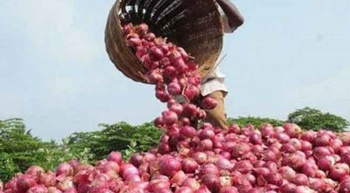
That's because India, the world's biggest seller of the Asian diet staple, has banned exports after extended Monsoon downpours delayed harvests and supplies shrivelled. And dedicated buyers across the region, like Nepalese housewife Seema Pokharel, are flummoxed.

"This is a terrible increase," said Pokharel, out shopping for vegetables in Kathmandu. "Onion prices have more than doubled in the last month alone."

Whether it's Pakistani chicken curry, Bangladeshi biryani or Indian sambar, Asian consumers have developed a serious dependence on Indian onion supplies for go-to dishes. Shorter shipment times than from rival exporters like China or Egypt play a crucial role in preserving the taste of the perishable commodity.

But last Sunday New Delhi banned all exports from India after local prices jumped to 4,500 rupees ($63.30) per 100 kg, their highest in nearly six years, due to the delay in summer-sown crop arrivals triggered by longer, heavier rains than usual.

Since the ban, countries such as Bangladesh have turned to the likes of Myanmar, Egypt, Turkey and China to increase supplies in a bid bring prices down, government officials and traders said.

But the hefty volumes lost will be hard to replace.

India exported 2.2 million tonnes of fresh onions in the 2018/19 fiscal year ended March 31, according to data from India's Agricultural and Processed Food Products Export Development Authority. That's more than half of all imports by Asian countries, traders estimate.

'TAKING ADVANTAGE'

Rising prices of alternative supplies will add to the headache for importers trying to get the vegetable from elsewhere, said Mohammad Idris, a trader based in Dhaka. In the Bangladesh capital, consumers are now being asked to pay 120 taka ($1.42) per kilogramme for their prized onions - twice the price a fortnight ago and the highest since December, 2013.

"Prices are going up elsewhere in Asia and Europe," said Idris. "Other exporting countries are taking advantage of the Indian ban" to raise their asking price.

In response to the crisis, the government of Bangladesh has initiated sales of subsidised onions through the state-run Trading Corporation of Bangladesh (TCB).

"We are looking for all possible options to import onions. Our target is to import in the shortest possible time," said TCB spokesman Humayun Kabir.

But the shipments from elsewhere - Iran and Turkey are also potential suppliers - that authorities in countries across the region are investigating will all take time.

"It takes one month when it comes from Egypt and about 25 days from China, while it takes only a few days from India," said Dhaka trader Idris.

The need for alternative imports is so severe, though, that countries like Sri Lanka have already placed orders with Egypt and China, said G Rajendran, president of the Essential Food Commodities, Importers and Traders Association.

Onion prices in Sri Lanka have risen by 50% in a week, to 280-300 Sri Lankan rupees ($1.7) per kilogramme.

'DOUBLE THE PRICE'

For other countries, there may be little option but to sit tight and hope for the best.

Malaysia, the second-biggest buyer of Indian onions, expects the ban to be temporary and sees no reason to panic, said Sim Tze Tzin, deputy minister of agriculture.

But even India has been importing onions from Egypt in an effort to calm prices. And there won't be any meaningful drop in prices before summer-sown crops start to hit the market, said Ajit Shah, president of the Mumbai-based Onion Exporters' Association.

That's not expected until mid-November, meaning the export ban isn't going away in the near term.

"India could resume exports once prices drop, but it will take time," said Shah. "Until India resumes exports, supplies will remain limited in Asia."

For now, consumers like Kathmandu shopper Pokharel are having to change habits across Asia.

"I went to buy 5 kilogrammes of onions for our five-member family but ended up buying only 3 kilogrammes due to higher prices," said Afroza Mimi, a Dhaka housewife on a shopping expedition the day after India imposed the export ban.

"They (traders) are selling old stock nearly at double the price. This is crazy."

($1 = 71.0900 Indian rupees) ($1 = 84.4900 Bangladesh taka) ($1 = 182.2000 Sri Lankan rupees)

Comments

Add new comment

  • Coastaldigest.com reserves the right to delete or block any comments.
  • Coastaldigset.com is not responsible for its readers’ comments.
  • Comments that are abusive, incendiary or irrelevant are strictly prohibited.
  • Please use a genuine email ID and provide your name to avoid reject.
News Network
December 19,2025

Saudi Arabia has abolished fees on expatriate workers employed in licensed industrial establishments, signaling a strong push to empower national factories and enhance the Kingdom’s global industrial competitiveness. The move reflects the leadership’s commitment to building a sustainable and resilient industrial economy under Saudi Vision 2030.

The decision was approved by the Council of Ministers, chaired by Crown Prince and Prime Minister Mohammed bin Salman, following a recommendation from the Council of Economic and Development Affairs (CEDA). It forms part of a broader strategy to support, modernize, and strengthen the industrial sector.

By removing fees on foreign workers, industrial establishments gain greater operational flexibility and relief from financial pressures. This is expected to help factories expand production, improve efficiency, and compete more effectively in international markets, while reinforcing long-term sustainability.

The initiative aligns closely with Saudi Vision 2030, which identifies industry as a key pillar of economic diversification. A competitive and resilient industrial base is viewed as essential for driving innovation, attracting investment, and sustaining long-term economic growth.

Overall, the fee exemption underscores the Kingdom’s commitment to creating a supportive environment for industrial development and ensuring that Saudi factories remain globally competitive and capable of leading the nation’s economic transformation.

Comments

Add new comment

  • Coastaldigest.com reserves the right to delete or block any comments.
  • Coastaldigset.com is not responsible for its readers’ comments.
  • Comments that are abusive, incendiary or irrelevant are strictly prohibited.
  • Please use a genuine email ID and provide your name to avoid reject.
News Network
December 16,2025

bengal.jpg

The deletion of over 58 lakh names from West Bengal’s draft electoral rolls following a Special Intensive Revision (SIR) has sparked widespread concern and is likely to deepen political tensions in the poll-bound state.

According to the Election Commission, the revision exercise has identified 24 lakh voters as deceased, 19 lakh as relocated, 12 lakh as missing, and 1.3 lakh as duplicate entries. The draft list, published after the completion of the first phase of SIR, aims to remove errors and duplication from the electoral rolls.

However, the scale of deletions has raised fears that a large number of eligible voters may have been wrongly excluded. The Election Commission has said that individuals whose names are missing can file objections and seek corrections. The final voter list is scheduled to be published in February next year, after which the Assembly election announcement is expected. Notably, the last Special Intensive Revision in Bengal was conducted in 2002.

The development has intensified the political row over the SIR process. Chief Minister Mamata Banerjee and her Trinamool Congress have strongly opposed the exercise, accusing the Centre and the Election Commission of attempting to disenfranchise lakhs of voters ahead of the elections.

Addressing a rally in Krishnanagar earlier this month, Banerjee urged people to protest if their names were removed from the voter list, alleging intimidation during elections and warning of serious consequences if voting rights were taken away.

The BJP, meanwhile, has defended the revision and accused the Trinamool Congress of politicising the issue to protect what it claims is an illegal voter base. Leader of the Opposition Suvendu Adhikari alleged that the ruling party fears losing power due to the removal of deceased, fake, and illegal voters.

The controversy comes amid earlier allegations by the Trinamool Congress that excessive work pressure during the SIR led to the deaths by suicide of some Booth Level Officers (BLOs), for which the party blamed the Election Commission. With the draft list now out, another round of political confrontation appears imminent.

As objections begin to be filed, the focus will be on whether the correction mechanism is accessible, transparent, and timely—critical factors in ensuring that no eligible voter is denied their democratic right ahead of a crucial election.

Comments

Add new comment

  • Coastaldigest.com reserves the right to delete or block any comments.
  • Coastaldigset.com is not responsible for its readers’ comments.
  • Comments that are abusive, incendiary or irrelevant are strictly prohibited.
  • Please use a genuine email ID and provide your name to avoid reject.
News Network
December 16,2025

Mangaluru, Dec 16: The Mangaluru City police have significantly escalated their campaign against drug trafficking, arresting 25 individuals and booking 12 cases under the Narcotic Drugs and Psychotropic Substances (NDPS) Act between November 30 and December 13. The crackdown resulted in the seizure of a substantial quantity of illicit substances, including 685.6 grams of MDMA and 1.5 kg of ganja.

The success of this recent drive has been significantly boosted by the city’s innovative, QR code-based anonymous reporting system.

"The anonymous reporting system has received an encouraging response. Several recent arrests were made based on inputs received through this system, helping police tighten the noose around drug peddlers," said the City Police Commissioner.

The latest arrests contribute to a robust year-to-date record, underscoring the police's relentless commitment to combating the drug menace.

Up to December 14 this year, the police have registered a total of 107 cases of drug peddling, leading to the arrest of 219 peddlers. Furthermore, they have booked 562 cases of drug consumption, resulting in the arrest of 671 individuals.

The scale of the seizure for the year reflects the magnitude of the problem being tackled: police have seized 320.6 kg of ganja worth ₹88.7 lakh and 1.4 kg of MDMA valued at ₹1.2 crore. Other significant seizures include hydro-weed ganja worth ₹94.7 lakh and cocaine worth ₹1.9 lakh, among others.

The Commissioner emphasized a policy of rigorous enforcement: "We ensure that peddlers are caught red-handed so that they cannot later dispute the case or claim innocence."

To counter the rising trend of substance abuse among youth, the Mangaluru City police have rolled out uniform guidelines for random drug testing across educational institutions.

As part of the drive, tests were conducted in approximately 100 institutions, screening an estimated 5,500 to 6,000 students in the first phase. 20 students tested positive for drug consumption during the initial screening.

Students who tested positive have been provided counselling and are scheduled for re-testing in the second quarter. The testing will also be expanded to students not covered in the first phase. In a move to ensure strict implementation, police personnel were deployed in mufti in some institutions. Reiterating a zero-tolerance stance, the Commissioner confirmed that random testing will continue, and colleges have also been instructed to conduct drug tests at the time of admission to deter substance abuse from an early stage.

Comments

Add new comment

  • Coastaldigest.com reserves the right to delete or block any comments.
  • Coastaldigset.com is not responsible for its readers’ comments.
  • Comments that are abusive, incendiary or irrelevant are strictly prohibited.
  • Please use a genuine email ID and provide your name to avoid reject.
