



India lifted 271 mn people out of poverty in 10 yrs: UN

Agencies
July 12, 2019

United Nations, Jul 12: India lifted 271 million people out of poverty between 2006 and 2016, recording the fastest reductions in the multidimensional poverty index values during the period with strong improvements in areas such as "assets, cooking fuel, sanitation and nutrition," a report by the United Nations said.
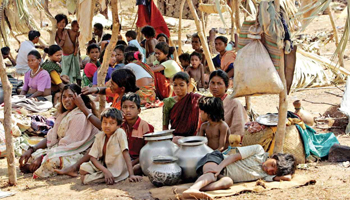
The 2019 global Multidimensional Poverty Index (MPI) from the UN Development Programme (UNDP), the Oxford Poverty and Human Development Initiative (OPHI) was released Thursday.

The report said that in the 101 countries studied – 31 low income, 68 middle income and 2 high income - 1.3 billion people are "multidimensionally poor", which means that poverty is defined not simply by income, but by a number of indicators, including poor health, poor quality of work and the threat of violence.

The report identifies 10 countries, with a combined population of around 2 billion people, to illustrate the level of poverty reduction, and all of them have shown statistically significant progress towards achieving Sustainable Development Goal 1, namely ending poverty "in all its forms, everywhere".

The 10 countries are Bangladesh, Cambodia, Democratic Republic of Congo, Ethiopia, Haiti, India, Nigeria, Pakistan, Peru and Vietnam.

The report said that within these 10 countries, data shows that 270 million people moved out of multidimensional poverty from one survey to the next.

"This progress was largely driven by South Asia. In India, there were 271 million fewer people in poverty in 2016 than in 2006, while in Bangladesh the number dropped by 19 million between 2004 and 2014," it said.

The report noted that of the 10 selected countries for which changes over time were analysed, India and Cambodia reduced their MPI values the fastest—and they did not leave the poorest groups behind.

India's MPI value reduced from 0.283 in 2005-06 to 0.123 in 2015-16.

Noting the examples of pro-poor reduction, where the poorest regions improved the fastest, the report said that Jharkhand in India reduced the incidence of multidimensional poverty from 74.9 per cent in 2005-06 to 46.5 per cent in 2015-16.

Mondol Kiri and Rattanak Kiri in Cambodia reduced it from 71.0 per cent to 55.9 per cent between 2010 and 2014.

Ethiopia, India and Peru significantly reduced deprivations in all 10 indicators, namely nutrition, sanitation, child mortality, drinking water, years of schooling, electricity, school attendance, housing, cooking fuel and assets.

In 2005-2006, the population in India living in multidimensional poverty stood at about 640 million people (55.1 per cent) and this reduced to 369 million people (27.9 per cent) living in poverty in 2015-16. India saw significant reductions in number of people who are multidimensionally poor and deprived in each of the 10 indicators over this time period.

India reduced deprivation in nutrition from 44.3 per cent in 2005-06 to 21.2 per cent in 2015-16, child mortality dropped from 4.5 per cent to 2.2 per cent, people deprived of cooking fuel reduced from 52.9 per cent to 26.2 per cent, deprivation in sanitation from 50.4 per cent to 24.6 per cent, those deprived of drinking water reduced from 16.6 per cent to 6.2 per cent.

Further more people gained access to electricity as deprivation was reduced from 29.1 per cent to 8.6 per cent, housing from 44.9 per cent to 23.6 per cent and assets deprivation from 37.6 per cent to 9.5 per cent.

The trends in these 10 countries also shine a light on where poverty reduction has been uneven, despite the good progress overall, it said.

"In all 10 countries rural areas are poorer than urban areas. In Cambodia, Haiti, India and Peru poverty reduction in rural areas outpaced that in urban areas–demonstrating pro-poor development–and in Bangladesh and Democratic Republic of the Congo poverty fell at the same speed in rural and urban areas,” it added.

The report also showed that children suffer poverty more intensely than adults and are more likely to be deprived in all 10 of the MPI indicators, lacking essentials such as clean water, sanitation, adequate nutrition or primary education.

Child poverty fell markedly faster than adult poverty in Bangladesh, Cambodia, Haiti, India and Peru. But children fell further behind in Ethiopia, and their progress—together with that of adults—stalled in Democratic Republic of the Congo and Pakistan.

Globally, of the 1.3 billion people who are multidimensionally poor, more than two-thirds of them—886 million— now live in middle-income countries. A further 440 million live in low-income countries.

Even more staggering, worldwide, one in three children is multidimensionally poor, compared to one in six adults. That means that nearly half of the people living in multidimensional poverty—663 million— are children, with the youngest children bearing the greatest burden. The vast majority of these children, around 85 per cent, live in South Asia and Sub-Saharan Africa, split roughly equally between the two regions.

The report underscored that the traditional concept of poverty is outdated, demonstrating more clearly than ever that labelling countries - or even households - as rich and poor is an oversimplification.

"To fight poverty, one needs to know where poor people live. They are not evenly spread across a country, not even within a household," UNDP Administrator Achim Steiner said.

The report also highlighted a positive trend that those furthest behind are moving up the fastest.

Comments

Add new comment

  • Coastaldigest.com reserves the right to delete or block any comments.
  • Coastaldigset.com is not responsible for its readers’ comments.
  • Comments that are abusive, incendiary or irrelevant are strictly prohibited.
  • Please use a genuine email ID and provide your name to avoid reject.
News Network
December 15,2025

Udupi, Dec 15: What was meant to be a post-pilgrimage gathering turned tragic in Padukere village of Brahmavar taluk, Udupi district, late Sunday night, when a clash among youths escalated into a fatal assault, leaving one man dead.

The victim has been identified as 30-year-old Santosh Mogaveera, a resident of Padukere.

According to preliminary information, the incident took place during a late-night drinking party involving a group of local youths who had recently returned after completing their pilgrimage to the Sabarimala shrine. An argument reportedly broke out among the group and soon escalated into a violent confrontation.

During the ensuing brawl, Santosh Mogaveera was allegedly assaulted and collapsed at the spot after sustaining serious injuries. He was rushed by local residents to a private hospital in Brahmavar, where doctors declared him dead.

On receiving information, senior police officials, including Brahmavar Circle Inspector Gopikrishna, Kota Police Sub-Inspector Praveen Kumar T, Station ASI Manthesh Jabagoudar, and head constables Pradeep and Ashok, visited the spot and conducted an inspection.

Police have taken four youths into custody in connection with the incident. A case has been registered at the Kota police station, and further investigation is underway to ascertain the exact sequence of events leading to the death.

Comments

Add new comment

  • Coastaldigest.com reserves the right to delete or block any comments.
  • Coastaldigset.com is not responsible for its readers’ comments.
  • Comments that are abusive, incendiary or irrelevant are strictly prohibited.
  • Please use a genuine email ID and provide your name to avoid reject.
News Network
December 5,2025

indigoCEO.jpg

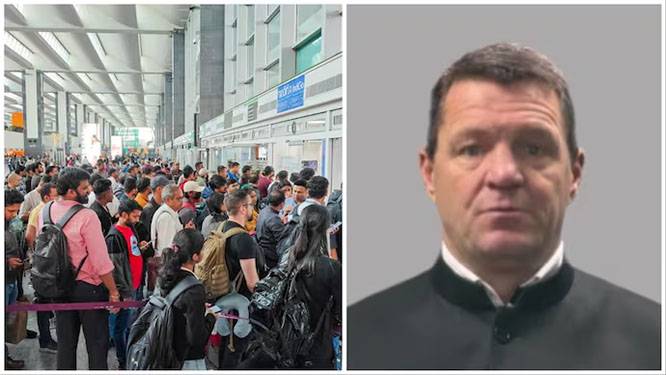
New Delhi, Dec 5: IndiGo CEO Pieter Elbers issued a public apology this evening after more than a thousand flights were cancelled today, making it the "most severely impacted day" in terms of cancellations. The biggest airline of the country cancelled "more than half" of its daily number of flights on Friday, said Elbers. He also said that even though the crisis will persist on Saturday, the airline anticipates fewer than 1,000 flight cancellations.

"Full normalisation is expected between December 10 and 15, though IndiGo cautions that recovery will take time due to the scale of operations," the IndiGo CEO said. 

IndiGo operates around 2,300 domestic and international flights daily.

Pieter Elbers, while apologising for the major inconvenience due to delays and cancellations, said the situation is a result of various causes.

The crisis at IndiGo stems from new regulations that boost pilots' weekly rest requirements by 12 hours to 48 and allow only two night-time landings per week, down from six. IndiGo has attributed the mass cancellations to "misjudgment and planning gaps".

Elbers also listed three lines of action that the airline will adopt to address the issue.

"Firstly, customer communication and addressing your needs, for this, messages have been sent on social media. And just now, a more detailed communication with information, refunds, cancellations and other customer support measures was sent," he said.

The airline has also stepped up its call centre capacity.

"Secondly, due to yesterday's situation, we had customers stranded mostly at the nation's largest airports. Our focus was for all of them to be able to travel today itself, which will be achieved. For this, we also ask customers whose flights are cancelled not to come to the airports as notifications are sent," the CEO said.

"Thirdly, cancellations were made for today to align our crew and planes to be where they need to start tomorrow morning afresh. Earlier measures of the last few days, regrettable, have proven not to be enough, but we have decided today to reboot all our systems and schedules, resulting in the highest numbers of cancellations so far, but imperative for progressive improvements starting from tomorrow," he added.

As airports witnessed chaotic scenes, the Directorate General of Civil Aviation (DGCA) stepped in to grant IndiGo a temporary exemption from stricter night duty rules for pilots. It also allowed substitution of leaves with a weekly rest period. 

Civil Aviation Minister Ram Mohan Naidu has said a high-level inquiry will be ordered and accountability will be fixed.

Comments

Add new comment

  • Coastaldigest.com reserves the right to delete or block any comments.
  • Coastaldigset.com is not responsible for its readers’ comments.
  • Comments that are abusive, incendiary or irrelevant are strictly prohibited.
  • Please use a genuine email ID and provide your name to avoid reject.
News Network
December 19,2025

Mangaluru: Public transport in Mangaluru is set for a state-led transformation as the government moves to deploy 100 new electric govt buses to replace unreliable private services. The initiative aims to provide a dependable alternative to private operators who have been frequently "cutting trips," leaving thousands of commuters stranded.

The announcement was made by Deputy Commissioner and MCC Administrator Darshan HV during a public phone-in session. The move specifically targets routes where private bus service has become erratic, ensuring that citizens no longer have to rely on a fluctuating private sector for their daily commute.

Restoring the Govt Presence

The transport crisis was brought to the forefront by Ramayya, a resident of Bajal, who highlighted a growing trend of private buses skipping morning and night trips. With the previous KSRTC (govt) services discontinued, residents have been left without a fallback option.

To fix this, the DC confirmed that the PM-eBus Sewa Scheme will bring 100 government-owned electric buses to the city:

•    Phased Deployment: The first 50 of the new 100 government buses are scheduled to arrive by March 2026.

•    State Infrastructure: Two new government depots, including one at Mudipu, are being prepared for operations.

•    Recruitment: The state has already begun training a new batch of government bus drivers to ensure the fleet is operational the moment it arrives.

Comments

Add new comment

  • Coastaldigest.com reserves the right to delete or block any comments.
  • Coastaldigset.com is not responsible for its readers’ comments.
  • Comments that are abusive, incendiary or irrelevant are strictly prohibited.
  • Please use a genuine email ID and provide your name to avoid reject.