



India lifted 271 mn people out of poverty in 10 yrs: UN

Agencies
July 12, 2019

United Nations, Jul 12: India lifted 271 million people out of poverty between 2006 and 2016, recording the fastest reductions in the multidimensional poverty index values during the period with strong improvements in areas such as "assets, cooking fuel, sanitation and nutrition," a report by the United Nations said.
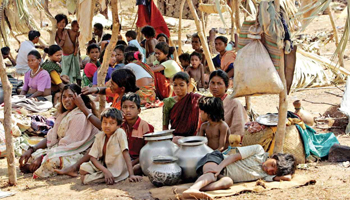
The 2019 global Multidimensional Poverty Index (MPI) from the UN Development Programme (UNDP), the Oxford Poverty and Human Development Initiative (OPHI) was released Thursday.

The report said that in the 101 countries studied – 31 low income, 68 middle income and 2 high income - 1.3 billion people are "multidimensionally poor", which means that poverty is defined not simply by income, but by a number of indicators, including poor health, poor quality of work and the threat of violence.

The report identifies 10 countries, with a combined population of around 2 billion people, to illustrate the level of poverty reduction, and all of them have shown statistically significant progress towards achieving Sustainable Development Goal 1, namely ending poverty "in all its forms, everywhere".

The 10 countries are Bangladesh, Cambodia, Democratic Republic of Congo, Ethiopia, Haiti, India, Nigeria, Pakistan, Peru and Vietnam.

The report said that within these 10 countries, data shows that 270 million people moved out of multidimensional poverty from one survey to the next.

"This progress was largely driven by South Asia. In India, there were 271 million fewer people in poverty in 2016 than in 2006, while in Bangladesh the number dropped by 19 million between 2004 and 2014," it said.

The report noted that of the 10 selected countries for which changes over time were analysed, India and Cambodia reduced their MPI values the fastest—and they did not leave the poorest groups behind.

India's MPI value reduced from 0.283 in 2005-06 to 0.123 in 2015-16.

Noting the examples of pro-poor reduction, where the poorest regions improved the fastest, the report said that Jharkhand in India reduced the incidence of multidimensional poverty from 74.9 per cent in 2005-06 to 46.5 per cent in 2015-16.

Mondol Kiri and Rattanak Kiri in Cambodia reduced it from 71.0 per cent to 55.9 per cent between 2010 and 2014.

Ethiopia, India and Peru significantly reduced deprivations in all 10 indicators, namely nutrition, sanitation, child mortality, drinking water, years of schooling, electricity, school attendance, housing, cooking fuel and assets.

In 2005-2006, the population in India living in multidimensional poverty stood at about 640 million people (55.1 per cent) and this reduced to 369 million people (27.9 per cent) living in poverty in 2015-16. India saw significant reductions in number of people who are multidimensionally poor and deprived in each of the 10 indicators over this time period.

India reduced deprivation in nutrition from 44.3 per cent in 2005-06 to 21.2 per cent in 2015-16, child mortality dropped from 4.5 per cent to 2.2 per cent, people deprived of cooking fuel reduced from 52.9 per cent to 26.2 per cent, deprivation in sanitation from 50.4 per cent to 24.6 per cent, those deprived of drinking water reduced from 16.6 per cent to 6.2 per cent.

Further more people gained access to electricity as deprivation was reduced from 29.1 per cent to 8.6 per cent, housing from 44.9 per cent to 23.6 per cent and assets deprivation from 37.6 per cent to 9.5 per cent.

The trends in these 10 countries also shine a light on where poverty reduction has been uneven, despite the good progress overall, it said.

"In all 10 countries rural areas are poorer than urban areas. In Cambodia, Haiti, India and Peru poverty reduction in rural areas outpaced that in urban areas–demonstrating pro-poor development–and in Bangladesh and Democratic Republic of the Congo poverty fell at the same speed in rural and urban areas,” it added.

The report also showed that children suffer poverty more intensely than adults and are more likely to be deprived in all 10 of the MPI indicators, lacking essentials such as clean water, sanitation, adequate nutrition or primary education.

Child poverty fell markedly faster than adult poverty in Bangladesh, Cambodia, Haiti, India and Peru. But children fell further behind in Ethiopia, and their progress—together with that of adults—stalled in Democratic Republic of the Congo and Pakistan.

Globally, of the 1.3 billion people who are multidimensionally poor, more than two-thirds of them—886 million— now live in middle-income countries. A further 440 million live in low-income countries.

Even more staggering, worldwide, one in three children is multidimensionally poor, compared to one in six adults. That means that nearly half of the people living in multidimensional poverty—663 million— are children, with the youngest children bearing the greatest burden. The vast majority of these children, around 85 per cent, live in South Asia and Sub-Saharan Africa, split roughly equally between the two regions.

The report underscored that the traditional concept of poverty is outdated, demonstrating more clearly than ever that labelling countries - or even households - as rich and poor is an oversimplification.

"To fight poverty, one needs to know where poor people live. They are not evenly spread across a country, not even within a household," UNDP Administrator Achim Steiner said.

The report also highlighted a positive trend that those furthest behind are moving up the fastest.

Comments

Add new comment

  • Coastaldigest.com reserves the right to delete or block any comments.
  • Coastaldigset.com is not responsible for its readers’ comments.
  • Comments that are abusive, incendiary or irrelevant are strictly prohibited.
  • Please use a genuine email ID and provide your name to avoid reject.
News Network
December 13,2025

New Delhi: School-going children are picking up drug and smoking habits and engaging in consumption of alcohol, with the average age of introduction to such harmful substances found to be around 13 years, suggesting a need for earlier interventions as early as primary school, a multi-city survey by AIIMS-Delhi said.

The findings also showed substance use increased in higher grades, with grade XI/XII students two times more likely to report use of substances when compared with grade VIII students. This emphasised the importance of continued prevention and intervention through middle and high school.

The study led by Dr Anju Dhawan of AIIMS's National Drug Dependence Treatment Centre, published in the National Medical Journal of India this month, looks at adolescent substance use across diverse regions.

The survey included 5,920 students from classes 8, 9, 11 and 12 in urban government, private and rural schools across 10 cities -- Bengaluru, Chandigarh, Delhi, Dibrugarh, Hyderabad, Imphal, Jammu, Lucknow, Mumbai, and Ranchi. The data were collected between May 2018 and June 2019.

The average age of initiation for any substance was 12.9 (2.8) years. It was lowest for inhalants (11.3 years) followed by heroin (12.3 years) and opioid pharmaceuticals (without prescription; 12.5 years).

Overall, 15.1 per cent of participants reported lifetime use, 10.3 per cent reported past year use, and 7.2 per cent reported use in the past month of any substance, the study found.

The most common substances used in the past year, after tobacco (4 per cent) and alcohol (3.8 per cent), were opioids (2.8 per cent), followed by cannabis (2 per cent) and inhalants (1.9 per cent). Use of non-prescribed pharmaceutical opioids was most common among opioid users (90.2 per cent).

On being asked, 'Do you think this substance is easily available for a person of your age' separately for each substance category, nearly half the students (46.3 per cent) endorsed that tobacco products and more than one-third of the students (36.5 per cent) agreed that a person of their age can easily procure alcohol products.

Similarly, for Bhang (21.9 per cent), ganja/charas (16.1 per cent), inhalants (15.2 per cent), sedatives (13.7 per cent), opium and heroin (10 per cent each), the students endorsed that these can be easily procured.

About 95 per cent of the children, irrespective of their grade, agreed with the statement that 'drug use is harmful'.

The rates of substance use (any) among boys were significantly higher than those of girls for substance use (ever), use in the past year and use in the past 30 days. Compared to grade VIII students, grade IX students were more likely, and grade XI/XII students were twice as likely to have used any substance (ever).

The likelihood of past-year use of any substance was also higher for grade IX students and for grade XI/XII students as compared to grade VIII students.

About 40 per cent of students mentioned that they had a family member who used tobacco or alcohol each. The use of cannabis (any product) and opioid (any product) by a family member was reported by 8.2 per cent and 3.9 per cent of students, respectively, while the use of other substances, such as inhalants/sedatives by family was 2-3 per cent, the study found.

A relatively smaller percentage of students reported use of tobacco or alcohol among peers as compared to among family members, while a higher percentage reported inhalants, sedatives, cannabis or opioid use among peers.

Children using substances (past year) compared to non-users reported significantly higher any substance use by their family members and peers.

There were 25.7 per cent students who replied 'yes' to the question 'conflicts/fights often occur in your family'. Most students also replied affirmatively to 'family members are aware of how their time is being spent' and 'damily members are aware of with whom they spend their time'.

Comments

Add new comment

  • Coastaldigest.com reserves the right to delete or block any comments.
  • Coastaldigset.com is not responsible for its readers’ comments.
  • Comments that are abusive, incendiary or irrelevant are strictly prohibited.
  • Please use a genuine email ID and provide your name to avoid reject.
News Network
December 20,2025

Mangaluru, Dec 20: The Mangaluru City Police have issued a detailed traffic advisory ahead of the inaugural ceremony of Karavali Utsava, which will be held at the Karavali Utsava Ground on Saturday.

The festival will be inaugurated at 6:00 pm by Dakshina Kannada District Minister Dinesh Gundu Rao. Cultural and public programmes will be held at the venue every evening and will continue until January 2.

According to City Police Commissioner Sudheer Kumar Reddy, parking of vehicles is strictly prohibited on both sides of the road from Lalbagh to Karavali Utsava Ground. Visitors are requested to park their vehicles only at designated parking areas.

To help the public, traffic signboards and parking guidance flex boards have been installed along the routes leading to the venue. The police have urged commuters and visitors to follow these instructions to ensure smooth traffic movement.

Designated Parking Locations

•    Urwa Market Ground – Cars
•    Gandhinagar Government School (near Press Club) – Two-wheelers and cars
•    Ladyhill Church parking area – Two-wheelers and cars
•    Canara School Ground, Mannagudda – Two-wheelers and cars
•    Thimmappa Hotel premises – Two-wheelers and cars
•    Scout and Guide Bhavana premises (behind Karavali Utsava Grounds) – Two-wheelers
•    Urwa Market Road – Two-wheelers
•    Hat Hill Road – Two-wheelers

The police have appealed to the public to cooperate by following traffic rules and parking guidelines to avoid inconvenience during the festival.

Comments

Add new comment

  • Coastaldigest.com reserves the right to delete or block any comments.
  • Coastaldigset.com is not responsible for its readers’ comments.
  • Comments that are abusive, incendiary or irrelevant are strictly prohibited.
  • Please use a genuine email ID and provide your name to avoid reject.
News Network
December 5,2025

Mangaluru: In a significant step to curb online hate and intimidation, Mangaluru City Police have registered a suo motu case against multiple Instagram accounts accused of circulating alleged provocative and threatening content.

While monitoring social media activity on Tuesday, Kankanady Town PSI Anitha Nikkam identified the Instagram handle ‘team_targetttt_900’ for posting a hate message alongside images of lethal weapons. Another account, ‘team_nagara_900’, allegedly shared a threatening post targeting activist Bharath Kumdelu, tagging additional pages such as KARAVALI-OFFICIAL.

Several other accounts — including ‘immu_bhai.fan’, ‘target_boy_900’, ‘kings_of_manglore’, ‘team_target_boys.900’, ‘arshad_mangalore’, ‘target_ka19_ullal’, ‘team_target__’, ‘troll_tigersz_900’, ‘tr_group_900’, and ‘team_target_900’ — are also under scrutiny for spreading similar inflammatory material, police said.

Authorities have urged citizens, especially young social media users, to report suspicious pages and avoid engaging with groups that glorify violence or threaten individuals. Online hate can quickly escalate into real-world harm, and police stress that sharing or promoting such content can attract legal consequences.

Comments

Add new comment

  • Coastaldigest.com reserves the right to delete or block any comments.
  • Coastaldigset.com is not responsible for its readers’ comments.
  • Comments that are abusive, incendiary or irrelevant are strictly prohibited.
  • Please use a genuine email ID and provide your name to avoid reject.