



India lifted 271 mn people out of poverty in 10 yrs: UN

Agencies
July 12, 2019

United Nations, Jul 12: India lifted 271 million people out of poverty between 2006 and 2016, recording the fastest reductions in the multidimensional poverty index values during the period with strong improvements in areas such as "assets, cooking fuel, sanitation and nutrition," a report by the United Nations said.
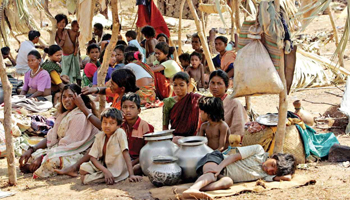
The 2019 global Multidimensional Poverty Index (MPI) from the UN Development Programme (UNDP), the Oxford Poverty and Human Development Initiative (OPHI) was released Thursday.

The report said that in the 101 countries studied – 31 low income, 68 middle income and 2 high income - 1.3 billion people are "multidimensionally poor", which means that poverty is defined not simply by income, but by a number of indicators, including poor health, poor quality of work and the threat of violence.

The report identifies 10 countries, with a combined population of around 2 billion people, to illustrate the level of poverty reduction, and all of them have shown statistically significant progress towards achieving Sustainable Development Goal 1, namely ending poverty "in all its forms, everywhere".

The 10 countries are Bangladesh, Cambodia, Democratic Republic of Congo, Ethiopia, Haiti, India, Nigeria, Pakistan, Peru and Vietnam.

The report said that within these 10 countries, data shows that 270 million people moved out of multidimensional poverty from one survey to the next.

"This progress was largely driven by South Asia. In India, there were 271 million fewer people in poverty in 2016 than in 2006, while in Bangladesh the number dropped by 19 million between 2004 and 2014," it said.

The report noted that of the 10 selected countries for which changes over time were analysed, India and Cambodia reduced their MPI values the fastest—and they did not leave the poorest groups behind.

India's MPI value reduced from 0.283 in 2005-06 to 0.123 in 2015-16.

Noting the examples of pro-poor reduction, where the poorest regions improved the fastest, the report said that Jharkhand in India reduced the incidence of multidimensional poverty from 74.9 per cent in 2005-06 to 46.5 per cent in 2015-16.

Mondol Kiri and Rattanak Kiri in Cambodia reduced it from 71.0 per cent to 55.9 per cent between 2010 and 2014.

Ethiopia, India and Peru significantly reduced deprivations in all 10 indicators, namely nutrition, sanitation, child mortality, drinking water, years of schooling, electricity, school attendance, housing, cooking fuel and assets.

In 2005-2006, the population in India living in multidimensional poverty stood at about 640 million people (55.1 per cent) and this reduced to 369 million people (27.9 per cent) living in poverty in 2015-16. India saw significant reductions in number of people who are multidimensionally poor and deprived in each of the 10 indicators over this time period.

India reduced deprivation in nutrition from 44.3 per cent in 2005-06 to 21.2 per cent in 2015-16, child mortality dropped from 4.5 per cent to 2.2 per cent, people deprived of cooking fuel reduced from 52.9 per cent to 26.2 per cent, deprivation in sanitation from 50.4 per cent to 24.6 per cent, those deprived of drinking water reduced from 16.6 per cent to 6.2 per cent.

Further more people gained access to electricity as deprivation was reduced from 29.1 per cent to 8.6 per cent, housing from 44.9 per cent to 23.6 per cent and assets deprivation from 37.6 per cent to 9.5 per cent.

The trends in these 10 countries also shine a light on where poverty reduction has been uneven, despite the good progress overall, it said.

"In all 10 countries rural areas are poorer than urban areas. In Cambodia, Haiti, India and Peru poverty reduction in rural areas outpaced that in urban areas–demonstrating pro-poor development–and in Bangladesh and Democratic Republic of the Congo poverty fell at the same speed in rural and urban areas,” it added.

The report also showed that children suffer poverty more intensely than adults and are more likely to be deprived in all 10 of the MPI indicators, lacking essentials such as clean water, sanitation, adequate nutrition or primary education.

Child poverty fell markedly faster than adult poverty in Bangladesh, Cambodia, Haiti, India and Peru. But children fell further behind in Ethiopia, and their progress—together with that of adults—stalled in Democratic Republic of the Congo and Pakistan.

Globally, of the 1.3 billion people who are multidimensionally poor, more than two-thirds of them—886 million— now live in middle-income countries. A further 440 million live in low-income countries.

Even more staggering, worldwide, one in three children is multidimensionally poor, compared to one in six adults. That means that nearly half of the people living in multidimensional poverty—663 million— are children, with the youngest children bearing the greatest burden. The vast majority of these children, around 85 per cent, live in South Asia and Sub-Saharan Africa, split roughly equally between the two regions.

The report underscored that the traditional concept of poverty is outdated, demonstrating more clearly than ever that labelling countries - or even households - as rich and poor is an oversimplification.

"To fight poverty, one needs to know where poor people live. They are not evenly spread across a country, not even within a household," UNDP Administrator Achim Steiner said.

The report also highlighted a positive trend that those furthest behind are moving up the fastest.

Comments

Add new comment

  • Coastaldigest.com reserves the right to delete or block any comments.
  • Coastaldigset.com is not responsible for its readers’ comments.
  • Comments that are abusive, incendiary or irrelevant are strictly prohibited.
  • Please use a genuine email ID and provide your name to avoid reject.
News Network
December 19,2025

Mangaluru: Public transport in Mangaluru is set for a state-led transformation as the government moves to deploy 100 new electric govt buses to replace unreliable private services. The initiative aims to provide a dependable alternative to private operators who have been frequently "cutting trips," leaving thousands of commuters stranded.

The announcement was made by Deputy Commissioner and MCC Administrator Darshan HV during a public phone-in session. The move specifically targets routes where private bus service has become erratic, ensuring that citizens no longer have to rely on a fluctuating private sector for their daily commute.

Restoring the Govt Presence

The transport crisis was brought to the forefront by Ramayya, a resident of Bajal, who highlighted a growing trend of private buses skipping morning and night trips. With the previous KSRTC (govt) services discontinued, residents have been left without a fallback option.

To fix this, the DC confirmed that the PM-eBus Sewa Scheme will bring 100 government-owned electric buses to the city:

•    Phased Deployment: The first 50 of the new 100 government buses are scheduled to arrive by March 2026.

•    State Infrastructure: Two new government depots, including one at Mudipu, are being prepared for operations.

•    Recruitment: The state has already begun training a new batch of government bus drivers to ensure the fleet is operational the moment it arrives.

Comments

Add new comment

  • Coastaldigest.com reserves the right to delete or block any comments.
  • Coastaldigset.com is not responsible for its readers’ comments.
  • Comments that are abusive, incendiary or irrelevant are strictly prohibited.
  • Please use a genuine email ID and provide your name to avoid reject.
News Network
December 16,2025

IPL.jpg

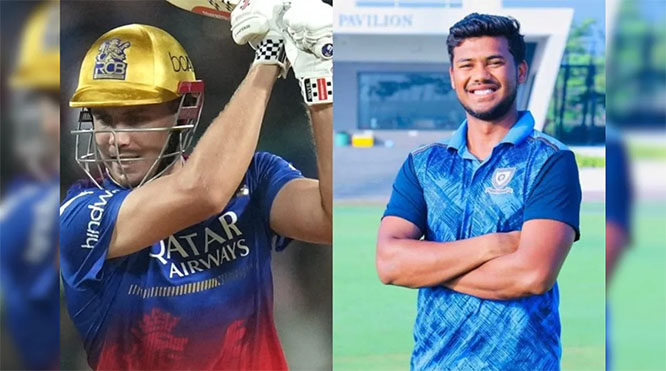
The IPL 2026 auction has seen uncapped Indian stars laugh their way to the bank. While Cameron Green set a world record as he was roped in by Kolkata Knight Riders for Rs 25.20 crore, making him the costliest overseas player ever in any franchise competition across the world, CSK roped in Prashant Veer and Kartik Sharma for a record bid of Rs 14.20 crore each. Sri Lanka's Matheesha Pathirana was picked up for Rs 18 crore by KKR. 

However, top names like Liam Livingstone, Prithvi Shaw, and Sarfaraz Khan have gone unsold. The mini-auction for IPL 2026 is being held in Abu Dhabi, with three-time winners Kolkata Knight Riders coming in with the biggest purse (Rs 64.30 crore). Chennai Super Kings entered the auction with the second-biggest purse (Rs 43.40 crore). The upcoming edition of the Indian Premier League will be held between March 26 and May 31.

Here is the full list of sold and unsold players:

Jake Fraser-McGurk - Base Price Rs 2 crore - Unsold
David Miller - Base Price Rs 2 crore - Delhi Capitals - Rs 2 crore
Prithvi Shaw - Base Price Rs 75 lakh - Unsold
Devon Conway - Base Price Rs 2 crore - Unsold
Cameron Green - Base Price Rs 2 crore - Kolkata Knight Riders - Rs 25.20 crore
Sarfaraz Khan - Base Price Rs 75 lakh - Unsold
Gus Atkinson - Base Price Rs 2 crore - Unsold
Rachin Ravindra - Base Price Rs 2 crore - Unsold
Liam Livingtone - Base Price Rs 2 crore - Unsold
Wiaan Mulder - Base Price Rs 1 crore - Unsold
Wanindu Hasaranga - Base Price Rs 2 crore - LSG - Rs 2 crore
Venkatesh Iyer - Base Price Rs 2 crore - RCB - Rs 7 crore
Deepak Hooda - Base Price Rs 75 lakh - Unsold
KS Bharat - Base Price Rs 75 lakh - Unsold
Quinton De Kock - Base Price Rs 1 crore - Mumbai Indians - Rs 1 crore
Rahmanullah Gurbaz - Base Price Rs 1.50 crore - Unsold
Jonny Bairstow - Base Price Rs 1 crore - Unsold
Jamie Smith - Base Price Rs 2 crore - Unsold
Ben Duckett - Base Price Rs 2 crore - Delhi Capitals - Rs 2 crore
Finn Allen - Base Price Rs 2 crore - KKR - Rs 2 crore
Matt Henry - Base Price Rs 2 crore - Unsold
Akash Deep - Base Price Rs 1 crore - Unsold
Jacob Duffy - Base Price Rs 2 crore - RCB - Rs 2 crore
Shivam Mavi - Base Price Rs 75 lakh - Unsold
Gerald Coetze - Base Price Rs 2 crore - Unsold
Matheesha Pathirana - Base Price Rs 2 crore - KKR - Rs 18 crore
Spencer Johnson - Base Price Rs 1.50 crore - Unsold
Anrich Nortje - Base Price Rs 2.00 crore - LSG Rs 2 crore
Fazalhaq Farooqui - Base Price Rs 1.00 crore - Unsold
Rahul Chahar - Base Price Rs 1.00 crore - Unsold
Ravi Bishnoi - Base Price Rs 2.00 crore - RR - Rs 7.20 crore
Maheesh Theekshana - Base Price Rs 2.00 crore - Unsold
Mujeeb Ur Rahman - Base Price Rs 2.00 crore - Unsold
Akeal Hosein - Base Price Rs 2.00 crore - CSK - Rs 2 crore
Atharva Taide - Base Price Rs 30 lakh - Unsold
Anmolprteet SIngh - Base Price Rs 30 lakh - Unsold
Abhinav Tejrana - Base Price Rs 30 lakh - Unsold
Abhinav Manohar - Base Price Rs 30 lakh - Unsold
Yash Dhull - Base Price Rs 30 lakh - Unsold
Aarya Desai - Base Price Rs 30 lakh - Unsold
Auqib Dar - Base Price Rs 30 lakh - DC - Rs 8.40 crore
Vijay Shankar - Base Price Rs 30 lakh - Unsold
Rajvardhan Hangargekar - Base Price Rs 40 lakh - Unsold
Mahipal Lomror - Base Price Rs 50 lakh - Unsold
Eden Apple Tom - Base Price Rs 30 lakh - Unsold
Prashant Veer - Base Price Rs 30 lakh - CSK Rs 14.20 crore
Shivang Kumar - Base Price Rs 30 lakh - SRH - Rs 30 lakh
Tanush Kotian - Base Price Rs 30 lakh - Unsold
Kamlesh Nagarkoti - Base Price Rs 30 lakh - Unsold
Sanvir Singh - Base Price Rs 30 lakh - Unsold
Rouchit Ahir - Base Price Rs 30 lakh - Unsold
Kartik Sharma - Base Price Rs 30 lakh - CSK Rs 14.20 crore
Mukul Choudhary - Base Price Rs 30 lakh - LSG Rs 2.60 crore
Tejasvi Singh - Base Price Rs 30 lakh - KKR - Rs 3 crore
Vansh Bedi - Base Price Rs 30 lakh - Unsold
Tushar Raheja - Base Price Rs 30 lakh - Unsold
Ashok Sharma - Base Price Rs 30 lakh - GT - Rs 90 lakh
Raj Limbani - Base Price Rs 30 lakh - Unsold
Kartik Tyagi - Base Price Rs 30 lakh - KKR - Rs 30 Lakh
Simarjeet Singh - Base Price Rs 30 lakh - Unsold
Aarya Desai - Base Price Rs 30 lakh - Unsold
Naman Tiwari - Base Price Rs 30 lakh - LSG - Rs 1 crore
Aakash Madhwal - Base Price Rs 30 lakh - Unsold
Sushant Mishra - Base Price Rs 30 lakh - RR - Rs 90 lakh
Wahidullah Zadran - Base Price Rs 30 lakh - Unsold
Shivam Shukla - Base Price Rs 30 lakh - Unsold
Yash Raj Punja - Base Price Rs 30 lakh - RR - Rs 30 Lakh
Prashant Solanki - Base Price Rs 30 lakh - KKR - Rs 30 Lakh
Vignesh Puthur - Base Price Rs 30 lakh - RR - Rs 30 lakh
Karn Sharma - Base Price Rs 50 lakh - Unsold
Kumar Kartikeya Singh - Base Price Rs 30 lakh - Unsold
Sediqullah Atal - Base Price Rs 75 lakh - Unsold
Pathum NIssanka - Base Price Rs 75 lakh - DC - Rs 4 Crore
Rahul Tripathi - Base Price Rs 75 lakh - KKR - Rs 75 lakh
Sean Abbott - Base Price Rs 2 crore - Unsold
Michael Bracewell - Base Price Rs 2 crore - Unsold
Ben Dwarshuis - Base Price Rs 1 crore - Unsold
Jason Holder - Base Price Rs 2 crore - GT Rs 7 crore
Dashun Shanaka - Base Price Rs 75 lakh - Unsold
Daryll Mitchell - Base Price Rs 2 crore - Unsold
Matthew Short - Base Price Rs 1.50 crore - CSK - Rs 1.50 crore
Tom Banton - Base Price Rs 2 crore - Unsold
Jordan Cox - Base Price Rs 75 lakh - Unsold
Josh Inglis - Base Price Rs 2 crore - Unsold
Tim Seifert - Base Price Rs 1.50 crore - KKR - Rs 1.50 Crore
Kyle Jamieson - Base Price Rs 2 crore - Unsold
Adam Milne - Base Price Rs 2 crore - Unsold
Lungi Ngidi - Base Price Rs 2 crore - Unsold
Mustafizur Rahman - Base Price Rs 2 crore - KKR - Rs 9.2 crore
Chetan Sakariya - Base Price Rs 75 lakh - Unsold
Kuldeep Sen - Base Price Rs 75 lakh - Unsold
Waqar Salamkheil - Base Price Rs 1 crore - Unsold
Danish Malewar - Base Price Rs 30 lakh - MI - Rs 30 lakh
Salman Nizar - Base Price Rs 30 lakh - Unsold
Akshat Raghuwanshi - Base Price Rs 30 lakh - LSG - Rs 2.2 crore 
Satvik Deswak - Base Price Rs 30 lakh - RCB - Rs 30 lakh
Aman Khan - Base Price Rs 30 lakh - CSK - Rs 40 lakh
Vicky Ostwal - Base Price Rs 30 lakh - Unsold
Mayank Rawat - Base Price Rs 30 lakh - Unsold
Mangesh Yadav - Base Price Rs 30 lakh - RCB - Rs 5.20 crore
Salil Arora - Base Price Rs 30 lakh - SRH - Rs 1.40 crore
Ravi Singh - Base Price Rs 30 lakh - RR - Rs 95 lakh
KM Asif - Base Price Rs 40 lakh - Unsold
Sakib Hussain - Base Price Rs 30 lakh - SRH - Rs 30 lakh 
Mohammad Izhar - Base Price Rs 30 lakh - MI - Rs 30 lakh 
Onkar Tarmale - Base Price Rs 30 lakh - SRH - Rs 30 Lakh
Murugan Ashwin - Base Price Rs 30 lakh - Unsold
Tejas Baroke - Base Price Rs 30 lakh - Unsold
KC Cariappa - Base Price Rs 30 lakh - Unsold
Mohit Rathee - Base Price Rs 30 lakh - Unsold
Cooper Connolly - Base Price Rs 2 Crore - PBKS - Rs 3 crore
Dan Lawrence - Base Price Rs 2 crore - Unsold
Taskin Ahmed - Base Price Rs 75 lakh - Unsold
Richard Gleeson - Base Price Rs 75 lakh - Unsold
Alzarri Joseph - Base Price Rs 2 crore - Unsold
Riley Meredith - Base Price Rs 1.50 crore - Unsold
Jhye Richardson - Base Price Rs 1.50 crore - Unsold
Dheeraj Kumar - Base Price Rs 30 lakh - Unsold
Tanay Thyagarajan - Base Price Rs 30 lakh - Unsold
Connor E. - Base Price Rs 30 lakh - Unsold
Irfan Umair - Base Price Rs 30 lakh - Unsold
Chintal Gandhi - Base Price Rs 30 lakh - Unsold
Amit Kumar - Base Price Rs 30 lakh - SRH - Rs 30 lakh 
Vishal Nishad - Base Price Rs 30 lakh - Unsold 
Nathan Smith - Base Price Rs 75 lakh - Unsold 
Daniel Lategan - Base Price Rs 30 lakh - Unsold 
Atharva Ankolekar - Base Price Rs 30 lakh - MI - Rs 30 Lakh
Karan Lal - Base Price Rs 30 lakh - Unsold 
Utkarsh Singh - Base Price Rs 30 lakh - Unsold 
Ayush Vartak - Base Price Rs 30 lakh - Unsold
Ayush Hinge - Base Price Rs 30 lakh - SRH - Rs 30 Lakh
Jikku Bright - Base Price Rs 30 lakh - Unsold
Izaz Sawariya - Base Price Rs 30 lakh - Unsold
Krains Fuletra - Base Price Rs 30 lakh - SRH - Rs 30 lakh
Sarthak Ranjan - Base Price Rs 30 lakh - KKR - Rs 30 lakh
Daksh Kamra - Base Price Rs 30 lakh - KKR - Rs 30 lakh
Manishankar Murasingh - Base Price Rs 30 lakh - Unsold

Comments

Add new comment

  • Coastaldigest.com reserves the right to delete or block any comments.
  • Coastaldigset.com is not responsible for its readers’ comments.
  • Comments that are abusive, incendiary or irrelevant are strictly prohibited.
  • Please use a genuine email ID and provide your name to avoid reject.
News Network
December 13,2025

New Delhi: School-going children are picking up drug and smoking habits and engaging in consumption of alcohol, with the average age of introduction to such harmful substances found to be around 13 years, suggesting a need for earlier interventions as early as primary school, a multi-city survey by AIIMS-Delhi said.

The findings also showed substance use increased in higher grades, with grade XI/XII students two times more likely to report use of substances when compared with grade VIII students. This emphasised the importance of continued prevention and intervention through middle and high school.

The study led by Dr Anju Dhawan of AIIMS's National Drug Dependence Treatment Centre, published in the National Medical Journal of India this month, looks at adolescent substance use across diverse regions.

The survey included 5,920 students from classes 8, 9, 11 and 12 in urban government, private and rural schools across 10 cities -- Bengaluru, Chandigarh, Delhi, Dibrugarh, Hyderabad, Imphal, Jammu, Lucknow, Mumbai, and Ranchi. The data were collected between May 2018 and June 2019.

The average age of initiation for any substance was 12.9 (2.8) years. It was lowest for inhalants (11.3 years) followed by heroin (12.3 years) and opioid pharmaceuticals (without prescription; 12.5 years).

Overall, 15.1 per cent of participants reported lifetime use, 10.3 per cent reported past year use, and 7.2 per cent reported use in the past month of any substance, the study found.

The most common substances used in the past year, after tobacco (4 per cent) and alcohol (3.8 per cent), were opioids (2.8 per cent), followed by cannabis (2 per cent) and inhalants (1.9 per cent). Use of non-prescribed pharmaceutical opioids was most common among opioid users (90.2 per cent).

On being asked, 'Do you think this substance is easily available for a person of your age' separately for each substance category, nearly half the students (46.3 per cent) endorsed that tobacco products and more than one-third of the students (36.5 per cent) agreed that a person of their age can easily procure alcohol products.

Similarly, for Bhang (21.9 per cent), ganja/charas (16.1 per cent), inhalants (15.2 per cent), sedatives (13.7 per cent), opium and heroin (10 per cent each), the students endorsed that these can be easily procured.

About 95 per cent of the children, irrespective of their grade, agreed with the statement that 'drug use is harmful'.

The rates of substance use (any) among boys were significantly higher than those of girls for substance use (ever), use in the past year and use in the past 30 days. Compared to grade VIII students, grade IX students were more likely, and grade XI/XII students were twice as likely to have used any substance (ever).

The likelihood of past-year use of any substance was also higher for grade IX students and for grade XI/XII students as compared to grade VIII students.

About 40 per cent of students mentioned that they had a family member who used tobacco or alcohol each. The use of cannabis (any product) and opioid (any product) by a family member was reported by 8.2 per cent and 3.9 per cent of students, respectively, while the use of other substances, such as inhalants/sedatives by family was 2-3 per cent, the study found.

A relatively smaller percentage of students reported use of tobacco or alcohol among peers as compared to among family members, while a higher percentage reported inhalants, sedatives, cannabis or opioid use among peers.

Children using substances (past year) compared to non-users reported significantly higher any substance use by their family members and peers.

There were 25.7 per cent students who replied 'yes' to the question 'conflicts/fights often occur in your family'. Most students also replied affirmatively to 'family members are aware of how their time is being spent' and 'damily members are aware of with whom they spend their time'.

Comments

Add new comment

  • Coastaldigest.com reserves the right to delete or block any comments.
  • Coastaldigset.com is not responsible for its readers’ comments.
  • Comments that are abusive, incendiary or irrelevant are strictly prohibited.
  • Please use a genuine email ID and provide your name to avoid reject.