India rejects UN Kashmir report on rights violation as 'fallacious'

Agencies
June 14, 2018

New Delhi, Jun 14: India on Thursday rejected a UN report alleging human rights violations in Kashmir as "fallacious, tendentious and motivated".

In a strong reaction, the Ministry of External Affairs (MEA) said the report is "overtly prejudiced" and seeks to build a "false narrative".

It violated the country's sovereignty and territorial integrity, it said.

In the report released on Thursday, the UN talked about alleged human rights violations in both Kashmir and Pakistan occupied Kashmir, and sought an international inquiry into these abuses.

"India rejects the report. It is fallacious, tendentious and motivated. We question the intent in bringing out such a report," the MEA said.

It added that the report is a selective compilation of largely unverified information.

"The report violates India's sovereignty and territorial integrity. The entire state of Jammu and Kashmir is an integral part of India. Pakistan is in illegal and forcible occupation of a part of the Indian state through aggression," the MEA said.

Comments

Add new comment

  • Coastaldigest.com reserves the right to delete or block any comments.
  • Coastaldigset.com is not responsible for its readers’ comments.
  • Comments that are abusive, incendiary or irrelevant are strictly prohibited.
  • Please use a genuine email ID and provide your name to avoid reject.
News Network
December 19,2025

Mangaluru: In a decisive move to tackle the city’s deteriorating sanitation infrastructure, the Mangaluru City Corporation (MCC) has announced a massive ₹1,200 crore action plan to overhaul its underground drainage (UGD) network.

The initiative, spearheaded by Deputy Commissioner and MCC Administrator Darshan HV, aims to bridge "missing links" in the current system that have left residents grappling with overflowing sewage and environmental hazards.

The Breaking Point

The announcement follows a high-intensity phone-in session on Thursday, where the DC was flooded with grievances from frustrated citizens. Residents, including Savithri from Yekkur, described a harrowing reality: raw sewage from apartments leaking into stormwater drains, creating a "permanent stink" and turning residential zones into mosquito breeding grounds.

"We are facing immense difficulties due to the stench and the health risks. Local officials have remained silent until now," one resident reported during the session.

The Strategy: A Six-Year Vision

DC Darshan HV confirmed that the proposed plan is not a temporary patch but a comprehensive six-year roadmap designed to accommodate Mangaluru’s projected population growth. Key highlights of the plan include:

•    Infrastructure Expansion: Laying additional pipelines to connect older neighborhoods to the main grid.

•    STP Crackdown: Stricter enforcement of Sewage Treatment Plant (STP) regulations. While new apartments are required to have functional STPs, many older buildings lack them entirely, and several newer units are reportedly non-functional.

•    Budgetary Push: The plan has already been discussed with the district in-charge minister and the Secretary of the Urban Development Department. It is slated for formal presentation in the upcoming state budget.

Comments

Add new comment

  • Coastaldigest.com reserves the right to delete or block any comments.
  • Coastaldigset.com is not responsible for its readers’ comments.
  • Comments that are abusive, incendiary or irrelevant are strictly prohibited.
  • Please use a genuine email ID and provide your name to avoid reject.
News Network
December 22,2025

bhagavat.jpg

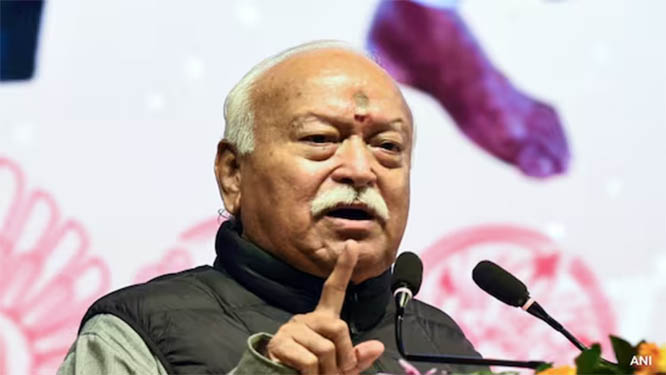
Kolkata: Stressing that India is a "Hindu nation," Rashtriya Swayamsevak Sangh (RSS) Chief Mohan Bhagwat on Sunday said that no constitutional approval is needed as it is the "truth".

Addressing an event marking 100 years of the RSS, Bhagwat said that India is, and will remain, a Hindu nation until Indian culture is appreciated in the country.

"The Sun rises in the east; we don't know since when this has been happening. So, do we need constitutional approval for that, too? Hindustan is a Hindu nation. Whoever considers India their motherland appreciates Indian culture, as long as there is even one person alive on the land of Hindustan who believes in and cherishes the glory of Indian ancestors, India is a Hindu nation. This is the ideology of the Sangh," he said at the '100 Vyakhyan Mala' program of RSS in Kolkata.

"If Parliament ever decides to amend the Constitution and add that word, whether they do it or not, it's fine. We don't care about that word because we are Hindus, and our nation is a Hindu nation. That is the truth. The caste system based on birth is not the hallmark of Hindutva," he added.

RSS has always argued that India is a "Hindu Nation," given the culture and majority's affiliations to Hinduism. However, 'secular' was not originally part of the Preamble of the Constitution, but it was added along with the word 'socialist' by the Constitution (42nd Amendment) Act, 1976, during the Emergency imposed by then Prime Minister Indira Gandhi.

Bhagwat also urged people to visit the organisation's offices and 'shakhas' to understand its work, so that what he dubbed as the “false perception” of the organisation as anti-Muslim can be dispelled!

Bhagwat said that people have understood that the organisation advocates for the protection of Hindus, and are "staunch nationalists," but not anti-muslim.

"If there is a perception that we are anti-Muslim, then, as I said, the RSS work is transparent. You can come anytime and see for yourself, and if you see anything like that happening, then you keep your views, and if you don't see it, then you change your views. There is a lot to understand (about RSS), but if you don't want to understand, then no one can change your mind," Bhagwat said.

He said, but anyone unwilling to learn cannot be helped.

"After seeing, people have said that you are staunch nationalists. You organise Hindus, and you advocate for the protection of Hindus. But you are not anti-Muslim. Many people have accepted this, and those who want to know more should come and see the RSS for themselves," he said.

Comments

Add new comment

  • Coastaldigest.com reserves the right to delete or block any comments.
  • Coastaldigset.com is not responsible for its readers’ comments.
  • Comments that are abusive, incendiary or irrelevant are strictly prohibited.
  • Please use a genuine email ID and provide your name to avoid reject.
News Network
December 13,2025

New Delhi: School-going children are picking up drug and smoking habits and engaging in consumption of alcohol, with the average age of introduction to such harmful substances found to be around 13 years, suggesting a need for earlier interventions as early as primary school, a multi-city survey by AIIMS-Delhi said.

The findings also showed substance use increased in higher grades, with grade XI/XII students two times more likely to report use of substances when compared with grade VIII students. This emphasised the importance of continued prevention and intervention through middle and high school.

The study led by Dr Anju Dhawan of AIIMS's National Drug Dependence Treatment Centre, published in the National Medical Journal of India this month, looks at adolescent substance use across diverse regions.

The survey included 5,920 students from classes 8, 9, 11 and 12 in urban government, private and rural schools across 10 cities -- Bengaluru, Chandigarh, Delhi, Dibrugarh, Hyderabad, Imphal, Jammu, Lucknow, Mumbai, and Ranchi. The data were collected between May 2018 and June 2019.

The average age of initiation for any substance was 12.9 (2.8) years. It was lowest for inhalants (11.3 years) followed by heroin (12.3 years) and opioid pharmaceuticals (without prescription; 12.5 years).

Overall, 15.1 per cent of participants reported lifetime use, 10.3 per cent reported past year use, and 7.2 per cent reported use in the past month of any substance, the study found.

The most common substances used in the past year, after tobacco (4 per cent) and alcohol (3.8 per cent), were opioids (2.8 per cent), followed by cannabis (2 per cent) and inhalants (1.9 per cent). Use of non-prescribed pharmaceutical opioids was most common among opioid users (90.2 per cent).

On being asked, 'Do you think this substance is easily available for a person of your age' separately for each substance category, nearly half the students (46.3 per cent) endorsed that tobacco products and more than one-third of the students (36.5 per cent) agreed that a person of their age can easily procure alcohol products.

Similarly, for Bhang (21.9 per cent), ganja/charas (16.1 per cent), inhalants (15.2 per cent), sedatives (13.7 per cent), opium and heroin (10 per cent each), the students endorsed that these can be easily procured.

About 95 per cent of the children, irrespective of their grade, agreed with the statement that 'drug use is harmful'.

The rates of substance use (any) among boys were significantly higher than those of girls for substance use (ever), use in the past year and use in the past 30 days. Compared to grade VIII students, grade IX students were more likely, and grade XI/XII students were twice as likely to have used any substance (ever).

The likelihood of past-year use of any substance was also higher for grade IX students and for grade XI/XII students as compared to grade VIII students.

About 40 per cent of students mentioned that they had a family member who used tobacco or alcohol each. The use of cannabis (any product) and opioid (any product) by a family member was reported by 8.2 per cent and 3.9 per cent of students, respectively, while the use of other substances, such as inhalants/sedatives by family was 2-3 per cent, the study found.

A relatively smaller percentage of students reported use of tobacco or alcohol among peers as compared to among family members, while a higher percentage reported inhalants, sedatives, cannabis or opioid use among peers.

Children using substances (past year) compared to non-users reported significantly higher any substance use by their family members and peers.

There were 25.7 per cent students who replied 'yes' to the question 'conflicts/fights often occur in your family'. Most students also replied affirmatively to 'family members are aware of how their time is being spent' and 'damily members are aware of with whom they spend their time'.


Comments

Add new comment

  • Coastaldigest.com reserves the right to delete or block any comments.
  • Coastaldigset.com is not responsible for its readers’ comments.
  • Comments that are abusive, incendiary or irrelevant are strictly prohibited.
  • Please use a genuine email ID and provide your name to avoid reject.