India to stop importing oil from Iran; make up lost volumes from alternate sources

Agencies
April 23, 2019

New Delhi, Apr 23: India will stop importing crude oil from Iran following the US move to end sanction waivers, and will use alternate supply sources such as Saudi Arabia to make up for the lost volumes, top officials and industry sources said Tuesday.

The Trump administration on Monday decided not to renew waiver that let countries like India buy Iranian oil without facing US sanctions.

"Until the waivers are not restored back, I don't think India can buy oil from Iran. We will stop importing oil from Iran," a top official said.

New Delhi is likely to press with the US government for continuation of beyond its expiry on May 2 in talks scheduled later this month, he said. "But purchases cannot be made in anticipation. We will not be importing any oil from Iran."

India was the second biggest buyer of Iranian crude oil after China. It bought some 24 million tonnes of crude oil from Iran in the fiscal ended March 31 (2018-19). Iran supplied more than a tenth of its oil needs.

The shortfall will be made from alternate supply sources available in Saudi Arabia, Kuwait, UAE and Mexico.

Oil Minister Dharmendra Pradhan in a tweet said "a robust plan for an adequate supply of crude oil to Indian refineries" is in place.

"There will be additional supplies from other major oil-producing countries; Indian refineries are fully prepared to meet the national demand for petrol, diesel & other petroleum products," he said.

The oil ministry too in a statement said a plan was in place to ensure supplies of crude oil from May when the waiver ends.

Indian Oil Corp (IOC) Chairman Sanjiv Singh said refiners import crude oil from a wide range of sources and had been lining up alternate supplies for the past months.

The US was to take a decision on waiver extension this month and Indian refineries had prepared plans for all eventualities.

"We have alternate sources lined up to make up for any shortfall," he said.

US President Donald Trump last year withdrew from the 2015 nuclear deal between Iran and world powers, and revived a range of sanctions against the Persian Gulf nation. It, however, granted a six-month waiver from sanctions to eight countries - China, India, Japan, South Korea, Taiwan, Turkey, Italy, and Greece - but with a condition that they would reduce their purchases of Iranian oil.

The waiver began in November 2018 and was to expire on May 2.

India had agreed to restrict its monthly purchase to 1.25 million tonnes to get the waiver. But since it had made robust purchases in the period prior to November 2018, India's overall crude oil imports from Iran totalled nearly 24 million tonnes in 2018-19 as compared to 22.6 million tonnes bought in the 2017-18.

"We have optional volumes (over and above the term contracts) from a number of suppliers which we can exercise to make up for any shortfall from Iran," Singh said. "We can also go to the spot (or current) market to source crude."

"As far as Indian Oil is concerned, supplies will not be a problem. We have already lined up alternate sources," he said, adding the impact of the US decision may reflect on global oil prices which may temporarily go up.

IOC has the option to take 0.7 million tonnes of crude oil from Mexico on top of its committed purchase of 0.7 million tonnes during the year. From Saudi Arabia, it has an optional volume of 2 million tonnes on top of a term contract of 5.6 million tonnes.

Similarly, it has optional volumes of 1.5 million tonnes from Kuwait and another 1 million tonnes from the UAE.

"We have all the supplies tied up and I think globally crude will be readily available but it is difficult to say what the impact will be on price," he added.

The price of Brent crude, the global oil benchmark, gained 0.6 per cent to USD 74.46 a barrel, the highest in almost six months. It had risen by 3 per cent on Monday.

When Trump first pulled out of the nuclear deal, oil shot up to over USD 85 a barrel and it fell to near USD 50 after the US administration unexpectedly granted the waivers.

US sanctions on Iran's oil buyers snap back next month that will block the American financial system for importers.

India, the world's third-biggest oil consumer, meets more than 80 per cent of its oil needs through imports. Iran in 2017-18 was its third-largest supplier after Iraq and Saudi Arabia and meets about 10 per cent of total needs.

Trump in May withdrew from the 2015 nuclear accord with Iran, re-imposing economic sanctions against the Persian Gulf nation. Some sanctions took effect from August 6, while those affecting the oil and banking sectors were to start from November 5, 2018. A six-month waiver was granted that was to expire on May 2.

Iran was India's second biggest supplier of crude oil after Saudi Arabia till 2010-11 but Western sanctions over its suspected nuclear programme relegated it to the seventh spot in the subsequent years. In 2013-14 and 2014-15, India bought 11 million tonnes and 10.95 million tonnes, respectively from it.

Sourcing from Iran increased to 12.7 million tonnes in 2015-16, giving it the sixth spot. In the following year, the Iranian supplies jumped to 27.2 million tonnes to catapult it to the third spot.

Iranian oil is a lucrative buy for refiners as the Persian Gulf nation provides 60 days of credit for purchases, terms not available from suppliers of substitute crudes -- Saudi Arabia, Kuwait, Iraq, Nigeria, and the US.

Comments

Add new comment

  • Coastaldigest.com reserves the right to delete or block any comments.
  • Coastaldigset.com is not responsible for its readers’ comments.
  • Comments that are abusive, incendiary or irrelevant are strictly prohibited.
  • Please use a genuine email ID and provide your name to avoid reject.
News Network
December 13,2025

New Delhi: School-going children are picking up drug and smoking habits and engaging in consumption of alcohol, with the average age of introduction to such harmful substances found to be around 13 years, suggesting a need for earlier interventions as early as primary school, a multi-city survey by AIIMS-Delhi said.

The findings also showed substance use increased in higher grades, with grade XI/XII students two times more likely to report use of substances when compared with grade VIII students. This emphasised the importance of continued prevention and intervention through middle and high school.

The study led by Dr Anju Dhawan of AIIMS's National Drug Dependence Treatment Centre, published in the National Medical Journal of India this month, looks at adolescent substance use across diverse regions.

The survey included 5,920 students from classes 8, 9, 11 and 12 in urban government, private and rural schools across 10 cities -- Bengaluru, Chandigarh, Delhi, Dibrugarh, Hyderabad, Imphal, Jammu, Lucknow, Mumbai, and Ranchi. The data were collected between May 2018 and June 2019.

The average age of initiation for any substance was 12.9 (2.8) years. It was lowest for inhalants (11.3 years) followed by heroin (12.3 years) and opioid pharmaceuticals (without prescription; 12.5 years).

Overall, 15.1 per cent of participants reported lifetime use, 10.3 per cent reported past year use, and 7.2 per cent reported use in the past month of any substance, the study found.

The most common substances used in the past year, after tobacco (4 per cent) and alcohol (3.8 per cent), were opioids (2.8 per cent), followed by cannabis (2 per cent) and inhalants (1.9 per cent). Use of non-prescribed pharmaceutical opioids was most common among opioid users (90.2 per cent).

On being asked, 'Do you think this substance is easily available for a person of your age' separately for each substance category, nearly half the students (46.3 per cent) endorsed that tobacco products and more than one-third of the students (36.5 per cent) agreed that a person of their age can easily procure alcohol products.

Similarly, for Bhang (21.9 per cent), ganja/charas (16.1 per cent), inhalants (15.2 per cent), sedatives (13.7 per cent), opium and heroin (10 per cent each), the students endorsed that these can be easily procured.

About 95 per cent of the children, irrespective of their grade, agreed with the statement that 'drug use is harmful'.

The rates of substance use (any) among boys were significantly higher than those of girls for substance use (ever), use in the past year and use in the past 30 days. Compared to grade VIII students, grade IX students were more likely, and grade XI/XII students were twice as likely to have used any substance (ever).

The likelihood of past-year use of any substance was also higher for grade IX students and for grade XI/XII students as compared to grade VIII students.

About 40 per cent of students mentioned that they had a family member who used tobacco or alcohol each. The use of cannabis (any product) and opioid (any product) by a family member was reported by 8.2 per cent and 3.9 per cent of students, respectively, while the use of other substances, such as inhalants/sedatives by family was 2-3 per cent, the study found.

A relatively smaller percentage of students reported use of tobacco or alcohol among peers as compared to among family members, while a higher percentage reported inhalants, sedatives, cannabis or opioid use among peers.

Children using substances (past year) compared to non-users reported significantly higher any substance use by their family members and peers.

There were 25.7 per cent students who replied 'yes' to the question 'conflicts/fights often occur in your family'. Most students also replied affirmatively to 'family members are aware of how their time is being spent' and 'damily members are aware of with whom they spend their time'.

Comments

Add new comment

  • Coastaldigest.com reserves the right to delete or block any comments.
  • Coastaldigset.com is not responsible for its readers’ comments.
  • Comments that are abusive, incendiary or irrelevant are strictly prohibited.
  • Please use a genuine email ID and provide your name to avoid reject.
News Network
December 17,2025

melkar1.jpg

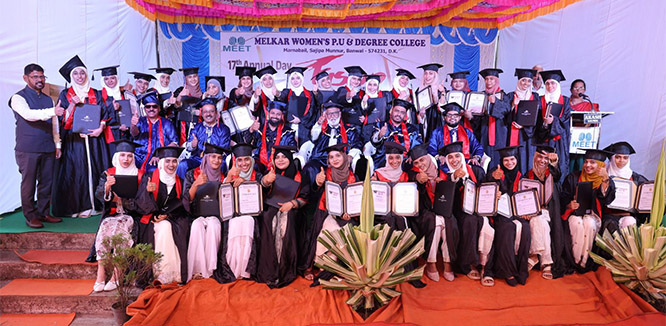
Melkar, Dec 17: The 17th Annual Day and Graduation Ceremony of Melkar Women’s PU and Degree College, themed “Fusion-2K25,” was celebrated with dignity and enthusiasm, marking a significant milestone in the institution’s academic journey. The programme reflected the college’s steadfast commitment to academic excellence, character building, and the holistic development of students.

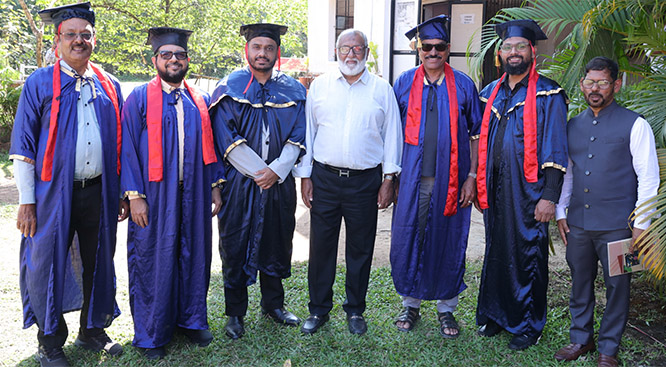
The event was inaugurated by Mr. Asif Mohammed, whose presence greatly enriched the occasion. The celebration was further graced by the chief guests Mr. P. B. Ahmed Mudassir and Mr. Nissar Fakeer Mohammed, along with the distinguished guests of honour Mr. B. A. Nazeer and Mr. Ibrahim Gadiyar. In their inspiring addresses, the guests encouraged the graduating students and appreciated the dedicated efforts of the management, faculty, and students.

The annual report was presented by the Principal, Mr. Abdul Majeed S, highlighting the institution’s academic progress, notable achievements, and extracurricular accomplishments during the academic year.

The presidential address was delivered by the esteemed Chairman of Melkar Women’s PU and Degree College, Dr. Haji S. M. Rasheed, who emphasized the vital role of education in empowering women and shaping responsible citizens. He also stressed the importance of discipline, dedication, and perseverance in achieving success.

Cultural programmes and academic recognitions formed an integral part of the celebration, showcasing the talents and achievements of the students. The graduation ceremony was a proud moment for the outgoing students as they were formally conferred degrees and wished success in their future endeavours.

Ms. Mashmooma Fathima served as the Master of Ceremonies. The welcome address was delivered by Ms. Fathima Nida, and the programme concluded with a vote of thanks proposed by Ms. Ayisha Suhana.

The event successfully achieved its objectives and was highly appreciated by the guests and attendees.

melkar3.jpg

melkar2.jpg

Comments

Add new comment

  • Coastaldigest.com reserves the right to delete or block any comments.
  • Coastaldigset.com is not responsible for its readers’ comments.
  • Comments that are abusive, incendiary or irrelevant are strictly prohibited.
  • Please use a genuine email ID and provide your name to avoid reject.
News Network
December 20,2025

Mangaluru, Dec 20: The Mangaluru City Police have issued a detailed traffic advisory ahead of the inaugural ceremony of Karavali Utsava, which will be held at the Karavali Utsava Ground on Saturday.

The festival will be inaugurated at 6:00 pm by Dakshina Kannada District Minister Dinesh Gundu Rao. Cultural and public programmes will be held at the venue every evening and will continue until January 2.

According to City Police Commissioner Sudheer Kumar Reddy, parking of vehicles is strictly prohibited on both sides of the road from Lalbagh to Karavali Utsava Ground. Visitors are requested to park their vehicles only at designated parking areas.

To help the public, traffic signboards and parking guidance flex boards have been installed along the routes leading to the venue. The police have urged commuters and visitors to follow these instructions to ensure smooth traffic movement.

Designated Parking Locations

•    Urwa Market Ground – Cars
•    Gandhinagar Government School (near Press Club) – Two-wheelers and cars
•    Ladyhill Church parking area – Two-wheelers and cars
•    Canara School Ground, Mannagudda – Two-wheelers and cars
•    Thimmappa Hotel premises – Two-wheelers and cars
•    Scout and Guide Bhavana premises (behind Karavali Utsava Grounds) – Two-wheelers
•    Urwa Market Road – Two-wheelers
•    Hat Hill Road – Two-wheelers

The police have appealed to the public to cooperate by following traffic rules and parking guidelines to avoid inconvenience during the festival.

Comments

Add new comment

  • Coastaldigest.com reserves the right to delete or block any comments.
  • Coastaldigset.com is not responsible for its readers’ comments.
  • Comments that are abusive, incendiary or irrelevant are strictly prohibited.
  • Please use a genuine email ID and provide your name to avoid reject.