Grand Mufti of India lauds Sheikh Mohammed bin Rashid’s 2 decades of leadership

News Network
January 6, 2026

uae.jpg

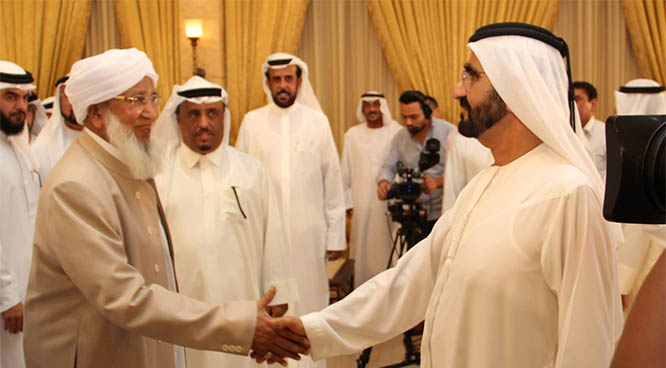
Sheikh Abubakr Ahmad, Grand Mufti of India, has congratulated Sheikh Mohammed bin Rashid Al Maktoum on completing twenty years as the ruler of Dubai.

In a statement, Sheikh Abubakr Ahmad said Sheikh Mohammed’s leadership has played a key role in transforming Dubai into one of the world’s leading cities and a global model for development, innovation, security and efficient governance. He noted that Dubai today is recognised as a vibrant international hub marked by tolerance, cleanliness and peaceful coexistence among diverse communities.

Recalling his personal experience of visiting Dubai over several decades, the Grand Mufti said the emirate’s inclusive and humanitarian policies have made it a welcoming home for people from across the world. He added that Dubai has emerged as a symbol of human dignity and mutual respect, while also contributing to stronger engagement between the Islamic world and the wider global community.

He said Dubai’s journey of progress is deeply rooted in the legacy of the late Sheikh Zayed bin Sultan Al Nahyan, the founder of the United Arab Emirates, and Sheikh Rashid bin Saeed Al Maktoum, regarded as the architect of modern Dubai. Their vision, based on wisdom, justice and service to humanity, continues to shape the leadership of Sheikh Mohammed bin Rashid Al Maktoum, he added.

Concluding his message, Sheikh Abubakr Ahmad prayed for Sheikh Mohammed bin Rashid Al Maktoum’s good health and continued success, and for lasting peace, stability and progress for Dubai and the United Arab Emirates.

Comments

Add new comment

  • Coastaldigest.com reserves the right to delete or block any comments.
  • Coastaldigset.com is not responsible for its readers’ comments.
  • Comments that are abusive, incendiary or irrelevant are strictly prohibited.
  • Please use a genuine email ID and provide your name to avoid reject.
News Network
January 2,2026

AP1.jpg

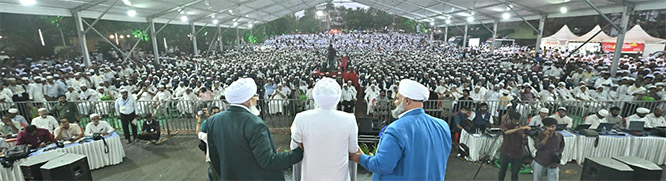
The Kerala Yatra, organised by the Kerala Muslim Jamaat under the theme “With Humanity,” was launched with great fervour in Kasaragod on New Year’s Day, carrying a strong message of unity, coexistence, and social harmony.

Addressing a large gathering at a reception in Cherkala, the Grand Mufti of India, Sheikh Abubakr Ahmad, said collective efforts are vital to pass on Kerala’s progress, values, and achievements to future generations. He described Samastha Kerala Jamiyyathul Ulama as the defining force behind the renaissance, survival, and moral character of the Kerala Muslim community.

In his inaugural address, the Grand Mufti noted that Samastha had provided clear direction and organisational strength to the community, enabling it to move forward as a disciplined and constructive social force—benefits that, he said, had positively influenced other communities as well.

Recalling the region’s spiritual history, he spoke about Malik Ibn Dinar and his companions, describing them as truthful, noble, and deeply spiritual figures. The history of Kasaragod, he said, is enriched by their legacy of coexistence and purity. Malik Ibn Dinar, who illuminated the spiritual path of the northern region, symbolised harmony and mutual respect, a tradition warmly embraced by the local rulers of the time and one that must be remembered and preserved.

Elaborating on the message of the Yatra, Sheikh Abubakr Ahmad emphasised that Islam stands for love and compassion, teaching believers to treat all people with goodness. He asserted that every religious community has the right to live and propagate its ideals without harming others, cautioning against attempts to sow hatred and hostility. “We must never forget our shared humanity,” he said, adding that acts of goodness should never be judged by caste or class, as peace and progress remain the foremost needs of any society.

Touching upon the upcoming centenary of Samastha, the Grand Mufti announced that the organisation is moving ahead with major action plans. Initiatives such as the Islamic University (Jamiathul Hind)—which integrates Islamic scholarship with modern education—have already been implemented. He appealed to all humanitarians to support Samastha’s extensive work in education and charity to ensure its benefits reach every section of society.

The Yatra commenced with a grand reception at Ullal Dargah, where Samastha President E. Sulaiman Musliyar and Yatra Committee Chairman Sayyid K.S. Attakoya Thangal Kumbol handed over the Yatra flag to the procession leader, the Grand Mufti, amid chants from hundreds of activists. The Cherkala inauguration was presided over by Sayyid K.S. Attakoya Thangal Kumbol and formally inaugurated by E. Sulaiman Musliyar.

The event drew a distinguished gathering, including Minister Kadannappally Ramachandran, Karnataka Assembly Speaker U.T. Khader, Rajmohan Unnithan MP, several MLAs, Swami Vivekananda Saraswati of the Chinmaya Mission, and Father Mathew Baby Marthoma.

The Kerala Yatra will traverse the state with scheduled stops at Kannur Collectorate Ground (January 2), Nadapuram (January 3), Kozhikode Muthalakulam (January 4), Kalpetta (January 5), Gudalur (January 6), Areekode (January 7), Tirur (January 8), Ottapalam (January 9), Chavakkad (January 10), Ernakulam Marine Drive (January 11), Thodupuzha (January 12), Kottayam (January 13), Pathanamthitta and Kayamkulam (January 14), and Kollam (January 15). The journey will culminate in a grand finale at Putharikandam Maidanam, Thiruvananthapuram, on January 16.


AP2.jpg

Comments

Add new comment

  • Coastaldigest.com reserves the right to delete or block any comments.
  • Coastaldigset.com is not responsible for its readers’ comments.
  • Comments that are abusive, incendiary or irrelevant are strictly prohibited.
  • Please use a genuine email ID and provide your name to avoid reject.
News Network
January 3,2026

kannur1.jpg

Kannur: The Kerala Yatra, organised by the Kerala Muslim Jamaat under the theme “With Humanity,” drew a massive response at the Kannur Collectorate Grounds on its second day, as the Grand Mufti of India, Sheikh Abubakr Ahmed, issued a strong caution against communal and divisive speech.

Addressing the gathering, the Grand Mufti warned that irresponsible rhetoric by community leaders could damage the social fabric of the land. He said Kerala’s people are deeply rooted in democratic values and mutual friendship, and the state must firmly resist any attempt to disrupt religious harmony or create divisions among communities.

In his keynote address, Sheikh Abubakr Ahmed highlighted the moral responsibility that comes with being human and with holding positions of influence in society. “We must be able to stand together and hold others close,” he said, adding that those who enjoy public respect must exercise utmost care in their words. A single careless expression, he cautioned, can trigger social discord. True human elevation, he noted, lies in balancing material progress with spiritual and ethical growth, and divisive speech has no place in a democratic society.

The Yatra was accorded a warm welcome at the district border in Payyannur by district Sunni leaders, accompanied by a ceremonial Centenary Guard parade. By evening, thousands had gathered at the conference venue, Chithari K.P. Hamza Musliyar Nagar, reflecting the wide public support for the campaign.

The conference opened with a prayer by Sayyid Ali Bafaqi Thangal and was presided over by K.P. Abubakr Musliyar. It was formally inaugurated by Minister Kadannappally Ramachandran.

Deputy leaders Sayyid Ibrahimul Khaleel Al Bukhari and Perod Abdurahman Saqafi addressed the gathering, while Muhammadali Saqafi Valliyad and M. Muhammad Sadiq presented the keynote addresses outlining the conference resolutions. Prominent attendees included K. Sudhakaran MP, Deputy Mayor K.P. Tahir, K.K. Ragesh, Abdul Kareem Cheleri, and Kasim Irikkur. Hamidali Master delivered the welcome address, and Haneef Panoor proposed the vote of thanks.

The Kerala Yatra will continue with receptions scheduled at Nadapuram (January 3), Kozhikode Muthalakulam (January 4), Kalpetta (January 5), Gudalur (January 6), Areekode (January 7), Tirur (January 8), Ottapalam (January 9), Chavakkad (January 10), Ernakulam Marine Drive (January 11), Thodupuzha (January 12), Kottayam (January 13), Pathanamthitta and Kayamkulam (January 14), and Kollam (January 15). The campaign will conclude with a grand finale at Putharikandam, Thiruvananthapuram, on January 16.

kannur2.jpg

Comments

Add new comment

  • Coastaldigest.com reserves the right to delete or block any comments.
  • Coastaldigset.com is not responsible for its readers’ comments.
  • Comments that are abusive, incendiary or irrelevant are strictly prohibited.
  • Please use a genuine email ID and provide your name to avoid reject.
News Network
January 5,2026

sharjeel.jpg

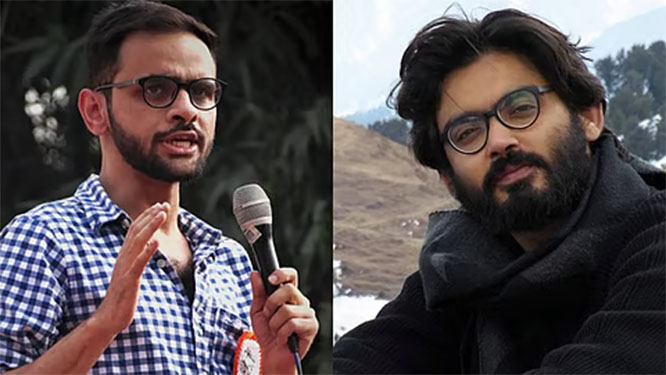
The Supreme Court on Monday refused to grant bail to activists Umar Khalid and Sharjeel Imam in the 2020 Delhi riots case, saying there was a prima facie case against them under the Unlawful Activities (Prevention) Act.

However, a bench of Justices Aravind Kumar and N V Anjaria granted bail to activists Gulfisha Fatima, Meeran Haider, Shifa Ur Rehman, Mohd. Saleem Khan, and Shadab Ahmad in the case.

Here is what the Bench said on the matter:

"This court is satisfied that the prosecution material disclosed a prima facie allegation against the appellants Umar Khalid and Sharjeel Imam. The statutory threshold stands attracted qua these appellants. This stage of proceedings does not justify their enlargement on bail," the Bench said.

"Umar Khalid and Sharjeel Imam stand on a qualitatively different footing as compared to other accused," it said, as reported by Bar and Bench.

The Court added that Khalid and Imam can "move for bail on completion of examination of protected witnesses or completion of one year from present order."

The Court further stated, "The UAPA as a special statute represents a legislative judgment as to the conditions on which bail may be granted in pre trial stage. Delay serves as a trigger for heightened judicial scrutiny. The discussion has been confined to delay and prolonged incarceration. UAPA offences are rarely confined to isolated acts. The statutory scheme reflects this understanding," as mentioned by the publication.

"Section 43D(5) of UAPA departs from general provisions for grant of bail. (But) it does not exclude judicial scrutiny or mandate denial of bail in default," the Bench noted.

On December 10, the top court reserved its verdict on separate pleas of the accused after hearing arguments from Solicitor General Tushar Mehta and Additional Solicitor General S V Raju, appearing for Delhi police, and senior advocates Kapil Sibal, Abhishek Singhvi, Siddhartha Dave, Salman Khurshid and Sidharth Luthra, appearing for the accused.

Umar, Sharjeel and the other accused were booked under the Unlawful Activities (Prevention) Act (UAPA), an anti-terror law, and provisions of the erstwhile IPC for allegedly being the "masterminds" of the 2020 riots, which left 53 people dead and more than 700 injured in northeast Delhi.

The violence erupted during widespread protests against the Citizenship (Amendment) Act (CAA) and the National Register of Citizens (NRC).

The accused moved the apex court challenging a Delhi High Court order dated September 2 denying them bail in the "larger conspiracy" case of the February 2020 riots.

Comments

Add new comment

  • Coastaldigest.com reserves the right to delete or block any comments.
  • Coastaldigset.com is not responsible for its readers’ comments.
  • Comments that are abusive, incendiary or irrelevant are strictly prohibited.
  • Please use a genuine email ID and provide your name to avoid reject.