Not just 'Missile Man': Here are five scientific contributions of APJ Abdul Kalam on his 89th birth anniversary

News Network
October 15, 2020

kalam.jpg

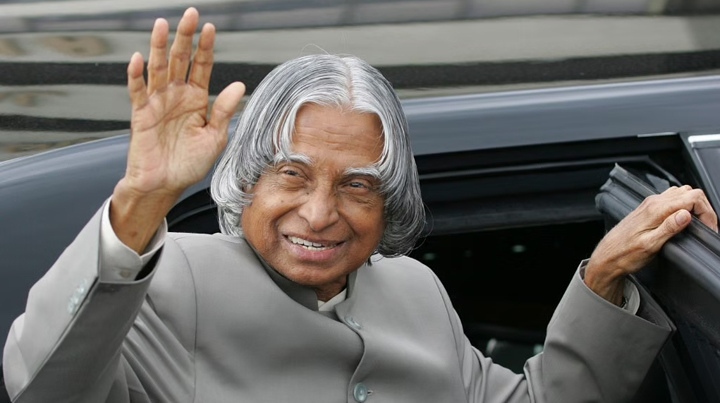
New Delhi, Oct 15: From being the people's President to spearheading the development of the most significant Indian missiles, late President Dr APJ Abdul Kalam has contributed to the development of the country in different spheres.

As an aerospace scientist, Kalam worked with India's two major space research organisations - Defence Research and Development Organisation (DRDO) and Indian Space Research Organisation (ISRO).

While, his work in the development and operationalisation of Indigenous guided missiles - AGNI and PRITHVI - earned him the title of the 'Missile Man of India,' there are many more ways in which Kalam has helped India in the division of science and technology.

On the 89th birth anniversary of Dr APJ Abdul Kalam, here are 5 of his scientific contributions to the country: -

1. Directed the project to develop India's first Satellite Launch Vehicle (SLV)

Back in 1980s, when India had hardly dreamt of having its indigenous Satellite Launch Vehicle (SLV), Dr Kalam's over 10-year-long hard work as the project director for the development of the indigenous Satellite Launch Vehicle at ISRO led to the ground-breaking scientific development.

It was in July 1980, that India's SLV-III successfully deployed the Rohini satellite in the near-Earth orbit leading to the country becoming a member of the exclusive Space Club.

2. Directed projects for the development of ballistic missiles

Kalam also headed the projects Devil and Valiant which had the aim of developing ballistic missiles using the technology behind the successful SLV program. Under mission Kalam with other projects, members developed many missiles including AGNI which is an intermediate-range ballistic missile and PRITHVI which is a surface-to-surface missile.

3. Headed multiple nuclear tests at Pokhran

Serving as the Chief Scientific Adviser to the then Prime Minister, Kalam played a major role in heading the Pokhran-II nuclear testing leading to him being known as the best nuclear scientist of the country at that time. The nuclear testing under the supervision of Kalam during the period of July 1992 to December 1999 made India a nuclear-armed state.

4. He worked in making healthcare accessible to all

Working jointly with cardiologist Soma Raju, the late President developed a cost-effective coronary stent 'Kalam-Raju Stent' which helped in making healthcare accessible to all.

5. Developed the rugged 'Kalam-Raju tablet'

The duo of Kalam and Soma Raju later in 2012 designed a rugged tablet computer for better health care administration in the rural pockets of the country. They termed it the 'Kalam-Raju tablet.'

For his work in the stream of science and politics, the 11th President was also awarded India's highest civilian honour or the Bharat Ratna.

Kalam breathed his last on July 27, 2015, while delivering a lecture at the Indian Institute of Management Shillong when he collapsed and died from a cardiac arrest.

Five years after his demise, his contributions are still remembered as some of the best scientific and technological developments in the country.

Comments

YUVI
 - 
Friday, 19 Nov 2021

This Information Helped Me A Lot

Add new comment

  • Coastaldigest.com reserves the right to delete or block any comments.
  • Coastaldigset.com is not responsible for its readers’ comments.
  • Comments that are abusive, incendiary or irrelevant are strictly prohibited.
  • Please use a genuine email ID and provide your name to avoid reject.
News Network
December 7,2025

envoy.jpg

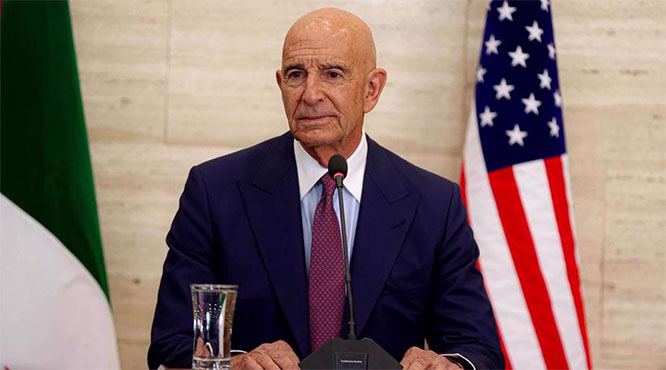
Since 1946, the United States has attempted 93 coups or “regime change” operations across the world — including two in Iran, US Special Envoy for Syria Tom Barrack has admitted.

Speaking to the UAE-based IMI Media Group, in remarks published by The National, Barrack said Washington tried twice to overthrow the Iranian government but failed both times. 

“For (Trump) then to be imputed with regime change — we had two regime changes in Iran already. Neither one worked. So I think wisely leave it to the region to solve,” said Barrack, who also serves as the US ambassador to Turkey.

His comments come six months after the US joined Israel in airstrikes against Iran during ongoing indirect nuclear negotiations between Tehran and Washington.

On June 13, Israel launched an attack on Iran that killed at least 1,064 people and hit civilian infrastructure. Days later, the United States targeted three nuclear facilities — Fordow, Natanz and Isfahan — in what Iran called a clear violation of international law. Iranian retaliation eventually forced a halt to the assault on June 24.

Barrack further claimed that US President Donald Trump and Foreign Secretary Marco Rubio are “not into regime change” and prefer a regional approach driven by Middle Eastern countries themselves. According to him, regional dialogue and non-interference by outside powers offer a more durable path forward.

He added that Washington is still open to an agreement with Tehran if Iranian authorities show “seriousness” and willingness to engage constructively.

However, Iran maintains the US has not shown readiness for meaningful talks. In an interview with Japan’s Kyodo News, Iranian Foreign Minister Abbas Araghchi said negotiations could advance only if Washington acknowledges Iran’s right to peaceful nuclear energy and lifts unilateral sanctions.

Comments

Add new comment

  • Coastaldigest.com reserves the right to delete or block any comments.
  • Coastaldigset.com is not responsible for its readers’ comments.
  • Comments that are abusive, incendiary or irrelevant are strictly prohibited.
  • Please use a genuine email ID and provide your name to avoid reject.
News Network
December 16,2025

bengal.jpg

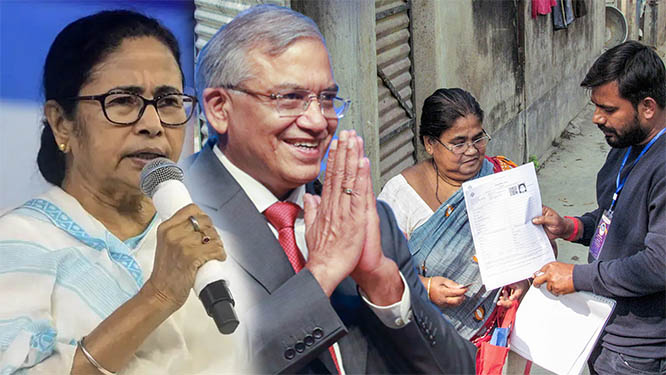
The deletion of over 58 lakh names from West Bengal’s draft electoral rolls following a Special Intensive Revision (SIR) has sparked widespread concern and is likely to deepen political tensions in the poll-bound state.

According to the Election Commission, the revision exercise has identified 24 lakh voters as deceased, 19 lakh as relocated, 12 lakh as missing, and 1.3 lakh as duplicate entries. The draft list, published after the completion of the first phase of SIR, aims to remove errors and duplication from the electoral rolls.

However, the scale of deletions has raised fears that a large number of eligible voters may have been wrongly excluded. The Election Commission has said that individuals whose names are missing can file objections and seek corrections. The final voter list is scheduled to be published in February next year, after which the Assembly election announcement is expected. Notably, the last Special Intensive Revision in Bengal was conducted in 2002.

The development has intensified the political row over the SIR process. Chief Minister Mamata Banerjee and her Trinamool Congress have strongly opposed the exercise, accusing the Centre and the Election Commission of attempting to disenfranchise lakhs of voters ahead of the elections.

Addressing a rally in Krishnanagar earlier this month, Banerjee urged people to protest if their names were removed from the voter list, alleging intimidation during elections and warning of serious consequences if voting rights were taken away.

The BJP, meanwhile, has defended the revision and accused the Trinamool Congress of politicising the issue to protect what it claims is an illegal voter base. Leader of the Opposition Suvendu Adhikari alleged that the ruling party fears losing power due to the removal of deceased, fake, and illegal voters.

The controversy comes amid earlier allegations by the Trinamool Congress that excessive work pressure during the SIR led to the deaths by suicide of some Booth Level Officers (BLOs), for which the party blamed the Election Commission. With the draft list now out, another round of political confrontation appears imminent.

As objections begin to be filed, the focus will be on whether the correction mechanism is accessible, transparent, and timely—critical factors in ensuring that no eligible voter is denied their democratic right ahead of a crucial election.

Comments

Add new comment

  • Coastaldigest.com reserves the right to delete or block any comments.
  • Coastaldigset.com is not responsible for its readers’ comments.
  • Comments that are abusive, incendiary or irrelevant are strictly prohibited.
  • Please use a genuine email ID and provide your name to avoid reject.
News Network
December 15,2025

Mangaluru, Dec 15: Air India Express has announced that it will resume direct flight services between Mangaluru and Muscat from March 2026, restoring an important international air link for passengers from the coastal region.

Airport authorities said the service will operate twice a week—on Sundays and Tuesdays—from March 1. The initial flights are scheduled on March 3, 8 and 10, followed by March 15 and 17, with the same operating pattern to continue thereafter. The flight duration is approximately three hours and 25 minutes.

The Mangaluru–Muscat route was earlier operated under the 2025 summer schedule, with services beginning on July 14. At that time, Air India Express had operated four flights a week before suspending the service.

Officials said the summer schedule will come into effect from March 29, after which changes in flight timings and departure schedules from Mangaluru are expected. Passengers have been advised to check the latest schedules while planning their travel.

The resumption of direct flights to Muscat is expected to significantly benefit expatriates, business travellers and others, further strengthening Mangaluru’s air connectivity with the Gulf region.

Comments

Add new comment

  • Coastaldigest.com reserves the right to delete or block any comments.
  • Coastaldigset.com is not responsible for its readers’ comments.
  • Comments that are abusive, incendiary or irrelevant are strictly prohibited.
  • Please use a genuine email ID and provide your name to avoid reject.