₹50,000-cr military budget hike expected after Operation Sindoor; overall military allocation may cross ₹7 lakh-crore!

Agencies
May 16, 2025

operation.jpg

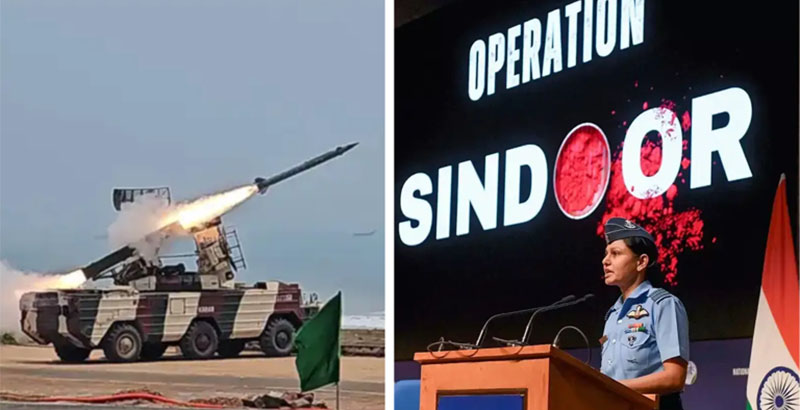
New Delhi: India’s defense budget is set to receive an unprecedented mid-year boost of ₹50,000 crore in the aftermath of Operation Sindoor, according to senior government officials cited by multiple media outlets. The increase, expected to be formalized through a supplementary budget during the Winter Session of Parliament, will push the overall military allocation for 2025–26 beyond ₹7 lakh crore — a record in the nation's history.

This boost comes on top of the ₹6.81 lakh crore already earmarked for defense in the Union Budget presented on February 1, which itself marked a sharp 9.2% rise from the previous year’s ₹6.22 lakh crore. At nearly 13% of the total Union Budget, defense continues to be the single-largest expenditure of the central government.

Sources quoted in reports by The Hindu, India Today, and Business Standard say that the additional allocation will primarily fund weapons procurement, strategic research and development, and expansion of indigenous defense systems.

Taxpayer Money & Military Spending
The ballooning defense allocation raises important questions about fiscal priorities, as the central government continues to invest heavily in its military apparatus. While national security is undoubtedly critical, some experts warn that such massive spending — funded by taxpayer money — should be subject to greater public debate and transparency.

The trend began in 2014, the first year of the Modi administration, when the defense allocation stood at ₹2.29 lakh crore. Since then, the budget has more than tripled in a decade, signaling a clear policy shift toward military modernization and assertive defense posturing.

The dramatic budget escalation follows Operation Sindoor, India's military response to the April 22 terror attack in Pahalgam, Jammu and Kashmir. In that incident, 26 civilians were killed in an assault attributed to the Pakistan-backed terrorist group Lashkar-e-Taiba.

India retaliated with precision air strikes on nine alleged terror hubs located in Pakistan and Pakistan-occupied Kashmir. In a display of military preparedness, Indian forces showcased sophisticated coordination between their air and ground defense systems — notably the domestically developed Akash missile system and the Russian-origin S-400.

Strategic Signals

In his post-operation speech, Prime Minister Narendra Modi issued a stern warning to terror networks and their state sponsors. He stated that India’s approach to cross-border terrorism had irreversibly changed, and no talks would be entertained unless they pertain to dismantling terror infrastructure and restoring Indian sovereignty over Pak-occupied Kashmir.

Following the military engagement, Pakistan launched retaliatory drone and missile attacks, targeting both military and civilian locations. Most were intercepted or neutralized by India’s air defense systems, reinforcing confidence in the nation's growing technological capabilities.

Defense Minister Rajnath Singh has reiterated the government's commitment to indigenous production, stating in a recent press briefing that relying on foreign suppliers for national defense is “not a viable long-term solution.”

As India steers into an increasingly volatile regional climate, the government's substantial financial commitment to defense has invited both praise and concern. While some see it as a necessary step in safeguarding the nation, others caution that such steep investments, ultimately borne by taxpayers, demand more rigorous public scrutiny.


Comments

Add new comment

  • Coastaldigest.com reserves the right to delete or block any comments.
  • Coastaldigset.com is not responsible for its readers’ comments.
  • Comments that are abusive, incendiary or irrelevant are strictly prohibited.
  • Please use a genuine email ID and provide your name to avoid reject.
News Network
December 7,2025

SHRIMP.jpg

Mangaluru, Dec 7: A rare bamboo shrimp has been rediscovered on mainland India more than 70 years after it was last reported, confirming for the first time the presence of Atyopsis spinipes in the country. The find was made by researchers from the Centre for Climate Change Studies at Sathyabama Institute of Science and Technology, Chennai, during surveys in Karnataka and Odisha.

The team — shrimp expert Dr S Prakash, PhD scholar K Kunjulakshmi, and Mangaluru-based researcher Maclean Antony Santos — combined field surveys, ecological assessments and DNA analysis to identify the elusive species. Their findings, published in Zootaxa, resolve decades of taxonomic confusion stemming from a 1951 report that misidentified the species as Atyopsis moluccensis without strong evidence.

The shrimp has now been confirmed at two locations: the Mulki–Pavanje estuary near Mangaluru and the Kuakhai River in Bhubaneswar. Historical specimens from the Andaman Islands, previously labelled as A. moluccensis, were also found to be misidentified and actually belong to A. spinipes.

The rediscovery began after an aquarium hobbyist in Odisha spotted a shrimp in 2022, prompting systematic surveys across Udupi, Karwar and Mangaluru. Four female specimens were collected in Mulki and one in Odisha, all genetically matching.

Researchers warn the species may exist in very small, vulnerable populations as freshwater habitats face increasing pressure from pollution, sand mining and infrastructure development. All verified specimens have been deposited with the Zoological Survey of India for future reference.

Comments

Add new comment

  • Coastaldigest.com reserves the right to delete or block any comments.
  • Coastaldigset.com is not responsible for its readers’ comments.
  • Comments that are abusive, incendiary or irrelevant are strictly prohibited.
  • Please use a genuine email ID and provide your name to avoid reject.
News Network
December 6,2025

indigoticket.jpg

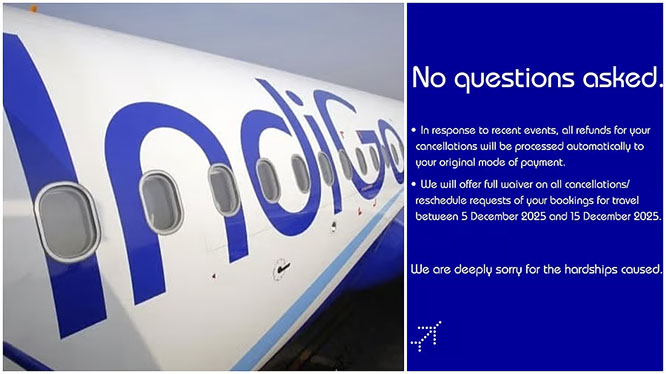
With IndiGo flight disruptions impacting thousands of passengers, the airline on Saturday said that it will offer full waiver on all cancellations/reschedule requests for travel bookings between December 5, 2025 and December 15, 2025.

Earlier in the day, the civil aviation ministry had directed the airline to complete the ticket refund process for the cancelled flights by Sunday evening, as well as ensure baggage separated from the travellers are delivered in the next two days.

In a post on X, titled 'No questions asked', IndiGo wrote, "In response to recent events, all refunds for your cancellations will be processed automatically to your original mode of payment."

"We are deeply sorry for the hardships caused," it further added.

Several passengers, however, complained of not getting full refund as promised by the airline.

Netizens have shared screenchots of getting charged for airline cancellation fee and convenience fee.

"Please tell me why u have did this airline cancellation charges when u say full amount will be refunded (sic)," a user wrote sharing a screenshot of the refund page.

"Well, but you have still debited the convenience charges," wrote another.

Passengers have also raised concerns about the "cancel" option being disabled on the IndiGo app. "First enable the 'Cancel' button on your App & offer full refund on tickets cancelled by customers between the said dates," wrote a user.

A day after the country's largest airline, IndiGo, cancelled more than 1,000 flights and caused disruptions for the fifth day on Saturday, the ministry said that any delay or non-compliance in refund processing will invite immediate regulatory action.

The refund process for all cancelled or disrupted flights must be completed by 8 pm on Sunday, the ministry said in a statement.

"Airlines have also been instructed not to levy any rescheduling charges for passengers whose travel plans were affected by cancellations," it said.

On Saturday, more than 400 flights were cancelled at various airports.

IndiGo has also been instructed to set up dedicated passenger support and refund facilitation cells.

Comments

Add new comment

  • Coastaldigest.com reserves the right to delete or block any comments.
  • Coastaldigset.com is not responsible for its readers’ comments.
  • Comments that are abusive, incendiary or irrelevant are strictly prohibited.
  • Please use a genuine email ID and provide your name to avoid reject.
News Network
December 16,2025

jordan.jpg

Prime Minister Narendra Modi on Monday held talks with Jordan’s King Abdullah II in Amman, during which the two leaders discussed ways to further strengthen bilateral relations, with the Prime Minister outlining an eight-point vision covering key areas of cooperation.

Describing the meeting as “productive”, PM Modi said he shared a roadmap focused on trade and economy, fertilisers and agriculture, information technology, healthcare, infrastructure, critical and strategic minerals, civil nuclear cooperation, and people-to-people ties.

In a post on social media platform X, the Prime Minister praised King Abdullah II’s personal commitment to advancing India–Jordan relations, particularly as both countries mark the 75th anniversary of the establishment of diplomatic ties this year.

“Held productive discussions with His Majesty King Abdullah II in Amman. His personal commitment towards vibrant India-Jordan relations is noteworthy. This year, we are celebrating the 75th anniversary of our bilateral diplomatic relations,” PM Modi said.

The meeting took place at the Al Husseiniya Palace, where the two leaders also exchanged views on regional and global issues of mutual interest. According to the Ministry of External Affairs (MEA), both sides agreed to further deepen cooperation in areas including trade and investment, defence and security, counter-terrorism and de-radicalisation, fertilisers and agriculture, infrastructure, renewable energy, tourism, and heritage.

The MEA said both leaders reaffirmed their united stand against terrorism.

PM Modi arrived in Amman earlier on Monday and was received by Jordanian Prime Minister Jafar Hassan, who accorded him a formal welcome. Following the talks, King Abdullah II hosted a banquet dinner in honour of the Prime Minister, reflecting the warmth of bilateral ties.

Jordan is the first leg of PM Modi’s three-nation tour. From Amman, the Prime Minister will travel to Ethiopia at the invitation of Prime Minister Abiy Ahmed Ali, marking his first official visit to the African nation. The tour will conclude with a visit to Oman.

Comments

Add new comment

  • Coastaldigest.com reserves the right to delete or block any comments.
  • Coastaldigset.com is not responsible for its readers’ comments.
  • Comments that are abusive, incendiary or irrelevant are strictly prohibited.
  • Please use a genuine email ID and provide your name to avoid reject.