Uttarakhand becomes first state to implement Uniform Civil Code

News Network
January 27, 2025

uccuttarakhand.jpg

The Uniform Civil Code (UCC), a law that has faced long-standing criticism from the Opposition, will officially come into effect in Uttarakhand on January 27, making it the first state in independent India to put into effect such a law.

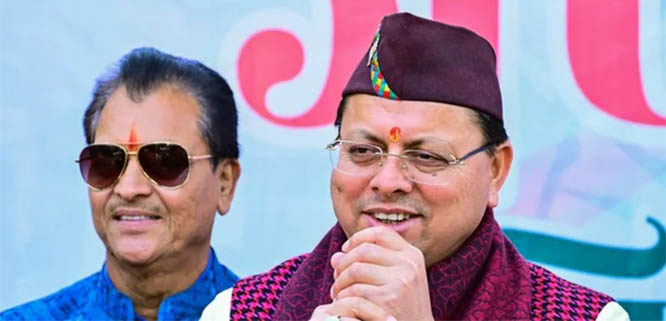
According to the state’s chief minister Pushkar Singh Dhami, the government has completed all preparations to implement the law, including getting approval of the rules for the implementation of the Act and training of officials concerned. The rationale given for the law is that it will bring about ‘uniformity in the society and ensure equal rights and responsibilities for all citizens.’

"UCC is just an offering made by our state in the great 'yagya' being performed by the Prime Minister to make the country a developed, organised, harmonious and self-reliant nation," PTI quoted Dhami as saying in a statement.

The BJP had made a promise to implement the Uniform Civil Code in Uttarakhand in the run-up to the 2022 assembly polls.These polls saw the party storming to power for a second consecutive term, something never done by any other party in the state since its creation in 2000.

According to CM Dhami, the historic mandate was because of the party's commitment to passing the UCC.

The Uniform Civil Code journey in Uttarakhand

The Uttarakhand state cabinet cleared a proposal to form an expert panel on the Uniform Civil Code in March 2022 in the first cabinet meeting after winning the assembly elections. The panel, headed by retired Supreme Court Judge Ranjana Prakash Desai, was constituted on May 27, 2022 to prepare the draft of the UCC.

The Desai committee submitted a comprehensive draft in four volumes, prepared after one and a half years of dialogue with different sections of the state's population. It was sent to the state on February 2, 2024 and just a few days later, the Uttarakhand assembly passed the UCC bill. President Droupadi Murmu gave it her assent in March 2024, nearly two years after the initial proposal.

Another expert committee was at work after that, headed by former chief secretary Shatrughna Singh. It was formed to frame the rules and regulations for the implementation of the Act. The Sinha committee submitted its report to the state government late last year.

The state cabinet gave its approval recently and authorised the chief minister to decide a date for its implementation. Dhami decided the date to be January 27, 2025, a day after the country celebrated its 76th Republic Day.

What is in the Uttarakhand UCC?

The Uniform Civil Code Act of Uttarakhand will govern and regulate the laws relating to marriage and divorce, succession, live-in relationships and related matters.

It sets equal marriageable age for men and women, grounds of divorce and procedures across all religions, and bans polygamy and 'halala'.

Doon University Vice Chancellor Surekha Dangwal, who was part of the panel that drafted the UCC and was among those who framed the rules for its implementation, described to PTI the provisions aimed at bringing about gender parity in matters of marriage, divorce and succession, treating all children as legitimate including those born of void or voidable marriages, simplifying the process of preparing a will and regulating live-in relationships as the most outstanding in the UCC. She termed gender parity across all religions as the spirit of UCC.

According to Duggal, the UCC makes registration of all marriages and live-in relationships mandatory. She also said that the government has created facilities to help people register their marriages online so that they do not have to run around government offices for it.

"Another remarkable feature of the UCC is that it treats all children as legitimate. We have in fact totally done away with the term illegitimate in the context of children," she said. The UCC also makes a special provision for defence personnel called "privileged will" which can be made both in writing or by word of mouth.

Any soldier or air force personnel engaged in an expedition or actual warfare or a mariner at sea can make a privileged will for which rules have been kept flexible.

UCC criticism

Opposition leaders have criticized the UCC, arguing that it may lead to societal division along religious lines and might be impractical and overly ambitious.
The debate surrounding the UCC extends beyond Uttarakhand, as Article 44 of the Indian Constitution advocates for a uniform civil code across the country. Prime Minister Narendra Modi has referenced the Supreme Court's direction on the need for a common code, stressing that fulfilling the vision of the Constitution's framers remains a national goal.

Uttarakhand's implementation of the UCC is likely to set a precedent, with other states potentially following suit. The success of the law's implementation will depend on its ability to balance individual rights and social harmony.

As Uttarakhand stands at the forefront of this legal revolution, the coming weeks will offer a clearer picture of how the UCC will be received, both in the state and across India. The state's experience with the UCC will undoubtedly shape the future of personal law reform in the country.

What is the implementation process?

Shailesh Bagauli, secretary (home), stated that the government will issue two notifications: one for the implementation of the UCC and another for the rules and regulations, officially launching the UCC in the state.

Dhami had promised to implement the UCC if re-elected during the 2022 state polls. After becoming CM, he appointed a five-member committee led by Justice Ranjana Prakash Desai to draft the code, which received feedback from over 2.3 lakh people, representing nearly 10% of Uttarakhand's families.

The 740-page draft was presented to the chief minister on February 2, 2024, approved by the cabinet on February 4, tabled in the assembly on February 6, and passed the following day. Governor Lt Gen Gurmit Singh (retd) approved the bill on February 28 and President Droupadi Murmu subsequently signed it on March 11.

Comments

Add new comment

  • Coastaldigest.com reserves the right to delete or block any comments.
  • Coastaldigset.com is not responsible for its readers’ comments.
  • Comments that are abusive, incendiary or irrelevant are strictly prohibited.
  • Please use a genuine email ID and provide your name to avoid reject.
News Network
January 20,2026

DGP.jpg

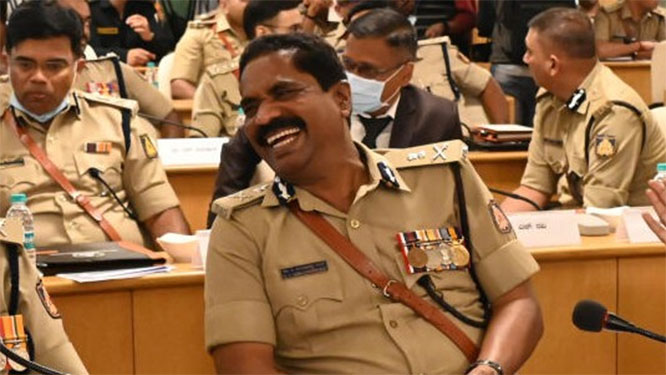
Karnataka DGP (Civil Rights Enforcement) K Ramachandra Rao was suspended with immediate effect, as per a state government order issued on Monday, 19 January. The order cited conduct unbecoming of a government servant and causing embarrassment to the state administration.

The Karnataka government suspended Rao after a purported video showed him in a compromising position with a woman inside his official chamber. The video went viral on social media. Rao rejected the videos outright, terming them "fabricated and false".

Who is K Ramachandra Rao?

Rao is a DGP-rank officer who was heading the Directorate of Civil Rights Enforcement until his suspension. He was promoted to DGP in September 2023 and assumed office in October 2023, the Sunday Guardian reported.

He also served as the Chairman and Managing Director of the Karnataka State Police Housing and Infrastructure Development Corporation Limited.

His stint as the Inspector General of Police (IGP) for the Southern Range was also marred by controversy. In 2014, during a cash seizure near Mysuru’s Yelwal, officials claimed the seized amount was ₹20 lakh, while the accused (Kerala-based merchants) claimed it was around ₹2.27 crore.

Rao, who was present during the seizure, denied all allegations. However, he was transferred soon after.

Allegations of collusion with a businessman surfaced, and a senior police officer was quoted by The Sunday Guardian as saying, “In Rao’s case, the CID has clearly mentioned that there was a great degree of lapse on the part of Rao and a deputy superintendent of police after it was brought to their notice that a few policemen, including a gunman attached to the IGP, were involved in the robbery.”

Rao had denied all wrongdoing in that incident. Despite past controversies, he rose to the state’s top police position, the Sunday Guardian reported.

Ranya Rao’s stepfather

Rao is the stepfather of Kannada actress Harshavardhini Ranya alias Ranya Rao, accused of orchestrating the illegal import of gold worth over ₹12.56 crore from Dubai to India along with two others — businessman Tarun Raju, and jewellery dealer Sahil Jain.

‘Obscene video’ controversy

A viral video showed Rao behaving inappropriately with a woman inside his office while in uniform.

The Karnataka government said in its Monday order that “vide videos and news reports widely broadcast on public news channels and media platforms, it is observed that Dr K Ramachandra Rao has acted in an obscene manner which is unbecoming of a Government Servant and also causing embarrassment to the Government.”

The order said the matter was examined by the state government, which found that the officer's conduct amounted to a violation of Rule 3 of the All India Services (Conduct) Rules, 1968.

The government said it is prima facie satisfied that "it is necessary to place Rao under suspension with immediate effect, pending inquiry".

During the suspension period, Rao will be entitled to subsistence allowance as per Rule 4 of the All India Services (Discipline and Appeal) Rules, 1969.

The order also places restrictions on his movement, stating that during the period of suspension, the officer must not leave headquarters under any circumstances without the written permission of the state government.

Comments

Add new comment

  • Coastaldigest.com reserves the right to delete or block any comments.
  • Coastaldigset.com is not responsible for its readers’ comments.
  • Comments that are abusive, incendiary or irrelevant are strictly prohibited.
  • Please use a genuine email ID and provide your name to avoid reject.
News Network
January 23,2026

modIKERALA.jpg

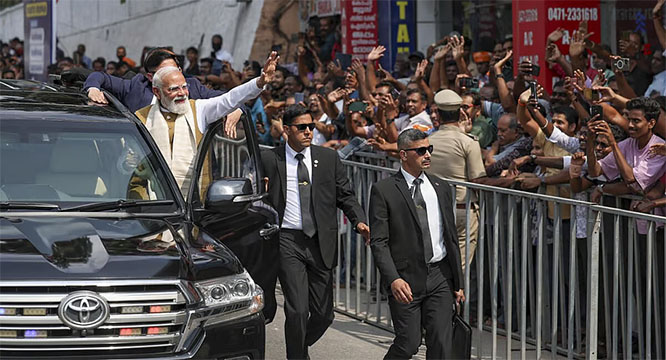
Prime Minister Narendra Modi, during his visit to Thiruvananthapuram on Friday, January 23, indicated that the Bharatiya Janata Party (BJP) is aiming to expand its political footprint in Kerala ahead of the Assembly elections scheduled in the coming months.

Speaking at a BJP-organised public meeting, Modi drew parallels between the party’s early electoral gains in Gujarat and its recent victory in the Thiruvananthapuram Municipal Corporation. The civic body win, which ended decades of Left control, was cited by the Prime Minister as a possible starting point for the party’s broader ambitions in the state.

Recalling BJP’s political trajectory in Gujarat, Modi said the party was largely insignificant before 1987 and received little media attention. He pointed out that the BJP’s first major breakthrough came with its victory in the Ahmedabad Municipal Corporation that year.

“Just as our journey in Gujarat began with one city, Kerala’s journey has also started with a single city,” Modi said, suggesting that the party’s municipal-level success could translate into wider electoral acceptance.

The Prime Minister alleged that successive governments led by the Left Democratic Front (LDF) and the United Democratic Front (UDF) had failed to adequately develop Thiruvananthapuram. He accused both fronts of corruption and neglect, claiming that basic infrastructure and facilities were denied to the capital city for decades.

According to Modi, the BJP’s control of the civic body represents a shift driven by public dissatisfaction with the existing political alternatives. He asserted that the BJP administration in Thiruvananthapuram had begun working towards development, though no specific details or timelines were outlined.

Addressing the gathering at Putharikandam Maidan, Modi said the BJP intended to project Thiruvananthapuram as a “model city,” reiterating his party’s commitment to governance-led change.

The Prime Minister’s visit to Kerala also included the inauguration of several development projects and the flagging off of new train services, as the BJP intensifies its political outreach in the poll-bound state.

Comments

Add new comment

  • Coastaldigest.com reserves the right to delete or block any comments.
  • Coastaldigset.com is not responsible for its readers’ comments.
  • Comments that are abusive, incendiary or irrelevant are strictly prohibited.
  • Please use a genuine email ID and provide your name to avoid reject.
News Network
January 20,2026

Mangaluru: In a major step towards strengthening rural innovation, the Office of the Principal Scientific Adviser (PSA) to the Government of India is supporting the establishment of RuTAGe Smart Village Centres (RSVCs) across the country through collaborations with academic institutions, civil society organisations and philanthropic partners.

As part of this national initiative, Nitte (Deemed to be University) will set up the first RSVCs in the region at Nitte GP in Udupi district and at the Nitte Health Centre, Sevanjali Trust, Farangipete, in Dakshina Kannada district. The centres will be inaugurated on January 21. In South India, the programme is being implemented by the Section Infin-8 Foundation (SI-8).

Speaking to reporters on Monday, SI-8 founder-director Vishwas US said experts from Nitte University and SI-8 would work closely with farmers, students, youth and local entrepreneurs to adapt and deploy technologies tailored to local needs.

Project head Prof Iddya Karunasagar, representing Nitte DU, said the RSVCs at Nitte and Farangipete would serve as demonstration hubs for a wide range of agriculture, energy, skill-development and assistive technologies. These include solar dryers for fruits, vegetables and crops; soil-testing solutions; power weeders and women-friendly farm tools; wind-powered devices for rural artisans; grain storage systems; grass-cutting and tree-climbing equipment; and liquid fertiliser production using cowshed waste.

SI-8 CEO Aravind C Kumar said the centres would also provide access to digital and knowledge-based platforms such as ISRO applications, government scheme portals, market linkage tools and gamified learning resources, along with assistive technologies for persons with visual impairments.

Highlighting the broader impact of the initiative, Principal Scientific Adviser Prof Ajay Kumar Sood said it demonstrated how applied research could bridge the rural–urban divide and help create self-reliant, technology-enabled villages.

The initiative has been made possible through philanthropic support from Dr NC Murthy of ACM Business Solutions, LLC, USA. Dr Sapna Poti, Director (Strategic Alliances) at the Office of the Principal Scientific Adviser, said the long-term objective is to build self-sufficient, technology-driven communities capable of generating sustainable livelihoods on their own.

Comments

Add new comment

  • Coastaldigest.com reserves the right to delete or block any comments.
  • Coastaldigset.com is not responsible for its readers’ comments.
  • Comments that are abusive, incendiary or irrelevant are strictly prohibited.
  • Please use a genuine email ID and provide your name to avoid reject.