Indian growth narrative of 7% GDP has done real damage

News Network
June 14, 2019

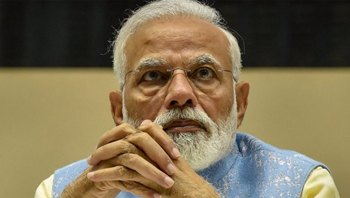
Jun 14: For four years, India has battled the suspicion that its new and improved GDP series is a rose-tinted view of reality. Now that Narendra Modi is prime minister for a second term, he must see that battle for what it is: a lost cause. Unlike harmless advertising puffery around a toothpaste that kills 99.9% of germs, the narrative of 7% growth has done real damage. This week, a top former government adviser provided a statistical estimate. The actual GDP growth rate between 2012 and 2017, according to Arvind Subramanian’s working paper for Harvard University, may have been 2.5 percentage points lower than the official 7% rate.

India’s level of economic output may be overstated by anywhere between 9% and 21%. The issue isn’t whether Subramanian’s technique of looking at other countries’ performance to build a picture of India’s growth is robust. As my colleague Mihir Sharma argues, if senior officials who served Modi in his first term don’t believe the data, nobody else will trust them either.

Going by the early official response to the critique, especially the promise of a point-by-point rebuttal to come later, it’s clear that Team Modi wants to continue to brazen it out. The prime minister should see the economic cost of that approach, even if his advisers don’t.

Voters don’t care about abstract statistical artifacts like GDP. They care about jobs, state subsidies and programs, and the cost of living. It was India Inc. that bought into the claim of 7% growth, and found itself badly deceived when the expected operating profits to repay creditors never materialized. Investments had stalled even before Modi’s first term, but the deleveraging that was badly needed to deal with a slowdown also got delayed.

Misleading GDP data is one of several reasons why most balance sheets in India are stressed today. It’s not surprising, therefore, that the most ardent supporters of the new GDP series are accountants by training. When 108 economists and social scientists wrote to the government asking it to restore sanity to the published figures, 131 accountants wrote their own letter, accusing the former group of running a politically motivated campaign.

India’s bean counters do have a dog in the GDP fight. Some of them, as fund managers, have given investors’ money to firms that are in deep trouble now. Others, as auditors, turned a blind eye to sharp corporate practices, related-party lending and self-dealing, perhaps thinking that all boats would be kept afloat by high growth. Now they’re scared.

Naturally, financial intermediaries in Mumbai don’t want Modi to tell creditors and debtors the truth about growth, especially since they can’t undo their previous bets on 7% expansion without career-limiting, wealth-destroying – and possibly even freedom-endangering – consequences. But if Modi doesn’t order a thorough revamp of the discredited data in his second five-year term, the danger is that every quarterly growth announcement from now on will be discounted by 2.5 percentage points – the Subramanian factor. That means asking investors to accept that the March quarter’s published 5.8% GDP expansion – a fourth straight quarter of cooling – may have been as low as 3.3%.

Who will invest in a labour-surplus nation at those near-recessionary growth rates?

Comments

Add new comment

  • Coastaldigest.com reserves the right to delete or block any comments.
  • Coastaldigset.com is not responsible for its readers’ comments.
  • Comments that are abusive, incendiary or irrelevant are strictly prohibited.
  • Please use a genuine email ID and provide your name to avoid reject.
News Network
December 6,2025

pilot.jpg

New Delhi: IndiGo, India’s largest airline, faced major operational turbulence this week after failing to prepare for new pilot-fatigue regulations issued by the Directorate General of Civil Aviation (DGCA). The stricter rules—designed to improve flight safety—took effect in phases through 2024, with the latest implementation on November 1. IndiGo has acknowledged that inadequate roster planning led to widespread cancellations and delays.

Below are the key DGCA rules that affected IndiGo’s operations:

1. Longer Mandatory Weekly Rest

Weekly rest for pilots has been increased from 36 hours to 48 hours.

The government says the extended break is essential to curb cumulative fatigue. This rule remains in force despite the current crisis.

2. Cap on Night Landings

Pilots can now perform only two night landings per week—a steep reduction from the earlier limit of six.

Night hours, defined as midnight to early morning, are considered the least alert period for pilots.

Given the disruptions, this rule has been temporarily relaxed for IndiGo until February 10.

3. Reduced Maximum Night Flight Duty

Flight duty that stretches into the night is now capped at 10 hours.

This measure has also been kept on hold for IndiGo until February 10 to stabilize operations.

4. Weekly Rest Cannot Be Replaced With Personal Leave

Airlines can no longer count a pilot’s personal leave as part of the mandatory 48-hour rest.

Pilots say this closes a loophole that previously reduced actual rest time.

Currently, all airlines are exempt from this rule to normalise travel.

5. Mandatory Fatigue Monitoring

Airlines must submit quarterly fatigue reports along with corrective actions to DGCA.

This system aims to create a transparent fatigue-tracking framework across the industry.

The DGCA has stressed that these rules were crafted to strengthen flight safety and align India with global fatigue-management standards. The temporary relaxations are expected to remain until February 2025, giving IndiGo time to stabilise its schedules and restore normal air travel.

Comments

Add new comment

  • Coastaldigest.com reserves the right to delete or block any comments.
  • Coastaldigset.com is not responsible for its readers’ comments.
  • Comments that are abusive, incendiary or irrelevant are strictly prohibited.
  • Please use a genuine email ID and provide your name to avoid reject.
News Network
December 16,2025

bengal.jpg

The deletion of over 58 lakh names from West Bengal’s draft electoral rolls following a Special Intensive Revision (SIR) has sparked widespread concern and is likely to deepen political tensions in the poll-bound state.

According to the Election Commission, the revision exercise has identified 24 lakh voters as deceased, 19 lakh as relocated, 12 lakh as missing, and 1.3 lakh as duplicate entries. The draft list, published after the completion of the first phase of SIR, aims to remove errors and duplication from the electoral rolls.

However, the scale of deletions has raised fears that a large number of eligible voters may have been wrongly excluded. The Election Commission has said that individuals whose names are missing can file objections and seek corrections. The final voter list is scheduled to be published in February next year, after which the Assembly election announcement is expected. Notably, the last Special Intensive Revision in Bengal was conducted in 2002.

The development has intensified the political row over the SIR process. Chief Minister Mamata Banerjee and her Trinamool Congress have strongly opposed the exercise, accusing the Centre and the Election Commission of attempting to disenfranchise lakhs of voters ahead of the elections.

Addressing a rally in Krishnanagar earlier this month, Banerjee urged people to protest if their names were removed from the voter list, alleging intimidation during elections and warning of serious consequences if voting rights were taken away.

The BJP, meanwhile, has defended the revision and accused the Trinamool Congress of politicising the issue to protect what it claims is an illegal voter base. Leader of the Opposition Suvendu Adhikari alleged that the ruling party fears losing power due to the removal of deceased, fake, and illegal voters.

The controversy comes amid earlier allegations by the Trinamool Congress that excessive work pressure during the SIR led to the deaths by suicide of some Booth Level Officers (BLOs), for which the party blamed the Election Commission. With the draft list now out, another round of political confrontation appears imminent.

As objections begin to be filed, the focus will be on whether the correction mechanism is accessible, transparent, and timely—critical factors in ensuring that no eligible voter is denied their democratic right ahead of a crucial election.

Comments

Add new comment

  • Coastaldigest.com reserves the right to delete or block any comments.
  • Coastaldigset.com is not responsible for its readers’ comments.
  • Comments that are abusive, incendiary or irrelevant are strictly prohibited.
  • Please use a genuine email ID and provide your name to avoid reject.
News Network
December 19,2025

Saudi Arabia has abolished fees on expatriate workers employed in licensed industrial establishments, signaling a strong push to empower national factories and enhance the Kingdom’s global industrial competitiveness. The move reflects the leadership’s commitment to building a sustainable and resilient industrial economy under Saudi Vision 2030.

The decision was approved by the Council of Ministers, chaired by Crown Prince and Prime Minister Mohammed bin Salman, following a recommendation from the Council of Economic and Development Affairs (CEDA). It forms part of a broader strategy to support, modernize, and strengthen the industrial sector.

By removing fees on foreign workers, industrial establishments gain greater operational flexibility and relief from financial pressures. This is expected to help factories expand production, improve efficiency, and compete more effectively in international markets, while reinforcing long-term sustainability.

The initiative aligns closely with Saudi Vision 2030, which identifies industry as a key pillar of economic diversification. A competitive and resilient industrial base is viewed as essential for driving innovation, attracting investment, and sustaining long-term economic growth.

Overall, the fee exemption underscores the Kingdom’s commitment to creating a supportive environment for industrial development and ensuring that Saudi factories remain globally competitive and capable of leading the nation’s economic transformation.

Comments

Add new comment

  • Coastaldigest.com reserves the right to delete or block any comments.
  • Coastaldigset.com is not responsible for its readers’ comments.
  • Comments that are abusive, incendiary or irrelevant are strictly prohibited.
  • Please use a genuine email ID and provide your name to avoid reject.