India's retail inflation hits 8-month high of 3.18% on back of higher food prices

Agencies
July 13, 2019

New Delhi, Jul 13: India's macro-economic data presented a slightly grim picture as food prices pushed India's retail inflation higher in June, and lower manufacturing output slowed down the country's industrial production in May.

The two key economic macro-data points -- Index of Industrial Production (IIP) for May and Consumer Price Index (CPI) for June -- were released by the Ministry of Statistics and Programme Implementation on Friday.

As per the data furnished by the National Statistical Office (NSO), higher food prices accelerated India's June retail inflation to 3.18 per cent from 3.05 per cent in May.

However, on a year-on-year (YoY) basis, the CPI in June 2019 was lower than the corresponding period of last year when retail inflation stood at 4.92 per cent.

The Consumer Food Price Index (CFPI) inflated to 2.17 per cent during the month under review from an expansion of 1.83 per cent in May 2019.

Product-wise, the prices of milk-based items, egg, meat and fish increased in March YoY. In contrast, a deflation trend was witnessed in the cost of vegetables and pulses. 

Prices of milk-based products rose marginally by 0.68 per cent, while egg became dearer by 1.62 per cent and meat and fish prices recorded a rise of 9.01 per cent.

On a sub-category basis, vegetable prices increased on a YoY basis in June to 4.66 per cent. The category of "pulses and products" became expensive 5. 68 per cent and that of "sugar and confectionery" (-)0.09 per cent.

In terms of IIP, the country's factory output growth eased in May 2019 as it rose by 3.1 per cent from a revised growth of 4.32 per cent reported for April 2019. 

Even on a YoY basis, May's industrial production growth of 3.1 per cent was lower than the 3.8 per cent achieved during the corresponding month of the previous fiscal. 

"The cumulative growth for the April-May 2019 period over the corresponding period of the previous year stands at 3.7 per cent," the Ministry of Statistics & Programme Implementation said in 'Quick Estimates of IIP.

Besides, the output rate of the manufacturing sector rose 2.5 per cent in May from a year-on-year (YoY) rise of 3.6 per cent. On a YoY level, mining production grew 3.2 per cent from a rise of 5.8 per cent and the sub-index of electricity generation was higher by 7.4 per cent from 4.2 per cent.

Among the six use-based classification groups, the output of primary goods, with the highest weightage of 34.04, grew by 2.5 per cent. The output of intermediate goods, which has the second highest weightage, inched up by 0.6 per cent. 

Similarly, output of consumer non-durables rose 7.7 per cent, however, consumer durables slipped (-)0.1 per cent. 

In addition, output of infrastructure or construction goods increased by 5 .5 per cent, but that of capital goods inched-up by 0.8 per cent. In terms of industries, 12 out of the 23 industry groups in the manufacturing sector have showed positive growth during the month under review as compared to the corresponding month of the previous year.

"The industry group 'Manufacture of wood and products of wood and cork, ex cept furniture; manufacture of articles of straw and plaiting materials' has shown the highest positive growth of 24.8 per cent followed by 15.9 per cen t in 'Manufacture of food products' and 9.4 per cent in 'Manufacture of computer, electronic and optical products." 

"On the other hand, the industry group 'Manufacture of paper and paper pro ducts' has shown the highest negative growth of (-) 12.2 per cent followed b y (-) 9.9 per cent in 'Manufacture of furniture' and (-) 8.7 per cent in 'manufacture of fabricated metal products, except machinery and equipment'." 

On IIP, Aditi Nayar, Principal Economist, ICRA said: "The sequential dip in industrial growth in May 2019 reflects the trend in core sector expansion, which offset the shallower drag from the contraction in auto production, as well as an improvement in growth of non oil merchandise exports." 

According to Madhavi Arora, Economist, Edelweiss Securities said: "The CPI inflation ticks up to 3.18 per cent but remains overall benign... The uptick in June was largely led by sequential uptick in food components, while sequential increase in core components moderated." 

"The food inflation seasonal uptrend will likely continue in the near term , albeit stay benign overall, partly reflecting structural change in food in flation dynamics." 

Devendra Pant, Chief Economist, India Ratings and Research, said: "CPI inflation is likely to follow its gradual increasing trend in the first half of this fiscal and likely to touch 4 per cent mark in third quarter (mainly due to base effect). 

"The August 2019 Monetary Policy growth inflation dynamics of Indian economy are evenly balanced," he said.

Comments

Add new comment

  • Coastaldigest.com reserves the right to delete or block any comments.
  • Coastaldigset.com is not responsible for its readers’ comments.
  • Comments that are abusive, incendiary or irrelevant are strictly prohibited.
  • Please use a genuine email ID and provide your name to avoid reject.
News Network
December 13,2025

New Delhi: School-going children are picking up drug and smoking habits and engaging in consumption of alcohol, with the average age of introduction to such harmful substances found to be around 13 years, suggesting a need for earlier interventions as early as primary school, a multi-city survey by AIIMS-Delhi said.

The findings also showed substance use increased in higher grades, with grade XI/XII students two times more likely to report use of substances when compared with grade VIII students. This emphasised the importance of continued prevention and intervention through middle and high school.

The study led by Dr Anju Dhawan of AIIMS's National Drug Dependence Treatment Centre, published in the National Medical Journal of India this month, looks at adolescent substance use across diverse regions.

The survey included 5,920 students from classes 8, 9, 11 and 12 in urban government, private and rural schools across 10 cities -- Bengaluru, Chandigarh, Delhi, Dibrugarh, Hyderabad, Imphal, Jammu, Lucknow, Mumbai, and Ranchi. The data were collected between May 2018 and June 2019.

The average age of initiation for any substance was 12.9 (2.8) years. It was lowest for inhalants (11.3 years) followed by heroin (12.3 years) and opioid pharmaceuticals (without prescription; 12.5 years).

Overall, 15.1 per cent of participants reported lifetime use, 10.3 per cent reported past year use, and 7.2 per cent reported use in the past month of any substance, the study found.

The most common substances used in the past year, after tobacco (4 per cent) and alcohol (3.8 per cent), were opioids (2.8 per cent), followed by cannabis (2 per cent) and inhalants (1.9 per cent). Use of non-prescribed pharmaceutical opioids was most common among opioid users (90.2 per cent).

On being asked, 'Do you think this substance is easily available for a person of your age' separately for each substance category, nearly half the students (46.3 per cent) endorsed that tobacco products and more than one-third of the students (36.5 per cent) agreed that a person of their age can easily procure alcohol products.

Similarly, for Bhang (21.9 per cent), ganja/charas (16.1 per cent), inhalants (15.2 per cent), sedatives (13.7 per cent), opium and heroin (10 per cent each), the students endorsed that these can be easily procured.

About 95 per cent of the children, irrespective of their grade, agreed with the statement that 'drug use is harmful'.

The rates of substance use (any) among boys were significantly higher than those of girls for substance use (ever), use in the past year and use in the past 30 days. Compared to grade VIII students, grade IX students were more likely, and grade XI/XII students were twice as likely to have used any substance (ever).

The likelihood of past-year use of any substance was also higher for grade IX students and for grade XI/XII students as compared to grade VIII students.

About 40 per cent of students mentioned that they had a family member who used tobacco or alcohol each. The use of cannabis (any product) and opioid (any product) by a family member was reported by 8.2 per cent and 3.9 per cent of students, respectively, while the use of other substances, such as inhalants/sedatives by family was 2-3 per cent, the study found.

A relatively smaller percentage of students reported use of tobacco or alcohol among peers as compared to among family members, while a higher percentage reported inhalants, sedatives, cannabis or opioid use among peers.

Children using substances (past year) compared to non-users reported significantly higher any substance use by their family members and peers.

There were 25.7 per cent students who replied 'yes' to the question 'conflicts/fights often occur in your family'. Most students also replied affirmatively to 'family members are aware of how their time is being spent' and 'damily members are aware of with whom they spend their time'.

Comments

Add new comment

  • Coastaldigest.com reserves the right to delete or block any comments.
  • Coastaldigset.com is not responsible for its readers’ comments.
  • Comments that are abusive, incendiary or irrelevant are strictly prohibited.
  • Please use a genuine email ID and provide your name to avoid reject.
News Network
December 6,2025

indigoticket.jpg

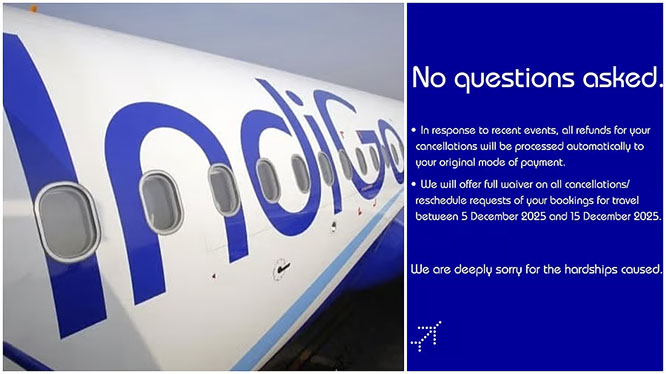
With IndiGo flight disruptions impacting thousands of passengers, the airline on Saturday said that it will offer full waiver on all cancellations/reschedule requests for travel bookings between December 5, 2025 and December 15, 2025.

Earlier in the day, the civil aviation ministry had directed the airline to complete the ticket refund process for the cancelled flights by Sunday evening, as well as ensure baggage separated from the travellers are delivered in the next two days.

In a post on X, titled 'No questions asked', IndiGo wrote, "In response to recent events, all refunds for your cancellations will be processed automatically to your original mode of payment."

"We are deeply sorry for the hardships caused," it further added.

Several passengers, however, complained of not getting full refund as promised by the airline.

Netizens have shared screenchots of getting charged for airline cancellation fee and convenience fee.

"Please tell me why u have did this airline cancellation charges when u say full amount will be refunded (sic)," a user wrote sharing a screenshot of the refund page.

"Well, but you have still debited the convenience charges," wrote another.

Passengers have also raised concerns about the "cancel" option being disabled on the IndiGo app. "First enable the 'Cancel' button on your App & offer full refund on tickets cancelled by customers between the said dates," wrote a user.

A day after the country's largest airline, IndiGo, cancelled more than 1,000 flights and caused disruptions for the fifth day on Saturday, the ministry said that any delay or non-compliance in refund processing will invite immediate regulatory action.

The refund process for all cancelled or disrupted flights must be completed by 8 pm on Sunday, the ministry said in a statement.

"Airlines have also been instructed not to levy any rescheduling charges for passengers whose travel plans were affected by cancellations," it said.

On Saturday, more than 400 flights were cancelled at various airports.

IndiGo has also been instructed to set up dedicated passenger support and refund facilitation cells.

Comments

Add new comment

  • Coastaldigest.com reserves the right to delete or block any comments.
  • Coastaldigset.com is not responsible for its readers’ comments.
  • Comments that are abusive, incendiary or irrelevant are strictly prohibited.
  • Please use a genuine email ID and provide your name to avoid reject.
News Network
December 7,2025

SHRIMP.jpg

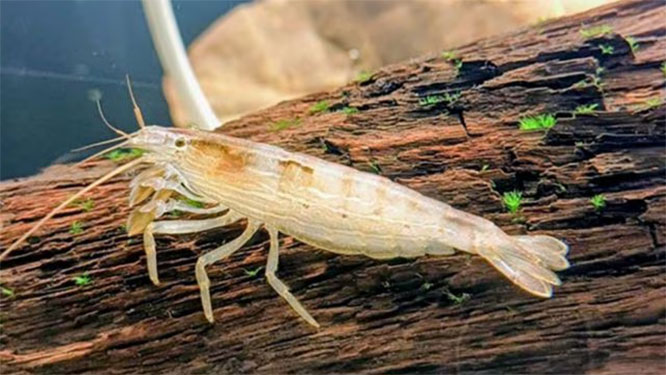
Mangaluru, Dec 7: A rare bamboo shrimp has been rediscovered on mainland India more than 70 years after it was last reported, confirming for the first time the presence of Atyopsis spinipes in the country. The find was made by researchers from the Centre for Climate Change Studies at Sathyabama Institute of Science and Technology, Chennai, during surveys in Karnataka and Odisha.

The team — shrimp expert Dr S Prakash, PhD scholar K Kunjulakshmi, and Mangaluru-based researcher Maclean Antony Santos — combined field surveys, ecological assessments and DNA analysis to identify the elusive species. Their findings, published in Zootaxa, resolve decades of taxonomic confusion stemming from a 1951 report that misidentified the species as Atyopsis moluccensis without strong evidence.

The shrimp has now been confirmed at two locations: the Mulki–Pavanje estuary near Mangaluru and the Kuakhai River in Bhubaneswar. Historical specimens from the Andaman Islands, previously labelled as A. moluccensis, were also found to be misidentified and actually belong to A. spinipes.

The rediscovery began after an aquarium hobbyist in Odisha spotted a shrimp in 2022, prompting systematic surveys across Udupi, Karwar and Mangaluru. Four female specimens were collected in Mulki and one in Odisha, all genetically matching.

Researchers warn the species may exist in very small, vulnerable populations as freshwater habitats face increasing pressure from pollution, sand mining and infrastructure development. All verified specimens have been deposited with the Zoological Survey of India for future reference.

Comments

Add new comment

  • Coastaldigest.com reserves the right to delete or block any comments.
  • Coastaldigset.com is not responsible for its readers’ comments.
  • Comments that are abusive, incendiary or irrelevant are strictly prohibited.
  • Please use a genuine email ID and provide your name to avoid reject.