



Indrani Mukerjea claims to have paid $5 million to P Chidambaram, son Karti in bribe, says CBI chargesheet

Agencies
October 19, 2019

New Delhi, Oct 19: Indrani Mukerjea has claimed to have paid a bribe of US $5 million to former Finance Minister and Congress leader P. Chidambaram and his son Karti Chidambaram through offshore payments in Singapore, Mauritius, Bermuda, the UK and Switzerland, the Central Bureau of Investigation stated in the chargesheet filed in a special court on Friday in the INX Media case.

The CBI also stated that it is awaiting response to its Letters Rogatory (formal request to a foreign court for judicial assistance) sent to five countries.

The agency filed a chargesheet against four entities and ten people under sections 120B (criminal conspiracy), 420 (cheating), 468 (forgery), 471 (signing a forged document as genuine) of Indian Penal Code and Section 9 (taking gratification, for exercise of personal influence with public servant), 13(1)(d) (abusing one’s position as a public servant) of 13(2) (public servant who commits criminal misconduct) of Prevention of Corruption Act.

The four entities charged are INX Media Private Limited (currently 9X Media Private Limited), INX News Private Limited (Direct News), Chess Management Services Private Limited and Advantage Strategic Consulting Private Limited (ASCPL).

The agency has charged P Chidambaram, then finance minister, his son Karti P Chidambaram, Ajeet Kumar Dungdung, the then section officer of Foreign Investment Promotion Board (FIPB) unit at Ministry of Finance, Rabindra Prasad, then under secretary at FIPB unit, Pradeep Kumar Bagga, then officer on special duty at Department of Economic Affairs, Prabodh Saxena, then director FIPB, Anup K Pujari, then Joint Secretary (Foreign Trade) Department of Economic Affairs, Sindhushree Khullar, then additional secretary, S Bhaskararaman, Chartered Accountant, and Peter Mukherjea, then director INX Media Limited.

The CBI has made Indrani Mukerjea, who is currently in jail in Mumbai in connection with the murder of her daughter Sheena Bora, approver in the case. She in her statement to CBI also stated that a meeting with P. Chidambaram to discuss the modalities of illegal gratification was held between March/April 2007.

The agency stated that CBI had registered a case in May 2017 to investigate corruption in INX Media Private Limited which had received foreign investment Rs 403.07 crore against approved foreign direct investment (FDI) of Rs 4.62 crore.

Further, this company illegally invested Rs 40.91 crore in its sister concern INX News Pvt Limited from the received FDI amount without approval from FIPB in violation of provisions of Foreign Exchange Maintenance Act.

During investigation, it was found that Indrani and Peter, directors of INX Media Private Limited, entered into a criminal conspiracy with the then finance minister P Chidambaram and his son Karti Chidambaram (the then director Chess Management Services Pvt Limited) and the then public servants of FIPB unit, Department of Economic Affairs for getting the issue settled without any penal action against them.

“This caused undue pecuniary advantage to the companies concerned in terms of possible penalty under FEMA which could have been up to three times the total amount received,” said a senior CBI officer.

The chargesheet stated that Karti had floated a front company, ASCPL, for receiving illegal payoffs in the guise of various consultancies and other fees and payments.INX Media had also made a payment of Rs 9.96 lakh into the account of ASCPL.

“An illegal payoff without delivering any service,” said CBI adding that further probe into the matter is on.

The Enforcement Directorate (ED) too had filed a money laundering case against Chidambaram in this regard in 2017. In the case, a Delhi court on Thursday sent P. Chidambaram to custodial interrogation by the Enforcement Directorate till October 24.

Comments

Add new comment

  • Coastaldigest.com reserves the right to delete or block any comments.
  • Coastaldigset.com is not responsible for its readers’ comments.
  • Comments that are abusive, incendiary or irrelevant are strictly prohibited.
  • Please use a genuine email ID and provide your name to avoid reject.
News Network
December 15,2025

Mangaluru, Dec 15: Educational institutions in Mangaluru that rely on the popular Mangala Stadium for their annual sports events are bracing for an inconvenience as the city's key sporting venue is set to close its gates for a significant upgrade. The stadium is expected to be unavailable for approximately two months starting from January 15, 2026.

The closure is necessitated by a proposed overhaul of the stadium's facilities, with a special focus on upgrading the synthetic track. Pradeep Dsouza, Assistant Director of the District of Youth Empowerment and Sports (DYES), Dakshina Kannada, confirmed the development.

"Experts have visited the stadium, conducted a thorough inspection, and have given the go-ahead for a complete makeover," Dsouza stated. "Funds have been allocated for the project, and we are currently awaiting the final green signal from state officials to commence the work. We anticipate that the work will likely begin in the second week of January. Consequently, we have stopped renting out the stadium to colleges and other organizations in preparation for the upgrade."

The timing presents a logistical challenge for colleges, as many schools have already concluded their sports meets.

"Colleges will now be organizing their events and will need to find alternative locations to host their sports meets," Dsouza added. He suggested a few potential venues, including the Dakshina Kannada police ground, University College grounds, Panambur grounds, Swaraj Maidan in Moodbidri, and the Mangalore University sports grounds in Konaje.

However, many institutions note that finding a comparable venue will be difficult. While the DK police ground and University College grounds are closer to the city center, they do not possess the extensive facilities and infrastructure offered by Mangala Stadium.

Dr. P Dayananda Pai - P Satisha Govt First Grade College, Carstreet, is one such institution dependent on the stadium. Principal Jayakar Bhandary expressed hope for a swift completion of the work. "We expect the work to be completed at the earliest. If not, we will be forced to look for other venues to host the sports day for our students," Bhandary said, highlighting the pressing need for the city's main sporting facility.

Comments

Add new comment

  • Coastaldigest.com reserves the right to delete or block any comments.
  • Coastaldigset.com is not responsible for its readers’ comments.
  • Comments that are abusive, incendiary or irrelevant are strictly prohibited.
  • Please use a genuine email ID and provide your name to avoid reject.
News Network
December 7,2025

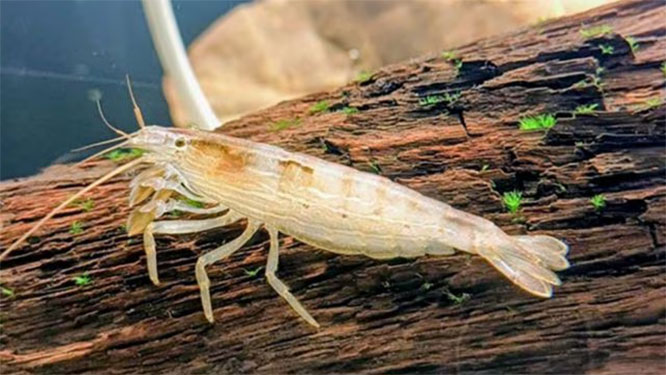
SHRIMP.jpg

Mangaluru, Dec 7: A rare bamboo shrimp has been rediscovered on mainland India more than 70 years after it was last reported, confirming for the first time the presence of Atyopsis spinipes in the country. The find was made by researchers from the Centre for Climate Change Studies at Sathyabama Institute of Science and Technology, Chennai, during surveys in Karnataka and Odisha.

The team — shrimp expert Dr S Prakash, PhD scholar K Kunjulakshmi, and Mangaluru-based researcher Maclean Antony Santos — combined field surveys, ecological assessments and DNA analysis to identify the elusive species. Their findings, published in Zootaxa, resolve decades of taxonomic confusion stemming from a 1951 report that misidentified the species as Atyopsis moluccensis without strong evidence.

The shrimp has now been confirmed at two locations: the Mulki–Pavanje estuary near Mangaluru and the Kuakhai River in Bhubaneswar. Historical specimens from the Andaman Islands, previously labelled as A. moluccensis, were also found to be misidentified and actually belong to A. spinipes.

The rediscovery began after an aquarium hobbyist in Odisha spotted a shrimp in 2022, prompting systematic surveys across Udupi, Karwar and Mangaluru. Four female specimens were collected in Mulki and one in Odisha, all genetically matching.

Researchers warn the species may exist in very small, vulnerable populations as freshwater habitats face increasing pressure from pollution, sand mining and infrastructure development. All verified specimens have been deposited with the Zoological Survey of India for future reference.

Comments

Add new comment

  • Coastaldigest.com reserves the right to delete or block any comments.
  • Coastaldigset.com is not responsible for its readers’ comments.
  • Comments that are abusive, incendiary or irrelevant are strictly prohibited.
  • Please use a genuine email ID and provide your name to avoid reject.
News Network
December 13,2025

New Delhi: School-going children are picking up drug and smoking habits and engaging in consumption of alcohol, with the average age of introduction to such harmful substances found to be around 13 years, suggesting a need for earlier interventions as early as primary school, a multi-city survey by AIIMS-Delhi said.

The findings also showed substance use increased in higher grades, with grade XI/XII students two times more likely to report use of substances when compared with grade VIII students. This emphasised the importance of continued prevention and intervention through middle and high school.

The study led by Dr Anju Dhawan of AIIMS's National Drug Dependence Treatment Centre, published in the National Medical Journal of India this month, looks at adolescent substance use across diverse regions.

The survey included 5,920 students from classes 8, 9, 11 and 12 in urban government, private and rural schools across 10 cities -- Bengaluru, Chandigarh, Delhi, Dibrugarh, Hyderabad, Imphal, Jammu, Lucknow, Mumbai, and Ranchi. The data were collected between May 2018 and June 2019.

The average age of initiation for any substance was 12.9 (2.8) years. It was lowest for inhalants (11.3 years) followed by heroin (12.3 years) and opioid pharmaceuticals (without prescription; 12.5 years).

Overall, 15.1 per cent of participants reported lifetime use, 10.3 per cent reported past year use, and 7.2 per cent reported use in the past month of any substance, the study found.

The most common substances used in the past year, after tobacco (4 per cent) and alcohol (3.8 per cent), were opioids (2.8 per cent), followed by cannabis (2 per cent) and inhalants (1.9 per cent). Use of non-prescribed pharmaceutical opioids was most common among opioid users (90.2 per cent).

On being asked, 'Do you think this substance is easily available for a person of your age' separately for each substance category, nearly half the students (46.3 per cent) endorsed that tobacco products and more than one-third of the students (36.5 per cent) agreed that a person of their age can easily procure alcohol products.

Similarly, for Bhang (21.9 per cent), ganja/charas (16.1 per cent), inhalants (15.2 per cent), sedatives (13.7 per cent), opium and heroin (10 per cent each), the students endorsed that these can be easily procured.

About 95 per cent of the children, irrespective of their grade, agreed with the statement that 'drug use is harmful'.

The rates of substance use (any) among boys were significantly higher than those of girls for substance use (ever), use in the past year and use in the past 30 days. Compared to grade VIII students, grade IX students were more likely, and grade XI/XII students were twice as likely to have used any substance (ever).

The likelihood of past-year use of any substance was also higher for grade IX students and for grade XI/XII students as compared to grade VIII students.

About 40 per cent of students mentioned that they had a family member who used tobacco or alcohol each. The use of cannabis (any product) and opioid (any product) by a family member was reported by 8.2 per cent and 3.9 per cent of students, respectively, while the use of other substances, such as inhalants/sedatives by family was 2-3 per cent, the study found.

A relatively smaller percentage of students reported use of tobacco or alcohol among peers as compared to among family members, while a higher percentage reported inhalants, sedatives, cannabis or opioid use among peers.

Children using substances (past year) compared to non-users reported significantly higher any substance use by their family members and peers.

There were 25.7 per cent students who replied 'yes' to the question 'conflicts/fights often occur in your family'. Most students also replied affirmatively to 'family members are aware of how their time is being spent' and 'damily members are aware of with whom they spend their time'.

Comments

Add new comment

  • Coastaldigest.com reserves the right to delete or block any comments.
  • Coastaldigset.com is not responsible for its readers’ comments.
  • Comments that are abusive, incendiary or irrelevant are strictly prohibited.
  • Please use a genuine email ID and provide your name to avoid reject.