IT giant Cognizant to pay $25 million to settle India bribery charges

Agencies
February 16, 2019

Feb 16: Major American IT player Cognizant will pay USD 25 million to the US Security and Exchange Commission to settle its India bribery charges, as Department of Justice filed criminal cases against two of its former top executives.
The two former executives have been charged for their roles in facilitating the payment of millions of dollars in bribe to an Indian government official, the Security and Exchange Commission (SEC) said.

Cognizant has agreed to pay USD 25 million to settle charges that it violated the Foreign Corrupt Practices Act (FCPA), the SEC said.

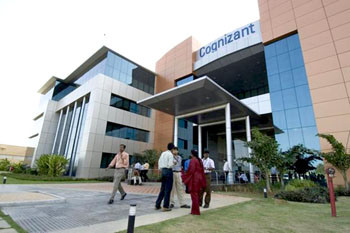
The complaint alleges that in 2014, a senior Tamil Nadu official demanded a USD 2 million bribe from the construction firm responsible for building Cognizant's 2.7 million square foot campus in Chennai.

As alleged in the complaint, Cognizant's President Gordon Coburn and Chief Legal Officer Steven E Schwartz authorised the contractor to pay the bribe and directed their subordinates to conceal the bribe by doctoring the contractor's change orders.

The SEC also alleges that Cognizant authorised the construction firm to make two additional bribes totaling more than USD 1.6 million.

Cognizant allegedly used sham change order requests to conceal the payments it made to reimburse the firm, SEC said.

The SEC charged Coburn and Schwartz with violating anti-bribery, books and records, and internal accounting controls provisions of the federal securities laws. The SEC is seeking permanent injunctions, monetary penalties, and officer-and-director bars against Coburn and Schwartz.

In a separate statement, the Department of Justice said Gordon Coburn, 55, and Steven Schwartz, 51, have been charged in a 12-count indictment with one count of conspiracy to violate the FCPA, three counts of violating the FCPA, seven counts of falsifying books and records, and one count of circumventing and failing to implement internal accounting controls.

The allegations in the indictment filed on February 14 describe a sophisticated international bribery scheme authorised and concealed by C-suite executives of a publicly-traded multinational company, said Assistant Attorney General Brian Benczkowski.

According to the indictment, in April 2014, Coburn and Schwartz allegedly authorised an unlawful payment of approximately USD 2 million to one or more foreign government officials in India to secure and obtain a necessary permit to open a new office campus.

To conceal Cognizant's involvement in the scheme, Coburn, Schwartz and others allegedly agreed that a third-party construction company would obtain the permit by making the illegal bribe payment and that Cognizant would reimburse the construction company through phony construction invoices at the end of the project.

The indictment further alleges that in June 2014, after the co-conspirators agreed that the construction company would make the bribe payment on behalf of Cognizant, the construction company secured the necessary government order for Cognizant to obtain the permit, allowing Cognizant to complete the development of the office campus and avoid millions of dollars in costs.

Months later, the co-conspirators are alleged to have knowingly caused Cognizant to funnel over USD 2 million to the construction company disguised as payment for cost overruns on the office campus when they knew that the actual purpose of the payment was to reimburse the construction company for the bribe payment.

According to the indictment, as Coburn, Schwartz and others had previously agreed, they hid the bribe reimbursement payment within a series of line items in a construction change order request to be paid to the construction company, thereby concealing the true nature and purpose of the reimbursement, falsifying Cognizant's books and records, and circumventing and failing to implement its internal controls.

In a statement, Cognizant said it has resolved the previously disclosed investigations by the Department of Justice and SEC into whether payments relating to permits and licenses for certain real estate facilities in India violated the US FCPA.

"We are pleased to reach these resolutions with the US Department of Justice and the US Securities and Exchange Commission. With today's announcements, we've taken a major step forward in putting this behind us," said Francisco D'Souza, vice chairman and CEO of Cognizant.

D'Souza said Cognizant undertook a comprehensive internal investigation under the oversight of the Audit Committee of the Board of Directors, with the assistance of outside counsel.

"We have also made further enhancements to our compliance processes, procedures and resources. It is important to note that this entire matter did not involve our work with clients or affect our ability to provide the quality services our clients expect from us," he said in a statement.

The Company, it said, settled with the SEC by consenting to the entry of an administrative order. In total, the resolutions require it to pay approximately USD 28 million to the DOJ and SEC.

"This amount is consistent with the accrual previously recorded by the company," the statement added.


Comments

Add new comment

  • Coastaldigest.com reserves the right to delete or block any comments.
  • Coastaldigset.com is not responsible for its readers’ comments.
  • Comments that are abusive, incendiary or irrelevant are strictly prohibited.
  • Please use a genuine email ID and provide your name to avoid reject.
News Network
December 6,2025

pilot.jpg

New Delhi: IndiGo, India’s largest airline, faced major operational turbulence this week after failing to prepare for new pilot-fatigue regulations issued by the Directorate General of Civil Aviation (DGCA). The stricter rules—designed to improve flight safety—took effect in phases through 2024, with the latest implementation on November 1. IndiGo has acknowledged that inadequate roster planning led to widespread cancellations and delays.

Below are the key DGCA rules that affected IndiGo’s operations:

1. Longer Mandatory Weekly Rest

Weekly rest for pilots has been increased from 36 hours to 48 hours.

The government says the extended break is essential to curb cumulative fatigue. This rule remains in force despite the current crisis.

2. Cap on Night Landings

Pilots can now perform only two night landings per week—a steep reduction from the earlier limit of six.

Night hours, defined as midnight to early morning, are considered the least alert period for pilots.

Given the disruptions, this rule has been temporarily relaxed for IndiGo until February 10.

3. Reduced Maximum Night Flight Duty

Flight duty that stretches into the night is now capped at 10 hours.

This measure has also been kept on hold for IndiGo until February 10 to stabilize operations.

4. Weekly Rest Cannot Be Replaced With Personal Leave

Airlines can no longer count a pilot’s personal leave as part of the mandatory 48-hour rest.

Pilots say this closes a loophole that previously reduced actual rest time.

Currently, all airlines are exempt from this rule to normalise travel.

5. Mandatory Fatigue Monitoring

Airlines must submit quarterly fatigue reports along with corrective actions to DGCA.

This system aims to create a transparent fatigue-tracking framework across the industry.

The DGCA has stressed that these rules were crafted to strengthen flight safety and align India with global fatigue-management standards. The temporary relaxations are expected to remain until February 2025, giving IndiGo time to stabilise its schedules and restore normal air travel.

Comments

Add new comment

  • Coastaldigest.com reserves the right to delete or block any comments.
  • Coastaldigset.com is not responsible for its readers’ comments.
  • Comments that are abusive, incendiary or irrelevant are strictly prohibited.
  • Please use a genuine email ID and provide your name to avoid reject.
News Network
December 16,2025

jordan.jpg

Prime Minister Narendra Modi on Monday held talks with Jordan’s King Abdullah II in Amman, during which the two leaders discussed ways to further strengthen bilateral relations, with the Prime Minister outlining an eight-point vision covering key areas of cooperation.

Describing the meeting as “productive”, PM Modi said he shared a roadmap focused on trade and economy, fertilisers and agriculture, information technology, healthcare, infrastructure, critical and strategic minerals, civil nuclear cooperation, and people-to-people ties.

In a post on social media platform X, the Prime Minister praised King Abdullah II’s personal commitment to advancing India–Jordan relations, particularly as both countries mark the 75th anniversary of the establishment of diplomatic ties this year.

“Held productive discussions with His Majesty King Abdullah II in Amman. His personal commitment towards vibrant India-Jordan relations is noteworthy. This year, we are celebrating the 75th anniversary of our bilateral diplomatic relations,” PM Modi said.

The meeting took place at the Al Husseiniya Palace, where the two leaders also exchanged views on regional and global issues of mutual interest. According to the Ministry of External Affairs (MEA), both sides agreed to further deepen cooperation in areas including trade and investment, defence and security, counter-terrorism and de-radicalisation, fertilisers and agriculture, infrastructure, renewable energy, tourism, and heritage.

The MEA said both leaders reaffirmed their united stand against terrorism.

PM Modi arrived in Amman earlier on Monday and was received by Jordanian Prime Minister Jafar Hassan, who accorded him a formal welcome. Following the talks, King Abdullah II hosted a banquet dinner in honour of the Prime Minister, reflecting the warmth of bilateral ties.

Jordan is the first leg of PM Modi’s three-nation tour. From Amman, the Prime Minister will travel to Ethiopia at the invitation of Prime Minister Abiy Ahmed Ali, marking his first official visit to the African nation. The tour will conclude with a visit to Oman.

Comments

Add new comment

  • Coastaldigest.com reserves the right to delete or block any comments.
  • Coastaldigset.com is not responsible for its readers’ comments.
  • Comments that are abusive, incendiary or irrelevant are strictly prohibited.
  • Please use a genuine email ID and provide your name to avoid reject.
News Network
December 4,2025

indigoflight.jpg

Domestic carrier IndiGo has cancelled over 180 flights from three major airports — Mumbai, Delhi and Bengaluru — on Thursday, December 4, as the airline struggles to secure the required crew to operate its flights in the wake of new flight-duty and rest-period norms for pilots.

While the number of cancellations at Mumbai airport stands at 86 (41 arrivals and 45 departures) for the day, at Bengaluru, 73 flights have been cancelled, including 41 arrivals, according to a PTI report that quoted sources.

"IndiGo cancelled over 180 flights on Thursday at three airports-Mumbai, Delhi and Bengaluru," the source told the news agency.

Besides, it had cancelled as many as 33 flights at Delhi airport for Thursday, the source said, adding, "The number of cancellations is expected to be higher by the end of the day."

The Gurugram-based airline's On-Time Performance (OTP) nosedived to 19.7 per cent at six key airports — Delhi, Mumbai, Chennai, Kolkata, Bengaluru and Hyderabad — on December 3, as it struggled to get the required crew to operate its services, down from almost half of December 2, when it was 35 per cent.

"IndiGo has been facing acute crew shortage since the implementation of the second phase of the FDTL (Flight Duty Time Limitations) norms, leading to cancellations and huge delays in its operations across the airports," a source had told PTI on Wednesday.

Chaos continued at several major airports for the third day on Thursday because of the cancellations.

A spokesperson for the Kempegowda International Airport (KIA) in Bengaluru said that 73 IndiGo flights had been cancelled on Thursday.

At least 150 flights were cancelled and dozens of others delayed on Wednesday, airport sources said, leaving thousands of travellers stranded, according to news agency Reuters.

The Directorate General of Civil Aviation (DGCA) has said it is investigating IndiGo flight disruptions and has asked the airline to submit the reasons for the current situation, as well as its plans to reduce flight cancellations and delays.

It may be mentioned here that the pilots' body, Federation of Indian Pilots (FIP), has alleged that IndiGo, despite getting a two-year preparatory window before the full implementation of new flight duty and rest period norms for cockpit crew, "inexplicably" adopted a "hiring freeze".

The FIP said it has urged the safety regulator, the DGCA, not to approve airlines' seasonal flight schedules unless they have adequate staff to operate their services "safely and reliably" in accordance with the New Flight Duty Time Limitations (FDTL) norms.

In a letter to the DGCA late on Wednesday, the FIP urged the DGCA to consider re-evaluating and reallocating slots to other airlines, which have the capacity to operate them without disruption during the peak holiday and fog season if IndiGo continues to "fail in delivering on its commitments to passengers due to its own avoidable staffing shortages."

Comments

Add new comment

  • Coastaldigest.com reserves the right to delete or block any comments.
  • Coastaldigset.com is not responsible for its readers’ comments.
  • Comments that are abusive, incendiary or irrelevant are strictly prohibited.
  • Please use a genuine email ID and provide your name to avoid reject.