



IT giant Cognizant to pay $25 million to settle India bribery charges

Agencies
February 16, 2019

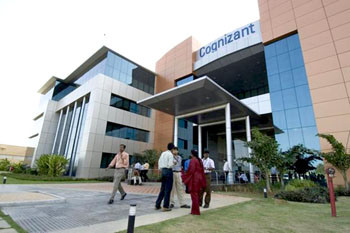
Feb 16: Major American IT player Cognizant will pay USD 25 million to the US Security and Exchange Commission to settle its India bribery charges, as Department of Justice filed criminal cases against two of its former top executives.
The two former executives have been charged for their roles in facilitating the payment of millions of dollars in bribe to an Indian government official, the Security and Exchange Commission (SEC) said.

Cognizant has agreed to pay USD 25 million to settle charges that it violated the Foreign Corrupt Practices Act (FCPA), the SEC said.

The complaint alleges that in 2014, a senior Tamil Nadu official demanded a USD 2 million bribe from the construction firm responsible for building Cognizant's 2.7 million square foot campus in Chennai.

As alleged in the complaint, Cognizant's President Gordon Coburn and Chief Legal Officer Steven E Schwartz authorised the contractor to pay the bribe and directed their subordinates to conceal the bribe by doctoring the contractor's change orders.

The SEC also alleges that Cognizant authorised the construction firm to make two additional bribes totaling more than USD 1.6 million.

Cognizant allegedly used sham change order requests to conceal the payments it made to reimburse the firm, SEC said.

The SEC charged Coburn and Schwartz with violating anti-bribery, books and records, and internal accounting controls provisions of the federal securities laws. The SEC is seeking permanent injunctions, monetary penalties, and officer-and-director bars against Coburn and Schwartz.

In a separate statement, the Department of Justice said Gordon Coburn, 55, and Steven Schwartz, 51, have been charged in a 12-count indictment with one count of conspiracy to violate the FCPA, three counts of violating the FCPA, seven counts of falsifying books and records, and one count of circumventing and failing to implement internal accounting controls.

The allegations in the indictment filed on February 14 describe a sophisticated international bribery scheme authorised and concealed by C-suite executives of a publicly-traded multinational company, said Assistant Attorney General Brian Benczkowski.

According to the indictment, in April 2014, Coburn and Schwartz allegedly authorised an unlawful payment of approximately USD 2 million to one or more foreign government officials in India to secure and obtain a necessary permit to open a new office campus.

To conceal Cognizant's involvement in the scheme, Coburn, Schwartz and others allegedly agreed that a third-party construction company would obtain the permit by making the illegal bribe payment and that Cognizant would reimburse the construction company through phony construction invoices at the end of the project.

The indictment further alleges that in June 2014, after the co-conspirators agreed that the construction company would make the bribe payment on behalf of Cognizant, the construction company secured the necessary government order for Cognizant to obtain the permit, allowing Cognizant to complete the development of the office campus and avoid millions of dollars in costs.

Months later, the co-conspirators are alleged to have knowingly caused Cognizant to funnel over USD 2 million to the construction company disguised as payment for cost overruns on the office campus when they knew that the actual purpose of the payment was to reimburse the construction company for the bribe payment.

According to the indictment, as Coburn, Schwartz and others had previously agreed, they hid the bribe reimbursement payment within a series of line items in a construction change order request to be paid to the construction company, thereby concealing the true nature and purpose of the reimbursement, falsifying Cognizant's books and records, and circumventing and failing to implement its internal controls.

In a statement, Cognizant said it has resolved the previously disclosed investigations by the Department of Justice and SEC into whether payments relating to permits and licenses for certain real estate facilities in India violated the US FCPA.

"We are pleased to reach these resolutions with the US Department of Justice and the US Securities and Exchange Commission. With today's announcements, we've taken a major step forward in putting this behind us," said Francisco D'Souza, vice chairman and CEO of Cognizant.

D'Souza said Cognizant undertook a comprehensive internal investigation under the oversight of the Audit Committee of the Board of Directors, with the assistance of outside counsel.

"We have also made further enhancements to our compliance processes, procedures and resources. It is important to note that this entire matter did not involve our work with clients or affect our ability to provide the quality services our clients expect from us," he said in a statement.

The Company, it said, settled with the SEC by consenting to the entry of an administrative order. In total, the resolutions require it to pay approximately USD 28 million to the DOJ and SEC.

"This amount is consistent with the accrual previously recorded by the company," the statement added.

Comments

Add new comment

  • Coastaldigest.com reserves the right to delete or block any comments.
  • Coastaldigset.com is not responsible for its readers’ comments.
  • Comments that are abusive, incendiary or irrelevant are strictly prohibited.
  • Please use a genuine email ID and provide your name to avoid reject.
News Network
December 15,2025

Udupi, Dec 15: What was meant to be a post-pilgrimage gathering turned tragic in Padukere village of Brahmavar taluk, Udupi district, late Sunday night, when a clash among youths escalated into a fatal assault, leaving one man dead.

The victim has been identified as 30-year-old Santosh Mogaveera, a resident of Padukere.

According to preliminary information, the incident took place during a late-night drinking party involving a group of local youths who had recently returned after completing their pilgrimage to the Sabarimala shrine. An argument reportedly broke out among the group and soon escalated into a violent confrontation.

During the ensuing brawl, Santosh Mogaveera was allegedly assaulted and collapsed at the spot after sustaining serious injuries. He was rushed by local residents to a private hospital in Brahmavar, where doctors declared him dead.

On receiving information, senior police officials, including Brahmavar Circle Inspector Gopikrishna, Kota Police Sub-Inspector Praveen Kumar T, Station ASI Manthesh Jabagoudar, and head constables Pradeep and Ashok, visited the spot and conducted an inspection.

Police have taken four youths into custody in connection with the incident. A case has been registered at the Kota police station, and further investigation is underway to ascertain the exact sequence of events leading to the death.

Comments

Add new comment

  • Coastaldigest.com reserves the right to delete or block any comments.
  • Coastaldigset.com is not responsible for its readers’ comments.
  • Comments that are abusive, incendiary or irrelevant are strictly prohibited.
  • Please use a genuine email ID and provide your name to avoid reject.
News Network
December 13,2025

New Delhi: School-going children are picking up drug and smoking habits and engaging in consumption of alcohol, with the average age of introduction to such harmful substances found to be around 13 years, suggesting a need for earlier interventions as early as primary school, a multi-city survey by AIIMS-Delhi said.

The findings also showed substance use increased in higher grades, with grade XI/XII students two times more likely to report use of substances when compared with grade VIII students. This emphasised the importance of continued prevention and intervention through middle and high school.

The study led by Dr Anju Dhawan of AIIMS's National Drug Dependence Treatment Centre, published in the National Medical Journal of India this month, looks at adolescent substance use across diverse regions.

The survey included 5,920 students from classes 8, 9, 11 and 12 in urban government, private and rural schools across 10 cities -- Bengaluru, Chandigarh, Delhi, Dibrugarh, Hyderabad, Imphal, Jammu, Lucknow, Mumbai, and Ranchi. The data were collected between May 2018 and June 2019.

The average age of initiation for any substance was 12.9 (2.8) years. It was lowest for inhalants (11.3 years) followed by heroin (12.3 years) and opioid pharmaceuticals (without prescription; 12.5 years).

Overall, 15.1 per cent of participants reported lifetime use, 10.3 per cent reported past year use, and 7.2 per cent reported use in the past month of any substance, the study found.

The most common substances used in the past year, after tobacco (4 per cent) and alcohol (3.8 per cent), were opioids (2.8 per cent), followed by cannabis (2 per cent) and inhalants (1.9 per cent). Use of non-prescribed pharmaceutical opioids was most common among opioid users (90.2 per cent).

On being asked, 'Do you think this substance is easily available for a person of your age' separately for each substance category, nearly half the students (46.3 per cent) endorsed that tobacco products and more than one-third of the students (36.5 per cent) agreed that a person of their age can easily procure alcohol products.

Similarly, for Bhang (21.9 per cent), ganja/charas (16.1 per cent), inhalants (15.2 per cent), sedatives (13.7 per cent), opium and heroin (10 per cent each), the students endorsed that these can be easily procured.

About 95 per cent of the children, irrespective of their grade, agreed with the statement that 'drug use is harmful'.

The rates of substance use (any) among boys were significantly higher than those of girls for substance use (ever), use in the past year and use in the past 30 days. Compared to grade VIII students, grade IX students were more likely, and grade XI/XII students were twice as likely to have used any substance (ever).

The likelihood of past-year use of any substance was also higher for grade IX students and for grade XI/XII students as compared to grade VIII students.

About 40 per cent of students mentioned that they had a family member who used tobacco or alcohol each. The use of cannabis (any product) and opioid (any product) by a family member was reported by 8.2 per cent and 3.9 per cent of students, respectively, while the use of other substances, such as inhalants/sedatives by family was 2-3 per cent, the study found.

A relatively smaller percentage of students reported use of tobacco or alcohol among peers as compared to among family members, while a higher percentage reported inhalants, sedatives, cannabis or opioid use among peers.

Children using substances (past year) compared to non-users reported significantly higher any substance use by their family members and peers.

There were 25.7 per cent students who replied 'yes' to the question 'conflicts/fights often occur in your family'. Most students also replied affirmatively to 'family members are aware of how their time is being spent' and 'damily members are aware of with whom they spend their time'.

Comments

Add new comment

  • Coastaldigest.com reserves the right to delete or block any comments.
  • Coastaldigset.com is not responsible for its readers’ comments.
  • Comments that are abusive, incendiary or irrelevant are strictly prohibited.
  • Please use a genuine email ID and provide your name to avoid reject.
News Network
December 19,2025

Saudi Arabia has abolished fees on expatriate workers employed in licensed industrial establishments, signaling a strong push to empower national factories and enhance the Kingdom’s global industrial competitiveness. The move reflects the leadership’s commitment to building a sustainable and resilient industrial economy under Saudi Vision 2030.

The decision was approved by the Council of Ministers, chaired by Crown Prince and Prime Minister Mohammed bin Salman, following a recommendation from the Council of Economic and Development Affairs (CEDA). It forms part of a broader strategy to support, modernize, and strengthen the industrial sector.

By removing fees on foreign workers, industrial establishments gain greater operational flexibility and relief from financial pressures. This is expected to help factories expand production, improve efficiency, and compete more effectively in international markets, while reinforcing long-term sustainability.

The initiative aligns closely with Saudi Vision 2030, which identifies industry as a key pillar of economic diversification. A competitive and resilient industrial base is viewed as essential for driving innovation, attracting investment, and sustaining long-term economic growth.

Overall, the fee exemption underscores the Kingdom’s commitment to creating a supportive environment for industrial development and ensuring that Saudi factories remain globally competitive and capable of leading the nation’s economic transformation.

Comments

Add new comment

  • Coastaldigest.com reserves the right to delete or block any comments.
  • Coastaldigset.com is not responsible for its readers’ comments.
  • Comments that are abusive, incendiary or irrelevant are strictly prohibited.
  • Please use a genuine email ID and provide your name to avoid reject.