



Jayalalithaa bucks tradition

May 19, 2016

Chennai, May 19: Fighting heavy odds, J Jayalalithaa proved her detractors wrong again with her grit and determination as she steered AIADMK to power for a second consecutive term, bucking the tradition since 1989 when no party has retained power in Tamil Nadu.
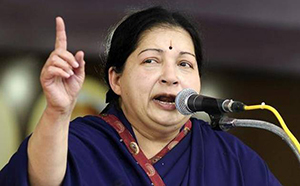
jaya

The 68-year-old AIADMK supremo, known as 'Puratchi Thalaivi' (Revolutionary Leader), has cemented her image as a fighter despite challenges that haunted her in the form of corruption cases forcing her to quit twice, only to make a comeback.

Though she had MG Ramachandran (MGR) as her mentor, she struggled in her initial days in the party and went on to became its general secretary, a post she has held since 1989.

She vowed in 1989 not to return to Assembly unless she is the Chief Minister and is now preparing to be sworn-in for the sixth time.

The opposition's attempt to target her as being "inaccessible" and "authoritarian" have failed to dent the image of Jayalathiaa who started a multitude of welfare schemes like the Amma canteen- a low cost food chain, Amma water and Amma pharmacies.

Her present regime is also noted for freebies like twenty kilograms of free rice for ration card holders, free mixers, grinders, milch cows, goats and "Thalikku Thangam", four grams of gold for Mangalsutra which she has promised to increase to eight grams if she is voted back to power. She also promised free mobile phones for all ration card holders this time.

However, her handling of flood situation came in for criticism with DMK alleging that "Jayalalithaa did not even meet the flood victims and console them" and raking up issues like alleged "insistence of AIADMK partymen to paste her sticker in relief materials."

But Jayalalithaa, who returned as chief minister a year ago after acquittal in disproportionate assets case, emerged unscathed again with the All India Anna Dravida Munnetra Kazhagam, which had won 37 of the 39 Lok Sabha seats in the state in 2014, continuing to hold sway in the Assembly election.

Her victory is extraordinary given the political history of Tamil Nadu that bets often on the "Dravidian" theory, and regales in anti-Brahmin rhetoric.

Known for her bold decision making, she famously remarked after assuming office as Chief Minister for the second time that "I am a ringmaster" making things work by motivating government officials.

A teen starlet who made her cinema debut in CV Sridhar-directed 'Vennira Aadai' (white dress) in 1956, Jayalalithaa became a popular actress and did 30 films alone with matinee idol MGR who later became her political mentor and in 1982 inducted her into AIADMK which he founded.

She worked her way up in the party though factional leaders targeted her. She was appointed propaganda secretary in 1983.

In the mid 1980's, then Hindu Religious Endowments Minister RM Veerappan and Agriculture Minister K Kalimuthu were at the forefront of opposing her within the party and they did not take it lightly when she was reappointed propaganda secretary by MGR.

Kalimuthu even infamously alleged once that Jayalalithaa was conspiring to end 'Dravidian rule' in Tamil Nadu.

MGR later got her elected to the Rajya Sabha in 1984 and she managed to win the support of many party functionaries.

She went on to lead a faction that stood by her after the AIADMK split following MGR's death in 1987. The other faction was led by VN Janaki, wife of MGR.

She successfully contested the Tamil Nadu Assembly election in 1989 from Bodinayakkanur and became the first woman leader of opposition in the House and under her leadership the AIADMK group won 27 seats with Janaki group managing to win only two.

When the party later united in 1989 she became the general secretary of the unified AIADMK, the top party post which she continues to hold to this day and is known for her deft handling of party affairs.

As Leader of the Opposition, she decided not to go the House following the infamous episode in the House on March 25, 1989 when her saree was pulled and DMK president and then Chief Minister Karunanidhi's spectacle was broken in a clash between the AIADMK and DMK members.

Jayalalithaa vowed to return to the Tamil Nadu Assembly only as the Chief Minister in 1989 though many were convinced that she could achieve it.She went on to become Chief Minister not for once but for five times (1991-96, May-Sept 2001, 2002-06, 2011-14, 2015-16).

In 1991, she stitched up an alliance with Congress and a sympathy wave spurred by the assassination of Rajiv Gandhi landed her party a landslide victory, with Jayalalithaa making her debut as Chief Minister. She was elected from Bargur constituency.

Ironically, her first tenure (1991-96) continues to haunt her even today as it was marked by several corruption allegations like the TANSI case and even the disproportionate assets case pending now in the Supreme Court has its origins to this period.

There were allegations that her aide Sasikala's family was calling the shots in all aspects of government and the extravagant wedding of her later disowned foster son VN Sudhakaran in 1995 became a sort of an indelible imprint against her on the alleged failure and insensitivity of her first regime.
Riding on anti-incumbency, she, however, came back to power in 2001 with her party winning 132 seats. But her appointment as CM was quashed by the Supreme Court vis-a-vis the TANSI case and she was unseated though she eventually made a comeback as CM in 2002 after getting elected from Andipatti.

Though her party lost polls in 2006, AIADMK emerged victorious in 61 seats that year and became a powerful opposition party.

DMK had won 96 seats and with the support of allies like Congress (which had won 34 seats) the Karunanidhi-led party managed to sail through. Often she taunted the DMK regime as a "minority government" throughout its five year tenure (2006-11).

In 2011 Assembly election, issues like the 2G Spectrum Scam, and the 2009 killings of Tamils in the Sri Lankan civil war helped her to trounce the DMK and make a dramatic comeback to power.

During 2011-16, she was careful to implement a multitude of welfare schemes and big ticket projects like the drinking water schemes for Dharmapuri, Krishnagiri and Vellore Districts.

Jayalalithaa did her studies at the Bishop Cotton Girls' High School in Bangalore and later at the Presentation Convent Church Park here.

Though she got a scholarship from the Central government for higher studies after completing her matriculation in 1964, she opted for a career in the film world.

She went on to act in South Indian language movies including Tamil. She is well-versed in several Indian languages including Tamil, Telugu, Kannada, Hindi besides English.


Comments

Add new comment

  • Coastaldigest.com reserves the right to delete or block any comments.
  • Coastaldigset.com is not responsible for its readers’ comments.
  • Comments that are abusive, incendiary or irrelevant are strictly prohibited.
  • Please use a genuine email ID and provide your name to avoid reject.
News Network
December 6,2025

pilot.jpg

New Delhi: IndiGo, India’s largest airline, faced major operational turbulence this week after failing to prepare for new pilot-fatigue regulations issued by the Directorate General of Civil Aviation (DGCA). The stricter rules—designed to improve flight safety—took effect in phases through 2024, with the latest implementation on November 1. IndiGo has acknowledged that inadequate roster planning led to widespread cancellations and delays.

Below are the key DGCA rules that affected IndiGo’s operations:

1. Longer Mandatory Weekly Rest

Weekly rest for pilots has been increased from 36 hours to 48 hours.

The government says the extended break is essential to curb cumulative fatigue. This rule remains in force despite the current crisis.

2. Cap on Night Landings

Pilots can now perform only two night landings per week—a steep reduction from the earlier limit of six.

Night hours, defined as midnight to early morning, are considered the least alert period for pilots.

Given the disruptions, this rule has been temporarily relaxed for IndiGo until February 10.

3. Reduced Maximum Night Flight Duty

Flight duty that stretches into the night is now capped at 10 hours.

This measure has also been kept on hold for IndiGo until February 10 to stabilize operations.

4. Weekly Rest Cannot Be Replaced With Personal Leave

Airlines can no longer count a pilot’s personal leave as part of the mandatory 48-hour rest.

Pilots say this closes a loophole that previously reduced actual rest time.

Currently, all airlines are exempt from this rule to normalise travel.

5. Mandatory Fatigue Monitoring

Airlines must submit quarterly fatigue reports along with corrective actions to DGCA.

This system aims to create a transparent fatigue-tracking framework across the industry.

The DGCA has stressed that these rules were crafted to strengthen flight safety and align India with global fatigue-management standards. The temporary relaxations are expected to remain until February 2025, giving IndiGo time to stabilise its schedules and restore normal air travel.

Comments

Add new comment

  • Coastaldigest.com reserves the right to delete or block any comments.
  • Coastaldigset.com is not responsible for its readers’ comments.
  • Comments that are abusive, incendiary or irrelevant are strictly prohibited.
  • Please use a genuine email ID and provide your name to avoid reject.
News Network
December 4,2025

indigoflight.jpg

Domestic carrier IndiGo has cancelled over 180 flights from three major airports — Mumbai, Delhi and Bengaluru — on Thursday, December 4, as the airline struggles to secure the required crew to operate its flights in the wake of new flight-duty and rest-period norms for pilots.

While the number of cancellations at Mumbai airport stands at 86 (41 arrivals and 45 departures) for the day, at Bengaluru, 73 flights have been cancelled, including 41 arrivals, according to a PTI report that quoted sources.

"IndiGo cancelled over 180 flights on Thursday at three airports-Mumbai, Delhi and Bengaluru," the source told the news agency.

Besides, it had cancelled as many as 33 flights at Delhi airport for Thursday, the source said, adding, "The number of cancellations is expected to be higher by the end of the day."

The Gurugram-based airline's On-Time Performance (OTP) nosedived to 19.7 per cent at six key airports — Delhi, Mumbai, Chennai, Kolkata, Bengaluru and Hyderabad — on December 3, as it struggled to get the required crew to operate its services, down from almost half of December 2, when it was 35 per cent.

"IndiGo has been facing acute crew shortage since the implementation of the second phase of the FDTL (Flight Duty Time Limitations) norms, leading to cancellations and huge delays in its operations across the airports," a source had told PTI on Wednesday.

Chaos continued at several major airports for the third day on Thursday because of the cancellations.

A spokesperson for the Kempegowda International Airport (KIA) in Bengaluru said that 73 IndiGo flights had been cancelled on Thursday.

At least 150 flights were cancelled and dozens of others delayed on Wednesday, airport sources said, leaving thousands of travellers stranded, according to news agency Reuters.

The Directorate General of Civil Aviation (DGCA) has said it is investigating IndiGo flight disruptions and has asked the airline to submit the reasons for the current situation, as well as its plans to reduce flight cancellations and delays.

It may be mentioned here that the pilots' body, Federation of Indian Pilots (FIP), has alleged that IndiGo, despite getting a two-year preparatory window before the full implementation of new flight duty and rest period norms for cockpit crew, "inexplicably" adopted a "hiring freeze".

The FIP said it has urged the safety regulator, the DGCA, not to approve airlines' seasonal flight schedules unless they have adequate staff to operate their services "safely and reliably" in accordance with the New Flight Duty Time Limitations (FDTL) norms.

In a letter to the DGCA late on Wednesday, the FIP urged the DGCA to consider re-evaluating and reallocating slots to other airlines, which have the capacity to operate them without disruption during the peak holiday and fog season if IndiGo continues to "fail in delivering on its commitments to passengers due to its own avoidable staffing shortages."

Comments

Add new comment

  • Coastaldigest.com reserves the right to delete or block any comments.
  • Coastaldigset.com is not responsible for its readers’ comments.
  • Comments that are abusive, incendiary or irrelevant are strictly prohibited.
  • Please use a genuine email ID and provide your name to avoid reject.
News Network
December 13,2025

New Delhi: School-going children are picking up drug and smoking habits and engaging in consumption of alcohol, with the average age of introduction to such harmful substances found to be around 13 years, suggesting a need for earlier interventions as early as primary school, a multi-city survey by AIIMS-Delhi said.

The findings also showed substance use increased in higher grades, with grade XI/XII students two times more likely to report use of substances when compared with grade VIII students. This emphasised the importance of continued prevention and intervention through middle and high school.

The study led by Dr Anju Dhawan of AIIMS's National Drug Dependence Treatment Centre, published in the National Medical Journal of India this month, looks at adolescent substance use across diverse regions.

The survey included 5,920 students from classes 8, 9, 11 and 12 in urban government, private and rural schools across 10 cities -- Bengaluru, Chandigarh, Delhi, Dibrugarh, Hyderabad, Imphal, Jammu, Lucknow, Mumbai, and Ranchi. The data were collected between May 2018 and June 2019.

The average age of initiation for any substance was 12.9 (2.8) years. It was lowest for inhalants (11.3 years) followed by heroin (12.3 years) and opioid pharmaceuticals (without prescription; 12.5 years).

Overall, 15.1 per cent of participants reported lifetime use, 10.3 per cent reported past year use, and 7.2 per cent reported use in the past month of any substance, the study found.

The most common substances used in the past year, after tobacco (4 per cent) and alcohol (3.8 per cent), were opioids (2.8 per cent), followed by cannabis (2 per cent) and inhalants (1.9 per cent). Use of non-prescribed pharmaceutical opioids was most common among opioid users (90.2 per cent).

On being asked, 'Do you think this substance is easily available for a person of your age' separately for each substance category, nearly half the students (46.3 per cent) endorsed that tobacco products and more than one-third of the students (36.5 per cent) agreed that a person of their age can easily procure alcohol products.

Similarly, for Bhang (21.9 per cent), ganja/charas (16.1 per cent), inhalants (15.2 per cent), sedatives (13.7 per cent), opium and heroin (10 per cent each), the students endorsed that these can be easily procured.

About 95 per cent of the children, irrespective of their grade, agreed with the statement that 'drug use is harmful'.

The rates of substance use (any) among boys were significantly higher than those of girls for substance use (ever), use in the past year and use in the past 30 days. Compared to grade VIII students, grade IX students were more likely, and grade XI/XII students were twice as likely to have used any substance (ever).

The likelihood of past-year use of any substance was also higher for grade IX students and for grade XI/XII students as compared to grade VIII students.

About 40 per cent of students mentioned that they had a family member who used tobacco or alcohol each. The use of cannabis (any product) and opioid (any product) by a family member was reported by 8.2 per cent and 3.9 per cent of students, respectively, while the use of other substances, such as inhalants/sedatives by family was 2-3 per cent, the study found.

A relatively smaller percentage of students reported use of tobacco or alcohol among peers as compared to among family members, while a higher percentage reported inhalants, sedatives, cannabis or opioid use among peers.

Children using substances (past year) compared to non-users reported significantly higher any substance use by their family members and peers.

There were 25.7 per cent students who replied 'yes' to the question 'conflicts/fights often occur in your family'. Most students also replied affirmatively to 'family members are aware of how their time is being spent' and 'damily members are aware of with whom they spend their time'.

Comments

Add new comment

  • Coastaldigest.com reserves the right to delete or block any comments.
  • Coastaldigset.com is not responsible for its readers’ comments.
  • Comments that are abusive, incendiary or irrelevant are strictly prohibited.
  • Please use a genuine email ID and provide your name to avoid reject.