



JP Nadda takes over as BJP National President as Amit Shah steps down

Agencies
January 20, 2020

New Delhi, Jan 20: The BJP has got a brand new President in the form of JP Nadda. At around 2.30 pm, the announcement was made, bringing an end to the Amit Shah era in BJP. The party's Working President Jagat Prakash Nadda won unopposed, sparking celebrations outside the BJP headquarters here on Monday. 

Amit Shah himself was among the people who proposed Nadda's name along with Nitin Gadkari and Rajnath Singh. Soon after his annointment, BJP election returning officer Radha Mohan Singh told the media, "I announce JP Nadda as the new BJP President." Shah was also seen hugging Nadda.

The nomination process for the post of the BJP President began at 10 am and went on till 12.30 pm. For the next hour, the filed nomination paper, which was just one, was examined. Party members waitied till 2.30 pm for the candidate to withdraw if he wished to. It was after this that Nadda was declared as the man who would step into the shoes of Amit Shah.

Many in the BJP believe that although Nadda is the BJP chief now, Shah would still make all macro-level decisions like pre poll alliances or top organisational appointments. Nadda would be in charge of monitoring the day-to-day needs of the organisation. BJP sources say that Amit Shah himself wanted an arrangement like this one and personally wanted Nadda to take over. as he helped Shah formulate legislations like Triple Talaq and Citizenship Amendment Act.

The party constitution mandates completion of election of at least 50 per cent of state Presidents for the election of national President to happen. In the last few days, the BJP has completed the election of a slew of state Presidents like in West Bengal, Nagaland among others.

The process of election of the national BJP President is quite elaborate and has been described in detail in the party constitution, which says that the national president shall be elected by an electoral college, comprising members of the national council and the state councils.

"Any 20 members of the electoral college of a state can jointly propose the name of a person, who has been an active member for four terms and has 15 years of membership, for the post of national president. Such joint proposal should come from not less than five states where elections have been completed for the national council. The consent of the candidate is necessary," it says.

Who is JP Nadda?

Jagat Prakash Nadda, 59, who has his roots in the Rashtriya Swayamsevak Sangh (RSS) and its affiliates, was appointed the Bharatiya Janata Party (BJP) national President on Monday, replacing his 'mentor' and Union Home Minister Amit Shah.

Former environment, health and law minister from Himachal Pradesh, which has just four of the Lok Sabha's 543 seats, Nadda has tried to carve out his own space in national politics with his low profile and astute organisational skills, believe his party leaders.

He rose through the ranks from the Akhil Bharatiya Vidyarthi Parishad (ABVP), the student wing of the RSS, from where he has managed to build inroads from university to the state politics.

Nadda has been active on the national political scene since 2010 when he was picked by then BJP chief Nitin Gadkari to join his new team. He was made the party's national general secretary.

Born on December 2, 1960, Nadda did his graduation from Patna and holds a post-graduate degree in political science and Bachelor of Legislative Law (LL.B) from Himachal Pradesh University in Shimla.

Starting his political career as a student leader of the ABVP in 1978, Nadda had also worked both with Gadkari and Shah even in the party's youth wing -- the Bharatiya Yuva Morcha -- from 1991 to 1994.

His wife Mallika Nadda, who teaches history at the Himachal Pradesh University and is currently posted in university's campus in Delhi, was an ABVP activist too, and its national general secretary from 1988 to 1999.

In the previous BJP government (2007-12) in the state, Nadda was forced to resign as Forest Minister in 2010 owing to differences between him and then chief minister Prem Kumar Dhumal.

He was elected to the Rajya Sabha in 2012.

Nadda won his first Assembly election from Bilaspur (Sadar) in Himachal in 1993. In 1998, he again won from that seat and became the state Health Minister.

He lost the Assembly elections in 2003, but again won in 2007 and was appointed the Forest Minister in the Himachal Pradesh.

Nadda, as a forest minister, was the brain behind opening forest police stations to check forest crimes, launching community-driven plantation, setting up forest ponds and the massive plantation of deodars to boost the depleting green cover of the 'Queen of Hills', as Shimla was fondly called by the British.

A close confidant of Prime Minister Narendra Modi, Nadda was among those who were mentioned as likely aspirants to the BJP top post after Rajnath Singh was inducted into the Central government as the Home Minister in 2014.

Later, Nadda was inducted into the union cabinet in its first expansion in 2014 as the Health Minister.

Hailing Nadda's appointment, Chief Minister Jai Ram Thakur told IANS it is a proud moment that a leader belonging to a small state in the national politics is today the leader of the country's biggest national party.

His father N.L. Nadda, who was a Vice-Chancellor of the Ranchi University, resides in Bilaspur town.

Comments

Add new comment

  • Coastaldigest.com reserves the right to delete or block any comments.
  • Coastaldigset.com is not responsible for its readers’ comments.
  • Comments that are abusive, incendiary or irrelevant are strictly prohibited.
  • Please use a genuine email ID and provide your name to avoid reject.
News Network
December 16,2025

bengal.jpg

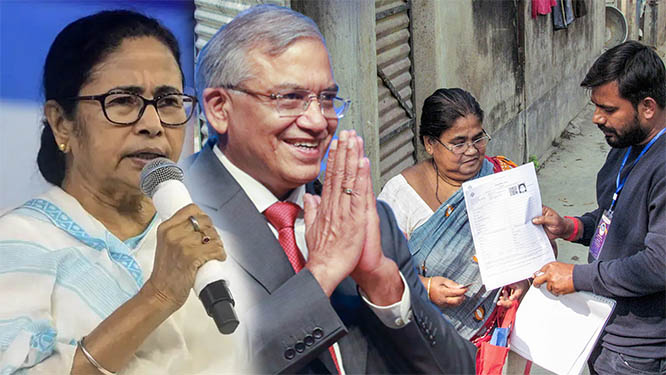
The deletion of over 58 lakh names from West Bengal’s draft electoral rolls following a Special Intensive Revision (SIR) has sparked widespread concern and is likely to deepen political tensions in the poll-bound state.

According to the Election Commission, the revision exercise has identified 24 lakh voters as deceased, 19 lakh as relocated, 12 lakh as missing, and 1.3 lakh as duplicate entries. The draft list, published after the completion of the first phase of SIR, aims to remove errors and duplication from the electoral rolls.

However, the scale of deletions has raised fears that a large number of eligible voters may have been wrongly excluded. The Election Commission has said that individuals whose names are missing can file objections and seek corrections. The final voter list is scheduled to be published in February next year, after which the Assembly election announcement is expected. Notably, the last Special Intensive Revision in Bengal was conducted in 2002.

The development has intensified the political row over the SIR process. Chief Minister Mamata Banerjee and her Trinamool Congress have strongly opposed the exercise, accusing the Centre and the Election Commission of attempting to disenfranchise lakhs of voters ahead of the elections.

Addressing a rally in Krishnanagar earlier this month, Banerjee urged people to protest if their names were removed from the voter list, alleging intimidation during elections and warning of serious consequences if voting rights were taken away.

The BJP, meanwhile, has defended the revision and accused the Trinamool Congress of politicising the issue to protect what it claims is an illegal voter base. Leader of the Opposition Suvendu Adhikari alleged that the ruling party fears losing power due to the removal of deceased, fake, and illegal voters.

The controversy comes amid earlier allegations by the Trinamool Congress that excessive work pressure during the SIR led to the deaths by suicide of some Booth Level Officers (BLOs), for which the party blamed the Election Commission. With the draft list now out, another round of political confrontation appears imminent.

As objections begin to be filed, the focus will be on whether the correction mechanism is accessible, transparent, and timely—critical factors in ensuring that no eligible voter is denied their democratic right ahead of a crucial election.

Comments

Add new comment

  • Coastaldigest.com reserves the right to delete or block any comments.
  • Coastaldigset.com is not responsible for its readers’ comments.
  • Comments that are abusive, incendiary or irrelevant are strictly prohibited.
  • Please use a genuine email ID and provide your name to avoid reject.
News Network
December 15,2025

Mangaluru, Dec 15: Air India Express has announced that it will resume direct flight services between Mangaluru and Muscat from March 2026, restoring an important international air link for passengers from the coastal region.

Airport authorities said the service will operate twice a week—on Sundays and Tuesdays—from March 1. The initial flights are scheduled on March 3, 8 and 10, followed by March 15 and 17, with the same operating pattern to continue thereafter. The flight duration is approximately three hours and 25 minutes.

The Mangaluru–Muscat route was earlier operated under the 2025 summer schedule, with services beginning on July 14. At that time, Air India Express had operated four flights a week before suspending the service.

Officials said the summer schedule will come into effect from March 29, after which changes in flight timings and departure schedules from Mangaluru are expected. Passengers have been advised to check the latest schedules while planning their travel.

The resumption of direct flights to Muscat is expected to significantly benefit expatriates, business travellers and others, further strengthening Mangaluru’s air connectivity with the Gulf region.

Comments

Add new comment

  • Coastaldigest.com reserves the right to delete or block any comments.
  • Coastaldigset.com is not responsible for its readers’ comments.
  • Comments that are abusive, incendiary or irrelevant are strictly prohibited.
  • Please use a genuine email ID and provide your name to avoid reject.
News Network
December 15,2025

Udupi, Dec 15: What was meant to be a post-pilgrimage gathering turned tragic in Padukere village of Brahmavar taluk, Udupi district, late Sunday night, when a clash among youths escalated into a fatal assault, leaving one man dead.

The victim has been identified as 30-year-old Santosh Mogaveera, a resident of Padukere.

According to preliminary information, the incident took place during a late-night drinking party involving a group of local youths who had recently returned after completing their pilgrimage to the Sabarimala shrine. An argument reportedly broke out among the group and soon escalated into a violent confrontation.

During the ensuing brawl, Santosh Mogaveera was allegedly assaulted and collapsed at the spot after sustaining serious injuries. He was rushed by local residents to a private hospital in Brahmavar, where doctors declared him dead.

On receiving information, senior police officials, including Brahmavar Circle Inspector Gopikrishna, Kota Police Sub-Inspector Praveen Kumar T, Station ASI Manthesh Jabagoudar, and head constables Pradeep and Ashok, visited the spot and conducted an inspection.

Police have taken four youths into custody in connection with the incident. A case has been registered at the Kota police station, and further investigation is underway to ascertain the exact sequence of events leading to the death.

Comments

Add new comment

  • Coastaldigest.com reserves the right to delete or block any comments.
  • Coastaldigset.com is not responsible for its readers’ comments.
  • Comments that are abusive, incendiary or irrelevant are strictly prohibited.
  • Please use a genuine email ID and provide your name to avoid reject.