



Kashmiri separatist leaders received funds from abroad, utilised them for personal gains: NIA

Agencies
June 16, 2019

New Delhi, Jun 16: The NIA has alleged that its probe into terror financing in Jammu and Kashmir has revealed that hardline separatist leaders received funds from abroad and utilised them for personal gains -- from amassing properties to paying for foreign education of their kin.
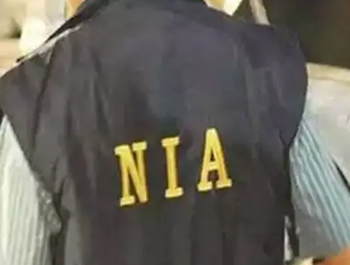
The agency has interrogated several top leaders of Hurriyat Conference and other organisations and claimed that they had confessed to receiving funds from Pakistan to fuel separatist sentiments among the people of Kashmir Valley.

In a statement issued Sunday, the National Investigation Agency (NIA) said the firebrand leader of Duktaran-e-Milat, Asiya Andrabi, was grilled by it about the educational expenses of her son in Malaysia incurred by Zahoor Watali, who was arrested in a terror funding case.

"During interrogation, Asiya Andrabi admitted that she had been collecting funds and donations from foreign sources and Duktaran-e-Milat had been organising protests by Muslim women in the valley," it claimed.

The NIA has already approached the relevant authorities for providing evidence relating to certain bank accounts used by Asiya Andrabi's son Mohammad bin Qasim while he was in the university, it said.

Another hardline separatist leader, Shabbir Shah, had to face some tough time when he was confronted about his businesses, including a hotel in Pahalgam which is allegedly funded through foreign funds received by him from Pakistan, the statement said.

"During the custodial interrogation, Shabir Shah was confronted with evidence relating to transfer of money by Pakistan-based agents and representatives of APHC (All Parties Hurriyat Conference) factions to parties affiliated to Hurriyat in J and K. He was also confronted about his investments in various hotels and businesses in Pahalgam, properties in Jammu, Srinagar and Anantnag," the NIA said.

The NIA had registered a case in May, 2017 against terrorists belonging to Jammat ud Dawah, Duktaran-e-Millat, Lashkar-e-Taiba, Hizb-ul-Mujahideen and other separatist leaders in the state for raising, receiving and collecting funds to fuel separatist and terrorist activities and entering into a larger conspiracy for causing disruption in Kashmir Valley and for waging war against India.

The agency has so far charge-sheeted 13 accused, including leader of Jammat-ud Dawah Hafiz Mohammad Saeed, head of proscribed organisation Hizb-ul-Mujahideen Syed Salahuddin, seven separatist leaders, two hawala conduits and some stone-pelters.

Watali is one of the main hawala conduits who used to generate and receive funds from Pakistan, ISI, UAE and had floated various shell companies to disguise foreign remittances for further transfer to separatist leaders and stone pelters in the valley, it said.

The agency said these funds were used to fuel unrest in the Kashmir valley and organise violent agitations and anti-India activities which resulted in large scale violence leading to numerous injuries and deaths of civilians and security forces.

Evidence relating to funding of these separatist elements through Pakistan and UAE-based businessman, ISI, High Commission of Pakistan in Delhi has been collected and presented to the NIA Special Court in the charge sheets, it said.

Watali's bail was rejected by the Supreme Court, on a plea by the NIA, as the apex court observed that the Delhi High Court has not appreciated the material which found favour with the designated court to record its opinion that there are reasonable grounds for believing that the accusations are prima facie true.

The agency has arrested Yasin Malik, leader of proscribed organisation JKLF, Asiya Andrabi leader of proscribed organisation Duktaran-e-Milat, separatist leader Shabir Shah of JKDFP and Masrat Alam of Muslim League.

Malik told the agency that he was instrumental in bringing together the factions of Hurriyat Conference and formed the Joint Resistance Leadership (JRL) which spear headed the violent agitations in 2016 in Kashmir Valley by issuing "Protest Calendars" leading to economic shut down for over four months and also caused death and injuries to civilians and security forces during the violent protests.

Malik admitted that the JRL and Hurriyat Conference Gilani Group collected funds from business community as well as certain other sources and ensured that economic shut down and violent protests continue to disrupt the daily life of common citizens in the valley, the agency said. "Evidence regarding many of Shah's benami properties is being collected. He was confronted with some of his personal staff and associates who have provided vital information regarding the sources fund raising and investment details," it alleged.

Masarat Alam, "the poster boy of stone pelters and violent agitations in Kashmir valley" has told investigators that Pakistan based agents route the funds through hawala operators which were transferred to the separatist leaders including Syed Shah Gilani Chairman, the NIA said.

Alam has also revealed that there are rifts in the Hurriyat Conference regarding collection and use of fund, it said.


Comments

Add new comment

  • Coastaldigest.com reserves the right to delete or block any comments.
  • Coastaldigset.com is not responsible for its readers’ comments.
  • Comments that are abusive, incendiary or irrelevant are strictly prohibited.
  • Please use a genuine email ID and provide your name to avoid reject.
News Network
December 15,2025

Mangaluru police have arrested a 27-year-old NRI on his return from Saudi Arabia in connection with an Instagram post allegedly containing derogatory and provocative remarks about the Hindu religion, officials said on Monday.

The accused, Abdul Khader Nehad, a resident of Ulaibettu in Mangaluru, was working in Saudi Arabia when the post was uploaded, police said.

A suo motu case was registered at the Bajpe police station on October 11 after an allegedly offensive post circulated from the Instagram account ‘team_sdpi_2025’. Police said the content was flagged for being provocative and derogatory in nature.

During the investigation, technical analysis traced the Instagram post to Nehad, who was residing abroad at the time, a senior police officer said. Based on these findings, a Look Out Circular (LOC) was issued against him.

On December 14, Nehad arrived from Saudi Arabia at Calicut International Airport in Kerala, where he was taken into custody on arrival. Police said further investigation is underway.

Comments

Add new comment

  • Coastaldigest.com reserves the right to delete or block any comments.
  • Coastaldigset.com is not responsible for its readers’ comments.
  • Comments that are abusive, incendiary or irrelevant are strictly prohibited.
  • Please use a genuine email ID and provide your name to avoid reject.
News Network
December 13,2025

New Delhi: School-going children are picking up drug and smoking habits and engaging in consumption of alcohol, with the average age of introduction to such harmful substances found to be around 13 years, suggesting a need for earlier interventions as early as primary school, a multi-city survey by AIIMS-Delhi said.

The findings also showed substance use increased in higher grades, with grade XI/XII students two times more likely to report use of substances when compared with grade VIII students. This emphasised the importance of continued prevention and intervention through middle and high school.

The study led by Dr Anju Dhawan of AIIMS's National Drug Dependence Treatment Centre, published in the National Medical Journal of India this month, looks at adolescent substance use across diverse regions.

The survey included 5,920 students from classes 8, 9, 11 and 12 in urban government, private and rural schools across 10 cities -- Bengaluru, Chandigarh, Delhi, Dibrugarh, Hyderabad, Imphal, Jammu, Lucknow, Mumbai, and Ranchi. The data were collected between May 2018 and June 2019.

The average age of initiation for any substance was 12.9 (2.8) years. It was lowest for inhalants (11.3 years) followed by heroin (12.3 years) and opioid pharmaceuticals (without prescription; 12.5 years).

Overall, 15.1 per cent of participants reported lifetime use, 10.3 per cent reported past year use, and 7.2 per cent reported use in the past month of any substance, the study found.

The most common substances used in the past year, after tobacco (4 per cent) and alcohol (3.8 per cent), were opioids (2.8 per cent), followed by cannabis (2 per cent) and inhalants (1.9 per cent). Use of non-prescribed pharmaceutical opioids was most common among opioid users (90.2 per cent).

On being asked, 'Do you think this substance is easily available for a person of your age' separately for each substance category, nearly half the students (46.3 per cent) endorsed that tobacco products and more than one-third of the students (36.5 per cent) agreed that a person of their age can easily procure alcohol products.

Similarly, for Bhang (21.9 per cent), ganja/charas (16.1 per cent), inhalants (15.2 per cent), sedatives (13.7 per cent), opium and heroin (10 per cent each), the students endorsed that these can be easily procured.

About 95 per cent of the children, irrespective of their grade, agreed with the statement that 'drug use is harmful'.

The rates of substance use (any) among boys were significantly higher than those of girls for substance use (ever), use in the past year and use in the past 30 days. Compared to grade VIII students, grade IX students were more likely, and grade XI/XII students were twice as likely to have used any substance (ever).

The likelihood of past-year use of any substance was also higher for grade IX students and for grade XI/XII students as compared to grade VIII students.

About 40 per cent of students mentioned that they had a family member who used tobacco or alcohol each. The use of cannabis (any product) and opioid (any product) by a family member was reported by 8.2 per cent and 3.9 per cent of students, respectively, while the use of other substances, such as inhalants/sedatives by family was 2-3 per cent, the study found.

A relatively smaller percentage of students reported use of tobacco or alcohol among peers as compared to among family members, while a higher percentage reported inhalants, sedatives, cannabis or opioid use among peers.

Children using substances (past year) compared to non-users reported significantly higher any substance use by their family members and peers.

There were 25.7 per cent students who replied 'yes' to the question 'conflicts/fights often occur in your family'. Most students also replied affirmatively to 'family members are aware of how their time is being spent' and 'damily members are aware of with whom they spend their time'.

Comments

Add new comment

  • Coastaldigest.com reserves the right to delete or block any comments.
  • Coastaldigset.com is not responsible for its readers’ comments.
  • Comments that are abusive, incendiary or irrelevant are strictly prohibited.
  • Please use a genuine email ID and provide your name to avoid reject.
News Network
December 16,2025

jordan.jpg

Prime Minister Narendra Modi on Monday held talks with Jordan’s King Abdullah II in Amman, during which the two leaders discussed ways to further strengthen bilateral relations, with the Prime Minister outlining an eight-point vision covering key areas of cooperation.

Describing the meeting as “productive”, PM Modi said he shared a roadmap focused on trade and economy, fertilisers and agriculture, information technology, healthcare, infrastructure, critical and strategic minerals, civil nuclear cooperation, and people-to-people ties.

In a post on social media platform X, the Prime Minister praised King Abdullah II’s personal commitment to advancing India–Jordan relations, particularly as both countries mark the 75th anniversary of the establishment of diplomatic ties this year.

“Held productive discussions with His Majesty King Abdullah II in Amman. His personal commitment towards vibrant India-Jordan relations is noteworthy. This year, we are celebrating the 75th anniversary of our bilateral diplomatic relations,” PM Modi said.

The meeting took place at the Al Husseiniya Palace, where the two leaders also exchanged views on regional and global issues of mutual interest. According to the Ministry of External Affairs (MEA), both sides agreed to further deepen cooperation in areas including trade and investment, defence and security, counter-terrorism and de-radicalisation, fertilisers and agriculture, infrastructure, renewable energy, tourism, and heritage.

The MEA said both leaders reaffirmed their united stand against terrorism.

PM Modi arrived in Amman earlier on Monday and was received by Jordanian Prime Minister Jafar Hassan, who accorded him a formal welcome. Following the talks, King Abdullah II hosted a banquet dinner in honour of the Prime Minister, reflecting the warmth of bilateral ties.

Jordan is the first leg of PM Modi’s three-nation tour. From Amman, the Prime Minister will travel to Ethiopia at the invitation of Prime Minister Abiy Ahmed Ali, marking his first official visit to the African nation. The tour will conclude with a visit to Oman.

Comments

Add new comment

  • Coastaldigest.com reserves the right to delete or block any comments.
  • Coastaldigset.com is not responsible for its readers’ comments.
  • Comments that are abusive, incendiary or irrelevant are strictly prohibited.
  • Please use a genuine email ID and provide your name to avoid reject.