



Lynching incidents shouldn't be politicised or given communal colour: Naqvi

Agencies
June 29, 2019

Mumbai, Jun 29: Union minister Mukhtar Abbas Naqvi Saturday said incidents of lynching should not be given a communal colour or politicised.

He was speaking to reporters after inaugurating a renovated hall of the Haj House in Mumbai. "Lynching is a criminal subject. It should not be give a communal colour. It is highly condemnable and no one should politicise it," the Minority Affairs Minister said.

The comment comes in the backdrop of the alleged lynching of a 24-year-old man in Jharkhand last week. The victim, Tabrez Ansari, was allegedly tied to a pole and thrashed with sticks by a mob in Seraikela Kharsawan district of Jharkhand on suspicion of theft. The man was purportedly seen in a video being forced to chant "Jai Shri Ram" and "Jai Hanuman". He later succumbed to injuries.

Naqvi said the culture of harmony and tolerance of majority Hindu community has built and strengthened the foundation of India's democratic secularism. "India is the world's largest secular democratic country because after partition, Pakistan chose to become an Islamic nation, while the majority Hindu community in India chose the path of secularism," he said.

Despite the diversity in languages, faiths, food and style of living, India's culture has kept us united through a strong bond. Today, the minorities in India are moving forward on the path of development with religious and social freedom, the minister said.

"The strong inclusive culture, unity and harmony of India has defeated terrorism and other enemies of humanity. Terrorist groups such as Al Qaeda and Islamic State have not been successful in their evil designs due to the commitment to unity of our society," the BJP leader said.

The Muslim community in India knows very well that terrorism is the biggest enemy of the entire humanity and Islam, he said.

"We should remain cautious to ensure that no negative agenda is successful in disturbing the atmosphere of inclusive development and harmony. We have to make secularism and democracy our strength and not a weakness," Naqvi said.

The minister said it was for the first time since independence that a record 2 lakh Indian Muslims will go on Haj this year without any subsidy. "An honest and transparent system developed by the Modi government has ensured that even after removal of Haj subsidy, there is no unnecessary financial burden on the Haj pilgrims," he said.

"A record number of two lakh Indian Muslims will go on Haj this year in over 500 flights from 21 embarkation points across the country," Naqvi said.

The number of women Haj pilgrims going without 'mehram' (male companion) this year is double as compared to last year, the minister added.

Comments

abdallah
 - 
Sunday, 30 Jun 2019

Dear Frank, yu should know that this Naqvi is not a muslim but sanghi and being used under muslim by bjp to fool muslims and hindus.   According to this devil, mob lynching of muslim is not a issue and triple is the core issue of muslims.   According to this hate monger, killing of muslims should not be discussed and focused as they are non indians.   As per this bulshit guy, bjp is also not concerned about mob lynching of muslims whereas death of a cow will be discussed in parliament and special bill will be passed for the safety of holy cow.    that is the reason why our great great PM is not ready to bring a bill of curbing mob lynching and instead bjp will award the person who kills muslims.   

Well Wisher
 - 
Sunday, 30 Jun 2019

This guy is bullshit

Mr Frank
 - 
Saturday, 29 Jun 2019

So according to Naqvi if one killed by minority is terrorism, and if killed by saffrons is lovely killed.

Add new comment

  • Coastaldigest.com reserves the right to delete or block any comments.
  • Coastaldigset.com is not responsible for its readers’ comments.
  • Comments that are abusive, incendiary or irrelevant are strictly prohibited.
  • Please use a genuine email ID and provide your name to avoid reject.
News Network
December 13,2025

New Delhi: School-going children are picking up drug and smoking habits and engaging in consumption of alcohol, with the average age of introduction to such harmful substances found to be around 13 years, suggesting a need for earlier interventions as early as primary school, a multi-city survey by AIIMS-Delhi said.

The findings also showed substance use increased in higher grades, with grade XI/XII students two times more likely to report use of substances when compared with grade VIII students. This emphasised the importance of continued prevention and intervention through middle and high school.

The study led by Dr Anju Dhawan of AIIMS's National Drug Dependence Treatment Centre, published in the National Medical Journal of India this month, looks at adolescent substance use across diverse regions.

The survey included 5,920 students from classes 8, 9, 11 and 12 in urban government, private and rural schools across 10 cities -- Bengaluru, Chandigarh, Delhi, Dibrugarh, Hyderabad, Imphal, Jammu, Lucknow, Mumbai, and Ranchi. The data were collected between May 2018 and June 2019.

The average age of initiation for any substance was 12.9 (2.8) years. It was lowest for inhalants (11.3 years) followed by heroin (12.3 years) and opioid pharmaceuticals (without prescription; 12.5 years).

Overall, 15.1 per cent of participants reported lifetime use, 10.3 per cent reported past year use, and 7.2 per cent reported use in the past month of any substance, the study found.

The most common substances used in the past year, after tobacco (4 per cent) and alcohol (3.8 per cent), were opioids (2.8 per cent), followed by cannabis (2 per cent) and inhalants (1.9 per cent). Use of non-prescribed pharmaceutical opioids was most common among opioid users (90.2 per cent).

On being asked, 'Do you think this substance is easily available for a person of your age' separately for each substance category, nearly half the students (46.3 per cent) endorsed that tobacco products and more than one-third of the students (36.5 per cent) agreed that a person of their age can easily procure alcohol products.

Similarly, for Bhang (21.9 per cent), ganja/charas (16.1 per cent), inhalants (15.2 per cent), sedatives (13.7 per cent), opium and heroin (10 per cent each), the students endorsed that these can be easily procured.

About 95 per cent of the children, irrespective of their grade, agreed with the statement that 'drug use is harmful'.

The rates of substance use (any) among boys were significantly higher than those of girls for substance use (ever), use in the past year and use in the past 30 days. Compared to grade VIII students, grade IX students were more likely, and grade XI/XII students were twice as likely to have used any substance (ever).

The likelihood of past-year use of any substance was also higher for grade IX students and for grade XI/XII students as compared to grade VIII students.

About 40 per cent of students mentioned that they had a family member who used tobacco or alcohol each. The use of cannabis (any product) and opioid (any product) by a family member was reported by 8.2 per cent and 3.9 per cent of students, respectively, while the use of other substances, such as inhalants/sedatives by family was 2-3 per cent, the study found.

A relatively smaller percentage of students reported use of tobacco or alcohol among peers as compared to among family members, while a higher percentage reported inhalants, sedatives, cannabis or opioid use among peers.

Children using substances (past year) compared to non-users reported significantly higher any substance use by their family members and peers.

There were 25.7 per cent students who replied 'yes' to the question 'conflicts/fights often occur in your family'. Most students also replied affirmatively to 'family members are aware of how their time is being spent' and 'damily members are aware of with whom they spend their time'.

Comments

Add new comment

  • Coastaldigest.com reserves the right to delete or block any comments.
  • Coastaldigset.com is not responsible for its readers’ comments.
  • Comments that are abusive, incendiary or irrelevant are strictly prohibited.
  • Please use a genuine email ID and provide your name to avoid reject.
News Network
December 7,2025

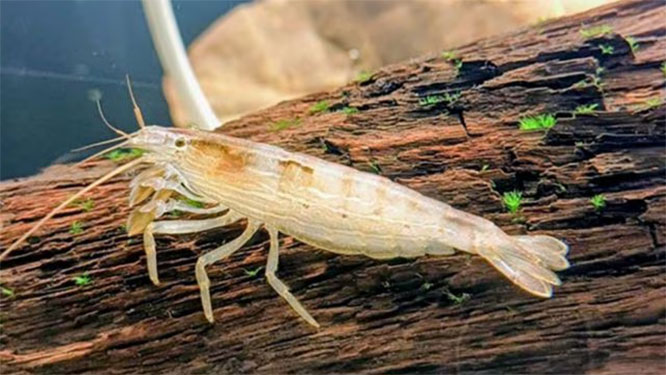
SHRIMP.jpg

Mangaluru, Dec 7: A rare bamboo shrimp has been rediscovered on mainland India more than 70 years after it was last reported, confirming for the first time the presence of Atyopsis spinipes in the country. The find was made by researchers from the Centre for Climate Change Studies at Sathyabama Institute of Science and Technology, Chennai, during surveys in Karnataka and Odisha.

The team — shrimp expert Dr S Prakash, PhD scholar K Kunjulakshmi, and Mangaluru-based researcher Maclean Antony Santos — combined field surveys, ecological assessments and DNA analysis to identify the elusive species. Their findings, published in Zootaxa, resolve decades of taxonomic confusion stemming from a 1951 report that misidentified the species as Atyopsis moluccensis without strong evidence.

The shrimp has now been confirmed at two locations: the Mulki–Pavanje estuary near Mangaluru and the Kuakhai River in Bhubaneswar. Historical specimens from the Andaman Islands, previously labelled as A. moluccensis, were also found to be misidentified and actually belong to A. spinipes.

The rediscovery began after an aquarium hobbyist in Odisha spotted a shrimp in 2022, prompting systematic surveys across Udupi, Karwar and Mangaluru. Four female specimens were collected in Mulki and one in Odisha, all genetically matching.

Researchers warn the species may exist in very small, vulnerable populations as freshwater habitats face increasing pressure from pollution, sand mining and infrastructure development. All verified specimens have been deposited with the Zoological Survey of India for future reference.

Comments

Add new comment

  • Coastaldigest.com reserves the right to delete or block any comments.
  • Coastaldigset.com is not responsible for its readers’ comments.
  • Comments that are abusive, incendiary or irrelevant are strictly prohibited.
  • Please use a genuine email ID and provide your name to avoid reject.
News Network
December 16,2025

jordan.jpg

Prime Minister Narendra Modi on Monday held talks with Jordan’s King Abdullah II in Amman, during which the two leaders discussed ways to further strengthen bilateral relations, with the Prime Minister outlining an eight-point vision covering key areas of cooperation.

Describing the meeting as “productive”, PM Modi said he shared a roadmap focused on trade and economy, fertilisers and agriculture, information technology, healthcare, infrastructure, critical and strategic minerals, civil nuclear cooperation, and people-to-people ties.

In a post on social media platform X, the Prime Minister praised King Abdullah II’s personal commitment to advancing India–Jordan relations, particularly as both countries mark the 75th anniversary of the establishment of diplomatic ties this year.

“Held productive discussions with His Majesty King Abdullah II in Amman. His personal commitment towards vibrant India-Jordan relations is noteworthy. This year, we are celebrating the 75th anniversary of our bilateral diplomatic relations,” PM Modi said.

The meeting took place at the Al Husseiniya Palace, where the two leaders also exchanged views on regional and global issues of mutual interest. According to the Ministry of External Affairs (MEA), both sides agreed to further deepen cooperation in areas including trade and investment, defence and security, counter-terrorism and de-radicalisation, fertilisers and agriculture, infrastructure, renewable energy, tourism, and heritage.

The MEA said both leaders reaffirmed their united stand against terrorism.

PM Modi arrived in Amman earlier on Monday and was received by Jordanian Prime Minister Jafar Hassan, who accorded him a formal welcome. Following the talks, King Abdullah II hosted a banquet dinner in honour of the Prime Minister, reflecting the warmth of bilateral ties.

Jordan is the first leg of PM Modi’s three-nation tour. From Amman, the Prime Minister will travel to Ethiopia at the invitation of Prime Minister Abiy Ahmed Ali, marking his first official visit to the African nation. The tour will conclude with a visit to Oman.

Comments

Add new comment

  • Coastaldigest.com reserves the right to delete or block any comments.
  • Coastaldigset.com is not responsible for its readers’ comments.
  • Comments that are abusive, incendiary or irrelevant are strictly prohibited.
  • Please use a genuine email ID and provide your name to avoid reject.
