



Srinagar, Aug 1: Former militant-turned Congress MLA Usman Majeed on Friday stoked a controversy by claiming he had met Tiger Memon after the 1993 Mumbai blasts in Pakistan Occupied Kashmir during which he seemed "worried" about his brother Yakub's surrender fearing the ISI might kill him.
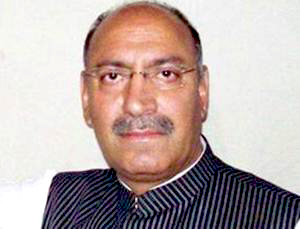
"I met Tiger in 1993. I met him 2-3 times. He used to come to our office in Muzaffarabad (capital of Pakistan Occupied Kashmir). I was not friends with Tiger. Hilal Beg, the founder of the Students Liberation Front and chief of Ikhwan-ul-Muslimeen militant outfit introduced me to him,"the MLA from north Kashmir'sBandipora claimed.
He said Tiger had already carried out the bomb blasts in Mumbai when they met.
"He was most wanted that time in our country. He had carried out the blasts. I asked him how and why he had done itand what was the reason behind the blasts," Majeed said.
"He replied that the main reason was the demolition of the BabriMasjid and the riots that followed it. He said people, including women, had come to him and told him that they were being killed and he had got emotional. That's is why hecarried out the blasts," Majeed claimed.
He said Tiger had told him that ISI had plannedand helped in carrying out the blasts.
"ISI helped Tiger in carrying out the blasts. Itwasn't Tiger himself who did it. According to Tiger,everything was done by Pakistan the plan and the weaponrywas provided by them (Pakistan) and the plan was executed byhis (Tiger's) gang on the directions of ISI," he claimed.
The legislator also claimed that Tiger was worried after hisbrother Yakub had "surrendered" and feared that the ISI might kill him.
"Yakub was mentioned to me when Tiger said he had surrendered. We had heard from the media that some Yakub, who was Tiger's brother, had surrendered. Tiger said Yakub had surrendered, but our people here said he was apprehended.
"ButTiger was worried about the surrender. He thought ISI wouldlose his trust. Pakistan also had the worry that he mightsurrender. Tiger said there was less respect for him in Pakistan than earlier and that ISI was looking at him with doubtful eyes."
"When Yakub surrendered, Tiger left Pakistan becausehe feared that the ISI will kill him. He felt humiliated and disgusted and fled to Dubai. But after negotiations, they (ISI) brought him back because they did not want him to surrender.
"They feared Yakub might provide the platform and hewill facilitate Tiger's surrender too," Majeed claimed.
According to him, ISI would never allow Tiger to surrender.
Majeed crossed into Pakistan from Bangladesh. After staying there for two years, he returned and surrendered to Indian authorities and was part of a counter-insurgent group headed by Kukka Parray. He later contested the assembly elections and winning as anIndependent candidate in 2002 from the Bandipora consitutency.
He became a minister of state in the then MuftiMohammad Sayeed led PDP-Congress government. In 2008 assembly polls, he was defeated by the PDP candidate but he wrested the seat in 2014 when he contested on a Congress ticket.


Comments
Add new comment