Amidst growing India-UAE ties, Sangh Parivar seeks to promote Hindu culture in Arab land

News Network
February 13, 2024

hinduabudhabi.jpg

Prime Minister Narendra Modi, who last month opened the doors to a controversial Ayodhya temple in India where a centuries-old mosque once stood, is all set to inaugurate another Hindu religious site this week— in the Arab land. 

The pink sandstone temple in the United Arab Emirates has been built on a 27-acre plot granted on lease by President Sheikh Mohammed bin Zayed Al Nahyan for as long as “the sun shines.” In an election year, the imposing edifice offers Modi a headline-grabbing opportunity to portray himself as a global leader with the ability to draw big foreign investments.

Interestingly, Indian expatriate Hindus are the third largest Religious group in the UAE and constitute around 6.6%-15% of the population in the nation. 

Most of the Hindu diaspora in UAE are Indian, especially from Tamil Nadu, Kerala, Maharashtra, and Punjab. The other Hindus are from Nepal, Pakistan, Bangladesh, Sri Lanka, and Bhutan.

Meanwhile, the Sangh Parivar (the Rashtriya Swayamsevak Sangh and its affiliates), which has been trying to promote Hindu culture in Arab land for decades through Indian expats, has seized the opportunity of growing friendship between the rulers of two countries to achieve its goals.

Investment pledges or memorandums of understanding between the two countries are expected to be announced during Modi’s visit. The prime minister will also address more than 40,000 people from the South Asian nation in a stadium in Abu Dhabi on February 13.

It’s a unique mix of religion, politics and money. Throngs of people waving flags gathered to greet the UAE president, known as MBZ, as he was welcomed by Modi at the airport of his home state Gujarat last month.

While Islam is the UAE’s state religion, Bharatiya Janata Party (BJP) has long had a strained relationship with India’s Muslim population. Still, Emirati officials said there is a growing appreciation in Abu Dhabi of India’s rising geopolitical importance as well as its position as the world’s fastest growing major economy. That would make it strategically important for the UAE to navigate around any differences in opinion with New Delhi, they said.

Modi has said that MBZ is like a brother to him, Brahmaviharidas Swami, the Hindu priest heading the temple said on a zoom call, standing in front of the site clad in saffron robes. “The relationship between India and the region has never been stronger.”

There are big business considerations. India is one of the largest customers of Middle Eastern oil. The country is also buying more liquefied natural gas from the region.

Meanwhile, sovereign wealth funds in the UAE and other parts of the Gulf have emerged as prominent investors in the South Asian nation. Royal Group — the private investment firm of UAE national security adviser Sheikh Tahnoon bin Zayed Al Nahyan — has long had an affinity for India, with executives there calling it the potential growth engine of the coming decade. In recent days, his artificial intelligence firm set up a new entity called G42 India Enterprises Holding RSC Ltd. within Abu Dhabi Global Market, filings show.

The UAE is weighing provisional pledges to invest as much as $50 billion in India, its second-largest trading partner, people familiar with the matter told Bloomberg News last year. While it’s unclear if all those investments will ultimately come through and when any agreements might be announced, they would offer Modi another opportunity showcase the international ties.

“These funds are coming into India not as an assistance but on a bet that India will do really well over the next few decades,” said Rajeev Misra, an Indian-born financier, who has over the years been entrusted with billions of dollars from Middle Eastern funds. “To tap this golden opportunity a system has to be put into place in India, which can guide the money to the right opportunities.”

Close Connections

Politically, the countries have grown closer in recent years. Modi’s latest visit will mark his seventh trip to the Gulf nation since he took over as prime minister in 2014. The last Indian premier to visit the UAE before him was Indira Gandhi in 1981.

In 2021, the Gulf nation helped broker a peace deal between India and Pakistan. More recently, the UAE was one of the countries invited to join the BRICS bloc, of which India is a part. Modi is increasingly being courted by global leaders, including US President Joe Biden.

“Both UAE and India stand to gain economically and geopolitically from the close relationship built over the recent years,” said Thomas Mathew, a New Delhi-based retired bureaucrat and international relations analyst. “The US and western bloc is also pushing to strengthen the bond as it helps in containing China which has ambitions in the region.”

Other Middle Eastern countries have also looked to strengthen ties with India. Saudi Arabia announced its intention to invest $100 billion in the country in 2019 and during a September visit Crown Prince Mohammed bin Salman discussed ways to quicken the implementation of those plans.

The UAE and India have historically enjoyed close ties. A third of the Gulf country’s population hails from India and Dubai counts Indians as among the top buyers of real estate in the city. The UAE was expected to be the top destination for migrating high net worth Indians in 2023, according to immigration firm Henley & Partners.

Billionaires Gautam Adani and Mukesh Ambani are among India’s wealthy to have made big investments in the Middle Eastern country. In turn, they’ve also managed to draw funding from state-backed entities in the region.

Against this backdrop, the treatment of Muslims in the country is an issue that “Abu Dhabi should voice behind closed doors,” said Abdulkhaleq Abdulla, an Emirati academic. “It’s not enough to encroach on the broader economic ties, security partnerships and overall national interest.”

To be sure, many of the pledges or MOUs from Middle Eastern countries remain promises and limited amounts have actually reached Indian shores so far.

Other big plans for deepening ties have also been slow to take off on the ground. The India-Middle East-Europe Economic Corridor — a project that envisages building new rail links across the Arabian peninsula — was intended to further strengthen the relationship between the countries.


Comments

Add new comment

  • Coastaldigest.com reserves the right to delete or block any comments.
  • Coastaldigset.com is not responsible for its readers’ comments.
  • Comments that are abusive, incendiary or irrelevant are strictly prohibited.
  • Please use a genuine email ID and provide your name to avoid reject.
News Network
December 7,2025

SHRIMP.jpg

Mangaluru, Dec 7: A rare bamboo shrimp has been rediscovered on mainland India more than 70 years after it was last reported, confirming for the first time the presence of Atyopsis spinipes in the country. The find was made by researchers from the Centre for Climate Change Studies at Sathyabama Institute of Science and Technology, Chennai, during surveys in Karnataka and Odisha.

The team — shrimp expert Dr S Prakash, PhD scholar K Kunjulakshmi, and Mangaluru-based researcher Maclean Antony Santos — combined field surveys, ecological assessments and DNA analysis to identify the elusive species. Their findings, published in Zootaxa, resolve decades of taxonomic confusion stemming from a 1951 report that misidentified the species as Atyopsis moluccensis without strong evidence.

The shrimp has now been confirmed at two locations: the Mulki–Pavanje estuary near Mangaluru and the Kuakhai River in Bhubaneswar. Historical specimens from the Andaman Islands, previously labelled as A. moluccensis, were also found to be misidentified and actually belong to A. spinipes.

The rediscovery began after an aquarium hobbyist in Odisha spotted a shrimp in 2022, prompting systematic surveys across Udupi, Karwar and Mangaluru. Four female specimens were collected in Mulki and one in Odisha, all genetically matching.

Researchers warn the species may exist in very small, vulnerable populations as freshwater habitats face increasing pressure from pollution, sand mining and infrastructure development. All verified specimens have been deposited with the Zoological Survey of India for future reference.

Comments

Add new comment

  • Coastaldigest.com reserves the right to delete or block any comments.
  • Coastaldigset.com is not responsible for its readers’ comments.
  • Comments that are abusive, incendiary or irrelevant are strictly prohibited.
  • Please use a genuine email ID and provide your name to avoid reject.
News Network
December 4,2025

indigocrisis.jpg

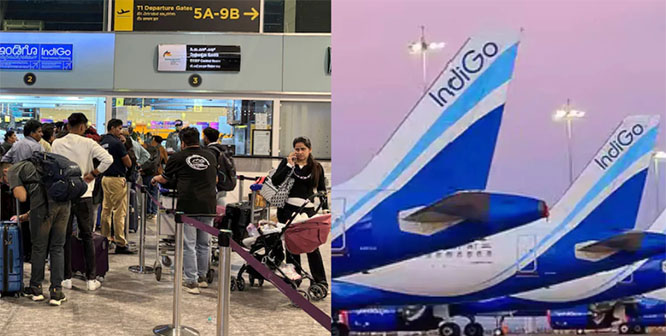
Angry outbursts, long queues, and desperate appeals filled airports across India today as IndiGo grappled with a severe operational breakdown. Hundreds of flights have been cancelled or delayed, leaving thousands of passengers stranded through the night and forcing many to spend long hours at helpdesks.

Social media was flooded with videos of fliers pleading for assistance, accusing the airline of misleading updates, and demanding accommodation after being stuck for 10 to 12 hours at airports such as Hyderabad and Bengaluru.

What Triggered the Meltdown?

IndiGo has attributed the widespread disruption to “a multitude of unforeseen operational challenges.” These include:

•    Minor technology glitches
•    Winter-season schedule adjustments
•    Bad weather
•    Congestion in the aviation network
•    New crew rostering rules (Flight Duty Time Limitations or FDTL)

Among these, the most disruptive has been the implementation of the updated FDTL norms introduced by the Directorate General of Civil Aviation (DGCA) in January 2024.

These rules were designed to reduce pilot fatigue and improve passenger safety. Key changes include:

•    Longer weekly rest periods for flight crew
•    A revised definition of “night,” extending it by an extra hour
•    Tighter caps on flight duty timing and night landings
•    Cutting night shifts for pilots and crew from six per roster cycle to just two

Once these norms became fully enforceable, airlines were required to overhaul rosters well in advance. For IndiGo, this triggered a sudden shortage of crew available for duty, leading to cascading delays and cancellations.

Why IndiGo Was Hit the Hardest

IndiGo is India’s largest airline by a wide margin, operating over 2,200 flights daily. That’s roughly double the number operated by Air India.

When an airline of this size experiences even a 10–20% disruption, it translates to 200–400 flights being delayed or grounded — producing massive spillover effects across the country.

IndiGo also relies heavily on high-frequency overnight operations, a model typical of low-cost carriers that aim to maximise aircraft utilisation and reduce downtime. The stricter FDTL norms clash with these overnight-heavy schedules, forcing the airline to pull back services.

Aviation bodies have also criticised IndiGo’s preparedness. The Airline Pilots' Association of India (ALPA) said airlines were given a two-year window to plan for the new rules but “started preparing rather late.” IndiGo, it said, failed to rebuild crew rosters 15 days in advance as required.

The Federation of Indian Pilots (FIP) went further, calling the crisis the result of IndiGo’s “prolonged and unorthodox lean manpower strategy,” and alleging that the airline adopted a hiring freeze even as it knew the new rules would require more careful staffing.

How Many Flights Are Affected?

In the past 48 hours, over 300 flights have been cancelled. At least 100 more are expected to be cancelled today.

City-wise impact:

•    Hyderabad: 33 expected cancellations; several fliers stranded overnight
•    Bengaluru: over 70 expected cancellations
•    Delhi, Mumbai, Chennai, Kolkata: widespread delays and missed connections

Passengers shared distressing accounts online.

One customer at Hyderabad airport said they waited from 6 PM to 9 AM with “no action taken” regarding their delayed Pune flight. Another said IndiGo repeatedly told them the crew was “arriving soon,” only for the delay to stretch over 12 hours.

IndiGo has apologised for the disruption and promised that operations will stabilise within 48 hours, adding that “calibrated adjustments” are being made to contain the chaos.

What Should Passengers Do Now?

For those flying in the next few days, especially with IndiGo, here are key precautions:

1. Keep Checking Flight Status
Monitor your flight closely before leaving for the airport, as delays may be announced last-minute.

2. Arrive Early
Expect long queues at counters and security due to crowding and rescheduling.

3. Carry Essentials
Pack snacks, water, basic medicines, chargers, and items for children or senior citizens. Extended waiting times should be anticipated.

4. Use Flexible Booking Options
If you booked tickets with a free-date-change or cancellation option, consider using them.
If you haven’t booked yet, prefer refundable or flexible fares, or even consider alternate airlines.

5. Follow IndiGo’s Updates
Keep an eye on IndiGo’s official social media channels and contact customer support for rebooking and refund queries.

What Needs to Change?

Pilot groups have raised concerns not just about staffing but also the planning practices behind it.
The Federation of Indian Pilots accused IndiGo of:

•    Imposing an unexplained hiring freeze despite knowing the FDTL changes were coming
•    Entering non-poaching agreements that limited talent movement
•    Keeping pilot pay frozen
•    Underestimating the need to restructure operations in advance

They have urged DGCA to approve seasonal schedules only after airlines prove they have adequate pilot strength under the new norms.

ALPA also warned that some airlines might be using the delays as an “immature pressure tactic” to push DGCA for relaxations in the new rules — which, if granted, could compromise the very safety standards the norms were meant to protect.

Both pilot bodies stressed that no exemption should dilute safety, and any deviations should be based solely on scientific risk assessment.

Is a Solution in Sight?

While IndiGo says normalcy will return within two days, aviation experts believe that fully stabilising operations could take longer, depending on how quickly the airline can:
•    Re-align rosters
•    Mobilise rested crew
•    Boost staffing
•    Adjust its winter schedule to match regulatory requirements
Passengers are advised to remain prepared for continued delays over the next few days as the airline works through its backlog. 

Comments

Add new comment

  • Coastaldigest.com reserves the right to delete or block any comments.
  • Coastaldigset.com is not responsible for its readers’ comments.
  • Comments that are abusive, incendiary or irrelevant are strictly prohibited.
  • Please use a genuine email ID and provide your name to avoid reject.
News Network
November 30,2025

airportmetro.jpg

Udupi: The pontiffs of Sri Paryaya Puttige Mutt, the sacred seat of Jagadguru Shrimad Madhvacharya Moola Samsthanam, have submitted a proposal to the Prime Minister seeking comprehensive development for Udupi district. 

Proposal for International Airport

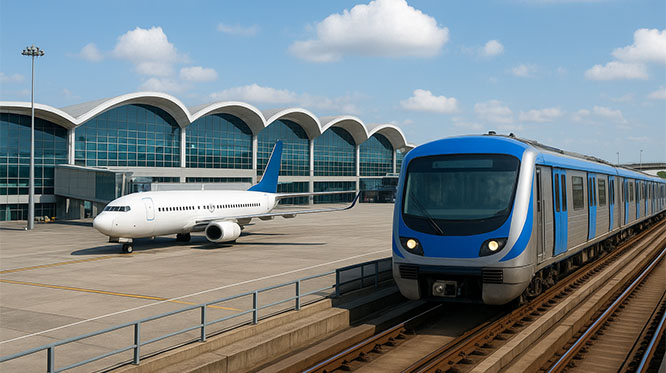
A key request is the establishment of an international airport. Highlighting that around 1,000 acres of land are available and suitable, the pontiffs noted that the existing Mangalore Airport provides limited international connectivity. They suggested the airport be developed under a Public-Private Partnership (PPP) or as a Greenfield Airport to boost trade, education, healthcare, and spiritual tourism.

Metro and Rapid Transit Connectivity

The proposal also calls for Metro Rail or Rapid Transit between Mangaluru and Udupi. The 55 km coastal stretch experiences heavy daily commuter traffic, causing congestion. The district administration is ready to prepare an initial project report for a Mass Rapid Transit corridor and requested inclusion under national urban mobility programmes to ensure safe, green, and time-efficient regional transport.

Port and Coastal Development

The pontiffs urged the development of an international-standard port with a cruise terminal along Udupi’s coast. They also requested fast-tracking of pending coastal tourism projects and revising Coastal Regulation Zone (CRZ) norms to encourage sustainable infrastructure and hospitality investment.

IT, AI and Technological Infrastructure

Support was sought for an IT and AI Innovation Park with incubation facilities under Digital India and Startup India initiatives. The proposal also emphasized the need for strengthened data security and cloud computing infrastructure to boost India’s technological independence.

Sports and Education Initiatives

The pontiffs requested national sports status for Kambala, along with financial and infrastructure support. They also sought the establishment of an AIIMS in Udupi, a new IIT campus, and approval for an IIM to promote higher education in the district.

Representation to the Prime Minister

Sri Sugunendra Tirtha Pontiff and Sri Sushrendra Tirtha Swamiji represented the pontiffs in submitting the comprehensive development proposal to the Prime Minister during his recent visit.

Comments

Add new comment

  • Coastaldigest.com reserves the right to delete or block any comments.
  • Coastaldigset.com is not responsible for its readers’ comments.
  • Comments that are abusive, incendiary or irrelevant are strictly prohibited.
  • Please use a genuine email ID and provide your name to avoid reject.