Over 2 million Muslim pilgrims converge at Mount Arafat for daylong worship as Hajj reaches its peak

Agencies
June 15, 2024

arafa1.jpg

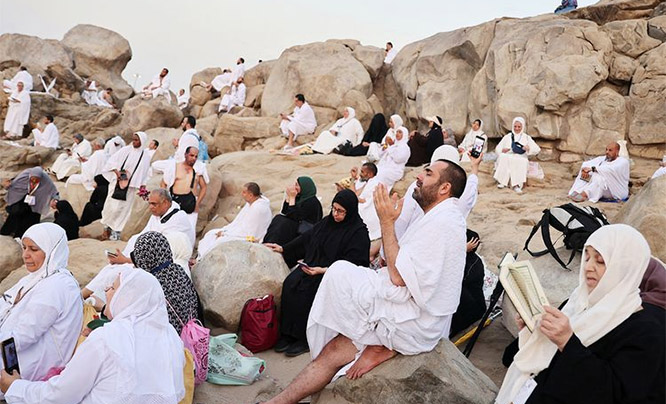
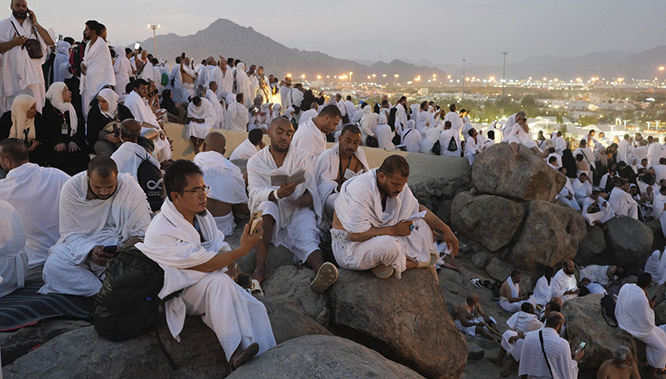
Mount Arafat, June 15: Following the footsteps of prophets beneath a burning sun, Muslims from around the world congregated Saturday at a sacred hill in Saudi Arabia for intense, daylong worship and reflection.

The ritual at Mount Arafat, known as the hill of mercy, is considered the peak of the Hajj pilgrimage. It is often the most memorable for pilgrims, who stand shoulder to shoulder, feet to feet, asking God for mercy, blessings, prosperity and good health. The mount is about 20 kilometers (12 miles) southeast of Makkah.

It’s believed that Prophet Muhammad delivered his final speech, known as the Farewell Sermon, at the sacred mount 1,435 years ago. In the sermon, the prophet called for equality and unity among Muslims.

“It’s indescribable,” Ahmed Tukeyia, an Egyptian pilgrim, said on his arrival Friday evening at a tent camp at the foot of Mount Arafat.

Hajj is one of the largest religious gatherings on earth. The rituals officially started Friday when pilgrims moved from Makkah’s Grand Mosque to Mina, a desert plain just outside the city.

Saudi authorities expect the number of pilgrims this year to exceed 2 million, approaching pre-coronavirus pandemic levels.

The pilgrimage is one of the Five Pillars of Islam. All Muslims are required to make the five-day Hajj at least once in their lives if they are physically and financially able to make the demanding pilgrimage.

The rituals largely commemorate the Qur’an’s accounts of Prophet Ibrahim, his son Prophet Ismail and Ismail’s mother Hajjar — or Abraham and Ismael as they are named in the Bible.

The time of year when the Hajj takes place varies, given that it is set for five days in the second week of Dhu Al-Hijjah, the last month in the Islamic lunar calendar.

Most of the Hajj rituals are held outdoors with little if any shade. When it falls in the summer months, temperatures can soar to over 40 Celsius (104 Fahrenheit). The Health Ministry has cautioned that temperatures at the holy sites could reach 48 C (118 F). It urged pilgrims to use umbrellas and drink more water to stay hydrated.

After Saturday’s worship in Arafat, pilgrims will travel a few kilometers (miles) to a site known as Muzdalifa to collect pebbles that they will use in the symbolic stoning of pillars representing the devil back in Mina.

Pilgrims then return to Mina for three days, coinciding with the festive Eid Al-Adha holiday, when financially able Muslims around the world slaughter livestock and distribute the meat to poor people. Afterward, they return to Makkah for a final circumambulation, known as Farewell Tawaf.

Once the Hajj is over, men are expected to shave their heads, and women to snip a lock of hair in a sign of renewal. Most of the pilgrims then leave Makkah for the city of Medina, some 340 kilometers (210 miles) away, to pray in Prophet Muhammad’s tomb, the Sacred Chamber. The tomb is part of the prophet’s mosque, which is one of the three holiest sites in Islam, along with the Grand Mosque in Makkah and the Al Aqsa Mosque in Jerusalem.

In recent years, Saudi authorities have made significant efforts to improve access and avoid deadly accidents. Tens of thousands of security personnel were deployed across the city, especially around the holy sites, to control the crowds, and the government built a high-speed rail link to ferry people between holy sites in the city, which has been jammed with traffic during the Hajj season. Pilgrims enter through special electronic gates.

Saudi authorities have also expanded and renovated the Grand Mosque where cranes are seen around some of its seven minarets as construction was underway in the holy site.

arafa.jpg

Comments

Add new comment

  • Coastaldigest.com reserves the right to delete or block any comments.
  • Coastaldigset.com is not responsible for its readers’ comments.
  • Comments that are abusive, incendiary or irrelevant are strictly prohibited.
  • Please use a genuine email ID and provide your name to avoid reject.
News Network
December 15,2025

Udupi, Dec 15: What was meant to be a post-pilgrimage gathering turned tragic in Padukere village of Brahmavar taluk, Udupi district, late Sunday night, when a clash among youths escalated into a fatal assault, leaving one man dead.

The victim has been identified as 30-year-old Santosh Mogaveera, a resident of Padukere.

According to preliminary information, the incident took place during a late-night drinking party involving a group of local youths who had recently returned after completing their pilgrimage to the Sabarimala shrine. An argument reportedly broke out among the group and soon escalated into a violent confrontation.

During the ensuing brawl, Santosh Mogaveera was allegedly assaulted and collapsed at the spot after sustaining serious injuries. He was rushed by local residents to a private hospital in Brahmavar, where doctors declared him dead.

On receiving information, senior police officials, including Brahmavar Circle Inspector Gopikrishna, Kota Police Sub-Inspector Praveen Kumar T, Station ASI Manthesh Jabagoudar, and head constables Pradeep and Ashok, visited the spot and conducted an inspection.

Police have taken four youths into custody in connection with the incident. A case has been registered at the Kota police station, and further investigation is underway to ascertain the exact sequence of events leading to the death.

Comments

Add new comment

  • Coastaldigest.com reserves the right to delete or block any comments.
  • Coastaldigset.com is not responsible for its readers’ comments.
  • Comments that are abusive, incendiary or irrelevant are strictly prohibited.
  • Please use a genuine email ID and provide your name to avoid reject.
News Network
December 7,2025

SHRIMP.jpg

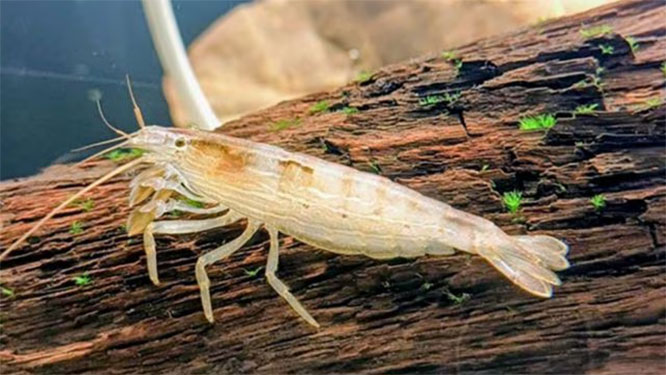
Mangaluru, Dec 7: A rare bamboo shrimp has been rediscovered on mainland India more than 70 years after it was last reported, confirming for the first time the presence of Atyopsis spinipes in the country. The find was made by researchers from the Centre for Climate Change Studies at Sathyabama Institute of Science and Technology, Chennai, during surveys in Karnataka and Odisha.

The team — shrimp expert Dr S Prakash, PhD scholar K Kunjulakshmi, and Mangaluru-based researcher Maclean Antony Santos — combined field surveys, ecological assessments and DNA analysis to identify the elusive species. Their findings, published in Zootaxa, resolve decades of taxonomic confusion stemming from a 1951 report that misidentified the species as Atyopsis moluccensis without strong evidence.

The shrimp has now been confirmed at two locations: the Mulki–Pavanje estuary near Mangaluru and the Kuakhai River in Bhubaneswar. Historical specimens from the Andaman Islands, previously labelled as A. moluccensis, were also found to be misidentified and actually belong to A. spinipes.

The rediscovery began after an aquarium hobbyist in Odisha spotted a shrimp in 2022, prompting systematic surveys across Udupi, Karwar and Mangaluru. Four female specimens were collected in Mulki and one in Odisha, all genetically matching.

Researchers warn the species may exist in very small, vulnerable populations as freshwater habitats face increasing pressure from pollution, sand mining and infrastructure development. All verified specimens have been deposited with the Zoological Survey of India for future reference.

Comments

Add new comment

  • Coastaldigest.com reserves the right to delete or block any comments.
  • Coastaldigset.com is not responsible for its readers’ comments.
  • Comments that are abusive, incendiary or irrelevant are strictly prohibited.
  • Please use a genuine email ID and provide your name to avoid reject.
News Network
December 13,2025

New Delhi: School-going children are picking up drug and smoking habits and engaging in consumption of alcohol, with the average age of introduction to such harmful substances found to be around 13 years, suggesting a need for earlier interventions as early as primary school, a multi-city survey by AIIMS-Delhi said.

The findings also showed substance use increased in higher grades, with grade XI/XII students two times more likely to report use of substances when compared with grade VIII students. This emphasised the importance of continued prevention and intervention through middle and high school.

The study led by Dr Anju Dhawan of AIIMS's National Drug Dependence Treatment Centre, published in the National Medical Journal of India this month, looks at adolescent substance use across diverse regions.

The survey included 5,920 students from classes 8, 9, 11 and 12 in urban government, private and rural schools across 10 cities -- Bengaluru, Chandigarh, Delhi, Dibrugarh, Hyderabad, Imphal, Jammu, Lucknow, Mumbai, and Ranchi. The data were collected between May 2018 and June 2019.

The average age of initiation for any substance was 12.9 (2.8) years. It was lowest for inhalants (11.3 years) followed by heroin (12.3 years) and opioid pharmaceuticals (without prescription; 12.5 years).

Overall, 15.1 per cent of participants reported lifetime use, 10.3 per cent reported past year use, and 7.2 per cent reported use in the past month of any substance, the study found.

The most common substances used in the past year, after tobacco (4 per cent) and alcohol (3.8 per cent), were opioids (2.8 per cent), followed by cannabis (2 per cent) and inhalants (1.9 per cent). Use of non-prescribed pharmaceutical opioids was most common among opioid users (90.2 per cent).

On being asked, 'Do you think this substance is easily available for a person of your age' separately for each substance category, nearly half the students (46.3 per cent) endorsed that tobacco products and more than one-third of the students (36.5 per cent) agreed that a person of their age can easily procure alcohol products.

Similarly, for Bhang (21.9 per cent), ganja/charas (16.1 per cent), inhalants (15.2 per cent), sedatives (13.7 per cent), opium and heroin (10 per cent each), the students endorsed that these can be easily procured.

About 95 per cent of the children, irrespective of their grade, agreed with the statement that 'drug use is harmful'.

The rates of substance use (any) among boys were significantly higher than those of girls for substance use (ever), use in the past year and use in the past 30 days. Compared to grade VIII students, grade IX students were more likely, and grade XI/XII students were twice as likely to have used any substance (ever).

The likelihood of past-year use of any substance was also higher for grade IX students and for grade XI/XII students as compared to grade VIII students.

About 40 per cent of students mentioned that they had a family member who used tobacco or alcohol each. The use of cannabis (any product) and opioid (any product) by a family member was reported by 8.2 per cent and 3.9 per cent of students, respectively, while the use of other substances, such as inhalants/sedatives by family was 2-3 per cent, the study found.

A relatively smaller percentage of students reported use of tobacco or alcohol among peers as compared to among family members, while a higher percentage reported inhalants, sedatives, cannabis or opioid use among peers.

Children using substances (past year) compared to non-users reported significantly higher any substance use by their family members and peers.

There were 25.7 per cent students who replied 'yes' to the question 'conflicts/fights often occur in your family'. Most students also replied affirmatively to 'family members are aware of how their time is being spent' and 'damily members are aware of with whom they spend their time'.

Comments

Add new comment

  • Coastaldigest.com reserves the right to delete or block any comments.
  • Coastaldigset.com is not responsible for its readers’ comments.
  • Comments that are abusive, incendiary or irrelevant are strictly prohibited.
  • Please use a genuine email ID and provide your name to avoid reject.