UN World Tourism Org to set up regional office in Saudi Arabia's capital

News Network
September 16, 2020

Tbilisi, Sept 16: The United Nations World Tourism Organization (UNWTO) has approved the setting up of a regional office in Riyadh to support the growth of the Middle East’s tourism sector as it recovers from the coronavirus pandemic.

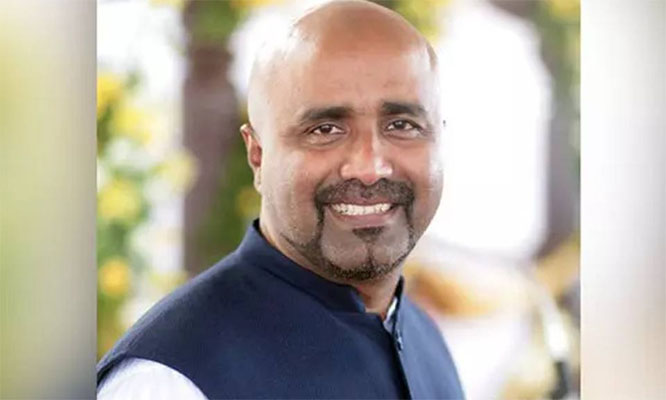
Minister of Tourism Ahmed Al-Khateeb said the UNWTO’s Executive Council members have approved the move to establish the office during a session in Georgia. The office will cover 13 countries within the region, and will serve as a platform to build long-term growth in the travel and tourism sector of the Middle East.

“International cooperation and the role of the UNWTO are more important than ever. I am therefore very excited that Saudi Arabia will become home to the first ever UNWTO Regional Office, which aims to support growth at a national and regional level,” Al-Khateeb said.

“In Saudi Arabia, we are very aware of the transformative power of tourism on the economy and people. We may still be a young destination, but tourism is at the forefront of Saudi Arabia’s vision for the future,” he added.

Recently, Al-Khateeb revealed that the Council of Ministers has given the Ministry of Tourism the go ahead to open a regional office of the United Nations World Tourism Organization (UNWTO) in Riyadh as well as to establish a global academy for tourism training.

Al-Khateeb pointed out that the ministry, in cooperation with UNWTO, would work to lay the foundations and standards that enable the proposed academy to be among the best tourism academies in the world.

It is noteworthy that that the UNWTO secretary general praised the Saudi Summer season during a recent visit to the Kingdom during which he toured a number of Saudi summer destinations. Al-Khateeb hoped that the Kingdom, together with UNWTO, would launch a set of initiatives to develop the tourism sector in the region.

Comments

Add new comment

  • Coastaldigest.com reserves the right to delete or block any comments.
  • Coastaldigset.com is not responsible for its readers’ comments.
  • Comments that are abusive, incendiary or irrelevant are strictly prohibited.
  • Please use a genuine email ID and provide your name to avoid reject.
News Network
January 14,2026

phone.jpg

Bidar (Karnataka): A routine ride turned fatal when a nylon kite string slit the throat of a 48-year-old motorcyclist in Karnataka’s Bidar district, claiming his life in a chilling reminder of the deadly threat posed by banned kite-flying materials.

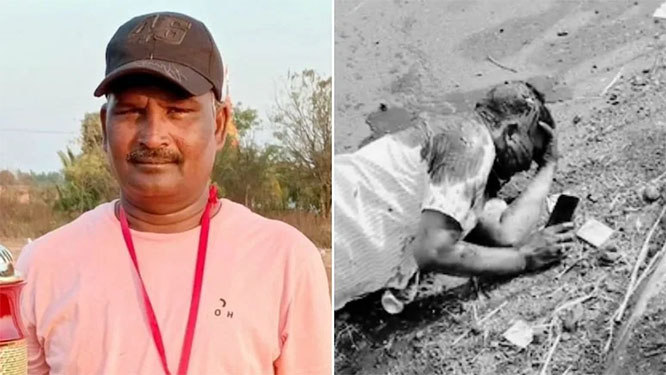
The victim, identified as Sanjukumar Hosamani, was riding near the Talamadagi Bridge when a taut kite string stretched across the road cut deep into his neck, causing profuse bleeding. Critically injured, Hosamani collapsed from his motorcycle but managed to place a final phone call to his daughter.

A disturbing video circulating on social media shows Hosamani drenched in blood, struggling to dial his daughter’s number as life ebbed away.

A passerby attempted to help by pressing a cloth against the wound to stop the bleeding. Locals said an ambulance was called immediately, but it arrived too late. Hosamani succumbed to his injuries before he could be taken to a hospital.

Family members have blamed the delay in emergency response for his death, alleging that timely medical assistance could have saved his life.

Following the incident, Hosamani’s relatives and local residents staged a protest at the accident spot, demanding strict action against the use of nylon kite strings and urgent improvements in emergency medical services.

Police have registered a case at Manna Ekhelli Police Station and said an investigation is underway.

Kite flying during Makar Sankranti is a long-standing tradition across many parts of India. While cotton strings coated with powdered glass were once common, they have increasingly been replaced by cheaper and more durable nylon strings. This durability, however, has proven lethal, as nylon can slice through skin with ease.

Commonly referred to as Chinese manjha, these strings pose a grave danger to two-wheeler riders, who often fail to notice the nearly invisible lines stretched across roads and flyovers.

The Karnataka incident is the latest in a series of such deaths reported across the country. Just this week, a 45-year-old man in Indore died after a kite string slit his throat. Delhi has witnessed multiple fatalities in recent years, including the deaths of a 22-year-old businessman in 2025, a biker in 2022, and a seven-year-old child in 2023.

Despite periodic raids and seizures by authorities, the recurring deaths underline serious gaps in enforcement, raising questions about whether current measures are sufficient to prevent further loss of life.

Comments

Add new comment

  • Coastaldigest.com reserves the right to delete or block any comments.
  • Coastaldigset.com is not responsible for its readers’ comments.
  • Comments that are abusive, incendiary or irrelevant are strictly prohibited.
  • Please use a genuine email ID and provide your name to avoid reject.
News Network
January 14,2026

utifti.jpg

The National Commission for Allied and Healthcare Professions (NCAHP) has announced that admissions to undergraduate programmes in physiotherapy and occupational therapy will henceforth be conducted exclusively through the National Eligibility-cum-Entrance Test (NEET).

In a press release issued by Prof. U. T. Iftikhar Ali Fareed, Chairman of the Karnataka State Allied and Healthcare Council, stated that the NCAHP has clarified the category-wise degree nomenclature and admission criteria for allied and healthcare undergraduate programmes, effective from the academic year 2026–27.

According to the notification, admissions to the Bachelor of Physiotherapy (BPT) – Category 3 and Bachelor of Occupational Therapy (BOT) – Category 6 will be conducted only through NEET, in accordance with the National Commission for Allied and Healthcare Professions Act, 2021.

All Vice-Chancellors of public, private, and deemed-to-be universities in Karnataka have been asked to ensure strict compliance with the NCAHP guidelines and to disseminate the information widely among affiliated colleges, faculty, and students.

Prof. Ifthikar Ali emphasized that universities must take necessary steps to implement the admission procedure for the academic year 2026–27 and subsequent years.
 

Comments

Add new comment

  • Coastaldigest.com reserves the right to delete or block any comments.
  • Coastaldigset.com is not responsible for its readers’ comments.
  • Comments that are abusive, incendiary or irrelevant are strictly prohibited.
  • Please use a genuine email ID and provide your name to avoid reject.
News Network
January 20,2026

Mangaluru: In a major step towards strengthening rural innovation, the Office of the Principal Scientific Adviser (PSA) to the Government of India is supporting the establishment of RuTAGe Smart Village Centres (RSVCs) across the country through collaborations with academic institutions, civil society organisations and philanthropic partners.

As part of this national initiative, Nitte (Deemed to be University) will set up the first RSVCs in the region at Nitte GP in Udupi district and at the Nitte Health Centre, Sevanjali Trust, Farangipete, in Dakshina Kannada district. The centres will be inaugurated on January 21. In South India, the programme is being implemented by the Section Infin-8 Foundation (SI-8).

Speaking to reporters on Monday, SI-8 founder-director Vishwas US said experts from Nitte University and SI-8 would work closely with farmers, students, youth and local entrepreneurs to adapt and deploy technologies tailored to local needs.

Project head Prof Iddya Karunasagar, representing Nitte DU, said the RSVCs at Nitte and Farangipete would serve as demonstration hubs for a wide range of agriculture, energy, skill-development and assistive technologies. These include solar dryers for fruits, vegetables and crops; soil-testing solutions; power weeders and women-friendly farm tools; wind-powered devices for rural artisans; grain storage systems; grass-cutting and tree-climbing equipment; and liquid fertiliser production using cowshed waste.

SI-8 CEO Aravind C Kumar said the centres would also provide access to digital and knowledge-based platforms such as ISRO applications, government scheme portals, market linkage tools and gamified learning resources, along with assistive technologies for persons with visual impairments.

Highlighting the broader impact of the initiative, Principal Scientific Adviser Prof Ajay Kumar Sood said it demonstrated how applied research could bridge the rural–urban divide and help create self-reliant, technology-enabled villages.

The initiative has been made possible through philanthropic support from Dr NC Murthy of ACM Business Solutions, LLC, USA. Dr Sapna Poti, Director (Strategic Alliances) at the Office of the Principal Scientific Adviser, said the long-term objective is to build self-sufficient, technology-driven communities capable of generating sustainable livelihoods on their own.

Comments

Add new comment

  • Coastaldigest.com reserves the right to delete or block any comments.
  • Coastaldigset.com is not responsible for its readers’ comments.
  • Comments that are abusive, incendiary or irrelevant are strictly prohibited.
  • Please use a genuine email ID and provide your name to avoid reject.