



Minor boys stripped, beaten up, paraded for bathing in farmer’s well

Agencies
June 15, 2018

Mumbai, Jun 15: Two minor boys from a backward community were allegedly beaten up and paraded naked in a village in Maharashtra's Jalgaon district for swimming in a well that belonged to a person of a different caste, police said on Friday.

The teenagers were paraded by two men, one of whom owned the well.

Police have arrested the men, identified as Ishwar Joshi and Prahlad Lohar, in connection with the incident.

The matter came to light when a video of the alleged assault and stripping of the boys went viral on the social media on June 10.

The video purportedly shows the two boys -- aged 15 and 16 -- being beaten up with a belt and paraded naked in Pahur village in Jamner taluka by the accused duo, a local police official said.

The boys had gone for a swim in the well belonging to Joshi, a farmer, in Wakadi village around 3 pm on June 10.

"While returning home after swimming, both the teenagers were caught by Joshi and his farmworker Prahlad Lohar," he said.

Joshi and Lohar allegedly started abusing the duo, stripped them off their clothes and started beating them with a belt, the official said.

According to the official, the cries of the boys to spare them fell on deaf ears.

He said the boys were paraded naked in the village while one of the accused used his mobile phone to film the incident and circulate it on social media.

The parents of the boys came to know about the incident after the video went viral, following which they approached the Pahur police.

On the complaint of the father of one of the victims, Joshi and Lohar were booked under sections 323 (Punishment for voluntarily causing hurt), 504 (Intentional insult with intent to provoke breach of the peace), and 506 (Punishment for criminal intimidation) of the IPC, said the officer.

Sub-Divisional Police Officer (SDPO) Keshav Pathond told PTI that Joshi and Lohar were also booked under the Atrocity Act, Protection of Children from Sexual Offences Act (POCSO) and section 67 (B) of the Information and Technology Act.

They were arrested on the night of June 10 and produced before the local court on June 11, which sent them to judicial remand.

The Congress has alleged that "atrocities against Dalits" are on the rise under the Narendra Modi government.

Former chief minister and state unit Congress president Ashok Chavan claimed that such incidents are happening with an increasing frequency after the BJP came to power in Maharashtra.

"This reflects the anti-Dalit mentality of the BJP," he said.

Maharashtra Congress in-charge Mohan Prakash said a party delegation will visit the village on Saturday.

"It has become a flagship programme of the Modi government ever since it was formed to unleash atrocities on Dalits.

"There are large-scale atrocities on Dalits and tribals in the BJP-ruled states such as Gujarat, Uttar Pradesh, Haryana and Maharashtra," he said.

"On one hand the chief minister talks about negotiating with Dalits, but on the other, cases are being slapped against them and they are being arrested. Now Prime Minister Narendra Modi and Chief Minister Devendra Fadnavis should tell if this is the act of Maoists or Manuvadis," Prakash said.

Nationalist Congress Party Maharashtra unit chief Jayant Patil alleged that Dalits and minorities were not safe under the BJP government.

"Such incidents, which are a blot on humanity, are happening frequently since the BJP assumed power," he said.

Maharashtra Revenue Minister Chandrakant Patil said two persons have been arrested in connection with the Jalgaon incident.

"I spoke to the collector and the superintendent of police," he said.

Irrigation Minister Girish Mahajan said the two people have been booked under the provisions of the Atrocities Act and POCSO.

Mahajan and Minister of State for Social Justice Dilip Kamble said the boys used to bathe in the well whose water was meant for drinking water purpose.

Comments

Add new comment

  • Coastaldigest.com reserves the right to delete or block any comments.
  • Coastaldigset.com is not responsible for its readers’ comments.
  • Comments that are abusive, incendiary or irrelevant are strictly prohibited.
  • Please use a genuine email ID and provide your name to avoid reject.
News Network
December 13,2025

New Delhi: School-going children are picking up drug and smoking habits and engaging in consumption of alcohol, with the average age of introduction to such harmful substances found to be around 13 years, suggesting a need for earlier interventions as early as primary school, a multi-city survey by AIIMS-Delhi said.

The findings also showed substance use increased in higher grades, with grade XI/XII students two times more likely to report use of substances when compared with grade VIII students. This emphasised the importance of continued prevention and intervention through middle and high school.

The study led by Dr Anju Dhawan of AIIMS's National Drug Dependence Treatment Centre, published in the National Medical Journal of India this month, looks at adolescent substance use across diverse regions.

The survey included 5,920 students from classes 8, 9, 11 and 12 in urban government, private and rural schools across 10 cities -- Bengaluru, Chandigarh, Delhi, Dibrugarh, Hyderabad, Imphal, Jammu, Lucknow, Mumbai, and Ranchi. The data were collected between May 2018 and June 2019.

The average age of initiation for any substance was 12.9 (2.8) years. It was lowest for inhalants (11.3 years) followed by heroin (12.3 years) and opioid pharmaceuticals (without prescription; 12.5 years).

Overall, 15.1 per cent of participants reported lifetime use, 10.3 per cent reported past year use, and 7.2 per cent reported use in the past month of any substance, the study found.

The most common substances used in the past year, after tobacco (4 per cent) and alcohol (3.8 per cent), were opioids (2.8 per cent), followed by cannabis (2 per cent) and inhalants (1.9 per cent). Use of non-prescribed pharmaceutical opioids was most common among opioid users (90.2 per cent).

On being asked, 'Do you think this substance is easily available for a person of your age' separately for each substance category, nearly half the students (46.3 per cent) endorsed that tobacco products and more than one-third of the students (36.5 per cent) agreed that a person of their age can easily procure alcohol products.

Similarly, for Bhang (21.9 per cent), ganja/charas (16.1 per cent), inhalants (15.2 per cent), sedatives (13.7 per cent), opium and heroin (10 per cent each), the students endorsed that these can be easily procured.

About 95 per cent of the children, irrespective of their grade, agreed with the statement that 'drug use is harmful'.

The rates of substance use (any) among boys were significantly higher than those of girls for substance use (ever), use in the past year and use in the past 30 days. Compared to grade VIII students, grade IX students were more likely, and grade XI/XII students were twice as likely to have used any substance (ever).

The likelihood of past-year use of any substance was also higher for grade IX students and for grade XI/XII students as compared to grade VIII students.

About 40 per cent of students mentioned that they had a family member who used tobacco or alcohol each. The use of cannabis (any product) and opioid (any product) by a family member was reported by 8.2 per cent and 3.9 per cent of students, respectively, while the use of other substances, such as inhalants/sedatives by family was 2-3 per cent, the study found.

A relatively smaller percentage of students reported use of tobacco or alcohol among peers as compared to among family members, while a higher percentage reported inhalants, sedatives, cannabis or opioid use among peers.

Children using substances (past year) compared to non-users reported significantly higher any substance use by their family members and peers.

There were 25.7 per cent students who replied 'yes' to the question 'conflicts/fights often occur in your family'. Most students also replied affirmatively to 'family members are aware of how their time is being spent' and 'damily members are aware of with whom they spend their time'.

Comments

Add new comment

  • Coastaldigest.com reserves the right to delete or block any comments.
  • Coastaldigset.com is not responsible for its readers’ comments.
  • Comments that are abusive, incendiary or irrelevant are strictly prohibited.
  • Please use a genuine email ID and provide your name to avoid reject.
News Network
December 7,2025

Mangaluru, Dec 7: A 34-year-old fruit and vegetable trader in Mangaluru has reportedly lost ₹33.1 lakh after falling victim to an online investment scam run through a fake mobile app.

Police said the scam began in September, when the victim received a link on Facebook. Clicking it connected him to a WhatsApp number, where an unidentified person introduced a high-return investment scheme and instructed him to download an app.

To build trust, the fraudster asked him to invest ₹30,000 on September 24. The trader soon received ₹34,000 as “profit,” convincing him the scheme was genuine. Over the next two months, he transferred money in multiple instalments via Google Pay and IMPS to different scanner codes and bank accounts shared by the scammers. Between September 24 and December 3, he ended up sending a total of ₹33.1 lakh.

When he later requested a refund of his investment and promised returns, the scammers demanded additional payments, claiming he needed to pay a “service tax” first. Even after he paid a small amount, no money was returned, and the scammers continued pressuring him for more.

A case has been registered at the CEN Crime Police Station.

Comments

Add new comment

  • Coastaldigest.com reserves the right to delete or block any comments.
  • Coastaldigset.com is not responsible for its readers’ comments.
  • Comments that are abusive, incendiary or irrelevant are strictly prohibited.
  • Please use a genuine email ID and provide your name to avoid reject.
News Network
December 7,2025

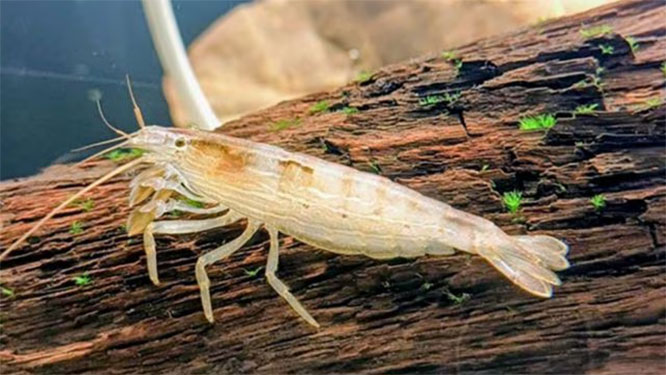
SHRIMP.jpg

Mangaluru, Dec 7: A rare bamboo shrimp has been rediscovered on mainland India more than 70 years after it was last reported, confirming for the first time the presence of Atyopsis spinipes in the country. The find was made by researchers from the Centre for Climate Change Studies at Sathyabama Institute of Science and Technology, Chennai, during surveys in Karnataka and Odisha.

The team — shrimp expert Dr S Prakash, PhD scholar K Kunjulakshmi, and Mangaluru-based researcher Maclean Antony Santos — combined field surveys, ecological assessments and DNA analysis to identify the elusive species. Their findings, published in Zootaxa, resolve decades of taxonomic confusion stemming from a 1951 report that misidentified the species as Atyopsis moluccensis without strong evidence.

The shrimp has now been confirmed at two locations: the Mulki–Pavanje estuary near Mangaluru and the Kuakhai River in Bhubaneswar. Historical specimens from the Andaman Islands, previously labelled as A. moluccensis, were also found to be misidentified and actually belong to A. spinipes.

The rediscovery began after an aquarium hobbyist in Odisha spotted a shrimp in 2022, prompting systematic surveys across Udupi, Karwar and Mangaluru. Four female specimens were collected in Mulki and one in Odisha, all genetically matching.

Researchers warn the species may exist in very small, vulnerable populations as freshwater habitats face increasing pressure from pollution, sand mining and infrastructure development. All verified specimens have been deposited with the Zoological Survey of India for future reference.

Comments

Add new comment

  • Coastaldigest.com reserves the right to delete or block any comments.
  • Coastaldigset.com is not responsible for its readers’ comments.
  • Comments that are abusive, incendiary or irrelevant are strictly prohibited.
  • Please use a genuine email ID and provide your name to avoid reject.