Modi healthcare scheme won hearts and votes

Agencies
May 29, 2019

Sitapur, May 29: While Prime Minister Narendra Modi's nationalist tub-thumping has been widely credited with his recent election win, another factor was one he kept relatively quiet about Modicare.
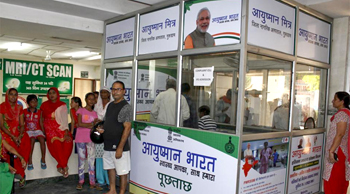
Despite some teething problems and a dire need for further reforms and more spending, this huge initiative launched last year one of the world's largest publicly funded healthcare programmes has made a difference.

"This scheme has infused a sense of belief in the poor that if they fall sick they will get treatment without spending a rupee," said Anil Agarwal, chief medical superintendent at a hospital in Sitapur, a city with some of India's worst health indicators.

Indeed, voting data from the mammoth election that ended last week with a landslide for Modi showed particularly strong support for his right-wing party in poorer areas where people would have benefited most.

"It has certainly been welcomed as a welfare measure by the poor and probably contributed to (Modi's) electoral victory," said K. Srinath Reddy, president of the non-profit Public Health Foundation of India.

The flagship programme, dubbed Modicare, covers hospital costs up to $7,200 for the poorest 40 per cent of Indians, or some 500 million people, in a country where the average annual income is about $1,670.

Even before Modicare, or the National Health Protection Scheme (NHPS), was introduced in September, treatment was largely free at government hospitals.

But patients still had to shell out for diagnostics and medicines, which make up a big chunk of the costs of hospital care, as well as for implants like stents.

Private clinics were out of reach for many, with a consultation alone costing some 1,000 rupees ($15) -- a large amount for millions living on less than $2 a day. But now poorer Indians can visit these clinics, providing they sign up to the scheme.

Sabir Ali, an impoverished weaver who got a Modicare card for himself and his family to use at any of the 15,000-odd participating hospitals, had a cyst removed from his forehead.

"It was unbelievable to hold the card in my hands," Ali told AFP, his head bandaged at the Sitapur district hospital in northern India.

"I used the card and I didn't have to spend a single rupee on my treatment."

Until recently only a quarter of India's population had any health insurance, forcing hundreds of millions to pay out of their own pockets, go to quack doctors or just skip treatment.

An estimated 60 million Indians are pushed below the poverty threshold every year paying for medical care, while a report last year by The Lancet medical journal found substandard healthcare was responsible for some 1.6 million deaths a year.

Almost two million people have benefited from the scheme so far, with the government allocating some $1.2 billion since the launch. The costs are shared between federal and state governments 60:40.

"Schemes such as Modicare played a larger role (in the election outcome) than anyone had anticipated," said political analyst Parsa Venkateshwar Rao.

"The overall message that has gone out is that Modi is willing to help the poor."

In his second term, however, Modi will have to iron out some of the scheme's teething problems, with some hospitals complaining they cannot recoup what they spend.

"We can't cope with (receiving) 9,000 rupees ($128) for a caesarean section which would include a stay of the patient, fees of the anaesthetist, paediatrician, medicines and so on," said Doctor V.K. Monga from the Indian Medical Association.

"But corrective steps are being taken... The health sector is overall satisfied now with the scheme," he told news agency.

Reddy of the Public Health Foundation of India also said the scheme needed more financial resources.

"If the state governments too can be stimulated to increase their health budgets, the scheme will become sustainable."

More broadly, Modi needs to build more facilities, train more staff and implement more reforms in what remains a dysfunctional healthcare system, experts say.

The newly re-elected prime minister has promised to hike health spending to 2.5 per cent of GDP by 2025, from 1.15 per cent now -- one of the lowest in the world -- but it is unclear if this will suffice.

Critics also say that Modicare helps unscrupulous private providers -- already accused of over-diagnosing and carrying out unnecessary surgeries -- boost profits.

Ali too has his complaints.

"I live nearby the hospital so I can come, but if someone lives outside the city, they will struggle with the number of times they are expected to visit the hospital," he said.

"They make us run around a lot."

But the family of Vindeshwari Devi, who has had her uterus removed at the same Sitapur hospital, is satisfied.

"I think this scheme is good and it will only get better," said Sunil Kumar, a daily-wage labourer and Devi's son-in-law.

"For those who have nothing, it means a lot."

Comments

Add new comment

  • Coastaldigest.com reserves the right to delete or block any comments.
  • Coastaldigset.com is not responsible for its readers’ comments.
  • Comments that are abusive, incendiary or irrelevant are strictly prohibited.
  • Please use a genuine email ID and provide your name to avoid reject.
News Network
December 17,2025

melkar1.jpg

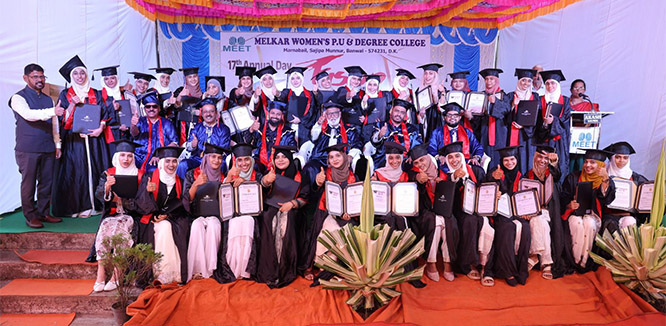
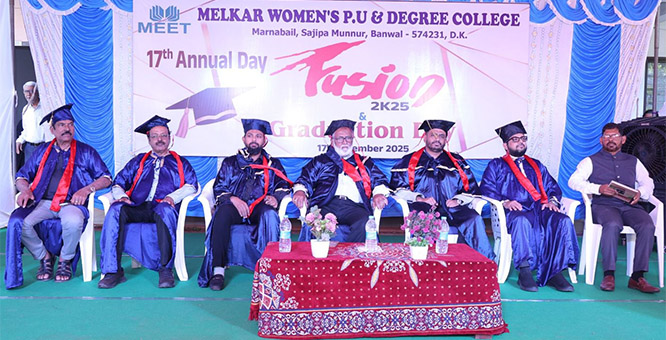
Melkar, Dec 17: The 17th Annual Day and Graduation Ceremony of Melkar Women’s PU and Degree College, themed “Fusion-2K25,” was celebrated with dignity and enthusiasm, marking a significant milestone in the institution’s academic journey. The programme reflected the college’s steadfast commitment to academic excellence, character building, and the holistic development of students.

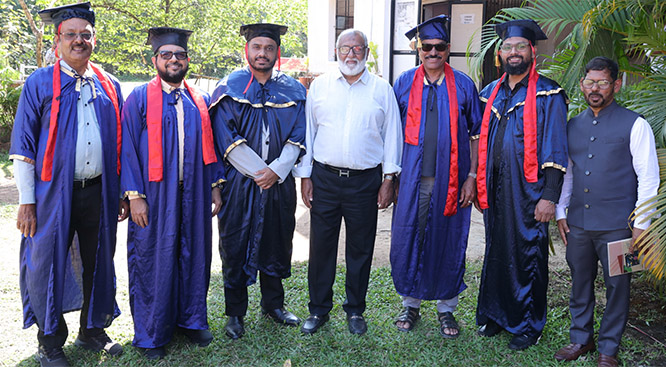
The event was inaugurated by Mr. Asif Mohammed, whose presence greatly enriched the occasion. The celebration was further graced by the chief guests Mr. P. B. Ahmed Mudassir and Mr. Nissar Fakeer Mohammed, along with the distinguished guests of honour Mr. B. A. Nazeer and Mr. Ibrahim Gadiyar. In their inspiring addresses, the guests encouraged the graduating students and appreciated the dedicated efforts of the management, faculty, and students.

The annual report was presented by the Principal, Mr. Abdul Majeed S, highlighting the institution’s academic progress, notable achievements, and extracurricular accomplishments during the academic year.

The presidential address was delivered by the esteemed Chairman of Melkar Women’s PU and Degree College, Dr. Haji S. M. Rasheed, who emphasized the vital role of education in empowering women and shaping responsible citizens. He also stressed the importance of discipline, dedication, and perseverance in achieving success.

Cultural programmes and academic recognitions formed an integral part of the celebration, showcasing the talents and achievements of the students. The graduation ceremony was a proud moment for the outgoing students as they were formally conferred degrees and wished success in their future endeavours.

Ms. Mashmooma Fathima served as the Master of Ceremonies. The welcome address was delivered by Ms. Fathima Nida, and the programme concluded with a vote of thanks proposed by Ms. Ayisha Suhana.

The event successfully achieved its objectives and was highly appreciated by the guests and attendees.

melkar3.jpg

melkar2.jpg

Comments

Add new comment

  • Coastaldigest.com reserves the right to delete or block any comments.
  • Coastaldigset.com is not responsible for its readers’ comments.
  • Comments that are abusive, incendiary or irrelevant are strictly prohibited.
  • Please use a genuine email ID and provide your name to avoid reject.
News Network
December 5,2025

indigoCEO.jpg

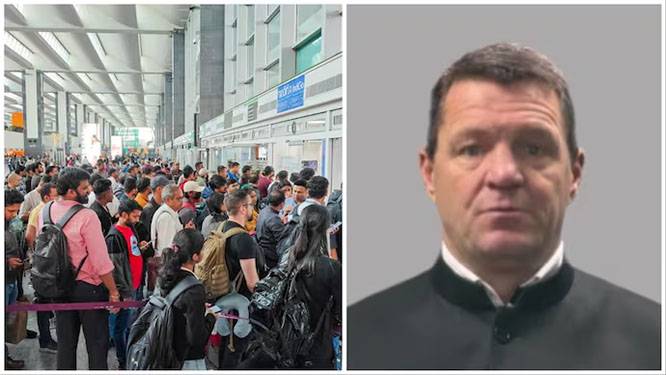
New Delhi, Dec 5: IndiGo CEO Pieter Elbers issued a public apology this evening after more than a thousand flights were cancelled today, making it the "most severely impacted day" in terms of cancellations. The biggest airline of the country cancelled "more than half" of its daily number of flights on Friday, said Elbers. He also said that even though the crisis will persist on Saturday, the airline anticipates fewer than 1,000 flight cancellations.

"Full normalisation is expected between December 10 and 15, though IndiGo cautions that recovery will take time due to the scale of operations," the IndiGo CEO said. 

IndiGo operates around 2,300 domestic and international flights daily.

Pieter Elbers, while apologising for the major inconvenience due to delays and cancellations, said the situation is a result of various causes.

The crisis at IndiGo stems from new regulations that boost pilots' weekly rest requirements by 12 hours to 48 and allow only two night-time landings per week, down from six. IndiGo has attributed the mass cancellations to "misjudgment and planning gaps".

Elbers also listed three lines of action that the airline will adopt to address the issue.

"Firstly, customer communication and addressing your needs, for this, messages have been sent on social media. And just now, a more detailed communication with information, refunds, cancellations and other customer support measures was sent," he said.

The airline has also stepped up its call centre capacity.

"Secondly, due to yesterday's situation, we had customers stranded mostly at the nation's largest airports. Our focus was for all of them to be able to travel today itself, which will be achieved. For this, we also ask customers whose flights are cancelled not to come to the airports as notifications are sent," the CEO said.

"Thirdly, cancellations were made for today to align our crew and planes to be where they need to start tomorrow morning afresh. Earlier measures of the last few days, regrettable, have proven not to be enough, but we have decided today to reboot all our systems and schedules, resulting in the highest numbers of cancellations so far, but imperative for progressive improvements starting from tomorrow," he added.

As airports witnessed chaotic scenes, the Directorate General of Civil Aviation (DGCA) stepped in to grant IndiGo a temporary exemption from stricter night duty rules for pilots. It also allowed substitution of leaves with a weekly rest period. 

Civil Aviation Minister Ram Mohan Naidu has said a high-level inquiry will be ordered and accountability will be fixed.

Comments

Add new comment

  • Coastaldigest.com reserves the right to delete or block any comments.
  • Coastaldigset.com is not responsible for its readers’ comments.
  • Comments that are abusive, incendiary or irrelevant are strictly prohibited.
  • Please use a genuine email ID and provide your name to avoid reject.
News Network
December 13,2025

New Delhi: School-going children are picking up drug and smoking habits and engaging in consumption of alcohol, with the average age of introduction to such harmful substances found to be around 13 years, suggesting a need for earlier interventions as early as primary school, a multi-city survey by AIIMS-Delhi said.

The findings also showed substance use increased in higher grades, with grade XI/XII students two times more likely to report use of substances when compared with grade VIII students. This emphasised the importance of continued prevention and intervention through middle and high school.

The study led by Dr Anju Dhawan of AIIMS's National Drug Dependence Treatment Centre, published in the National Medical Journal of India this month, looks at adolescent substance use across diverse regions.

The survey included 5,920 students from classes 8, 9, 11 and 12 in urban government, private and rural schools across 10 cities -- Bengaluru, Chandigarh, Delhi, Dibrugarh, Hyderabad, Imphal, Jammu, Lucknow, Mumbai, and Ranchi. The data were collected between May 2018 and June 2019.

The average age of initiation for any substance was 12.9 (2.8) years. It was lowest for inhalants (11.3 years) followed by heroin (12.3 years) and opioid pharmaceuticals (without prescription; 12.5 years).

Overall, 15.1 per cent of participants reported lifetime use, 10.3 per cent reported past year use, and 7.2 per cent reported use in the past month of any substance, the study found.

The most common substances used in the past year, after tobacco (4 per cent) and alcohol (3.8 per cent), were opioids (2.8 per cent), followed by cannabis (2 per cent) and inhalants (1.9 per cent). Use of non-prescribed pharmaceutical opioids was most common among opioid users (90.2 per cent).

On being asked, 'Do you think this substance is easily available for a person of your age' separately for each substance category, nearly half the students (46.3 per cent) endorsed that tobacco products and more than one-third of the students (36.5 per cent) agreed that a person of their age can easily procure alcohol products.

Similarly, for Bhang (21.9 per cent), ganja/charas (16.1 per cent), inhalants (15.2 per cent), sedatives (13.7 per cent), opium and heroin (10 per cent each), the students endorsed that these can be easily procured.

About 95 per cent of the children, irrespective of their grade, agreed with the statement that 'drug use is harmful'.

The rates of substance use (any) among boys were significantly higher than those of girls for substance use (ever), use in the past year and use in the past 30 days. Compared to grade VIII students, grade IX students were more likely, and grade XI/XII students were twice as likely to have used any substance (ever).

The likelihood of past-year use of any substance was also higher for grade IX students and for grade XI/XII students as compared to grade VIII students.

About 40 per cent of students mentioned that they had a family member who used tobacco or alcohol each. The use of cannabis (any product) and opioid (any product) by a family member was reported by 8.2 per cent and 3.9 per cent of students, respectively, while the use of other substances, such as inhalants/sedatives by family was 2-3 per cent, the study found.

A relatively smaller percentage of students reported use of tobacco or alcohol among peers as compared to among family members, while a higher percentage reported inhalants, sedatives, cannabis or opioid use among peers.

Children using substances (past year) compared to non-users reported significantly higher any substance use by their family members and peers.

There were 25.7 per cent students who replied 'yes' to the question 'conflicts/fights often occur in your family'. Most students also replied affirmatively to 'family members are aware of how their time is being spent' and 'damily members are aware of with whom they spend their time'.

Comments

Add new comment

  • Coastaldigest.com reserves the right to delete or block any comments.
  • Coastaldigset.com is not responsible for its readers’ comments.
  • Comments that are abusive, incendiary or irrelevant are strictly prohibited.
  • Please use a genuine email ID and provide your name to avoid reject.