Modi healthcare scheme won hearts and votes

Agencies
May 29, 2019

Sitapur, May 29: While Prime Minister Narendra Modi's nationalist tub-thumping has been widely credited with his recent election win, another factor was one he kept relatively quiet about Modicare.
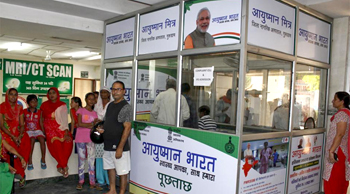
Despite some teething problems and a dire need for further reforms and more spending, this huge initiative launched last year one of the world's largest publicly funded healthcare programmes has made a difference.

"This scheme has infused a sense of belief in the poor that if they fall sick they will get treatment without spending a rupee," said Anil Agarwal, chief medical superintendent at a hospital in Sitapur, a city with some of India's worst health indicators.

Indeed, voting data from the mammoth election that ended last week with a landslide for Modi showed particularly strong support for his right-wing party in poorer areas where people would have benefited most.

"It has certainly been welcomed as a welfare measure by the poor and probably contributed to (Modi's) electoral victory," said K. Srinath Reddy, president of the non-profit Public Health Foundation of India.

The flagship programme, dubbed Modicare, covers hospital costs up to $7,200 for the poorest 40 per cent of Indians, or some 500 million people, in a country where the average annual income is about $1,670.

Even before Modicare, or the National Health Protection Scheme (NHPS), was introduced in September, treatment was largely free at government hospitals.

But patients still had to shell out for diagnostics and medicines, which make up a big chunk of the costs of hospital care, as well as for implants like stents.

Private clinics were out of reach for many, with a consultation alone costing some 1,000 rupees ($15) -- a large amount for millions living on less than $2 a day. But now poorer Indians can visit these clinics, providing they sign up to the scheme.

Sabir Ali, an impoverished weaver who got a Modicare card for himself and his family to use at any of the 15,000-odd participating hospitals, had a cyst removed from his forehead.

"It was unbelievable to hold the card in my hands," Ali told AFP, his head bandaged at the Sitapur district hospital in northern India.

"I used the card and I didn't have to spend a single rupee on my treatment."

Until recently only a quarter of India's population had any health insurance, forcing hundreds of millions to pay out of their own pockets, go to quack doctors or just skip treatment.

An estimated 60 million Indians are pushed below the poverty threshold every year paying for medical care, while a report last year by The Lancet medical journal found substandard healthcare was responsible for some 1.6 million deaths a year.

Almost two million people have benefited from the scheme so far, with the government allocating some $1.2 billion since the launch. The costs are shared between federal and state governments 60:40.

"Schemes such as Modicare played a larger role (in the election outcome) than anyone had anticipated," said political analyst Parsa Venkateshwar Rao.

"The overall message that has gone out is that Modi is willing to help the poor."

In his second term, however, Modi will have to iron out some of the scheme's teething problems, with some hospitals complaining they cannot recoup what they spend.

"We can't cope with (receiving) 9,000 rupees ($128) for a caesarean section which would include a stay of the patient, fees of the anaesthetist, paediatrician, medicines and so on," said Doctor V.K. Monga from the Indian Medical Association.

"But corrective steps are being taken... The health sector is overall satisfied now with the scheme," he told news agency.

Reddy of the Public Health Foundation of India also said the scheme needed more financial resources.

"If the state governments too can be stimulated to increase their health budgets, the scheme will become sustainable."

More broadly, Modi needs to build more facilities, train more staff and implement more reforms in what remains a dysfunctional healthcare system, experts say.

The newly re-elected prime minister has promised to hike health spending to 2.5 per cent of GDP by 2025, from 1.15 per cent now -- one of the lowest in the world -- but it is unclear if this will suffice.

Critics also say that Modicare helps unscrupulous private providers -- already accused of over-diagnosing and carrying out unnecessary surgeries -- boost profits.

Ali too has his complaints.

"I live nearby the hospital so I can come, but if someone lives outside the city, they will struggle with the number of times they are expected to visit the hospital," he said.

"They make us run around a lot."

But the family of Vindeshwari Devi, who has had her uterus removed at the same Sitapur hospital, is satisfied.

"I think this scheme is good and it will only get better," said Sunil Kumar, a daily-wage labourer and Devi's son-in-law.

"For those who have nothing, it means a lot."

Comments

Add new comment

  • Coastaldigest.com reserves the right to delete or block any comments.
  • Coastaldigset.com is not responsible for its readers’ comments.
  • Comments that are abusive, incendiary or irrelevant are strictly prohibited.
  • Please use a genuine email ID and provide your name to avoid reject.
News Network
December 16,2025

jordan.jpg

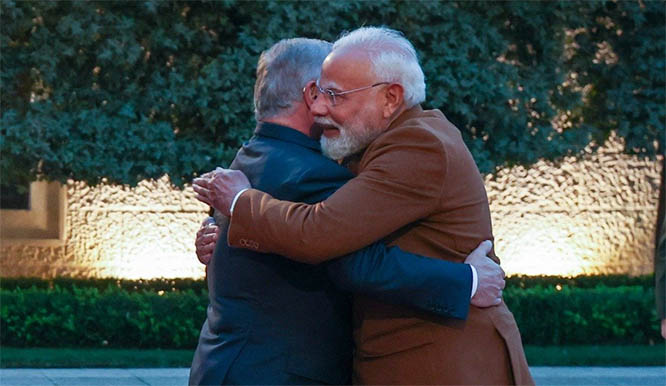
Prime Minister Narendra Modi on Monday held talks with Jordan’s King Abdullah II in Amman, during which the two leaders discussed ways to further strengthen bilateral relations, with the Prime Minister outlining an eight-point vision covering key areas of cooperation.

Describing the meeting as “productive”, PM Modi said he shared a roadmap focused on trade and economy, fertilisers and agriculture, information technology, healthcare, infrastructure, critical and strategic minerals, civil nuclear cooperation, and people-to-people ties.

In a post on social media platform X, the Prime Minister praised King Abdullah II’s personal commitment to advancing India–Jordan relations, particularly as both countries mark the 75th anniversary of the establishment of diplomatic ties this year.

“Held productive discussions with His Majesty King Abdullah II in Amman. His personal commitment towards vibrant India-Jordan relations is noteworthy. This year, we are celebrating the 75th anniversary of our bilateral diplomatic relations,” PM Modi said.

The meeting took place at the Al Husseiniya Palace, where the two leaders also exchanged views on regional and global issues of mutual interest. According to the Ministry of External Affairs (MEA), both sides agreed to further deepen cooperation in areas including trade and investment, defence and security, counter-terrorism and de-radicalisation, fertilisers and agriculture, infrastructure, renewable energy, tourism, and heritage.

The MEA said both leaders reaffirmed their united stand against terrorism.

PM Modi arrived in Amman earlier on Monday and was received by Jordanian Prime Minister Jafar Hassan, who accorded him a formal welcome. Following the talks, King Abdullah II hosted a banquet dinner in honour of the Prime Minister, reflecting the warmth of bilateral ties.

Jordan is the first leg of PM Modi’s three-nation tour. From Amman, the Prime Minister will travel to Ethiopia at the invitation of Prime Minister Abiy Ahmed Ali, marking his first official visit to the African nation. The tour will conclude with a visit to Oman.

Comments

Add new comment

  • Coastaldigest.com reserves the right to delete or block any comments.
  • Coastaldigset.com is not responsible for its readers’ comments.
  • Comments that are abusive, incendiary or irrelevant are strictly prohibited.
  • Please use a genuine email ID and provide your name to avoid reject.
News Network
December 7,2025

SHRIMP.jpg

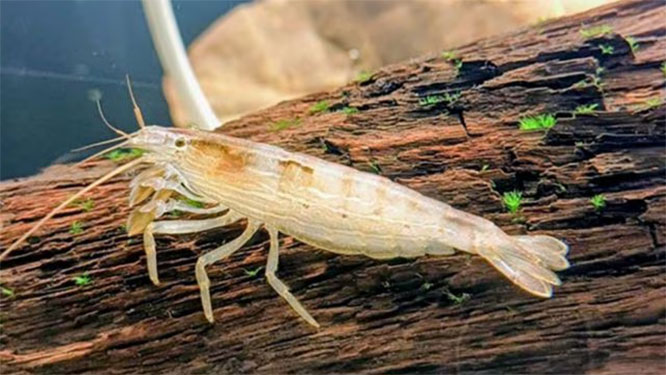
Mangaluru, Dec 7: A rare bamboo shrimp has been rediscovered on mainland India more than 70 years after it was last reported, confirming for the first time the presence of Atyopsis spinipes in the country. The find was made by researchers from the Centre for Climate Change Studies at Sathyabama Institute of Science and Technology, Chennai, during surveys in Karnataka and Odisha.

The team — shrimp expert Dr S Prakash, PhD scholar K Kunjulakshmi, and Mangaluru-based researcher Maclean Antony Santos — combined field surveys, ecological assessments and DNA analysis to identify the elusive species. Their findings, published in Zootaxa, resolve decades of taxonomic confusion stemming from a 1951 report that misidentified the species as Atyopsis moluccensis without strong evidence.

The shrimp has now been confirmed at two locations: the Mulki–Pavanje estuary near Mangaluru and the Kuakhai River in Bhubaneswar. Historical specimens from the Andaman Islands, previously labelled as A. moluccensis, were also found to be misidentified and actually belong to A. spinipes.

The rediscovery began after an aquarium hobbyist in Odisha spotted a shrimp in 2022, prompting systematic surveys across Udupi, Karwar and Mangaluru. Four female specimens were collected in Mulki and one in Odisha, all genetically matching.

Researchers warn the species may exist in very small, vulnerable populations as freshwater habitats face increasing pressure from pollution, sand mining and infrastructure development. All verified specimens have been deposited with the Zoological Survey of India for future reference.

Comments

Add new comment

  • Coastaldigest.com reserves the right to delete or block any comments.
  • Coastaldigset.com is not responsible for its readers’ comments.
  • Comments that are abusive, incendiary or irrelevant are strictly prohibited.
  • Please use a genuine email ID and provide your name to avoid reject.
coastaldigest.com news network
December 20,2025

Mangaluru, Dec 20: City Police Commissioner Sudheer Kumar Reddy has issued a high-alert warning to vehicle owners regarding a surge in cyber fraud targeting those looking to pay traffic violation fines. Fraudsters are reportedly exploiting recent government discount schemes on traffic penalties to deceive citizens.

The Scam: How Fraudsters Strike

Criminals are using SMS, WhatsApp, and social media to circulate suspicious links and APK files (Android application packages). They claim these apps allow users to pay e-challans at a discount.

•    Device Hacking: Downloading these unauthorized apps gives hackers full access to the victim's smartphone.

•    Financial Theft: Once the phone is compromised, fraudsters intercept OTPs and personal data to drain bank accounts.

•    Phishing Sites: Fake websites mimicking official portals are also being used to harvest banking credentials.

Already, two residents within Mangaluru city limits have reported significant financial losses after falling victim to these fraudulent apps.

Comments

Add new comment

  • Coastaldigest.com reserves the right to delete or block any comments.
  • Coastaldigset.com is not responsible for its readers’ comments.
  • Comments that are abusive, incendiary or irrelevant are strictly prohibited.
  • Please use a genuine email ID and provide your name to avoid reject.