Modi’s jobs deficit: J&J’s largest India plant idle 3 years after completion

Agencies
May 19, 2019

New Delhi, May 19: It was supposed to be Johnson & Johnson’s biggest manufacturing plant in India. It was to eventually employ at least 1,500 people and help bring development to a rural area near Hyderabad in southern India.

Yet, three years after the US healthcare company completed construction of production facilities for cosmetics and baby products on the 47-acre site, they stand idle.

Two sources familiar with J&J’s operations in India and one state government official told Reuters production at the plant, at Penjerla in Telangana, never began because of a slowing in the growth in demand for the products.

One of them said that demand didn’t rise as expected because of two shock policy moves by Prime Minister Narendra Modi: a late 2016 ban on then circulating high-value currency notes, and the nationwide introduction of a goods and services tax (GST) in 2017.

J&J spokespeople in its Mumbai operations in India and at its global headquarters in New Brunswick, New Jersey, declined to respond to a list of questions from Reuters.

Modi’s office did not respond to a call and an email with questions.

Aimed at rooting out corruption and streamlining the tax system, the double whammy of ‘demonetization’ and GST – were two of Modi’s signature policy moves. But instead of encouraging economic activity as intended, they did the opposite, at least in 2016-2018, by sapping consumer demand, according to some economists.

Many businesses, especially small and medium-sized enterprises, complained publicly – some in their financial statements - that they suffered a drop off in orders. The suspended J&J project stands as one of the most vivid examples of the impact on the broader investment picture.

In the first month after demonetisation, some business surveys showed that sales of products such as shampoos and soap fell more than 20 per cent.

Lack of jobs growth and a farm-income crisis because of low crop prices have hurt Modi in the current general election, according to several political strategists.

Still, Modi and his ruling Hindu nationalist Bharatiya Janata Party are expected by many of the strategists to be in a position to get a second term – probably with support of some other parties - when votes are counted on Thursday, partly because of his strong stance on national security issues.

BIG INVESTMENTS, GREAT EXPECTATIONS

A range of Modi’s business policies, such as capping prices of medical devices, forcing tech companies to store more data locally and stricter e-commerce regulations have in the past two years hurt plans of American multinationals such as J&J, Mastercard, Amazon and Walmart-owned Flipkart.

The groundbreaking of the J&J facility in Penjerla, its third in the country, was carried out with much fanfare in 2014, attended by Telangana’s Chief Minister Chandrashekar Rao, who hailed the foreign investment as a big win for local communities.

A document dated April 2017 that lists products the company planned to make at the facility, submitted to the Telangana government and reviewed by Reuters, names baby oil, baby shampoo, baby lotion, baby hair oil, face wash and creams.

Shaukat Ali, running a tea shop under a bamboo stall on barren land outside the plant, said local workers check in routinely for possible vacancies at the J&J site, but nothing has come up in years.

At the local pollution control board office, the member secretary Satyanarayana Reddy said the J&J plant had all the required approvals and he was not sure why it hadn’t started production.

“It is unusual for such a big plant to stay idle for so long,” he said. “But there is no problem from our side.”

Chandrasekhar Babu, an additional director at the Telangana industries department, said a J&J company official told him the plant hadn’t started due to lack of demand.

GST and demonetisation were two key reasons the plan didn’t kick off, one of the sources said, adding that lack of consumer demand since then dented company’s plans.

The second source familiar with J&J’s plans said the company miscalculated Indian market demand.

On a recent visit by a Reuters reporter to the J&J plant, plush, furnished conference rooms and cubicles sat inactive; M. Sairam, who said he was the site manager, told Reuters production areas with machines were idle too.

PLANNED FURTHER EXPANSION

Local officials had hoped the initial J&J plant would be only the beginning. After the groundbreaking in 2014, Pradeep Chandra, who was Telangana’s special chief secretary of industries, told Business Today magazine that “based on the extent of land (J&J) have acquired we believe that they are looking at much larger expansion here.”

Local media reports at the time said the J&J facility would employ some 1,500 people.

A J&J official, who was not identified by name, was reported subsequently in December 2016 in India’s Business Standard as saying that the $85 million plant would be operational by 2018 after it had overcome procedural delays. The official was quoted as saying the company had earmarked an additional $100 million for expansion.

Vikas Srivastava, the managing director of J&J Consumer(India), who was at the 2014 groundbreaking, did not respond to calls for comment.

Reuters also talked to two workers outside a sprawling Procter & Gamble facility making detergents and diapers, which is next to the J&J plant. They said they were part of the P&G plant’s production team and the plant had been running below capacity.

A P&G spokesperson denied that, saying the plant was “operating at full capacity in line with our business plans”.

“India is a priority market for P&G globally and in recent quarters, P&G’s business in India has registered strong double-digit growth consistently,” the company said.

The weak rural economy, where most Indians work, has also hurt growth in sales of basic items such as detergents and shampoo in the past year.

Hindustan Unilever Ltd, an industry bellwether that would compete with the likes of J&J and P&G in some categories, said its volume growth shrank to 7 percent in the quarter ended March 31, down from double-digit growth in the previous five quarters.

The company warned that the daily consumer goods segment in India was “recession resistant ... not recession proof.”

Comments

Add new comment

  • Coastaldigest.com reserves the right to delete or block any comments.
  • Coastaldigset.com is not responsible for its readers’ comments.
  • Comments that are abusive, incendiary or irrelevant are strictly prohibited.
  • Please use a genuine email ID and provide your name to avoid reject.
News Network
December 16,2025

jordan.jpg

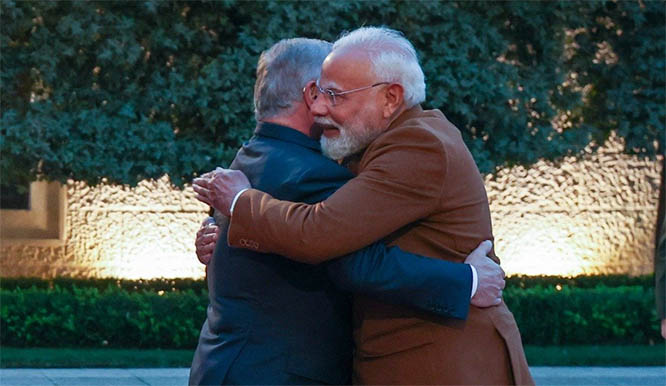
Prime Minister Narendra Modi on Monday held talks with Jordan’s King Abdullah II in Amman, during which the two leaders discussed ways to further strengthen bilateral relations, with the Prime Minister outlining an eight-point vision covering key areas of cooperation.

Describing the meeting as “productive”, PM Modi said he shared a roadmap focused on trade and economy, fertilisers and agriculture, information technology, healthcare, infrastructure, critical and strategic minerals, civil nuclear cooperation, and people-to-people ties.

In a post on social media platform X, the Prime Minister praised King Abdullah II’s personal commitment to advancing India–Jordan relations, particularly as both countries mark the 75th anniversary of the establishment of diplomatic ties this year.

“Held productive discussions with His Majesty King Abdullah II in Amman. His personal commitment towards vibrant India-Jordan relations is noteworthy. This year, we are celebrating the 75th anniversary of our bilateral diplomatic relations,” PM Modi said.

The meeting took place at the Al Husseiniya Palace, where the two leaders also exchanged views on regional and global issues of mutual interest. According to the Ministry of External Affairs (MEA), both sides agreed to further deepen cooperation in areas including trade and investment, defence and security, counter-terrorism and de-radicalisation, fertilisers and agriculture, infrastructure, renewable energy, tourism, and heritage.

The MEA said both leaders reaffirmed their united stand against terrorism.

PM Modi arrived in Amman earlier on Monday and was received by Jordanian Prime Minister Jafar Hassan, who accorded him a formal welcome. Following the talks, King Abdullah II hosted a banquet dinner in honour of the Prime Minister, reflecting the warmth of bilateral ties.

Jordan is the first leg of PM Modi’s three-nation tour. From Amman, the Prime Minister will travel to Ethiopia at the invitation of Prime Minister Abiy Ahmed Ali, marking his first official visit to the African nation. The tour will conclude with a visit to Oman.

Comments

Add new comment

  • Coastaldigest.com reserves the right to delete or block any comments.
  • Coastaldigset.com is not responsible for its readers’ comments.
  • Comments that are abusive, incendiary or irrelevant are strictly prohibited.
  • Please use a genuine email ID and provide your name to avoid reject.
News Network
December 20,2025

train.jpg

At least seven elephants were killed and one calf injured after a herd collided with the Sairang-New Delhi Rajdhani Express in Assam's Hojai on Saturday morning, leading to disruption of rail services. 

The Sairang-New Delhi Rajdhani Express struck a herd of elephants, resulting in the derailment of the locomotive and five coaches. No passenger casualties or injuries were reported, officials said.

The New Delhi-bound train met with the accident around 2.17 am, PTI reported. The Sairang-New Delhi Rajdhani Express connects Mizoram's Sairang (near Aizawl) to Anand Vihar Terminal (Delhi). 

Railway has issued helpline numbers at the Guwahati Railway Station:-

•    0361-2731621
•    0361-2731622
•    0361-2731623

The accident site is located about 126 km from Guwahati. Following the incident, accident relief trains and railway officials rushed to the spot to initiate rescue operations.

Train Services Disrupted

Sources said that due to the derailment and elephant body parts scattered on the tracks, train services to Upper Assam and other parts of the Northeast were affected.

Passengers from the affected coaches were temporarily accommodated in vacant berths available in other coaches of the train. Once the train reaches Guwahati, additional coaches will be attached to accommodate all passengers, after which the train will resume its onward journey.

The incident occurred at a location that is not a designated elephant corridor. The loco pilot, upon spotting the herd on the tracks, applied emergency brakes. Despite this, the elephants dashed into the train, leading to the collision and derailment.

Last month, an elephant was killed after being hit by a train in Dhupguri in West Bengal's Jalpaiguri district. The incident took place on November 30. 

The adult elephant was killed on the spot, and a calf was discovered lying injured beside the tracks. 

Over 70 Elephants Killed In Train Collisions Over Last 5 Years

At least 79 elephants have died in train collisions across the country in the last five years, the Environment Ministry had informed Parliament in August.

In a written reply in the Lok Sabha, Minister of State for Environment Kirti Vardhan Singh had said the figure is based on reports from state governments and Union Territory administrations for the period 2020-21 to 2024-25.

He said that the ministry does not maintain consolidated data on the deaths of other wild animals on railway tracks, including in designated elephant corridors.

Singh confirmed that three elephants, including a mother and her calf, were killed on July 18 this year after being hit by a speeding express train on the Kharagpur-Tatanagar section in West Bengal's Paschim Midnapore district. The incident took place near Banstala between Jhargram and Banstala stations.

The minister said several measures have been taken jointly by the Environment Ministry and the Railways to prevent such accidents.

These include imposing speed restrictions in elephant habitats, pilot projects such as seismic sensor-based detection of elephants near tracks and construction of underpasses, ramps and fencing at vulnerable points.

The Wildlife Institute of India, in consultation with the ministry and other stakeholders, has also issued guidelines titled 'Eco-friendly Measures to Mitigate Impacts of Linear Infrastructure' to help agencies design railways and other projects in ways that reduce human-animal conflicts.

Singh added that capacity-building workshops were conducted for railway officials at the Wildlife Institute of India in 2023 and 2024 to raise awareness on elephant conservation and protection.

A detailed report titled 'Suggested Measures to Mitigate Elephant & Other Wildlife Train Collisions on Vulnerable Railway Stretches in India' had also been prepared after surveys across 127 railway stretches covering 3,452 km.

Of these, 77 stretches spanning 1,965 km in 14 states were prioritised for mitigation, with site-specific interventions suggested. 

Comments

Add new comment

  • Coastaldigest.com reserves the right to delete or block any comments.
  • Coastaldigset.com is not responsible for its readers’ comments.
  • Comments that are abusive, incendiary or irrelevant are strictly prohibited.
  • Please use a genuine email ID and provide your name to avoid reject.
News Network
December 17,2025

melkar1.jpg

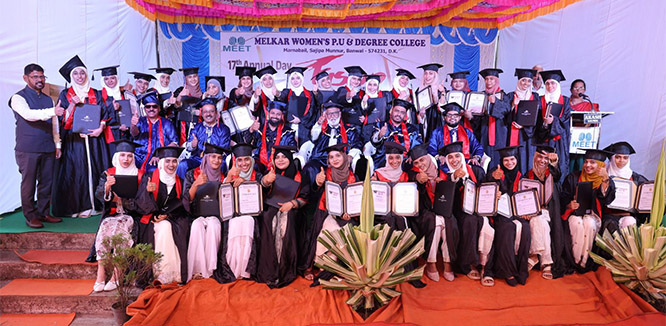
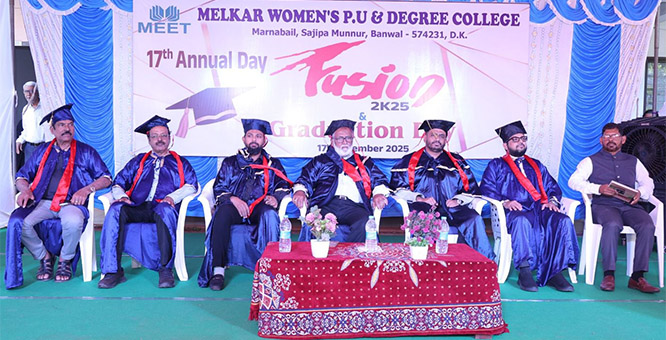
Melkar, Dec 17: The 17th Annual Day and Graduation Ceremony of Melkar Women’s PU and Degree College, themed “Fusion-2K25,” was celebrated with dignity and enthusiasm, marking a significant milestone in the institution’s academic journey. The programme reflected the college’s steadfast commitment to academic excellence, character building, and the holistic development of students.

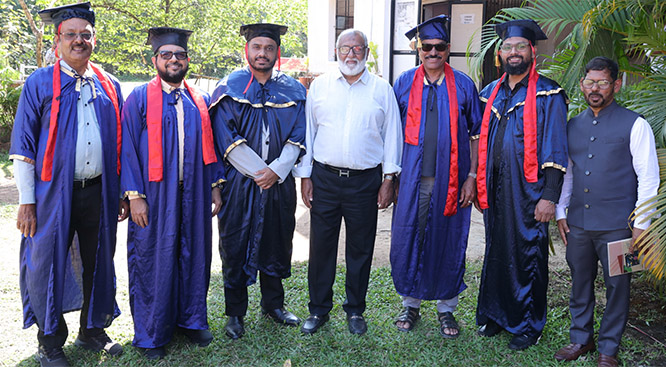
The event was inaugurated by Mr. Asif Mohammed, whose presence greatly enriched the occasion. The celebration was further graced by the chief guests Mr. P. B. Ahmed Mudassir and Mr. Nissar Fakeer Mohammed, along with the distinguished guests of honour Mr. B. A. Nazeer and Mr. Ibrahim Gadiyar. In their inspiring addresses, the guests encouraged the graduating students and appreciated the dedicated efforts of the management, faculty, and students.

The annual report was presented by the Principal, Mr. Abdul Majeed S, highlighting the institution’s academic progress, notable achievements, and extracurricular accomplishments during the academic year.

The presidential address was delivered by the esteemed Chairman of Melkar Women’s PU and Degree College, Dr. Haji S. M. Rasheed, who emphasized the vital role of education in empowering women and shaping responsible citizens. He also stressed the importance of discipline, dedication, and perseverance in achieving success.

Cultural programmes and academic recognitions formed an integral part of the celebration, showcasing the talents and achievements of the students. The graduation ceremony was a proud moment for the outgoing students as they were formally conferred degrees and wished success in their future endeavours.

Ms. Mashmooma Fathima served as the Master of Ceremonies. The welcome address was delivered by Ms. Fathima Nida, and the programme concluded with a vote of thanks proposed by Ms. Ayisha Suhana.

The event successfully achieved its objectives and was highly appreciated by the guests and attendees.

melkar3.jpg

melkar2.jpg

Comments

Add new comment

  • Coastaldigest.com reserves the right to delete or block any comments.
  • Coastaldigset.com is not responsible for its readers’ comments.
  • Comments that are abusive, incendiary or irrelevant are strictly prohibited.
  • Please use a genuine email ID and provide your name to avoid reject.