



Muslim population rose in India because they got 'special rights': Yogi Adityanath

News Network
January 15, 2020

Jan 15: Uttar Pradesh Chief Minister Yogi Adityanath said on Tuesday that the Muslim population in India increased manifold since the partition because they were given special rights and facilities, according to a report by The Indian Express.
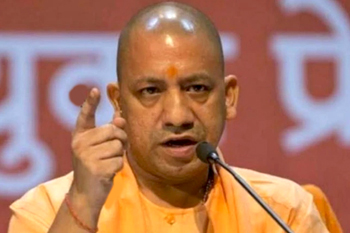
"The Muslim population in India has increased manifold since 1947, it has gone up by seven to eight times. No one has any objection. If they, as citizens of the country, work for development, they are welcome. Their population has increased because they have been given special rights and facilities. All possible steps were taken to ensure their growth," Adityanath said while addressing a rally in Gaya organised by the BJP in support of the Citizenship (Amendment) Act.

He asked the audience, "But what happened in Pakistan?" Claiming that the Hindu population in Pakistan had decreased since 1947, he asked why it was so.

Yogi said that the countrywide anti-CAA protests are a "conspiracy" hatched from afar by those resentful of a united and grand India and these are being aided by a "crooked" opposition. He further charged that those opposing the legislation were committing the "paap" (sin) of working against national interests.

"For taking such a step, Prime Minister Narendra Modi and Home Minister Amit Shah deserve acclaim. Instead, they are being attacked", Yogi lamented.


Comments

India
 - 
Wednesday, 15 Jan 2020

He himself contradicts his statements. He claims the Muslim population rose 8-9 (according to him) times since 1947. If he was educated its simple 73 years have passed the population grows. Still, the Muslim population is only a minority against the majority. He talks about special rights and facilities given yes agreed but not by him it's by the Constitution of India and for all the minorities. So it's not you its Constitution of India.  The majority of the people are against the act CAA is against the very fundamental of the Constitution of India which PM & HM are taking away from the people. If you disagree, disrespect, go against it then you are against the country itself in Hindi deshdruhi. 

Add new comment

  • Coastaldigest.com reserves the right to delete or block any comments.
  • Coastaldigset.com is not responsible for its readers’ comments.
  • Comments that are abusive, incendiary or irrelevant are strictly prohibited.
  • Please use a genuine email ID and provide your name to avoid reject.
News Network
December 16,2025

Mangaluru, Dec 16: The Mangaluru City police have significantly escalated their campaign against drug trafficking, arresting 25 individuals and booking 12 cases under the Narcotic Drugs and Psychotropic Substances (NDPS) Act between November 30 and December 13. The crackdown resulted in the seizure of a substantial quantity of illicit substances, including 685.6 grams of MDMA and 1.5 kg of ganja.

The success of this recent drive has been significantly boosted by the city’s innovative, QR code-based anonymous reporting system.

"The anonymous reporting system has received an encouraging response. Several recent arrests were made based on inputs received through this system, helping police tighten the noose around drug peddlers," said the City Police Commissioner.

The latest arrests contribute to a robust year-to-date record, underscoring the police's relentless commitment to combating the drug menace.

Up to December 14 this year, the police have registered a total of 107 cases of drug peddling, leading to the arrest of 219 peddlers. Furthermore, they have booked 562 cases of drug consumption, resulting in the arrest of 671 individuals.

The scale of the seizure for the year reflects the magnitude of the problem being tackled: police have seized 320.6 kg of ganja worth ₹88.7 lakh and 1.4 kg of MDMA valued at ₹1.2 crore. Other significant seizures include hydro-weed ganja worth ₹94.7 lakh and cocaine worth ₹1.9 lakh, among others.

The Commissioner emphasized a policy of rigorous enforcement: "We ensure that peddlers are caught red-handed so that they cannot later dispute the case or claim innocence."

To counter the rising trend of substance abuse among youth, the Mangaluru City police have rolled out uniform guidelines for random drug testing across educational institutions.

As part of the drive, tests were conducted in approximately 100 institutions, screening an estimated 5,500 to 6,000 students in the first phase. 20 students tested positive for drug consumption during the initial screening.

Students who tested positive have been provided counselling and are scheduled for re-testing in the second quarter. The testing will also be expanded to students not covered in the first phase. In a move to ensure strict implementation, police personnel were deployed in mufti in some institutions. Reiterating a zero-tolerance stance, the Commissioner confirmed that random testing will continue, and colleges have also been instructed to conduct drug tests at the time of admission to deter substance abuse from an early stage.

Comments

Add new comment

  • Coastaldigest.com reserves the right to delete or block any comments.
  • Coastaldigset.com is not responsible for its readers’ comments.
  • Comments that are abusive, incendiary or irrelevant are strictly prohibited.
  • Please use a genuine email ID and provide your name to avoid reject.
News Network
December 6,2025

pilot.jpg

New Delhi: IndiGo, India’s largest airline, faced major operational turbulence this week after failing to prepare for new pilot-fatigue regulations issued by the Directorate General of Civil Aviation (DGCA). The stricter rules—designed to improve flight safety—took effect in phases through 2024, with the latest implementation on November 1. IndiGo has acknowledged that inadequate roster planning led to widespread cancellations and delays.

Below are the key DGCA rules that affected IndiGo’s operations:

1. Longer Mandatory Weekly Rest

Weekly rest for pilots has been increased from 36 hours to 48 hours.

The government says the extended break is essential to curb cumulative fatigue. This rule remains in force despite the current crisis.

2. Cap on Night Landings

Pilots can now perform only two night landings per week—a steep reduction from the earlier limit of six.

Night hours, defined as midnight to early morning, are considered the least alert period for pilots.

Given the disruptions, this rule has been temporarily relaxed for IndiGo until February 10.

3. Reduced Maximum Night Flight Duty

Flight duty that stretches into the night is now capped at 10 hours.

This measure has also been kept on hold for IndiGo until February 10 to stabilize operations.

4. Weekly Rest Cannot Be Replaced With Personal Leave

Airlines can no longer count a pilot’s personal leave as part of the mandatory 48-hour rest.

Pilots say this closes a loophole that previously reduced actual rest time.

Currently, all airlines are exempt from this rule to normalise travel.

5. Mandatory Fatigue Monitoring

Airlines must submit quarterly fatigue reports along with corrective actions to DGCA.

This system aims to create a transparent fatigue-tracking framework across the industry.

The DGCA has stressed that these rules were crafted to strengthen flight safety and align India with global fatigue-management standards. The temporary relaxations are expected to remain until February 2025, giving IndiGo time to stabilise its schedules and restore normal air travel.

Comments

Add new comment

  • Coastaldigest.com reserves the right to delete or block any comments.
  • Coastaldigset.com is not responsible for its readers’ comments.
  • Comments that are abusive, incendiary or irrelevant are strictly prohibited.
  • Please use a genuine email ID and provide your name to avoid reject.
News Network
December 7,2025

Mangaluru, Dec 7: A 34-year-old fruit and vegetable trader in Mangaluru has reportedly lost ₹33.1 lakh after falling victim to an online investment scam run through a fake mobile app.

Police said the scam began in September, when the victim received a link on Facebook. Clicking it connected him to a WhatsApp number, where an unidentified person introduced a high-return investment scheme and instructed him to download an app.

To build trust, the fraudster asked him to invest ₹30,000 on September 24. The trader soon received ₹34,000 as “profit,” convincing him the scheme was genuine. Over the next two months, he transferred money in multiple instalments via Google Pay and IMPS to different scanner codes and bank accounts shared by the scammers. Between September 24 and December 3, he ended up sending a total of ₹33.1 lakh.

When he later requested a refund of his investment and promised returns, the scammers demanded additional payments, claiming he needed to pay a “service tax” first. Even after he paid a small amount, no money was returned, and the scammers continued pressuring him for more.

A case has been registered at the CEN Crime Police Station.

Comments

Add new comment

  • Coastaldigest.com reserves the right to delete or block any comments.
  • Coastaldigset.com is not responsible for its readers’ comments.
  • Comments that are abusive, incendiary or irrelevant are strictly prohibited.
  • Please use a genuine email ID and provide your name to avoid reject.