Historic Milestone: Tulu script gains global digital recognition with inclusion in Unicode 16

News Network
September 9, 2024

tuluscript.jpg

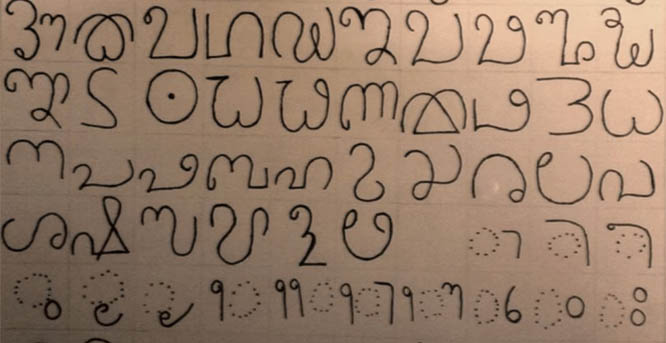
Mangaluru: The Unicode Consortium has announced the inclusion of Tulu script in its latest version, Unicode 16. This update adds 80 characters to the Unicode Standard, marking a significant milestone for the Tulu-speaking community.

According to officials, the journey to this achievement began in 2001 when a member of the Unicode Consortium helped fix the Kannada script in Unicode and simultaneously advocated for the inclusion of Tulu.

Despite initial misunderstandings with the Tulu Academy in Mangaluru, the groundwork was laid for future developments. Initially, three Tulu experts had worked on the subject, including S A Krishnaiah, a Tulu scholar.

"In 2014, efforts to create a Tulu Wikipedia gained momentum, leading to its launch on August 6, 2016. By 2017, the Tulu Academy recognised the need for Tulu Unicode, forming a committee to finalise the characters with technical guidance. Concurrently, another proposal for the Tilari script was submitted," Krishnaiah said.

After extensive correspondence, the script was officially added to Unicode under the name Tulu-Tigalari. While there are minor differences between the Tulu Academy's list and the finalised Unicode version, most characters have been included. Notably, Tulu digits and some diacritic marks necessary for writing Sanskrit in Tulu script were added, he said.

According to him, the inclusion of the Tulu script in Unicode will have a significant positive impact on digital communication for Tulu speakers, including enhanced digital presence. Tulu speakers can now use their native script across various digital platforms, including social media, websites, and messaging apps, fostering a stronger online presence.

The availability of Tulu in Unicode will facilitate the creation of educational materials, such as textbooks and online courses, in the Tulu script, supporting language learning and literacy, he said.

The development of Unicode-encoded fonts, keyboard software, and converters will streamline the use of Tulu in digital communication, making it easier for users to type and share information in their native script, he said.

Being part of the Unicode Standard gives Tulu global recognition, encouraging more software and application developers to support the script, thereby increasing its usability and visibility, the Tulu scholar said.

Overall, this will empower Tulu speakers to communicate more effectively and confidently in their language, both locally and globally.

It is estimated that over 1.8 million people worldwide speak Tulu. Most Tulu speakers live in the coastal areas of Karnataka and Kerala, India, in regions known as Tulu Nadu. There are also Tulu speakers in the Gulf countries and the United States, he said.

Tulu is a Dravidian language and is related to Kannada, the official language of Karnataka. Tulu has a rich oral tradition, but there isn't much written in the language. Tulu's script is similar to Malayalam and originated from the Grantha script.

A long-drawn fight is ongoing to include Tulu in the Eighth Schedule of the Constitution. The Dravidian University at Kuppam in Andhra Pradesh has a special Tulu chair, he added.

Comments

Add new comment

  • Coastaldigest.com reserves the right to delete or block any comments.
  • Coastaldigset.com is not responsible for its readers’ comments.
  • Comments that are abusive, incendiary or irrelevant are strictly prohibited.
  • Please use a genuine email ID and provide your name to avoid reject.
News Network
December 4,2025

Mangaluru: Chaos erupted at Mangaluru International Airport (MIA) after IndiGo flight 6E 5150, bound for Mumbai, was repeatedly delayed and ultimately cancelled, leaving around 100 passengers stranded overnight. The incident highlights the ongoing country-wide operational disruptions affecting the airline, largely due to the implementation of new Flight Duty Time Limitations (FDTL) norms for crew.

The flight was initially scheduled for 9:25 PM on Tuesday but was first postponed to 11:40 PM, then midnight, before being cancelled around 3:00 AM. Passengers expressed frustration over last-minute communication and the lack of clarity, with elderly and ailing travellers particularly affected. “Though the airline arranged food, there was no proper communication, leaving us confused,” said one family member.

An IndiGo executive at MIA cited the FDTL rules, designed to prevent pilot fatigue by limiting crew working hours, as the cause of the cancellation. While alternative arrangements, including hotel stays, were offered, about 100 passengers chose to remain at the airport, creating tension. A replacement flight was arranged but also faced delays due to the same constraints, finally departing for Mumbai around 1:45 PM on Wednesday. Passengers either flew, requested refunds, or postponed their travel.

The Mangaluru delay is part of a broader crisis for IndiGo. The airline has been forced to make “calibrated schedule adjustments”—a euphemism for widespread cancellations and delays—after stricter FDTL norms came into effect on November 1.

While an IndiGo spokesperson acknowledged unavoidable flight disruptions due to technology issues, operational requirements, and the updated crew rostering rules, the DGCA has intervened, summoning senior airline officials to explain the chaos and outline corrective measures.

The ripple effect has been felt across the country, with major hubs like Bengaluru and Mumbai reporting numerous cancellations. The Mangaluru incident underscores the systemic operational strain currently confronting India’s largest carrier, leaving passengers nationwide grappling with uncertainty and delays.

Comments

Add new comment

  • Coastaldigest.com reserves the right to delete or block any comments.
  • Coastaldigset.com is not responsible for its readers’ comments.
  • Comments that are abusive, incendiary or irrelevant are strictly prohibited.
  • Please use a genuine email ID and provide your name to avoid reject.
News Network
December 4,2025

indigoflight.jpg

Domestic carrier IndiGo has cancelled over 180 flights from three major airports — Mumbai, Delhi and Bengaluru — on Thursday, December 4, as the airline struggles to secure the required crew to operate its flights in the wake of new flight-duty and rest-period norms for pilots.

While the number of cancellations at Mumbai airport stands at 86 (41 arrivals and 45 departures) for the day, at Bengaluru, 73 flights have been cancelled, including 41 arrivals, according to a PTI report that quoted sources.

"IndiGo cancelled over 180 flights on Thursday at three airports-Mumbai, Delhi and Bengaluru," the source told the news agency.

Besides, it had cancelled as many as 33 flights at Delhi airport for Thursday, the source said, adding, "The number of cancellations is expected to be higher by the end of the day."

The Gurugram-based airline's On-Time Performance (OTP) nosedived to 19.7 per cent at six key airports — Delhi, Mumbai, Chennai, Kolkata, Bengaluru and Hyderabad — on December 3, as it struggled to get the required crew to operate its services, down from almost half of December 2, when it was 35 per cent.

"IndiGo has been facing acute crew shortage since the implementation of the second phase of the FDTL (Flight Duty Time Limitations) norms, leading to cancellations and huge delays in its operations across the airports," a source had told PTI on Wednesday.

Chaos continued at several major airports for the third day on Thursday because of the cancellations.

A spokesperson for the Kempegowda International Airport (KIA) in Bengaluru said that 73 IndiGo flights had been cancelled on Thursday.

At least 150 flights were cancelled and dozens of others delayed on Wednesday, airport sources said, leaving thousands of travellers stranded, according to news agency Reuters.

The Directorate General of Civil Aviation (DGCA) has said it is investigating IndiGo flight disruptions and has asked the airline to submit the reasons for the current situation, as well as its plans to reduce flight cancellations and delays.

It may be mentioned here that the pilots' body, Federation of Indian Pilots (FIP), has alleged that IndiGo, despite getting a two-year preparatory window before the full implementation of new flight duty and rest period norms for cockpit crew, "inexplicably" adopted a "hiring freeze".

The FIP said it has urged the safety regulator, the DGCA, not to approve airlines' seasonal flight schedules unless they have adequate staff to operate their services "safely and reliably" in accordance with the New Flight Duty Time Limitations (FDTL) norms.

In a letter to the DGCA late on Wednesday, the FIP urged the DGCA to consider re-evaluating and reallocating slots to other airlines, which have the capacity to operate them without disruption during the peak holiday and fog season if IndiGo continues to "fail in delivering on its commitments to passengers due to its own avoidable staffing shortages."

Comments

Add new comment

  • Coastaldigest.com reserves the right to delete or block any comments.
  • Coastaldigset.com is not responsible for its readers’ comments.
  • Comments that are abusive, incendiary or irrelevant are strictly prohibited.
  • Please use a genuine email ID and provide your name to avoid reject.
News Network
December 7,2025

envoy.jpg

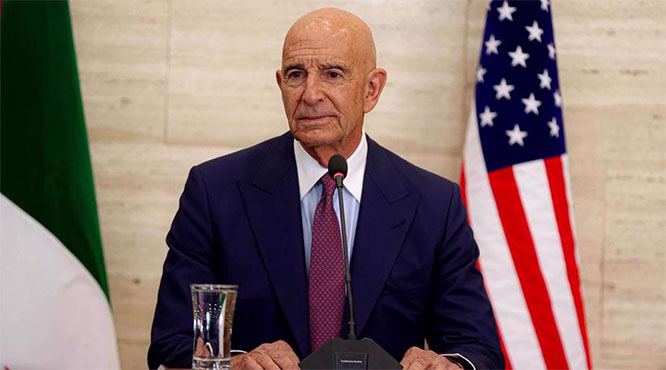
Since 1946, the United States has attempted 93 coups or “regime change” operations across the world — including two in Iran, US Special Envoy for Syria Tom Barrack has admitted.

Speaking to the UAE-based IMI Media Group, in remarks published by The National, Barrack said Washington tried twice to overthrow the Iranian government but failed both times. 

“For (Trump) then to be imputed with regime change — we had two regime changes in Iran already. Neither one worked. So I think wisely leave it to the region to solve,” said Barrack, who also serves as the US ambassador to Turkey.

His comments come six months after the US joined Israel in airstrikes against Iran during ongoing indirect nuclear negotiations between Tehran and Washington.

On June 13, Israel launched an attack on Iran that killed at least 1,064 people and hit civilian infrastructure. Days later, the United States targeted three nuclear facilities — Fordow, Natanz and Isfahan — in what Iran called a clear violation of international law. Iranian retaliation eventually forced a halt to the assault on June 24.

Barrack further claimed that US President Donald Trump and Foreign Secretary Marco Rubio are “not into regime change” and prefer a regional approach driven by Middle Eastern countries themselves. According to him, regional dialogue and non-interference by outside powers offer a more durable path forward.

He added that Washington is still open to an agreement with Tehran if Iranian authorities show “seriousness” and willingness to engage constructively.

However, Iran maintains the US has not shown readiness for meaningful talks. In an interview with Japan’s Kyodo News, Iranian Foreign Minister Abbas Araghchi said negotiations could advance only if Washington acknowledges Iran’s right to peaceful nuclear energy and lifts unilateral sanctions.

Comments

Add new comment

  • Coastaldigest.com reserves the right to delete or block any comments.
  • Coastaldigset.com is not responsible for its readers’ comments.
  • Comments that are abusive, incendiary or irrelevant are strictly prohibited.
  • Please use a genuine email ID and provide your name to avoid reject.