



TISS report points to anti-Muslim bias of police

June 26, 2012
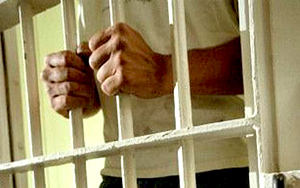
prisoner

Mumbai, June 26: A report on Muslim prisoners in Maharashtra jails by the Tata Institute of Social Sciences (TISS) establishes that most of them do not have connections with criminal gangs, and points to an acute bias of the police for arresting them in some cases only because they belong to a particular community.

A Study of the Socio Economic Profile and Rehabilitation Needs of Muslim Community in Prisons in Maharashtra, 2011, by Dr. Vijay Raghavan and Roshni Nair from the Centre for Criminology and Justice School of Social Work, Tata Institute of Social Sciences (TISS), states that 96 per cent of the respondents have not been held under preventive detention charges, thus indicating that they are not viewed as a threat to law and order.

The study which surveyed 339 Muslims, mostly between 18 and 30 years of age, in 15 prisons says this implies that most respondents do not have connections with criminal gangs or have any record which may be a threat to law and order. About 25.4 per cent of those imprisoned don’t have lawyers to represent them in their cases.

The police’s bias against Muslims led to some of the arrests under the erstwhile Terrorist and Disruptive Activities (Prevention) Act (TADA), the Maharashtra Control of Organised Crimes Act (MCOCA) and even under the Official Secrets Act.

‘Two types of laws’

An agent in textile export, Murtuza, arrested under the Official Secrets Act on charges of spying, says in his interview to the research team: “There are two types of laws in this country. One is for Hindus and the other is for Muslims. The policeman is first a Hindu and then a policeman. The judge is first a Hindu and then a judge and the lawyer is first a Hindu then a lawyer. People who work against the State, indulge in rioting, kill thousands of innocent people, and harass women and children roam free in this country. They are not punished. I am suffering only because I am a Muslim.”

Murtuza strongly feels that the discriminatory attitude is one of the major reasons for his arrest. He says that the police do not have enough evidence against him and yet he remains in prison. Two years have passed and the case is dragging on in court. He misses his court dates because the escort to take him to court is often not available. He has applied for bail thrice, but it has been rejected each time. He also applied for transferring the case to a different judge, but nothing has happened yet.

Poor victimised

Another prisoner Moiz says that “every time he tries to start life afresh, the police arrest him in some false case. They also demand money from criminals and those who can pay are set free. The poor are victimised. The police are very powerful and can do anything.”

Some interviews reflect the deep despair and alienation of the people interviewed. Muneer feels that after the demolition of the Babri Masjid, the rift between Hindus and Muslims has widened. Due to the riots and bomb blasts in 1992-93, the police perception of Muslims has become negative. The police view them as criminal minded. Migrants from Uttar Pradesh and Bihar are viewed with prejudice by the police.

Shoaib expressed his fears about the breakdown of the social fabric if the bias against Muslims continues. “The police have a negative perception of the Muslim community and act with bias. Due to the actions of the police and fundamentalist politics, the perception of Muslims is negative in society. If the situation continues to be like this, the next generation may get into further crime and vested interests could use them. Society’s perception and the negative feelings of hatred have to be reduced. Only then there is hope for a better tomorrow. Otherwise the situation will get worse for individuals, their families and society.”

About 70 per cent of the 3,000 Muslims prisoners in 15 jails were under trials and 30 per cent were convicted prisoners. What is of concern is that 52.8 per cent are charged with violent crimes mainly murder, attempt to murder, rape, assault and kidnapping. Among the under trials interviewed charge sheets have only been filed in 47.4 per cent of the cases and a mere 3.8 per cent have reached judgement stage, indicating the slow pace of trials. Of those interviewed 75.5 per cent were arrested for the first time and 25.5 per cent are repeat offenders.

The percentage of Muslims in jails is also a high 36 per cent, says Dr. Raghavan, quoting recent official figures. Along with Gujarat and Kerala, Maharashtra is one of the States with the most disproportionate number of Muslims in prisons.

The Sachar Committee report says that in Maharashtra, Muslims account for 10.6 per cent of the general population; yet they comprise 32.4 per cent of the prison population. For those incarcerated on terms of less than a year, the figure rises: 42 per cent of prisoners on short-term sentences in the State are Muslims.

This study was done at the behest of the Maharashtra State Minorities Commission in response to the charge of a disproportionate number of Muslims in jail. It makes a slew of recommendations relating to rehabilitation and correctional programmes, and the need for steps to sensitise the police and prison administration.

Last month the findings were presented at a meeting with Arif Naseem Khan, State Minister for Minority Affairs.

The Minister accepted most of the recommendations, especially those relating to legal aid, adult education, vocational training, release on probation, and awareness and counselling centres in Muslim areas.

The Additional Chief Secretary of Minority Development will call a high-level inter-departmental meeting soon to work out ways to implement the recommendations.

Comments

Add new comment

  • Coastaldigest.com reserves the right to delete or block any comments.
  • Coastaldigset.com is not responsible for its readers’ comments.
  • Comments that are abusive, incendiary or irrelevant are strictly prohibited.
  • Please use a genuine email ID and provide your name to avoid reject.
News Network
December 2,2025

A major upgrade in safety and monitoring is planned for Haj 2026, with every Indian pilgrim set to receive a Haj Suvidha smart wristband linked to the official Haj Suvidha mobile app. The initiative aims to support pilgrims—especially senior citizens—who may struggle with smartphones during the 45-day journey.

What the Smart Wristband Will Do

Officials said the device will come with:
•    Location tracking
•    Pedometer
•    SOS emergency button
•    Qibla compass
•    Prayer timings
•    Basic health monitoring

SP Tiwari, secretary of the UP State Haj Committee, said the goal is to make the pilgrimage safer and more comfortable.

“Most Hajis are elderly and not comfortable with mobile apps,” he said. “The smartwatch will help locate pilgrims who forget their way or cannot communicate their location.”

The wristbands will be monitored by the Consulate General of India in Saudi Arabia, similar to mobile tracking via the Haj Suvidha App.

Free Distribution and Training

•    Smart wristbands will be given free of cost.
•    Training for pilgrims will be conducted between January and February 2026.
•    Sample units will reach state Haj committees soon.
•    Final devices will be distributed as pilgrims begin their journey.

New Rules for Accommodation

Two major decisions have also been finalised for Haj 2026:
1.    Separate rooms for men and women – including married couples. They may stay on the same floor but must occupy different rooms, following stricter Saudi guidelines.
2.    Cooking banned – gas cylinders will not be allowed; all meals will be provided through official catering services arranged by the Haj Committee of India.

These decisions were finalised during a meeting of the Haj Committee of India and state representatives in Mumbai.

Haj Suvidha App Launched Earlier

The government launched the Haj Suvidha App in 2024, offering:

•    Training modules
•    Accommodation and flight details
•    Baggage information
•    SOS and translation tools
•    Grievance redressal

Haj 2026 Quota and Key States

•    India’s total Haj quota for 2026: 1,75,025 pilgrims
•    70% (1,25,000) allotted to the Haj Committee of India
•    30% (around 50,000) reserved for Haj Group Organisers

Uttar Pradesh has the largest allocation (around 30,000 seats), though approximately 18,000 pilgrims are expected to go this year. States with high pilgrim numbers include Kerala, Maharashtra and Gujarat.

Dates of Haj 2026

The pilgrimage is scheduled to take place from 24 May to 29 May, 2026 (tentative).
Haj is one of the five pillars of Islam and is mandatory for Muslims who meet the required conditions.

Comments

Add new comment

  • Coastaldigest.com reserves the right to delete or block any comments.
  • Coastaldigset.com is not responsible for its readers’ comments.
  • Comments that are abusive, incendiary or irrelevant are strictly prohibited.
  • Please use a genuine email ID and provide your name to avoid reject.
News Network
December 13,2025

New Delhi: School-going children are picking up drug and smoking habits and engaging in consumption of alcohol, with the average age of introduction to such harmful substances found to be around 13 years, suggesting a need for earlier interventions as early as primary school, a multi-city survey by AIIMS-Delhi said.

The findings also showed substance use increased in higher grades, with grade XI/XII students two times more likely to report use of substances when compared with grade VIII students. This emphasised the importance of continued prevention and intervention through middle and high school.

The study led by Dr Anju Dhawan of AIIMS's National Drug Dependence Treatment Centre, published in the National Medical Journal of India this month, looks at adolescent substance use across diverse regions.

The survey included 5,920 students from classes 8, 9, 11 and 12 in urban government, private and rural schools across 10 cities -- Bengaluru, Chandigarh, Delhi, Dibrugarh, Hyderabad, Imphal, Jammu, Lucknow, Mumbai, and Ranchi. The data were collected between May 2018 and June 2019.

The average age of initiation for any substance was 12.9 (2.8) years. It was lowest for inhalants (11.3 years) followed by heroin (12.3 years) and opioid pharmaceuticals (without prescription; 12.5 years).

Overall, 15.1 per cent of participants reported lifetime use, 10.3 per cent reported past year use, and 7.2 per cent reported use in the past month of any substance, the study found.

The most common substances used in the past year, after tobacco (4 per cent) and alcohol (3.8 per cent), were opioids (2.8 per cent), followed by cannabis (2 per cent) and inhalants (1.9 per cent). Use of non-prescribed pharmaceutical opioids was most common among opioid users (90.2 per cent).

On being asked, 'Do you think this substance is easily available for a person of your age' separately for each substance category, nearly half the students (46.3 per cent) endorsed that tobacco products and more than one-third of the students (36.5 per cent) agreed that a person of their age can easily procure alcohol products.

Similarly, for Bhang (21.9 per cent), ganja/charas (16.1 per cent), inhalants (15.2 per cent), sedatives (13.7 per cent), opium and heroin (10 per cent each), the students endorsed that these can be easily procured.

About 95 per cent of the children, irrespective of their grade, agreed with the statement that 'drug use is harmful'.

The rates of substance use (any) among boys were significantly higher than those of girls for substance use (ever), use in the past year and use in the past 30 days. Compared to grade VIII students, grade IX students were more likely, and grade XI/XII students were twice as likely to have used any substance (ever).

The likelihood of past-year use of any substance was also higher for grade IX students and for grade XI/XII students as compared to grade VIII students.

About 40 per cent of students mentioned that they had a family member who used tobacco or alcohol each. The use of cannabis (any product) and opioid (any product) by a family member was reported by 8.2 per cent and 3.9 per cent of students, respectively, while the use of other substances, such as inhalants/sedatives by family was 2-3 per cent, the study found.

A relatively smaller percentage of students reported use of tobacco or alcohol among peers as compared to among family members, while a higher percentage reported inhalants, sedatives, cannabis or opioid use among peers.

Children using substances (past year) compared to non-users reported significantly higher any substance use by their family members and peers.

There were 25.7 per cent students who replied 'yes' to the question 'conflicts/fights often occur in your family'. Most students also replied affirmatively to 'family members are aware of how their time is being spent' and 'damily members are aware of with whom they spend their time'.

Comments

Add new comment

  • Coastaldigest.com reserves the right to delete or block any comments.
  • Coastaldigset.com is not responsible for its readers’ comments.
  • Comments that are abusive, incendiary or irrelevant are strictly prohibited.
  • Please use a genuine email ID and provide your name to avoid reject.
News Network
December 6,2025

indigoticket.jpg

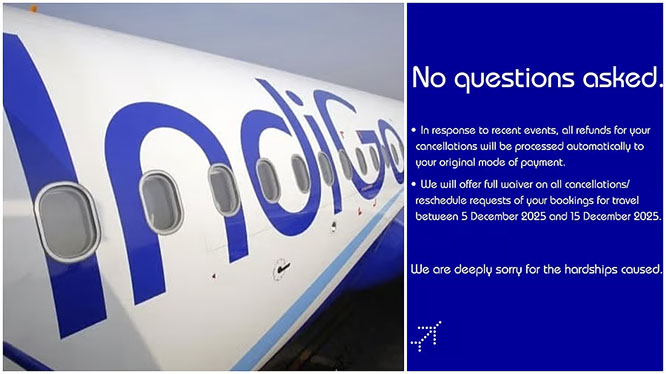
With IndiGo flight disruptions impacting thousands of passengers, the airline on Saturday said that it will offer full waiver on all cancellations/reschedule requests for travel bookings between December 5, 2025 and December 15, 2025.

Earlier in the day, the civil aviation ministry had directed the airline to complete the ticket refund process for the cancelled flights by Sunday evening, as well as ensure baggage separated from the travellers are delivered in the next two days.

In a post on X, titled 'No questions asked', IndiGo wrote, "In response to recent events, all refunds for your cancellations will be processed automatically to your original mode of payment."

"We are deeply sorry for the hardships caused," it further added.

Several passengers, however, complained of not getting full refund as promised by the airline.

Netizens have shared screenchots of getting charged for airline cancellation fee and convenience fee.

"Please tell me why u have did this airline cancellation charges when u say full amount will be refunded (sic)," a user wrote sharing a screenshot of the refund page.

"Well, but you have still debited the convenience charges," wrote another.

Passengers have also raised concerns about the "cancel" option being disabled on the IndiGo app. "First enable the 'Cancel' button on your App & offer full refund on tickets cancelled by customers between the said dates," wrote a user.

A day after the country's largest airline, IndiGo, cancelled more than 1,000 flights and caused disruptions for the fifth day on Saturday, the ministry said that any delay or non-compliance in refund processing will invite immediate regulatory action.

The refund process for all cancelled or disrupted flights must be completed by 8 pm on Sunday, the ministry said in a statement.

"Airlines have also been instructed not to levy any rescheduling charges for passengers whose travel plans were affected by cancellations," it said.

On Saturday, more than 400 flights were cancelled at various airports.

IndiGo has also been instructed to set up dedicated passenger support and refund facilitation cells.

Comments

Add new comment

  • Coastaldigest.com reserves the right to delete or block any comments.
  • Coastaldigset.com is not responsible for its readers’ comments.
  • Comments that are abusive, incendiary or irrelevant are strictly prohibited.
  • Please use a genuine email ID and provide your name to avoid reject.