No problem talking to Pak but 'Terroristan': Jaishankar

Agencies
September 25, 2019

New York, Sept 25: India has no problem talking to Pakistan but it has a problem talking to “Terroristan”, External Affairs Minister S Jaishankar said here, asserting that Islamabad has created an entire industry of terrorism to deal with the Kashmir issue.

Jaishankar, addressing a New York audience at cultural organization Asia Society Tuesday, said when India decided to revoke Article 370 and bifurcate the state of Jammu and Kashmir into two union territories of Jammu and Kashmir and Ladakh, it drew a reaction from Pakistan and China.

Pakistan downgraded diplomatic relations with India and also expelled Indian High Commissioner after New Delhi revoked the special status given to Jammu and Kashmir on Aug 5.

China had voiced "serious concern" over the situation in Kashmir, saying "the parties concerned should exercise restraint and act with caution, especially to avoid actions that unilaterally change the status quo and exacerbate tension."

Jaishankar emphasized that India has no problem talking to Pakistan.

“But we have a problem talking to Terroristan. And they have to be one and not be the other,” he said.

Jaishankar underlined that revoking Article 370 has no implications for India's external boundaries.

“We are sort of reformatting this within our existing boundaries. It obviously drew a reaction from Pakistan, it drew a reaction from China. These are two very different reactions. I think, for Pakistan, it was a country which has really created an entire industry of terrorism to deal with the Kashmir issue. In my view, it's actually bigger than Kashmir, I think they have created it for India,” Jaishankar said.

He added that in the aftermath of India's decision to scrap Jammu and Kashmir's special status, Pakistan now sees its “investment” of 70 years undercut if this policy succeeds.

“So theirs is today a reaction of anger, of frustration in many ways, because you have built an entire industry over a long period of time,” he said.

When asked that Pakistan has said a lot and what does he think it would do, Jaishankar said this is not a Kashmir issue but a bigger issue than that and Pakistan has to accept that the “model which they have built for themselves, no longer works. That you cannot, in this day and age, conduct policy using terrorism as a legitimate instrument of statecraft. I think that's at the heart of the issue.”

Jaishankar recalled that over the years in Jammu and Kashmir, the lack of development, lack of opportunity, “actually created a sense of alienation, alienation to separatism, separatism used for terrorism.”

When asked what does Pakistan need to do as a precondition for Kashmir talks, Jaishankar said, “I think we are getting this wrong. First of all Pakistan has to do something for its own good and if it does that, it would enable a normal neighbourly relationship with India.”

He added that it is not like India and Pakistan agree on everything else and the two countries have wonderful relationships and there is a Kashmir issue.

“We had an attack on Mumbai city. The last time I checked, Mumbai city was not a part of Kashmir. So if Pakistani terrorists can attack states and regions which are far removed from Kashmir, we have got to recognize that there is a bigger problem out there,” the minister said.

The problem is really the “mindset,” he said adding that every time there is a change of government in Pakistan, "somebody says its new and nothing to do with the earlier guys" and blames the previous government.

Second, they say, "it has nothing to do with us as a country, it's all the Americans. The Americans taught us the bad habits by doing the Afghan jihad. We were good people till you came along,” he said, taking a strong jibe at Pakistan.

“There is a fundamental issue there which they need to understand and we need to encourage them to do - that is to move away from terrorism,” he said, adding that at one level it's a huge issue and another level it's a very obvious issue.

“These are not activities which are subterranean. These are activities in broad daylight. They know where the camps are, anybody knows where the camps are, just google them. You’ll find them,” he said.

Jaishankar emphasized that the provision in the Indian Constitution which gave Kashmir a different status was a temporary provision. “Now, here's the funny thing. We rarely read that in the international press.”

“We agree on what the word temporary means, it means something comes to an end. After 70 years, it came to an end. And 70 years is a decent definition of the word temporary,” he said.

He said when the Narendra Modi government was voted back into power, it took a long hard look at what its options are about Article 370 in Jammu and Kashmir.

“And the options were either we do more of the same knowing it doesn't work, or we do something different. So I think the choice was ok, we will do something different. And that something different, by the way, has no implications for the external boundaries of India,” he said.

On China, he said Beijing misread what was happening in Jammu and Kashmir after the revocation of Article 370.

“Now, I don't know why they believe that it impacted on them,” he said, adding that he went to Beijing a few days after the Constitutional change and explained to them that “as far as they were concerned, nothing had changed. India's boundaries had not changed, the line of actual control has not changed. So that was the conversation we had with them.”


Comments

Add new comment

  • Coastaldigest.com reserves the right to delete or block any comments.
  • Coastaldigset.com is not responsible for its readers’ comments.
  • Comments that are abusive, incendiary or irrelevant are strictly prohibited.
  • Please use a genuine email ID and provide your name to avoid reject.
News Network
December 7,2025

Mangaluru, Dec 7: A 34-year-old fruit and vegetable trader in Mangaluru has reportedly lost ₹33.1 lakh after falling victim to an online investment scam run through a fake mobile app.

Police said the scam began in September, when the victim received a link on Facebook. Clicking it connected him to a WhatsApp number, where an unidentified person introduced a high-return investment scheme and instructed him to download an app.

To build trust, the fraudster asked him to invest ₹30,000 on September 24. The trader soon received ₹34,000 as “profit,” convincing him the scheme was genuine. Over the next two months, he transferred money in multiple instalments via Google Pay and IMPS to different scanner codes and bank accounts shared by the scammers. Between September 24 and December 3, he ended up sending a total of ₹33.1 lakh.

When he later requested a refund of his investment and promised returns, the scammers demanded additional payments, claiming he needed to pay a “service tax” first. Even after he paid a small amount, no money was returned, and the scammers continued pressuring him for more.

A case has been registered at the CEN Crime Police Station.

Comments

Add new comment

  • Coastaldigest.com reserves the right to delete or block any comments.
  • Coastaldigset.com is not responsible for its readers’ comments.
  • Comments that are abusive, incendiary or irrelevant are strictly prohibited.
  • Please use a genuine email ID and provide your name to avoid reject.
News Network
December 20,2025

train.jpg

At least seven elephants were killed and one calf injured after a herd collided with the Sairang-New Delhi Rajdhani Express in Assam's Hojai on Saturday morning, leading to disruption of rail services. 

The Sairang-New Delhi Rajdhani Express struck a herd of elephants, resulting in the derailment of the locomotive and five coaches. No passenger casualties or injuries were reported, officials said.

The New Delhi-bound train met with the accident around 2.17 am, PTI reported. The Sairang-New Delhi Rajdhani Express connects Mizoram's Sairang (near Aizawl) to Anand Vihar Terminal (Delhi). 

Railway has issued helpline numbers at the Guwahati Railway Station:-

•    0361-2731621
•    0361-2731622
•    0361-2731623

The accident site is located about 126 km from Guwahati. Following the incident, accident relief trains and railway officials rushed to the spot to initiate rescue operations.

Train Services Disrupted

Sources said that due to the derailment and elephant body parts scattered on the tracks, train services to Upper Assam and other parts of the Northeast were affected.

Passengers from the affected coaches were temporarily accommodated in vacant berths available in other coaches of the train. Once the train reaches Guwahati, additional coaches will be attached to accommodate all passengers, after which the train will resume its onward journey.

The incident occurred at a location that is not a designated elephant corridor. The loco pilot, upon spotting the herd on the tracks, applied emergency brakes. Despite this, the elephants dashed into the train, leading to the collision and derailment.

Last month, an elephant was killed after being hit by a train in Dhupguri in West Bengal's Jalpaiguri district. The incident took place on November 30. 

The adult elephant was killed on the spot, and a calf was discovered lying injured beside the tracks. 

Over 70 Elephants Killed In Train Collisions Over Last 5 Years

At least 79 elephants have died in train collisions across the country in the last five years, the Environment Ministry had informed Parliament in August.

In a written reply in the Lok Sabha, Minister of State for Environment Kirti Vardhan Singh had said the figure is based on reports from state governments and Union Territory administrations for the period 2020-21 to 2024-25.

He said that the ministry does not maintain consolidated data on the deaths of other wild animals on railway tracks, including in designated elephant corridors.

Singh confirmed that three elephants, including a mother and her calf, were killed on July 18 this year after being hit by a speeding express train on the Kharagpur-Tatanagar section in West Bengal's Paschim Midnapore district. The incident took place near Banstala between Jhargram and Banstala stations.

The minister said several measures have been taken jointly by the Environment Ministry and the Railways to prevent such accidents.

These include imposing speed restrictions in elephant habitats, pilot projects such as seismic sensor-based detection of elephants near tracks and construction of underpasses, ramps and fencing at vulnerable points.

The Wildlife Institute of India, in consultation with the ministry and other stakeholders, has also issued guidelines titled 'Eco-friendly Measures to Mitigate Impacts of Linear Infrastructure' to help agencies design railways and other projects in ways that reduce human-animal conflicts.

Singh added that capacity-building workshops were conducted for railway officials at the Wildlife Institute of India in 2023 and 2024 to raise awareness on elephant conservation and protection.

A detailed report titled 'Suggested Measures to Mitigate Elephant & Other Wildlife Train Collisions on Vulnerable Railway Stretches in India' had also been prepared after surveys across 127 railway stretches covering 3,452 km.

Of these, 77 stretches spanning 1,965 km in 14 states were prioritised for mitigation, with site-specific interventions suggested. 

Comments

Add new comment

  • Coastaldigest.com reserves the right to delete or block any comments.
  • Coastaldigset.com is not responsible for its readers’ comments.
  • Comments that are abusive, incendiary or irrelevant are strictly prohibited.
  • Please use a genuine email ID and provide your name to avoid reject.
News Network
December 7,2025

SHRIMP.jpg

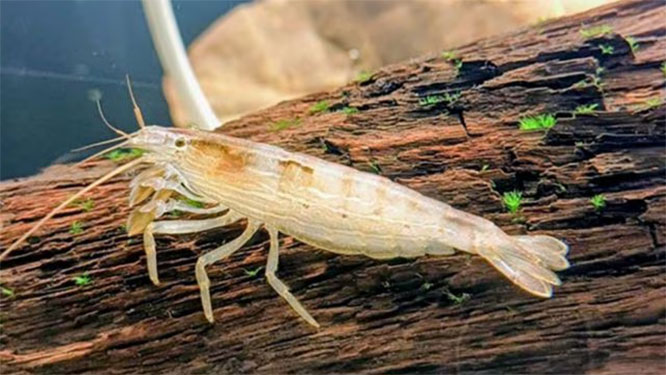
Mangaluru, Dec 7: A rare bamboo shrimp has been rediscovered on mainland India more than 70 years after it was last reported, confirming for the first time the presence of Atyopsis spinipes in the country. The find was made by researchers from the Centre for Climate Change Studies at Sathyabama Institute of Science and Technology, Chennai, during surveys in Karnataka and Odisha.

The team — shrimp expert Dr S Prakash, PhD scholar K Kunjulakshmi, and Mangaluru-based researcher Maclean Antony Santos — combined field surveys, ecological assessments and DNA analysis to identify the elusive species. Their findings, published in Zootaxa, resolve decades of taxonomic confusion stemming from a 1951 report that misidentified the species as Atyopsis moluccensis without strong evidence.

The shrimp has now been confirmed at two locations: the Mulki–Pavanje estuary near Mangaluru and the Kuakhai River in Bhubaneswar. Historical specimens from the Andaman Islands, previously labelled as A. moluccensis, were also found to be misidentified and actually belong to A. spinipes.

The rediscovery began after an aquarium hobbyist in Odisha spotted a shrimp in 2022, prompting systematic surveys across Udupi, Karwar and Mangaluru. Four female specimens were collected in Mulki and one in Odisha, all genetically matching.

Researchers warn the species may exist in very small, vulnerable populations as freshwater habitats face increasing pressure from pollution, sand mining and infrastructure development. All verified specimens have been deposited with the Zoological Survey of India for future reference.

Comments

Add new comment

  • Coastaldigest.com reserves the right to delete or block any comments.
  • Coastaldigset.com is not responsible for its readers’ comments.
  • Comments that are abusive, incendiary or irrelevant are strictly prohibited.
  • Please use a genuine email ID and provide your name to avoid reject.