No problem talking to Pak but 'Terroristan': Jaishankar

Agencies
September 25, 2019

New York, Sept 25: India has no problem talking to Pakistan but it has a problem talking to “Terroristan”, External Affairs Minister S Jaishankar said here, asserting that Islamabad has created an entire industry of terrorism to deal with the Kashmir issue.

Jaishankar, addressing a New York audience at cultural organization Asia Society Tuesday, said when India decided to revoke Article 370 and bifurcate the state of Jammu and Kashmir into two union territories of Jammu and Kashmir and Ladakh, it drew a reaction from Pakistan and China.

Pakistan downgraded diplomatic relations with India and also expelled Indian High Commissioner after New Delhi revoked the special status given to Jammu and Kashmir on Aug 5.

China had voiced "serious concern" over the situation in Kashmir, saying "the parties concerned should exercise restraint and act with caution, especially to avoid actions that unilaterally change the status quo and exacerbate tension."

Jaishankar emphasized that India has no problem talking to Pakistan.

“But we have a problem talking to Terroristan. And they have to be one and not be the other,” he said.

Jaishankar underlined that revoking Article 370 has no implications for India's external boundaries.

“We are sort of reformatting this within our existing boundaries. It obviously drew a reaction from Pakistan, it drew a reaction from China. These are two very different reactions. I think, for Pakistan, it was a country which has really created an entire industry of terrorism to deal with the Kashmir issue. In my view, it's actually bigger than Kashmir, I think they have created it for India,” Jaishankar said.

He added that in the aftermath of India's decision to scrap Jammu and Kashmir's special status, Pakistan now sees its “investment” of 70 years undercut if this policy succeeds.

“So theirs is today a reaction of anger, of frustration in many ways, because you have built an entire industry over a long period of time,” he said.

When asked that Pakistan has said a lot and what does he think it would do, Jaishankar said this is not a Kashmir issue but a bigger issue than that and Pakistan has to accept that the “model which they have built for themselves, no longer works. That you cannot, in this day and age, conduct policy using terrorism as a legitimate instrument of statecraft. I think that's at the heart of the issue.”

Jaishankar recalled that over the years in Jammu and Kashmir, the lack of development, lack of opportunity, “actually created a sense of alienation, alienation to separatism, separatism used for terrorism.”

When asked what does Pakistan need to do as a precondition for Kashmir talks, Jaishankar said, “I think we are getting this wrong. First of all Pakistan has to do something for its own good and if it does that, it would enable a normal neighbourly relationship with India.”

He added that it is not like India and Pakistan agree on everything else and the two countries have wonderful relationships and there is a Kashmir issue.

“We had an attack on Mumbai city. The last time I checked, Mumbai city was not a part of Kashmir. So if Pakistani terrorists can attack states and regions which are far removed from Kashmir, we have got to recognize that there is a bigger problem out there,” the minister said.

The problem is really the “mindset,” he said adding that every time there is a change of government in Pakistan, "somebody says its new and nothing to do with the earlier guys" and blames the previous government.

Second, they say, "it has nothing to do with us as a country, it's all the Americans. The Americans taught us the bad habits by doing the Afghan jihad. We were good people till you came along,” he said, taking a strong jibe at Pakistan.

“There is a fundamental issue there which they need to understand and we need to encourage them to do - that is to move away from terrorism,” he said, adding that at one level it's a huge issue and another level it's a very obvious issue.

“These are not activities which are subterranean. These are activities in broad daylight. They know where the camps are, anybody knows where the camps are, just google them. You’ll find them,” he said.

Jaishankar emphasized that the provision in the Indian Constitution which gave Kashmir a different status was a temporary provision. “Now, here's the funny thing. We rarely read that in the international press.”

“We agree on what the word temporary means, it means something comes to an end. After 70 years, it came to an end. And 70 years is a decent definition of the word temporary,” he said.

He said when the Narendra Modi government was voted back into power, it took a long hard look at what its options are about Article 370 in Jammu and Kashmir.

“And the options were either we do more of the same knowing it doesn't work, or we do something different. So I think the choice was ok, we will do something different. And that something different, by the way, has no implications for the external boundaries of India,” he said.

On China, he said Beijing misread what was happening in Jammu and Kashmir after the revocation of Article 370.

“Now, I don't know why they believe that it impacted on them,” he said, adding that he went to Beijing a few days after the Constitutional change and explained to them that “as far as they were concerned, nothing had changed. India's boundaries had not changed, the line of actual control has not changed. So that was the conversation we had with them.”


Comments

Add new comment

  • Coastaldigest.com reserves the right to delete or block any comments.
  • Coastaldigset.com is not responsible for its readers’ comments.
  • Comments that are abusive, incendiary or irrelevant are strictly prohibited.
  • Please use a genuine email ID and provide your name to avoid reject.
News Network
December 15,2025

Mangaluru, Dec 15: Air India Express has announced that it will resume direct flight services between Mangaluru and Muscat from March 2026, restoring an important international air link for passengers from the coastal region.

Airport authorities said the service will operate twice a week—on Sundays and Tuesdays—from March 1. The initial flights are scheduled on March 3, 8 and 10, followed by March 15 and 17, with the same operating pattern to continue thereafter. The flight duration is approximately three hours and 25 minutes.

The Mangaluru–Muscat route was earlier operated under the 2025 summer schedule, with services beginning on July 14. At that time, Air India Express had operated four flights a week before suspending the service.

Officials said the summer schedule will come into effect from March 29, after which changes in flight timings and departure schedules from Mangaluru are expected. Passengers have been advised to check the latest schedules while planning their travel.

The resumption of direct flights to Muscat is expected to significantly benefit expatriates, business travellers and others, further strengthening Mangaluru’s air connectivity with the Gulf region.

Comments

Add new comment

  • Coastaldigest.com reserves the right to delete or block any comments.
  • Coastaldigset.com is not responsible for its readers’ comments.
  • Comments that are abusive, incendiary or irrelevant are strictly prohibited.
  • Please use a genuine email ID and provide your name to avoid reject.
News Network
December 6,2025

pilot.jpg

New Delhi: IndiGo, India’s largest airline, faced major operational turbulence this week after failing to prepare for new pilot-fatigue regulations issued by the Directorate General of Civil Aviation (DGCA). The stricter rules—designed to improve flight safety—took effect in phases through 2024, with the latest implementation on November 1. IndiGo has acknowledged that inadequate roster planning led to widespread cancellations and delays.

Below are the key DGCA rules that affected IndiGo’s operations:

1. Longer Mandatory Weekly Rest

Weekly rest for pilots has been increased from 36 hours to 48 hours.

The government says the extended break is essential to curb cumulative fatigue. This rule remains in force despite the current crisis.

2. Cap on Night Landings

Pilots can now perform only two night landings per week—a steep reduction from the earlier limit of six.

Night hours, defined as midnight to early morning, are considered the least alert period for pilots.

Given the disruptions, this rule has been temporarily relaxed for IndiGo until February 10.

3. Reduced Maximum Night Flight Duty

Flight duty that stretches into the night is now capped at 10 hours.

This measure has also been kept on hold for IndiGo until February 10 to stabilize operations.

4. Weekly Rest Cannot Be Replaced With Personal Leave

Airlines can no longer count a pilot’s personal leave as part of the mandatory 48-hour rest.

Pilots say this closes a loophole that previously reduced actual rest time.

Currently, all airlines are exempt from this rule to normalise travel.

5. Mandatory Fatigue Monitoring

Airlines must submit quarterly fatigue reports along with corrective actions to DGCA.

This system aims to create a transparent fatigue-tracking framework across the industry.

The DGCA has stressed that these rules were crafted to strengthen flight safety and align India with global fatigue-management standards. The temporary relaxations are expected to remain until February 2025, giving IndiGo time to stabilise its schedules and restore normal air travel.

Comments

Add new comment

  • Coastaldigest.com reserves the right to delete or block any comments.
  • Coastaldigset.com is not responsible for its readers’ comments.
  • Comments that are abusive, incendiary or irrelevant are strictly prohibited.
  • Please use a genuine email ID and provide your name to avoid reject.
News Network
December 17,2025

melkar1.jpg

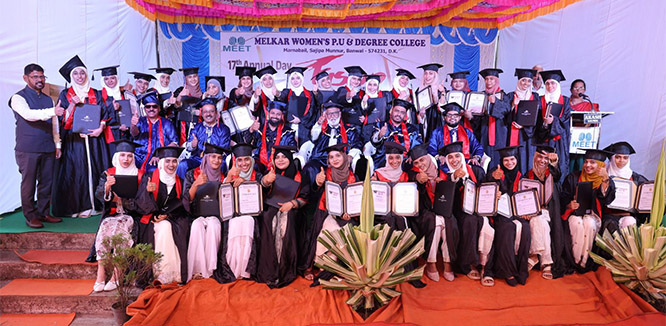
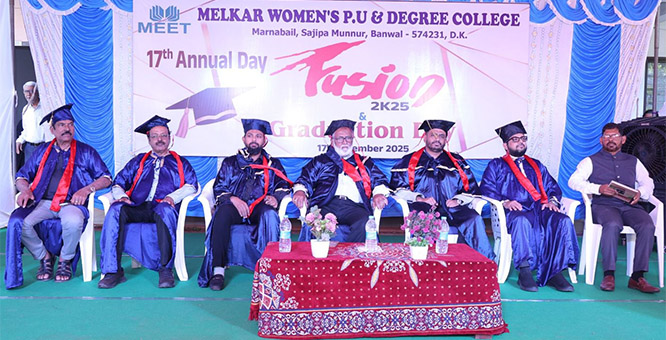
Melkar, Dec 17: The 17th Annual Day and Graduation Ceremony of Melkar Women’s PU and Degree College, themed “Fusion-2K25,” was celebrated with dignity and enthusiasm, marking a significant milestone in the institution’s academic journey. The programme reflected the college’s steadfast commitment to academic excellence, character building, and the holistic development of students.

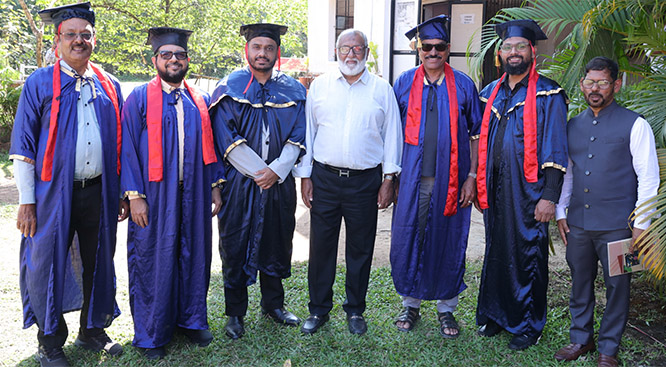
The event was inaugurated by Mr. Asif Mohammed, whose presence greatly enriched the occasion. The celebration was further graced by the chief guests Mr. P. B. Ahmed Mudassir and Mr. Nissar Fakeer Mohammed, along with the distinguished guests of honour Mr. B. A. Nazeer and Mr. Ibrahim Gadiyar. In their inspiring addresses, the guests encouraged the graduating students and appreciated the dedicated efforts of the management, faculty, and students.

The annual report was presented by the Principal, Mr. Abdul Majeed S, highlighting the institution’s academic progress, notable achievements, and extracurricular accomplishments during the academic year.

The presidential address was delivered by the esteemed Chairman of Melkar Women’s PU and Degree College, Dr. Haji S. M. Rasheed, who emphasized the vital role of education in empowering women and shaping responsible citizens. He also stressed the importance of discipline, dedication, and perseverance in achieving success.

Cultural programmes and academic recognitions formed an integral part of the celebration, showcasing the talents and achievements of the students. The graduation ceremony was a proud moment for the outgoing students as they were formally conferred degrees and wished success in their future endeavours.

Ms. Mashmooma Fathima served as the Master of Ceremonies. The welcome address was delivered by Ms. Fathima Nida, and the programme concluded with a vote of thanks proposed by Ms. Ayisha Suhana.

The event successfully achieved its objectives and was highly appreciated by the guests and attendees.

melkar3.jpg

melkar2.jpg

Comments

Add new comment

  • Coastaldigest.com reserves the right to delete or block any comments.
  • Coastaldigset.com is not responsible for its readers’ comments.
  • Comments that are abusive, incendiary or irrelevant are strictly prohibited.
  • Please use a genuine email ID and provide your name to avoid reject.