



Parties fail to take EVM hackathon challenge

June 4, 2017

New Delhi, Jun 4: Despite over a dozen political parties questioning the reliability of electronic voting machines, none of them took up the challenge to prove it they can be tampered with.
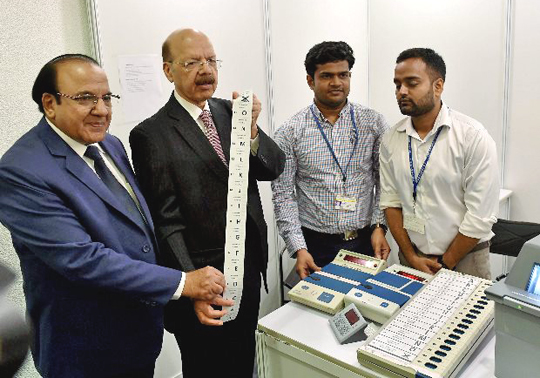
EVM

The Election Commission had recently thrown open a challenge to all political parties. Though the CPM and the NCP accepted the challenge and appeared for the event held here on Saturday, they opted out of the test. After the event, Chief Election Commissioner Nasim Zaidi told reporters that EVMs used by the poll panel are “non-tamperable”, and with 100% use of paper trail machines in all future elections, the issue of tamperability of the machines “stands closed”.

He also made it clear that there would be no such challenge in future to test the reliability of EVMs. The CPM said they didn't want to participate in the challenge, but wished to understand the EVM process.

The NCP team, for its part, informed they, too, didn't want to participate in any test, but were only interested to participate in an academic exercise, Zaidi said.

The challenge was organised after several major Opposition parties had claimed that the faith of people in the machines had eroded due to charges of tampering.

Representatives from both the parties were offered four machines and four hours to hack into them. The machines were brought from Punjab, Uttarakhand and Uttar Pradesh where the recent Assembly elections were held.

Zaidi said the CPM members were given a detailed demonstration by the commission about EVMs and they were “satisfied”.

The NCP team led by Rajya Sabha member Vandana Chavan conveyed that the main reason for their apprehension was over the voting machines used in the municipal polls in Maharashtra, the commission clarified that the EVMs used by the Maharashtra State Election Commission did not belong to the ECI.

However, when the NCP team again met the commission officials and sought time to participate in the challenge or by way of academic exercise by selecting the EVM and then accessing the memory and battery numbers by opening the machines themselves, the commission agreed to that, a statement said.

Earlier, the commission had rejected the AAP and Congress demand to allow them to access motherboard of the voting machines.

Comments

Add new comment

  • Coastaldigest.com reserves the right to delete or block any comments.
  • Coastaldigset.com is not responsible for its readers’ comments.
  • Comments that are abusive, incendiary or irrelevant are strictly prohibited.
  • Please use a genuine email ID and provide your name to avoid reject.
News Network
December 7,2025

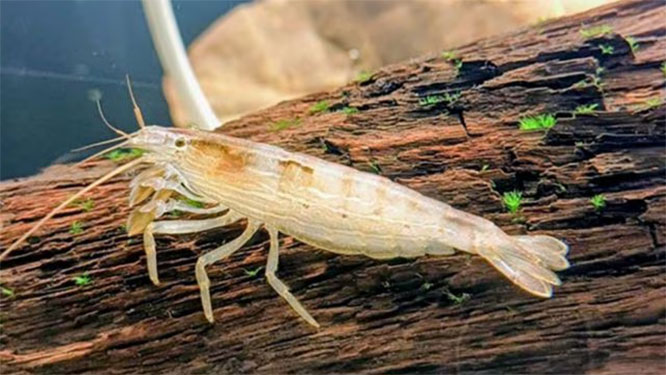
SHRIMP.jpg

Mangaluru, Dec 7: A rare bamboo shrimp has been rediscovered on mainland India more than 70 years after it was last reported, confirming for the first time the presence of Atyopsis spinipes in the country. The find was made by researchers from the Centre for Climate Change Studies at Sathyabama Institute of Science and Technology, Chennai, during surveys in Karnataka and Odisha.

The team — shrimp expert Dr S Prakash, PhD scholar K Kunjulakshmi, and Mangaluru-based researcher Maclean Antony Santos — combined field surveys, ecological assessments and DNA analysis to identify the elusive species. Their findings, published in Zootaxa, resolve decades of taxonomic confusion stemming from a 1951 report that misidentified the species as Atyopsis moluccensis without strong evidence.

The shrimp has now been confirmed at two locations: the Mulki–Pavanje estuary near Mangaluru and the Kuakhai River in Bhubaneswar. Historical specimens from the Andaman Islands, previously labelled as A. moluccensis, were also found to be misidentified and actually belong to A. spinipes.

The rediscovery began after an aquarium hobbyist in Odisha spotted a shrimp in 2022, prompting systematic surveys across Udupi, Karwar and Mangaluru. Four female specimens were collected in Mulki and one in Odisha, all genetically matching.

Researchers warn the species may exist in very small, vulnerable populations as freshwater habitats face increasing pressure from pollution, sand mining and infrastructure development. All verified specimens have been deposited with the Zoological Survey of India for future reference.

Comments

Add new comment

  • Coastaldigest.com reserves the right to delete or block any comments.
  • Coastaldigset.com is not responsible for its readers’ comments.
  • Comments that are abusive, incendiary or irrelevant are strictly prohibited.
  • Please use a genuine email ID and provide your name to avoid reject.