



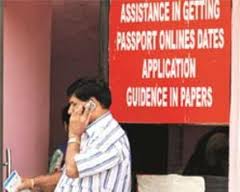
Passport office to clear 500 more online applications daily

June 21, 2012

Passport_500

New Delhi, June 21: Shaken by the rising public anger against messy implementation of the new internet-based passport application system, the ministry of external affairs on Wednesday put in place a number of measures that are expected to make it easier for people to apply for passports. Some of these measures will come into effect immediately and a few more are likely to be announced on Friday.

Among the steps taken right away is a hike in the number of daily online appointments by 500. This is expected to ease up some pressure on applicants. Right now, the window for making online applications is exceedingly short. The hike by 500 is expected to make this window a little larger. What's more, the passport office will now work also on Saturdays in Delhi. In other words, 12,000 more passport applications will be dealt with every month.

These measures, as well as some more, were taken in the wake of The Times of India highlighting the pain of passport applicants in a series of reports. "We have treated the matter with utmost concern after the TOI reports. We will be releasing more appointment slots every day, little by little, and in 15 days you will see a definite impact," said chief passport officer (CPO) and joint secretary in the MEA, Muktesh Kumar Pardeshi.

The MEA has said that all Passport Seva Kendras (PSKs) will be increasing their capacity to deal with applicants over the next fortnight. The ministry also said that family tokens will be issued to allow family members to seek appointments together. In order to tackle touts and recalcitrant babus, the ministry said the online process would be made more transparent and anyone asking for money to play the system would face strict action.

Ministry officials promised that the website would be revisited to ensure that all requirement of documents are clearly mentioned. This will ensure that there will be no suprises or whimsical demands for documents. Together with the stick, the ministry is expected to shortly announce the carrot - a monetary incentive policy for those clearing a higher number of applications.

The ministry has decided to make one passport centre dedicated for passports under the Tatkal scheme. Right now because of the mess, Tatkal passport application do not get any real advantage despite paying an additional Rs 2,500.

Starting Thursday, the Bhikaji Cama Place PSK will accommodate 500 more online appointments, taking the total number of booking slots allotted to Delhi to 2,000. Pardeshi claimed that PSKs in Delhi have been witnessing a trend of roughly 30% online applicants not showing up on the appointed day. Calling it a "sheer waste of resource", Pardeshi said the MEA has factored in this absenteeism and will release more slots accordingly.

A special token intended to serve families better is also in the pipeline. TOI readers had complained that they couldn't book online appointments for their families on the same day as theirs. This new token, Pardeshi said, would solve this problem.

The ambiguities in the passport application process have been another concern. Both MEA and Tata Consultancy Services have claimed that the new system is "absolutely transparent" and "smooth". When TOI investigated the issue, it found that information pertaining to the mandatory documents displayed on the portal, www.passportindia.gov.in, was not in consonance with the ones asked by the PSKs. When PSKs were asked the reason, they said they reserved the right to demand additional documents.

This will not happen anymore, said the CPO. "We are working on our portal and will soon upload an advisory for applicants. The process will be explained in detail and hopefully, nobody will face any inconvenience at the PSKs in terms of 'surprise demands'," Pardeshi said.

But what about those people who fail to book appointments online and have to seek help from agents, who charge hefty amounts for bookings? "We are issuing instructions to all passport offices to lodge FIRs against anyone found claiming to arrange for multiple bookings in exchange for money. We are also considering an idea to rope in the postal department into the process. Post offices can book online appointments for a token fee and keep agents out of the picture completely," said Basant K Gupta, additional secretary, consular passport & visa division, MEA.

Passport promises

500 more online appointment slots for Passport Seva Kendra at Bhikaji Cama Place, taking total number of slots for Delhi to 2,000.

Tokens to allow entire family to turn up on same day for appointment.

Passport offices to lodge FIRs against those promising multiple bookings for fee.

Post offices may be alllowed to book online appointments for applicants without Net access.

Website to list details of all mandatory documents. PSKs can't turn away applicants by saying they reserve right to demand additional papers.

Likely announcements on Friday

Dedicated office for processing Tatkaal applications.

All passport offices to work on Saturdays too.

Special incentive scheme for staff for faster processing.

Quote

We have treated the matter with utmost concern after the TOI reports. In 15 days you will see a definite impact

—Muktesh Kumar Pardeshi, chief passport officer

Times View

It's good that the authorities are responding to media reports on the problems being faced by passport applicants. It's hoped that what's been announced will actually be done right away. We want a transparent and an efficient system for issuing passports. And an Internet-based system can achieve that. Transparency will, of course, mean that certain vested interests - from touts to corrupt passport office babus - will be badly hit. And these interests are trying to derail a more transparent system. There must be a firm message from the top that the system will be cleaned up and anyone found to be subverting it will be dealt with firmly.

Comments

Add new comment

  • Coastaldigest.com reserves the right to delete or block any comments.
  • Coastaldigset.com is not responsible for its readers’ comments.
  • Comments that are abusive, incendiary or irrelevant are strictly prohibited.
  • Please use a genuine email ID and provide your name to avoid reject.
News Network
December 16,2025

bengal.jpg

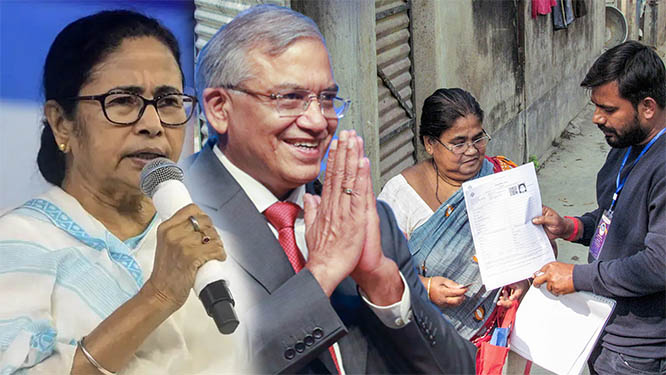
The deletion of over 58 lakh names from West Bengal’s draft electoral rolls following a Special Intensive Revision (SIR) has sparked widespread concern and is likely to deepen political tensions in the poll-bound state.

According to the Election Commission, the revision exercise has identified 24 lakh voters as deceased, 19 lakh as relocated, 12 lakh as missing, and 1.3 lakh as duplicate entries. The draft list, published after the completion of the first phase of SIR, aims to remove errors and duplication from the electoral rolls.

However, the scale of deletions has raised fears that a large number of eligible voters may have been wrongly excluded. The Election Commission has said that individuals whose names are missing can file objections and seek corrections. The final voter list is scheduled to be published in February next year, after which the Assembly election announcement is expected. Notably, the last Special Intensive Revision in Bengal was conducted in 2002.

The development has intensified the political row over the SIR process. Chief Minister Mamata Banerjee and her Trinamool Congress have strongly opposed the exercise, accusing the Centre and the Election Commission of attempting to disenfranchise lakhs of voters ahead of the elections.

Addressing a rally in Krishnanagar earlier this month, Banerjee urged people to protest if their names were removed from the voter list, alleging intimidation during elections and warning of serious consequences if voting rights were taken away.

The BJP, meanwhile, has defended the revision and accused the Trinamool Congress of politicising the issue to protect what it claims is an illegal voter base. Leader of the Opposition Suvendu Adhikari alleged that the ruling party fears losing power due to the removal of deceased, fake, and illegal voters.

The controversy comes amid earlier allegations by the Trinamool Congress that excessive work pressure during the SIR led to the deaths by suicide of some Booth Level Officers (BLOs), for which the party blamed the Election Commission. With the draft list now out, another round of political confrontation appears imminent.

As objections begin to be filed, the focus will be on whether the correction mechanism is accessible, transparent, and timely—critical factors in ensuring that no eligible voter is denied their democratic right ahead of a crucial election.

Comments

Add new comment

  • Coastaldigest.com reserves the right to delete or block any comments.
  • Coastaldigset.com is not responsible for its readers’ comments.
  • Comments that are abusive, incendiary or irrelevant are strictly prohibited.
  • Please use a genuine email ID and provide your name to avoid reject.
News Network
December 2,2025

A major upgrade in safety and monitoring is planned for Haj 2026, with every Indian pilgrim set to receive a Haj Suvidha smart wristband linked to the official Haj Suvidha mobile app. The initiative aims to support pilgrims—especially senior citizens—who may struggle with smartphones during the 45-day journey.

What the Smart Wristband Will Do

Officials said the device will come with:
•    Location tracking
•    Pedometer
•    SOS emergency button
•    Qibla compass
•    Prayer timings
•    Basic health monitoring

SP Tiwari, secretary of the UP State Haj Committee, said the goal is to make the pilgrimage safer and more comfortable.

“Most Hajis are elderly and not comfortable with mobile apps,” he said. “The smartwatch will help locate pilgrims who forget their way or cannot communicate their location.”

The wristbands will be monitored by the Consulate General of India in Saudi Arabia, similar to mobile tracking via the Haj Suvidha App.

Free Distribution and Training

•    Smart wristbands will be given free of cost.
•    Training for pilgrims will be conducted between January and February 2026.
•    Sample units will reach state Haj committees soon.
•    Final devices will be distributed as pilgrims begin their journey.

New Rules for Accommodation

Two major decisions have also been finalised for Haj 2026:
1.    Separate rooms for men and women – including married couples. They may stay on the same floor but must occupy different rooms, following stricter Saudi guidelines.
2.    Cooking banned – gas cylinders will not be allowed; all meals will be provided through official catering services arranged by the Haj Committee of India.

These decisions were finalised during a meeting of the Haj Committee of India and state representatives in Mumbai.

Haj Suvidha App Launched Earlier

The government launched the Haj Suvidha App in 2024, offering:

•    Training modules
•    Accommodation and flight details
•    Baggage information
•    SOS and translation tools
•    Grievance redressal

Haj 2026 Quota and Key States

•    India’s total Haj quota for 2026: 1,75,025 pilgrims
•    70% (1,25,000) allotted to the Haj Committee of India
•    30% (around 50,000) reserved for Haj Group Organisers

Uttar Pradesh has the largest allocation (around 30,000 seats), though approximately 18,000 pilgrims are expected to go this year. States with high pilgrim numbers include Kerala, Maharashtra and Gujarat.

Dates of Haj 2026

The pilgrimage is scheduled to take place from 24 May to 29 May, 2026 (tentative).
Haj is one of the five pillars of Islam and is mandatory for Muslims who meet the required conditions.

Comments

Add new comment

  • Coastaldigest.com reserves the right to delete or block any comments.
  • Coastaldigset.com is not responsible for its readers’ comments.
  • Comments that are abusive, incendiary or irrelevant are strictly prohibited.
  • Please use a genuine email ID and provide your name to avoid reject.
News Network
December 13,2025

New Delhi: School-going children are picking up drug and smoking habits and engaging in consumption of alcohol, with the average age of introduction to such harmful substances found to be around 13 years, suggesting a need for earlier interventions as early as primary school, a multi-city survey by AIIMS-Delhi said.

The findings also showed substance use increased in higher grades, with grade XI/XII students two times more likely to report use of substances when compared with grade VIII students. This emphasised the importance of continued prevention and intervention through middle and high school.

The study led by Dr Anju Dhawan of AIIMS's National Drug Dependence Treatment Centre, published in the National Medical Journal of India this month, looks at adolescent substance use across diverse regions.

The survey included 5,920 students from classes 8, 9, 11 and 12 in urban government, private and rural schools across 10 cities -- Bengaluru, Chandigarh, Delhi, Dibrugarh, Hyderabad, Imphal, Jammu, Lucknow, Mumbai, and Ranchi. The data were collected between May 2018 and June 2019.

The average age of initiation for any substance was 12.9 (2.8) years. It was lowest for inhalants (11.3 years) followed by heroin (12.3 years) and opioid pharmaceuticals (without prescription; 12.5 years).

Overall, 15.1 per cent of participants reported lifetime use, 10.3 per cent reported past year use, and 7.2 per cent reported use in the past month of any substance, the study found.

The most common substances used in the past year, after tobacco (4 per cent) and alcohol (3.8 per cent), were opioids (2.8 per cent), followed by cannabis (2 per cent) and inhalants (1.9 per cent). Use of non-prescribed pharmaceutical opioids was most common among opioid users (90.2 per cent).

On being asked, 'Do you think this substance is easily available for a person of your age' separately for each substance category, nearly half the students (46.3 per cent) endorsed that tobacco products and more than one-third of the students (36.5 per cent) agreed that a person of their age can easily procure alcohol products.

Similarly, for Bhang (21.9 per cent), ganja/charas (16.1 per cent), inhalants (15.2 per cent), sedatives (13.7 per cent), opium and heroin (10 per cent each), the students endorsed that these can be easily procured.

About 95 per cent of the children, irrespective of their grade, agreed with the statement that 'drug use is harmful'.

The rates of substance use (any) among boys were significantly higher than those of girls for substance use (ever), use in the past year and use in the past 30 days. Compared to grade VIII students, grade IX students were more likely, and grade XI/XII students were twice as likely to have used any substance (ever).

The likelihood of past-year use of any substance was also higher for grade IX students and for grade XI/XII students as compared to grade VIII students.

About 40 per cent of students mentioned that they had a family member who used tobacco or alcohol each. The use of cannabis (any product) and opioid (any product) by a family member was reported by 8.2 per cent and 3.9 per cent of students, respectively, while the use of other substances, such as inhalants/sedatives by family was 2-3 per cent, the study found.

A relatively smaller percentage of students reported use of tobacco or alcohol among peers as compared to among family members, while a higher percentage reported inhalants, sedatives, cannabis or opioid use among peers.

Children using substances (past year) compared to non-users reported significantly higher any substance use by their family members and peers.

There were 25.7 per cent students who replied 'yes' to the question 'conflicts/fights often occur in your family'. Most students also replied affirmatively to 'family members are aware of how their time is being spent' and 'damily members are aware of with whom they spend their time'.

Comments

Add new comment

  • Coastaldigest.com reserves the right to delete or block any comments.
  • Coastaldigset.com is not responsible for its readers’ comments.
  • Comments that are abusive, incendiary or irrelevant are strictly prohibited.
  • Please use a genuine email ID and provide your name to avoid reject.