Petrol, diesel to be costlier; tax on super-rich, gold imports

Agencies
July 5, 2019

New Delhi, Jul 5: Finance Minister Nirmala Sitharaman on Friday hiked tax on petrol and diesel, raised import duty on gold, levied additional surcharge on super rich and brought a tax on high value cash withdrawals as she sought to spur growth with reduction in corporate tax and sops to housing sector, startups and electric vehicles.

Presenting the maiden budget of Modi 2.0 government in Lok Sabha, Sitharaman, the first full-time woman Finance Minister, proposed measures to ease liquidity crisis facing shadow banking sector (NBFCs) and providing Rs 70,000 crore capital to public sector banks while seeking to raise additional resources through privatisation of some PSUs.

In relief to tax payers, she provided for an additional deduction of Rs 1.5 lakh on interest paid on loans borrowed up to March 31, 2020 on purchase of a house up to Rs 45 lakh.

Corporate tax on companies with turnover of up to Rs 400 crore has been slashed to 25 per cent from current 30 per cent. Presently, the lower tax rate is applicable on companies having a turnover of up to Rs 250 crore.

Sitharaman said the reduced tax rate would cover 99.3 per cent of corporates in the country.

To boost use of electric vehicles, an additional income tax deduction of Rs 1.5 lakh on interest paid on loans taken to purchase EVs has been proposed.

Also the government has asked the GST Council to reduce tax rate on EVs from 12 per cent to 5 per cent. Customs duty on certain parts of EVs has been reduced.

Addressing the angel tax issue faced by startups, she said startups and investors who file requisite declarations will not be subjected to any kind of scrutiny in respect of valuation of share premium.

A mechanism of e-verification will be put in place and with this, the funds raised by startups will not require any tax scrutiny.

She raised special additional excise duty and road cess on petrol and diesel by Re 1 per litre each, saying lower crude oil prices provide her with an opportunity to review taxes on the sector.

Also, customs duty on gold and precious metals was raised from 10 per cent to 12.5 per cent to mobilize resources.

Basic customs duty was raised on an array of products including tiles, cashew kernels, vinyl flooring, auto parts, some synthetic rubber, digital and video recorder and CCTV camera.

Excise duty of Rs 5 per 1000 has been imposed on cigarettes of length exceeding 65 mm, while 0.5 per cent duty has been levied on chewing tobacco, zarda and tobacco extracts and essence.

"I propose to levy TDS of 2 per cent on cash withdrawal exceeding Rs 1 crore in a year from a bank account," she said.

She also announced a surcharge on individuals having taxable income of Rs 2 crore to Rs 5 crore and for those above Rs 5 crore which will hike their effective tax rate by 3 per cent and 7 per cent respectively.

Sitharaman also proposed to made Aadhaar and PAN interchangeable for the purpose of filing Income Tax returns.

To boost FDI inflow into the country, the government will examine further liberalisation of sectoral investment caps in aviation, media, animation and insurance.

The Budget also proposed 100 per cent FDI in insurance intermediaries and easing of local sourcing norms for single brand retail.

She said measures are being worked out to ease filing returns and tax compliance. Taxpayers with an annual turnover of less than Rs 5 crore will have to file only quarterly returns, she said

To boost cash-less economy, she said business establishments with annual turnover of Rs 50 crore will have to use BHIM, UPI, Aadhaar Pay, NEFT, RTGS modes of payments with no charges or merchant discount rates will be imposed on customers or merchants.

RBI and banks will absorb these costs, she said.

The Securities Transaction Tax or STT is proposed to be restricted to the difference between settlement and strike price of options, she said.

She proposed an additional income tax deduction of Rs 1.5 lakh on interest paid on loans taken to buy electric vehicles.

This will lead to a benefit of Rs 2.5 lakh crore over the tax period of the loan for the payer.

She said the government will spend Rs 100 lakh crores for infrastructure in next five years.

The disinvestment target for FY20 was raised to Rs 1.05 lakh crore from Rs 90,000 crore set in the interim budget and government will continue with disinvestment of PSUs in the non-financial space as well.

Regulation of housing finance companies has been moved to the Reserve Bank of India (RBI) from the NHB.

The government proposed to allocate Rs 70,000 crore for PSU Bank recapitalisation.

Comments

Add new comment

  • Coastaldigest.com reserves the right to delete or block any comments.
  • Coastaldigset.com is not responsible for its readers’ comments.
  • Comments that are abusive, incendiary or irrelevant are strictly prohibited.
  • Please use a genuine email ID and provide your name to avoid reject.
News Network
December 16,2025

jordan.jpg

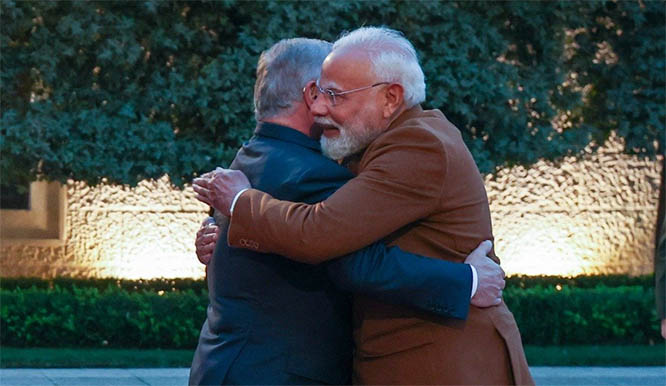
Prime Minister Narendra Modi on Monday held talks with Jordan’s King Abdullah II in Amman, during which the two leaders discussed ways to further strengthen bilateral relations, with the Prime Minister outlining an eight-point vision covering key areas of cooperation.

Describing the meeting as “productive”, PM Modi said he shared a roadmap focused on trade and economy, fertilisers and agriculture, information technology, healthcare, infrastructure, critical and strategic minerals, civil nuclear cooperation, and people-to-people ties.

In a post on social media platform X, the Prime Minister praised King Abdullah II’s personal commitment to advancing India–Jordan relations, particularly as both countries mark the 75th anniversary of the establishment of diplomatic ties this year.

“Held productive discussions with His Majesty King Abdullah II in Amman. His personal commitment towards vibrant India-Jordan relations is noteworthy. This year, we are celebrating the 75th anniversary of our bilateral diplomatic relations,” PM Modi said.

The meeting took place at the Al Husseiniya Palace, where the two leaders also exchanged views on regional and global issues of mutual interest. According to the Ministry of External Affairs (MEA), both sides agreed to further deepen cooperation in areas including trade and investment, defence and security, counter-terrorism and de-radicalisation, fertilisers and agriculture, infrastructure, renewable energy, tourism, and heritage.

The MEA said both leaders reaffirmed their united stand against terrorism.

PM Modi arrived in Amman earlier on Monday and was received by Jordanian Prime Minister Jafar Hassan, who accorded him a formal welcome. Following the talks, King Abdullah II hosted a banquet dinner in honour of the Prime Minister, reflecting the warmth of bilateral ties.

Jordan is the first leg of PM Modi’s three-nation tour. From Amman, the Prime Minister will travel to Ethiopia at the invitation of Prime Minister Abiy Ahmed Ali, marking his first official visit to the African nation. The tour will conclude with a visit to Oman.

Comments

Add new comment

  • Coastaldigest.com reserves the right to delete or block any comments.
  • Coastaldigset.com is not responsible for its readers’ comments.
  • Comments that are abusive, incendiary or irrelevant are strictly prohibited.
  • Please use a genuine email ID and provide your name to avoid reject.
News Network
December 16,2025

bengal.jpg

The deletion of over 58 lakh names from West Bengal’s draft electoral rolls following a Special Intensive Revision (SIR) has sparked widespread concern and is likely to deepen political tensions in the poll-bound state.

According to the Election Commission, the revision exercise has identified 24 lakh voters as deceased, 19 lakh as relocated, 12 lakh as missing, and 1.3 lakh as duplicate entries. The draft list, published after the completion of the first phase of SIR, aims to remove errors and duplication from the electoral rolls.

However, the scale of deletions has raised fears that a large number of eligible voters may have been wrongly excluded. The Election Commission has said that individuals whose names are missing can file objections and seek corrections. The final voter list is scheduled to be published in February next year, after which the Assembly election announcement is expected. Notably, the last Special Intensive Revision in Bengal was conducted in 2002.

The development has intensified the political row over the SIR process. Chief Minister Mamata Banerjee and her Trinamool Congress have strongly opposed the exercise, accusing the Centre and the Election Commission of attempting to disenfranchise lakhs of voters ahead of the elections.

Addressing a rally in Krishnanagar earlier this month, Banerjee urged people to protest if their names were removed from the voter list, alleging intimidation during elections and warning of serious consequences if voting rights were taken away.

The BJP, meanwhile, has defended the revision and accused the Trinamool Congress of politicising the issue to protect what it claims is an illegal voter base. Leader of the Opposition Suvendu Adhikari alleged that the ruling party fears losing power due to the removal of deceased, fake, and illegal voters.

The controversy comes amid earlier allegations by the Trinamool Congress that excessive work pressure during the SIR led to the deaths by suicide of some Booth Level Officers (BLOs), for which the party blamed the Election Commission. With the draft list now out, another round of political confrontation appears imminent.

As objections begin to be filed, the focus will be on whether the correction mechanism is accessible, transparent, and timely—critical factors in ensuring that no eligible voter is denied their democratic right ahead of a crucial election.

Comments

Add new comment

  • Coastaldigest.com reserves the right to delete or block any comments.
  • Coastaldigset.com is not responsible for its readers’ comments.
  • Comments that are abusive, incendiary or irrelevant are strictly prohibited.
  • Please use a genuine email ID and provide your name to avoid reject.