



Petrol, diesel prices on the rise again

Agencies
October 7, 2018

New Delhi, Oct 7: Within a day of the one-off excise duty cut and PSUs subsidising fuel, petrol and diesel prices are on the rise again and have hit a three week high.
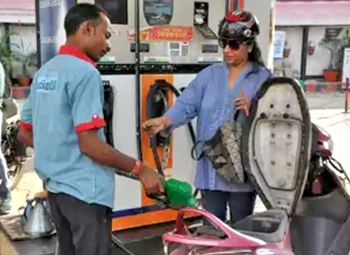
Petrol and diesel prices were cut by a minimum Rs 2.50 on October 5 when the government's only second cut in excise duty of Rs 1.50 per litre and state-owned fuel retailers providing a Re 1 per litre subsidy came into effect. In BJP-ruled states, the reduction was higher as they matched the cut with a similar reduction in local sales tax or VAT.

But the prices were on the rise from the very next day. Petrol price was hiked by 18 paise a litre on October 6 and 14 paise on Sunday, according to daily price notification issued by state-owned oil firms.

Petrol, which in Delhi was cut to Rs 81.50 on October 5, on Sunday costs Rs 81.82.

Similarly, diesel rates are hiked by 29 paise a litre each on October 6 and Sunday. It costs Rs 73.53 per litre in Delhi, up from Rs 72.95 on October 5, according to the oil firms.

Delhi, which did not cut VAT on fuel, still has the cheapest fuel in all metros and bulk of state capital as it levies lower taxes. Mumbai despite reducing VAT on petrol still has the highest priced fuel.

Petrol in Mumbai sells for Rs 87.29 a litre on Sunday and diesel is priced at Rs 77.06.

Petrol prices had hit an all-time high of Rs 84 per litre in Delhi and Rs 91.34 in Mumbai on October 4. Diesel rates too had peaked to Rs 75.45 a litre in Delhi and Rs 80.10 in Mumbai. Following the twin decision, they fell to Rs 81.50 per litre of petrol in Delhi and Rs 86.97 in Mumbai.

Diesel rates fell to Rs 72.95 in Delhi and Rs 77.45 in Mumbai on October 5.

On Sunday, the rates hit a three-week high.

Private retailers like Nayara Energy, formerly known as Essar Oil, too are matching PSU rates by subsidising fuel by Re 1 a litre.

After the Centre cut excise duty by Rs 1.50 per litre and asked PSU oil firms to subsidise fuel by Re 1, Maharashtra and Gujarat governments were among the first to announce a matching Rs 2.50 cut.

They were later joined by Chhattisgarh, Jharkhand, Tripura, Uttar Pradesh, Madhya Pradesh, Himachal Pradesh, Haryana Assam, Uttarakhand, Goa and Arunachal Pradesh with similar moves. Jammu and Kashmir, which is under governor's rule, too reduced tax on the two fuel.

Maharashtra, however, reduced VAT only on petrol and not on diesel.

Even before the excise duty cut, Rajasthan, West Bengal, Karnataka, Kerala and Andhra Pradesh had last month reduced VAT to cushion consumers for a spate of price increases.

The reduction in excise duty, only the second in four years of BJP-led NDA rule, will dent central government revenues by Rs 10,500 crore and was aimed at cooling retail prices that had shot up to an all-time high.

The BJP-government at the Centre had raised excise duty on petrol by Rs 11.77 a litre and that on diesel by Rs 13.47 a litre in nine installments between November 2014 and January 2016 to shore up finances as global oil prices fell, but then cut the tax just once in October last year by Rs 2 a litre.

Prior to Friday's cut, petrol price had risen by Rs 6.86 a litre and diesel by Rs 6.73 since mid-August - the most in any six-week duration after the daily price revision was introduced in mid-June last year.

Industry sources said for state-owned fuel retailers absorbing Re 1 per litre price would mean a Rs 9,000 crore hit on profits on an annualised basis. For the remainder of current fiscal, it would be Rs 4,500 crore, with IOC's share being roughly half and the rest is split equally between HPCL and BPCL.

Almost half of the fuel price is made up of taxes. The Centre, prior to the excise duty cur, levied a total of Rs 19.48 per litre of excise duty on petrol and Rs 15.33 per litre on diesel. On top of this, states levy value-added tax (VAT).

The hike in duties in 2014-16 had led to excise collections from petro goods rising from Rs 99,184 crore in 2014-15 to Rs 2,29,019 crore in 2017-18. States saw their VAT revenue rise from Rs 1,37,157 crore in 2014-15 to Rs 1,84,091 crore in 2017-18.

Comments

Add new comment

  • Coastaldigest.com reserves the right to delete or block any comments.
  • Coastaldigset.com is not responsible for its readers’ comments.
  • Comments that are abusive, incendiary or irrelevant are strictly prohibited.
  • Please use a genuine email ID and provide your name to avoid reject.
News Network
December 15,2025

Mangaluru, Dec 15: Air India Express has announced that it will resume direct flight services between Mangaluru and Muscat from March 2026, restoring an important international air link for passengers from the coastal region.

Airport authorities said the service will operate twice a week—on Sundays and Tuesdays—from March 1. The initial flights are scheduled on March 3, 8 and 10, followed by March 15 and 17, with the same operating pattern to continue thereafter. The flight duration is approximately three hours and 25 minutes.

The Mangaluru–Muscat route was earlier operated under the 2025 summer schedule, with services beginning on July 14. At that time, Air India Express had operated four flights a week before suspending the service.

Officials said the summer schedule will come into effect from March 29, after which changes in flight timings and departure schedules from Mangaluru are expected. Passengers have been advised to check the latest schedules while planning their travel.

The resumption of direct flights to Muscat is expected to significantly benefit expatriates, business travellers and others, further strengthening Mangaluru’s air connectivity with the Gulf region.

Comments

Add new comment

  • Coastaldigest.com reserves the right to delete or block any comments.
  • Coastaldigset.com is not responsible for its readers’ comments.
  • Comments that are abusive, incendiary or irrelevant are strictly prohibited.
  • Please use a genuine email ID and provide your name to avoid reject.
News Network
December 7,2025

envoy.jpg

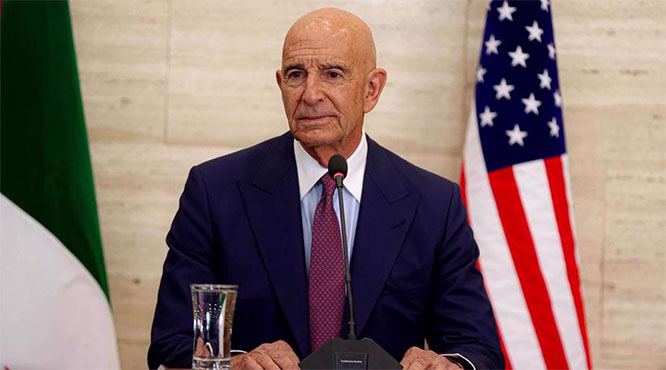
Since 1946, the United States has attempted 93 coups or “regime change” operations across the world — including two in Iran, US Special Envoy for Syria Tom Barrack has admitted.

Speaking to the UAE-based IMI Media Group, in remarks published by The National, Barrack said Washington tried twice to overthrow the Iranian government but failed both times. 

“For (Trump) then to be imputed with regime change — we had two regime changes in Iran already. Neither one worked. So I think wisely leave it to the region to solve,” said Barrack, who also serves as the US ambassador to Turkey.

His comments come six months after the US joined Israel in airstrikes against Iran during ongoing indirect nuclear negotiations between Tehran and Washington.

On June 13, Israel launched an attack on Iran that killed at least 1,064 people and hit civilian infrastructure. Days later, the United States targeted three nuclear facilities — Fordow, Natanz and Isfahan — in what Iran called a clear violation of international law. Iranian retaliation eventually forced a halt to the assault on June 24.

Barrack further claimed that US President Donald Trump and Foreign Secretary Marco Rubio are “not into regime change” and prefer a regional approach driven by Middle Eastern countries themselves. According to him, regional dialogue and non-interference by outside powers offer a more durable path forward.

He added that Washington is still open to an agreement with Tehran if Iranian authorities show “seriousness” and willingness to engage constructively.

However, Iran maintains the US has not shown readiness for meaningful talks. In an interview with Japan’s Kyodo News, Iranian Foreign Minister Abbas Araghchi said negotiations could advance only if Washington acknowledges Iran’s right to peaceful nuclear energy and lifts unilateral sanctions.

Comments

Add new comment

  • Coastaldigest.com reserves the right to delete or block any comments.
  • Coastaldigset.com is not responsible for its readers’ comments.
  • Comments that are abusive, incendiary or irrelevant are strictly prohibited.
  • Please use a genuine email ID and provide your name to avoid reject.
News Network
December 6,2025

pilot.jpg

New Delhi: IndiGo, India’s largest airline, faced major operational turbulence this week after failing to prepare for new pilot-fatigue regulations issued by the Directorate General of Civil Aviation (DGCA). The stricter rules—designed to improve flight safety—took effect in phases through 2024, with the latest implementation on November 1. IndiGo has acknowledged that inadequate roster planning led to widespread cancellations and delays.

Below are the key DGCA rules that affected IndiGo’s operations:

1. Longer Mandatory Weekly Rest

Weekly rest for pilots has been increased from 36 hours to 48 hours.

The government says the extended break is essential to curb cumulative fatigue. This rule remains in force despite the current crisis.

2. Cap on Night Landings

Pilots can now perform only two night landings per week—a steep reduction from the earlier limit of six.

Night hours, defined as midnight to early morning, are considered the least alert period for pilots.

Given the disruptions, this rule has been temporarily relaxed for IndiGo until February 10.

3. Reduced Maximum Night Flight Duty

Flight duty that stretches into the night is now capped at 10 hours.

This measure has also been kept on hold for IndiGo until February 10 to stabilize operations.

4. Weekly Rest Cannot Be Replaced With Personal Leave

Airlines can no longer count a pilot’s personal leave as part of the mandatory 48-hour rest.

Pilots say this closes a loophole that previously reduced actual rest time.

Currently, all airlines are exempt from this rule to normalise travel.

5. Mandatory Fatigue Monitoring

Airlines must submit quarterly fatigue reports along with corrective actions to DGCA.

This system aims to create a transparent fatigue-tracking framework across the industry.

The DGCA has stressed that these rules were crafted to strengthen flight safety and align India with global fatigue-management standards. The temporary relaxations are expected to remain until February 2025, giving IndiGo time to stabilise its schedules and restore normal air travel.

Comments

Add new comment

  • Coastaldigest.com reserves the right to delete or block any comments.
  • Coastaldigset.com is not responsible for its readers’ comments.
  • Comments that are abusive, incendiary or irrelevant are strictly prohibited.
  • Please use a genuine email ID and provide your name to avoid reject.
