



Petrol, diesel prices on the rise again

Agencies
October 7, 2018

New Delhi, Oct 7: Within a day of the one-off excise duty cut and PSUs subsidising fuel, petrol and diesel prices are on the rise again and have hit a three week high.
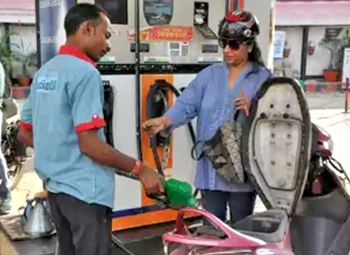
Petrol and diesel prices were cut by a minimum Rs 2.50 on October 5 when the government's only second cut in excise duty of Rs 1.50 per litre and state-owned fuel retailers providing a Re 1 per litre subsidy came into effect. In BJP-ruled states, the reduction was higher as they matched the cut with a similar reduction in local sales tax or VAT.

But the prices were on the rise from the very next day. Petrol price was hiked by 18 paise a litre on October 6 and 14 paise on Sunday, according to daily price notification issued by state-owned oil firms.

Petrol, which in Delhi was cut to Rs 81.50 on October 5, on Sunday costs Rs 81.82.

Similarly, diesel rates are hiked by 29 paise a litre each on October 6 and Sunday. It costs Rs 73.53 per litre in Delhi, up from Rs 72.95 on October 5, according to the oil firms.

Delhi, which did not cut VAT on fuel, still has the cheapest fuel in all metros and bulk of state capital as it levies lower taxes. Mumbai despite reducing VAT on petrol still has the highest priced fuel.

Petrol in Mumbai sells for Rs 87.29 a litre on Sunday and diesel is priced at Rs 77.06.

Petrol prices had hit an all-time high of Rs 84 per litre in Delhi and Rs 91.34 in Mumbai on October 4. Diesel rates too had peaked to Rs 75.45 a litre in Delhi and Rs 80.10 in Mumbai. Following the twin decision, they fell to Rs 81.50 per litre of petrol in Delhi and Rs 86.97 in Mumbai.

Diesel rates fell to Rs 72.95 in Delhi and Rs 77.45 in Mumbai on October 5.

On Sunday, the rates hit a three-week high.

Private retailers like Nayara Energy, formerly known as Essar Oil, too are matching PSU rates by subsidising fuel by Re 1 a litre.

After the Centre cut excise duty by Rs 1.50 per litre and asked PSU oil firms to subsidise fuel by Re 1, Maharashtra and Gujarat governments were among the first to announce a matching Rs 2.50 cut.

They were later joined by Chhattisgarh, Jharkhand, Tripura, Uttar Pradesh, Madhya Pradesh, Himachal Pradesh, Haryana Assam, Uttarakhand, Goa and Arunachal Pradesh with similar moves. Jammu and Kashmir, which is under governor's rule, too reduced tax on the two fuel.

Maharashtra, however, reduced VAT only on petrol and not on diesel.

Even before the excise duty cut, Rajasthan, West Bengal, Karnataka, Kerala and Andhra Pradesh had last month reduced VAT to cushion consumers for a spate of price increases.

The reduction in excise duty, only the second in four years of BJP-led NDA rule, will dent central government revenues by Rs 10,500 crore and was aimed at cooling retail prices that had shot up to an all-time high.

The BJP-government at the Centre had raised excise duty on petrol by Rs 11.77 a litre and that on diesel by Rs 13.47 a litre in nine installments between November 2014 and January 2016 to shore up finances as global oil prices fell, but then cut the tax just once in October last year by Rs 2 a litre.

Prior to Friday's cut, petrol price had risen by Rs 6.86 a litre and diesel by Rs 6.73 since mid-August - the most in any six-week duration after the daily price revision was introduced in mid-June last year.

Industry sources said for state-owned fuel retailers absorbing Re 1 per litre price would mean a Rs 9,000 crore hit on profits on an annualised basis. For the remainder of current fiscal, it would be Rs 4,500 crore, with IOC's share being roughly half and the rest is split equally between HPCL and BPCL.

Almost half of the fuel price is made up of taxes. The Centre, prior to the excise duty cur, levied a total of Rs 19.48 per litre of excise duty on petrol and Rs 15.33 per litre on diesel. On top of this, states levy value-added tax (VAT).

The hike in duties in 2014-16 had led to excise collections from petro goods rising from Rs 99,184 crore in 2014-15 to Rs 2,29,019 crore in 2017-18. States saw their VAT revenue rise from Rs 1,37,157 crore in 2014-15 to Rs 1,84,091 crore in 2017-18.

Comments

Add new comment

  • Coastaldigest.com reserves the right to delete or block any comments.
  • Coastaldigset.com is not responsible for its readers’ comments.
  • Comments that are abusive, incendiary or irrelevant are strictly prohibited.
  • Please use a genuine email ID and provide your name to avoid reject.
News Network
December 19,2025

Saudi Arabia has abolished fees on expatriate workers employed in licensed industrial establishments, signaling a strong push to empower national factories and enhance the Kingdom’s global industrial competitiveness. The move reflects the leadership’s commitment to building a sustainable and resilient industrial economy under Saudi Vision 2030.

The decision was approved by the Council of Ministers, chaired by Crown Prince and Prime Minister Mohammed bin Salman, following a recommendation from the Council of Economic and Development Affairs (CEDA). It forms part of a broader strategy to support, modernize, and strengthen the industrial sector.

By removing fees on foreign workers, industrial establishments gain greater operational flexibility and relief from financial pressures. This is expected to help factories expand production, improve efficiency, and compete more effectively in international markets, while reinforcing long-term sustainability.

The initiative aligns closely with Saudi Vision 2030, which identifies industry as a key pillar of economic diversification. A competitive and resilient industrial base is viewed as essential for driving innovation, attracting investment, and sustaining long-term economic growth.

Overall, the fee exemption underscores the Kingdom’s commitment to creating a supportive environment for industrial development and ensuring that Saudi factories remain globally competitive and capable of leading the nation’s economic transformation.

Comments

Add new comment

  • Coastaldigest.com reserves the right to delete or block any comments.
  • Coastaldigset.com is not responsible for its readers’ comments.
  • Comments that are abusive, incendiary or irrelevant are strictly prohibited.
  • Please use a genuine email ID and provide your name to avoid reject.
News Network
December 16,2025

jordan.jpg

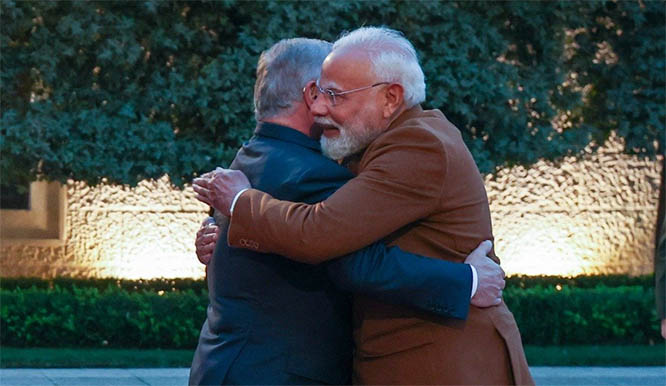
Prime Minister Narendra Modi on Monday held talks with Jordan’s King Abdullah II in Amman, during which the two leaders discussed ways to further strengthen bilateral relations, with the Prime Minister outlining an eight-point vision covering key areas of cooperation.

Describing the meeting as “productive”, PM Modi said he shared a roadmap focused on trade and economy, fertilisers and agriculture, information technology, healthcare, infrastructure, critical and strategic minerals, civil nuclear cooperation, and people-to-people ties.

In a post on social media platform X, the Prime Minister praised King Abdullah II’s personal commitment to advancing India–Jordan relations, particularly as both countries mark the 75th anniversary of the establishment of diplomatic ties this year.

“Held productive discussions with His Majesty King Abdullah II in Amman. His personal commitment towards vibrant India-Jordan relations is noteworthy. This year, we are celebrating the 75th anniversary of our bilateral diplomatic relations,” PM Modi said.

The meeting took place at the Al Husseiniya Palace, where the two leaders also exchanged views on regional and global issues of mutual interest. According to the Ministry of External Affairs (MEA), both sides agreed to further deepen cooperation in areas including trade and investment, defence and security, counter-terrorism and de-radicalisation, fertilisers and agriculture, infrastructure, renewable energy, tourism, and heritage.

The MEA said both leaders reaffirmed their united stand against terrorism.

PM Modi arrived in Amman earlier on Monday and was received by Jordanian Prime Minister Jafar Hassan, who accorded him a formal welcome. Following the talks, King Abdullah II hosted a banquet dinner in honour of the Prime Minister, reflecting the warmth of bilateral ties.

Jordan is the first leg of PM Modi’s three-nation tour. From Amman, the Prime Minister will travel to Ethiopia at the invitation of Prime Minister Abiy Ahmed Ali, marking his first official visit to the African nation. The tour will conclude with a visit to Oman.

Comments

Add new comment

  • Coastaldigest.com reserves the right to delete or block any comments.
  • Coastaldigset.com is not responsible for its readers’ comments.
  • Comments that are abusive, incendiary or irrelevant are strictly prohibited.
  • Please use a genuine email ID and provide your name to avoid reject.