Rahul picks holes in PM's 'Kerala dear to me' remark

Agencies
June 9, 2019

Thiruvambady, Jun 9: Congress president Rahul Gandhi on Sunday sought to dismiss Prime Minister Narendra Modi's assertion that Kerala was as dear to him as Varanasi, alleging that the PM was meting out stepmotherly treatment to non-BJP-ruled states and he did not expect any cooperation from him.
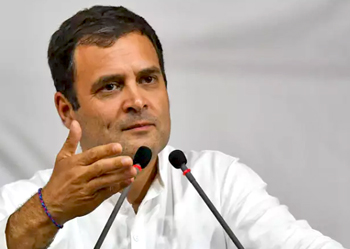
In his speech, thanking the voters of the Wayanad Lok Sabha constituency for electing him, Gandhi claimed that the ruling Bharatiya Janata Party (BJP) was blinded by "hatred and anger" and viewed those not following the Rashtriya Swayamsevak Sangh (RSS) ideology as not Indians while vowing to fight it.

He was addressing a gathering at Engapuzha near here, a tiny town in Kozhikode district and part of his Lok Sabha constituency, after a roadshow on the third and final day of his thanksgiving visit to Wayanad.

"The prime minister considers BJP-ruled states and non-BJP ruled states differently. I know, he will never consider Kerala the way he considers Uttar Pradesh because the CPI(M) is ruling here," he said, referring to Modi's speech at Guruvayur in Kerala on Saturday.

After offering prayers at the famous Krishna temple in Guruvayur, Modi had said the BJP was not working for mere electoral politics and that it was keen on building the country and ensuring that India got its place of pride in the international arena.

"Elections have their place in democracy and it is the responsibility of the winner to take care of the 130 crore people. Those who made us win or those who did not, both are our (people). Kerala is as dear to me as Varanasi," he had said, referring to his Lok Sabha constituency in Uttar Pradesh.

The Congress chief, however, said he was not expecting any cooperation from the prime minister and the BJP-led central government for the development of Wayanad and Kerala.

Referring to his Saturday meeting with the CPI(M) MLA from Kalpeta, which falls under the Wayanad Lok Sabha constituency, Gandhi said there might be "ideological differences" (between the Congress and the Left), but those would be set aside and both parties would work together for the development of Wayanad.

But, such cooperation was not coming from the prime minister and the BJP, he charged.

"Because they are blinded by hatred and anger...because either you follow the ideology of the RSS or you are not an Indian.... We will fight that and I promise you that we will not be ruled by Nagpur (where the RSS is based)," Gandhi said.

As in the last two days, hundreds of party workers and locals, including women and children, greeted Gandhi during the roadshow at Engapuzha in the morning.

Several people in the crowd were seen wearing T-shirts with slogans such as "Rahul we need you" and "Rahul pada" (army).

Before leaving for New Delhi in the afternoon, Gandhi would take out one more roadshow at Mukkam, near here.

This is the All India Congress Committee (AICC) president's first visit to Wayanad after his thumping poll victory with a margin of about 4.31 lakh votes. The Congress-led United Democratic Front (UDF) swept the parliamentary election in Kerala, winning 19 of its 20 seats.

Besides Wayanad, Gandhi had also contested the polls from his pocket borough of Amethi in Uttar Pradesh. He lost the Amethi poll battle to Union minister Smriti Irani.

After arriving in Kerala on June 7, the Congress chief took out massive roadshows in various parts of his high-range constituency, which spreads over three districts -- Wayanad, Malappuram and Kozhikode.

He accepted memorandums and complaints from people and spent time listening to the grievances of representatives of tribals and farmers at the Wayanad district collectorate on Saturday.

During his roadshows, Gandhi lashed out at Modi and assured the people that he would raise the issues of not only Wayanad but of entire Kerala in Parliament.

Reviving his attack on Modi after the polls, he alleged that the prime minister's election campaign was filled with "lies, poison and hatred", while his party stood for "truth, love and affection".

Gandhi's visit to Kerala came days after he offered to resign as the Congress president in view of the party's dismal showing in the second consecutive general election. But the offer was rejected by the Congress Working Committee, the highest decision-making body of the party.

Comments

Add new comment

  • Coastaldigest.com reserves the right to delete or block any comments.
  • Coastaldigset.com is not responsible for its readers’ comments.
  • Comments that are abusive, incendiary or irrelevant are strictly prohibited.
  • Please use a genuine email ID and provide your name to avoid reject.
News Network
December 13,2025

New Delhi: School-going children are picking up drug and smoking habits and engaging in consumption of alcohol, with the average age of introduction to such harmful substances found to be around 13 years, suggesting a need for earlier interventions as early as primary school, a multi-city survey by AIIMS-Delhi said.

The findings also showed substance use increased in higher grades, with grade XI/XII students two times more likely to report use of substances when compared with grade VIII students. This emphasised the importance of continued prevention and intervention through middle and high school.

The study led by Dr Anju Dhawan of AIIMS's National Drug Dependence Treatment Centre, published in the National Medical Journal of India this month, looks at adolescent substance use across diverse regions.

The survey included 5,920 students from classes 8, 9, 11 and 12 in urban government, private and rural schools across 10 cities -- Bengaluru, Chandigarh, Delhi, Dibrugarh, Hyderabad, Imphal, Jammu, Lucknow, Mumbai, and Ranchi. The data were collected between May 2018 and June 2019.

The average age of initiation for any substance was 12.9 (2.8) years. It was lowest for inhalants (11.3 years) followed by heroin (12.3 years) and opioid pharmaceuticals (without prescription; 12.5 years).

Overall, 15.1 per cent of participants reported lifetime use, 10.3 per cent reported past year use, and 7.2 per cent reported use in the past month of any substance, the study found.

The most common substances used in the past year, after tobacco (4 per cent) and alcohol (3.8 per cent), were opioids (2.8 per cent), followed by cannabis (2 per cent) and inhalants (1.9 per cent). Use of non-prescribed pharmaceutical opioids was most common among opioid users (90.2 per cent).

On being asked, 'Do you think this substance is easily available for a person of your age' separately for each substance category, nearly half the students (46.3 per cent) endorsed that tobacco products and more than one-third of the students (36.5 per cent) agreed that a person of their age can easily procure alcohol products.

Similarly, for Bhang (21.9 per cent), ganja/charas (16.1 per cent), inhalants (15.2 per cent), sedatives (13.7 per cent), opium and heroin (10 per cent each), the students endorsed that these can be easily procured.

About 95 per cent of the children, irrespective of their grade, agreed with the statement that 'drug use is harmful'.

The rates of substance use (any) among boys were significantly higher than those of girls for substance use (ever), use in the past year and use in the past 30 days. Compared to grade VIII students, grade IX students were more likely, and grade XI/XII students were twice as likely to have used any substance (ever).

The likelihood of past-year use of any substance was also higher for grade IX students and for grade XI/XII students as compared to grade VIII students.

About 40 per cent of students mentioned that they had a family member who used tobacco or alcohol each. The use of cannabis (any product) and opioid (any product) by a family member was reported by 8.2 per cent and 3.9 per cent of students, respectively, while the use of other substances, such as inhalants/sedatives by family was 2-3 per cent, the study found.

A relatively smaller percentage of students reported use of tobacco or alcohol among peers as compared to among family members, while a higher percentage reported inhalants, sedatives, cannabis or opioid use among peers.

Children using substances (past year) compared to non-users reported significantly higher any substance use by their family members and peers.

There were 25.7 per cent students who replied 'yes' to the question 'conflicts/fights often occur in your family'. Most students also replied affirmatively to 'family members are aware of how their time is being spent' and 'damily members are aware of with whom they spend their time'.

Comments

Add new comment

  • Coastaldigest.com reserves the right to delete or block any comments.
  • Coastaldigset.com is not responsible for its readers’ comments.
  • Comments that are abusive, incendiary or irrelevant are strictly prohibited.
  • Please use a genuine email ID and provide your name to avoid reject.
News Network
December 17,2025

melkar1.jpg

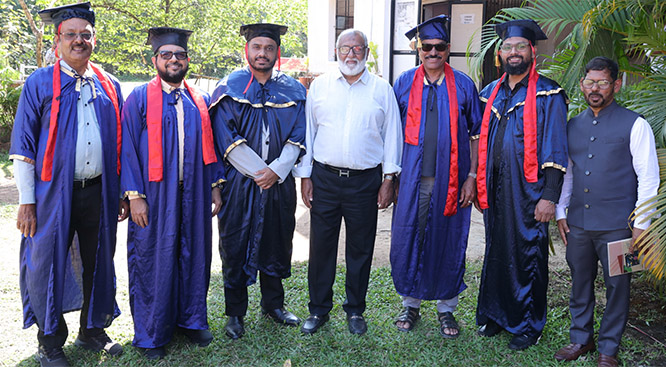
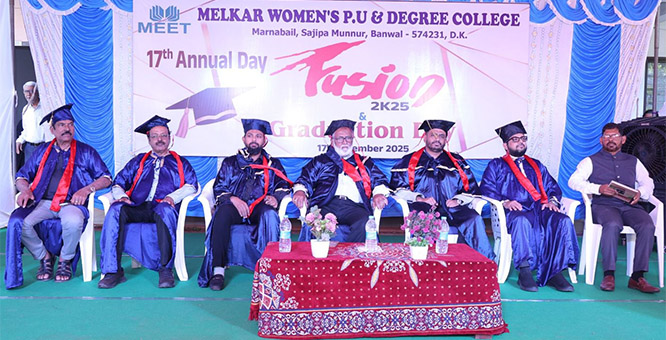
Melkar, Dec 17: The 17th Annual Day and Graduation Ceremony of Melkar Women’s PU and Degree College, themed “Fusion-2K25,” was celebrated with dignity and enthusiasm, marking a significant milestone in the institution’s academic journey. The programme reflected the college’s steadfast commitment to academic excellence, character building, and the holistic development of students.

The event was inaugurated by Mr. Asif Mohammed, whose presence greatly enriched the occasion. The celebration was further graced by the chief guests Mr. P. B. Ahmed Mudassir and Mr. Nissar Fakeer Mohammed, along with the distinguished guests of honour Mr. B. A. Nazeer and Mr. Ibrahim Gadiyar. In their inspiring addresses, the guests encouraged the graduating students and appreciated the dedicated efforts of the management, faculty, and students.

The annual report was presented by the Principal, Mr. Abdul Majeed S, highlighting the institution’s academic progress, notable achievements, and extracurricular accomplishments during the academic year.

The presidential address was delivered by the esteemed Chairman of Melkar Women’s PU and Degree College, Dr. Haji S. M. Rasheed, who emphasized the vital role of education in empowering women and shaping responsible citizens. He also stressed the importance of discipline, dedication, and perseverance in achieving success.

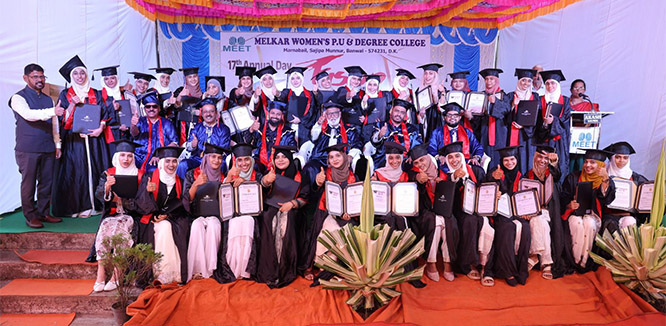
Cultural programmes and academic recognitions formed an integral part of the celebration, showcasing the talents and achievements of the students. The graduation ceremony was a proud moment for the outgoing students as they were formally conferred degrees and wished success in their future endeavours.

Ms. Mashmooma Fathima served as the Master of Ceremonies. The welcome address was delivered by Ms. Fathima Nida, and the programme concluded with a vote of thanks proposed by Ms. Ayisha Suhana.

The event successfully achieved its objectives and was highly appreciated by the guests and attendees.

melkar3.jpg

melkar2.jpg

Comments

Add new comment

  • Coastaldigest.com reserves the right to delete or block any comments.
  • Coastaldigset.com is not responsible for its readers’ comments.
  • Comments that are abusive, incendiary or irrelevant are strictly prohibited.
  • Please use a genuine email ID and provide your name to avoid reject.
News Network
December 16,2025

jordan.jpg

Prime Minister Narendra Modi on Monday held talks with Jordan’s King Abdullah II in Amman, during which the two leaders discussed ways to further strengthen bilateral relations, with the Prime Minister outlining an eight-point vision covering key areas of cooperation.

Describing the meeting as “productive”, PM Modi said he shared a roadmap focused on trade and economy, fertilisers and agriculture, information technology, healthcare, infrastructure, critical and strategic minerals, civil nuclear cooperation, and people-to-people ties.

In a post on social media platform X, the Prime Minister praised King Abdullah II’s personal commitment to advancing India–Jordan relations, particularly as both countries mark the 75th anniversary of the establishment of diplomatic ties this year.

“Held productive discussions with His Majesty King Abdullah II in Amman. His personal commitment towards vibrant India-Jordan relations is noteworthy. This year, we are celebrating the 75th anniversary of our bilateral diplomatic relations,” PM Modi said.

The meeting took place at the Al Husseiniya Palace, where the two leaders also exchanged views on regional and global issues of mutual interest. According to the Ministry of External Affairs (MEA), both sides agreed to further deepen cooperation in areas including trade and investment, defence and security, counter-terrorism and de-radicalisation, fertilisers and agriculture, infrastructure, renewable energy, tourism, and heritage.

The MEA said both leaders reaffirmed their united stand against terrorism.

PM Modi arrived in Amman earlier on Monday and was received by Jordanian Prime Minister Jafar Hassan, who accorded him a formal welcome. Following the talks, King Abdullah II hosted a banquet dinner in honour of the Prime Minister, reflecting the warmth of bilateral ties.

Jordan is the first leg of PM Modi’s three-nation tour. From Amman, the Prime Minister will travel to Ethiopia at the invitation of Prime Minister Abiy Ahmed Ali, marking his first official visit to the African nation. The tour will conclude with a visit to Oman.

Comments

Add new comment

  • Coastaldigest.com reserves the right to delete or block any comments.
  • Coastaldigset.com is not responsible for its readers’ comments.
  • Comments that are abusive, incendiary or irrelevant are strictly prohibited.
  • Please use a genuine email ID and provide your name to avoid reject.