Records show Narendra Modi got at least five income tax refunds, Rahul Gandhi six

Agencies
April 29, 2019

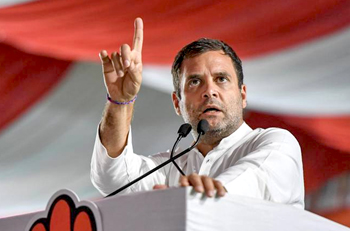
New Delhi, Apr 29: Prime Minister Narendra Modihas got income tax refunds at least five times in the last 18 years, while Congress chief Rahul Gandhi has received six refunds during the same period. Besides, the refunds for assessment years 2015-16 and 2012-13 got "adjusted against outstanding demand" in case of Modi, while it was the case for Gandhi in assessment year 2011-12.
This is based on the online 'refund status' service provided by the Tax Information Network of the Income Tax Department, managed by NSDL e-Governance Infrastructure Limited.

The refund status since the assessment year 2001-02 can be checked online on this platform with an individual's PAN (Permanent Account Number), which has been sourced from the election affidavits filed by the political leaders for the Lok Sabha polls 2019.

Rahul Gandhi's mother and senior Congress leader Sonia Gandhi has also got at least five refunds since the assessment year 2001-02, but there is no adjustment against any outstanding demand for her in this time period.

On the other hand, BJP chief Amit Shah's income tax refund got "adjusted against outstanding demand" for the assessment year 2015-16. The TIN-NSDL records do not show any other refund for him in the last 18 years.

While the portal does not disclose the amount of the refund, it mentions the date of the refund or adjustment, the challan sequence number and the mode of payment (cheque or direct credit), among other details.

As per the 'refund status' records, Modi got his refund for the assessment year 2018-19 through 'direct credit' to his account on September 26, 2018. The refund for the same year took place on October 6, 2018 for Sonia Gandhi and on March 26, 2019 for Rahul Gandhi.

Modi got the refund for assessment year 2016-17 on August 16, 2016 through direct credit and through 'refund cheque' for 2013-14 on January 7, 2015, for 2010-11 on January 9, 2015 and for 2006-07 on October 11, 2007.

For assessment years 2015-16 and 2012-13, his refund got "adjusted against outstanding demand". Modi became Prime Minister in May 2014.

In case of Rahul Gandhi, his refund for assessment year 2011-12 got "adjusted against outstanding demand" on February 1, 2012, while he also got a refund cheque for the same year a few days later on February 13, 2012.

His other refunds relate to assessment years 2017-18, 2016-17, 2012-13 and 2007-08.

Sonia Gandhi's refunds relate to assessment years 2016-17, 2012-13, 2008-09 and 2007-08, besides 2018-19.

Interestingly, both Rahul and Sonia Gandhi have disclosed in their election affidavits filed for the Lok Sabha 2019 elections that the Income Tax Department has initiated reassessment proceedings against them for the assessment year 2011-12 and has passed reassessment order, dated December 31, 2018, raising demand.

The two leaders, however, added in their affidavits that the said proceedings are under challenge before the Supreme Court.

In his affidavit, Rahul Gandhi has declared total income (as shown in income tax returns) of over Rs 1.11 crore for financial year 2017-18 (up from Rs 1.03 crore in 2013-14), while it is Rs 9.6 lakh for Sonia Gandhi (down from Rs 17.6 lakh in 2013-14).

In his affidavit, Modi had declared total income of Rs 19.92 lakh for the financial year 2017-18, up from Rs 9.69 lakh in 2013-14. There are no "income tax dues" pending against him, as per Modi's election affidavit filed for Varanasi Lok Sabha constituency.

Listing his assets in the affidavit, Modi under the sub-head 'value of claims/interest' mentioned Rs 85,145 as tax deducted at source (TDS) for financial year 2018-19.


Comments

Add new comment

  • Coastaldigest.com reserves the right to delete or block any comments.
  • Coastaldigset.com is not responsible for its readers’ comments.
  • Comments that are abusive, incendiary or irrelevant are strictly prohibited.
  • Please use a genuine email ID and provide your name to avoid reject.
News Network
December 21,2025

hadith.jpg

Invoking the teachings of Prophet Muhammad—“pay the worker before his sweat dries”—the Madras High Court has directed a municipal corporation to settle long-pending legal dues owed to a former counsel. The court observed that this principle reflects basic fairness and applies equally to labour and service-related disputes.

Justice G. R. Swaminathan made the observation while hearing a petition filed by advocate P. Thirumalai, who claimed that the Madurai City Municipal Corporation failed to pay him legal fees amounting to ₹13.05 lakh. Earlier, the High Court had asked the corporation to consider his representation. However, a later order rejected a major portion of his claim, prompting the present petition.

The court allowed Thirumalai to approach the District Legal Services Authority (DLSA) and submit a list of cases in which he had appeared. It also directed the corporation to settle the verified fee bills within two months, without interest. The court noted that the petitioner had waited nearly 18 years before challenging the non-payment and that the corporation could not be fully blamed, as the fee bills were not submitted properly.

‘A Matter of Embarrassment’

Justice Swaminathan described it as a “matter of embarrassment” that the State has nearly a dozen Additional Advocate Generals. He observed that appointing too many law officers often leads to unnecessary allocation of work and frequent adjournments, as government counsel claim that senior officers are engaged elsewhere.

He expressed hope that such practices would end at least in the Madurai Bench of the High Court and added that Additional Advocate Generals should “turn a new leaf” from 2026 onwards.

‘Scandalously High Amounts’

While stating that the court cannot examine the exact fees paid to senior counsel or law officers, Justice Swaminathan stressed that good governance requires public funds to be used prudently. He expressed concern over the “scandalously high amounts” paid by government and quasi-government bodies to a few favoured law officers.

In contrast, the court noted that Thirumalai’s total claim was “a pittance” considering the large number of cases he had handled.

Background

Thirumalai served as the standing counsel for the Madurai City Municipal Corporation for more than 14 years, from 1992 to 2006. During this period, he represented the corporation in about 818 cases before the Madurai District Courts.

As the former counsel was unable to hire a clerk to obtain certified copies of judgments in all 818 cases, the court directed the District Legal Services Authority to collect the certified copies within two months. The court further ordered the corporation to bear the cost incurred by the DLSA and deduct that amount from the final settlement payable to the petitioner.

Comments

Add new comment

  • Coastaldigest.com reserves the right to delete or block any comments.
  • Coastaldigset.com is not responsible for its readers’ comments.
  • Comments that are abusive, incendiary or irrelevant are strictly prohibited.
  • Please use a genuine email ID and provide your name to avoid reject.
News Network
December 7,2025

SHRIMP.jpg

Mangaluru, Dec 7: A rare bamboo shrimp has been rediscovered on mainland India more than 70 years after it was last reported, confirming for the first time the presence of Atyopsis spinipes in the country. The find was made by researchers from the Centre for Climate Change Studies at Sathyabama Institute of Science and Technology, Chennai, during surveys in Karnataka and Odisha.

The team — shrimp expert Dr S Prakash, PhD scholar K Kunjulakshmi, and Mangaluru-based researcher Maclean Antony Santos — combined field surveys, ecological assessments and DNA analysis to identify the elusive species. Their findings, published in Zootaxa, resolve decades of taxonomic confusion stemming from a 1951 report that misidentified the species as Atyopsis moluccensis without strong evidence.

The shrimp has now been confirmed at two locations: the Mulki–Pavanje estuary near Mangaluru and the Kuakhai River in Bhubaneswar. Historical specimens from the Andaman Islands, previously labelled as A. moluccensis, were also found to be misidentified and actually belong to A. spinipes.

The rediscovery began after an aquarium hobbyist in Odisha spotted a shrimp in 2022, prompting systematic surveys across Udupi, Karwar and Mangaluru. Four female specimens were collected in Mulki and one in Odisha, all genetically matching.

Researchers warn the species may exist in very small, vulnerable populations as freshwater habitats face increasing pressure from pollution, sand mining and infrastructure development. All verified specimens have been deposited with the Zoological Survey of India for future reference.

Comments

Add new comment

  • Coastaldigest.com reserves the right to delete or block any comments.
  • Coastaldigset.com is not responsible for its readers’ comments.
  • Comments that are abusive, incendiary or irrelevant are strictly prohibited.
  • Please use a genuine email ID and provide your name to avoid reject.
News Network
December 19,2025

Saudi Arabia has abolished fees on expatriate workers employed in licensed industrial establishments, signaling a strong push to empower national factories and enhance the Kingdom’s global industrial competitiveness. The move reflects the leadership’s commitment to building a sustainable and resilient industrial economy under Saudi Vision 2030.

The decision was approved by the Council of Ministers, chaired by Crown Prince and Prime Minister Mohammed bin Salman, following a recommendation from the Council of Economic and Development Affairs (CEDA). It forms part of a broader strategy to support, modernize, and strengthen the industrial sector.

By removing fees on foreign workers, industrial establishments gain greater operational flexibility and relief from financial pressures. This is expected to help factories expand production, improve efficiency, and compete more effectively in international markets, while reinforcing long-term sustainability.

The initiative aligns closely with Saudi Vision 2030, which identifies industry as a key pillar of economic diversification. A competitive and resilient industrial base is viewed as essential for driving innovation, attracting investment, and sustaining long-term economic growth.

Overall, the fee exemption underscores the Kingdom’s commitment to creating a supportive environment for industrial development and ensuring that Saudi factories remain globally competitive and capable of leading the nation’s economic transformation.

Comments

Add new comment

  • Coastaldigest.com reserves the right to delete or block any comments.
  • Coastaldigset.com is not responsible for its readers’ comments.
  • Comments that are abusive, incendiary or irrelevant are strictly prohibited.
  • Please use a genuine email ID and provide your name to avoid reject.