RSS in Textbooks: Contrasting Concepts of Nation and Nation building

Ram Puniyani
July 21, 2019

Nationalism has been the matter of debate yet again. From last few years we saw the individuals being labeled as Anti National for criticizing the ruling Government, we witnessed the attack on JNU on the ground that it is breeding ground of anti-Nationals. At the same time those belonging to ‘Hindu nationalism’ have been presenting themselves as Nationalists. The shrewdness involved in this is that they have been hiding the prefix Hindu to the word, Nation. It is this prefix which shows that they in no way were part of the process of India becoming a nation. Indian Nation building has been a multi layered process. On one hand it was to oppose the colonial rule and simultaneously it was a journey towards democratic values.

This issue comes to fore yet again as Sant Tukdoji Maharaj Nagpur University has brought in a damaging change in their second year B.A. history course. The earlier chapter in the book was on the rise of communalism in India. That has been replaced by the chapter on ‘History of RSS and its role in Nation building’. The university spokesperson put it “Nationalist school of thoughts… is also part of the Indian history. Similarly, history of the Sangh is a part of the nationalist school. Hence, introduction to RSS was included in the course," On the other hand the state Congress spokesperson Sachin Sawant disputes this by saying, "Where would Nagpur University find reference of RSS & Nation Building? It is most divisive force which collaborated with British, opposed freedom movement, didn't hoist Tricolor for 52 years calling it inauspicious, wanted Manusmriti in lieu of constitution, spreads hatred."  

What have been the components of India becoming a Nation? The earlier kingdoms were replaced by the colonial rule. The colonial phase was marked by introduction of major economic and social changes. These changes related to transport (railways), communication (Post and telegraph) modern education (Schools and universities), free press and modern judicial system among others. With these changes the social relations began to take place. The process of breaking of the ‘iron frame of caste structure’ began. The subordinate status of women was challenged as the likes of Savitribai Phule started schools for education for girls. The new class of Industrialists, modern businessmen and educated classes came up in the society. The political expression of these processes got reflected in multiple streams.

The major expression of this political phenomenon was the formation of Indian National Congress. The movements for breaking caste inequality were inspired by Joti Rao Phule and Babasaheb Ambedkar. The aspirations of workers got expressed in the unions led by Narayan Meghaji Lokhande and Com Singarvelu. Revolutionaries like Bhagat Singh stood against colonial rule with a dream of socialist society. This process of nation building has two sides. One was to express the social aspirations of these classes coming up in society; workers, women, educated classes, bureaucrats and industrialists in particular. The other was the political expression; the struggle against British colonialists.

To oppose these social-political changes section of declining classes, the kings and landlords and their fellow travelers, threw up their organizations. These organizations had two aspects. One was to oppose the social changes related to caste and gender transformation and second was to harp on nationalism in the name of religion. They were the ones who were opposed to the anti-British national movement. These declining sections had religion as a prefix of their nationalism. Their aims were purely political. Their political agenda was to preserve the birth based values of hierarchy, as manifested in feudal times.

Muslim League on one hand and Hindu Mahasabha-RSS on the other stood for Muslim and Hindu nationalism respectively. In case of Muslim League, Hindu Mahasabha, the religion is written on their sleeves, in case of RSS religion is the core part of their nationalism. Savarkar did work against caste system in patches, but mostly these organizations were totally aloof from the social changes related to caste and gender transformation. As far as freedom movement is concerned; as organizations they were never a part of any anti British movement. Individually pre-Andman Savarkar was anti British, but after his release his was a changed man. Similarly Dr. K. B. Hedgewar, RSS founder, as an individual did take part in 1930 Civil disobedience movement, but that was with the goal of finding like-minded workers in jail. As far as RSS is concerned, the instructions were given by Golwalkar, not to disturb the peace of British.

During Quit India movement the second Sarsanghchalak M.S. Golwalkar states, “In 1942 also there was a strong sentiment in the hearts of many. At that time too, routine work of Sangh continued. Sangh vowed not to do anything directly.” Defending his decision to keep aloof from the movement he says “We should remember that in our pledge we have talked of freedom of the country through defending religion and culture, there is no mention of departure of British from here.” (Shri Guruji Samagra Darshan, vol. IV, page 40) “

While Indian nationalism is inclusive and plural, as expressed in Indian Constitution, RSS has been eulogizing the ancient laws particularly those of Manu. Nationalism is not just the state and boundaries, it is the social relationships. In case of Indian nationalism these values are Liberty, Equality and Fraternity. ‘Nationalism under the garb of religion’, regards these values of equality as Western, not suitable for this or that country. For example Muslim Brotherhood in Egypt promotes feudal hierarchical values in the garb of Islam. It labels democratic values of equality, liberty as being Western ones’. RSS similarly regards Indian Constitution as being Western. 

With these types of changes in our educational syllabus, the attempt is to present RSS as part of Indian nation building. This lie hides that RSS neither struggled against British rule nor for the democratic values of equality. The efforts like change in syllabus are attempts to give legitimacy to RSS as Indian nation builder, which they are not. 

Comments

Add new comment

  • Coastaldigest.com reserves the right to delete or block any comments.
  • Coastaldigset.com is not responsible for its readers’ comments.
  • Comments that are abusive, incendiary or irrelevant are strictly prohibited.
  • Please use a genuine email ID and provide your name to avoid reject.
coastaldigest.com news network
January 19,2026

rizwanzameer.jpg

Bengaluru: As the dust settles on the recent legislative session, the corridors of Vidhana Soudha are buzzing with more than just policy talk. A high-stakes game of political musical chairs has begun, exposing a deepening rift within the Congress party’s Muslim leadership as a major Cabinet reshuffle looms.

With the party hierarchy signaling a "50% refresh" to gear up for the 2028 Assembly elections, the race to fill three projected Muslim ministerial berths has transformed from a strategic discussion into an all-out turf war.

The "Star Son" Spark

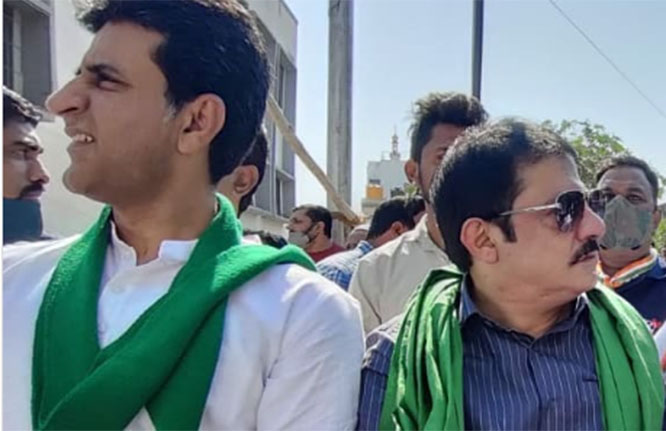
The internal friction turned public this week following provocative remarks by Zaid Khan, actor and son of Wakf Minister Zameer Ahmed Khan. Zaid’s claim—that his father "helped" secure a ticket for Shivajinagar MLA Rizwan Arshad in 2023—has acted as a lightning rod for resentment.

Rizwan’s camp was quick to fire back, dismissing the comment as a desperate attempt by Zameer to manufacture seniority. "Rizwan’s political pedigree was forged in the NSUI and Youth Congress long before Zameer even stepped into the party," a supporter noted, highlighting Rizwan’s tenure as an AICC secretary and his two-term presidency of the State Youth Congress.

A Tale of Two Loyalists

While both Zameer Ahmed Khan and Rizwan Arshad are staunch allies of Chief Minister Siddaramaiah and represent Bengaluru strongholds, their political DNA could not be more different:

•    Zameer Ahmed Khan: A four-time MLA who crossed over from JD(S) in 2018. Known for his "overzealous" and often polarizing outreach during communal flashpoints—from the DJ Halli riots to the recent Wakf land notice controversy—his style has frequently left the Congress high command in a state of "discomfort."

•    Rizwan Arshad: A homegrown organizational man. Seen as a "quiet performer," Arshad represents the sophisticated, moderate face of the party, preferred by those who find Zameer’s brand of politics too volatile.

The Outsiders Looking In

The bickering isn't limited to a duo. The "Beary" community, represented by leaders like N A Haris and Saleem Ahmed, is demanding its pound of flesh. Saleem Ahmed, the Chief Whip in the Legislative Council, has dropped the veil of diplomacy, openly declaring his ministerial aspirations.

"I was the only working president not included in the Cabinet last time," Saleem noted pointedly, signaling that the "loyalty quota" is no longer enough to keep the peace.

As Chief Minister Siddaramaiah prepares to finalize the list, he faces a delicate balancing act: rewarding the aggressive grassroots mobilization of Zameer’s camp without alienating the organizational stalwarts and minority sub-sects who feel increasingly sidelined by the "Chamarajpet-Shivajinagar" binary.

Comments

Add new comment

  • Coastaldigest.com reserves the right to delete or block any comments.
  • Coastaldigset.com is not responsible for its readers’ comments.
  • Comments that are abusive, incendiary or irrelevant are strictly prohibited.
  • Please use a genuine email ID and provide your name to avoid reject.
News Network
January 31,2026

Roy.jpg

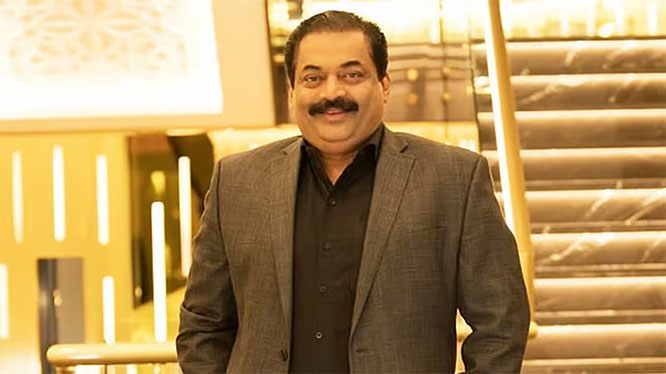
Bengaluru: The shooting incident involving CJ Roy, founder of the Confident Group, has once again put the spotlight on a businessman whose life has swung between flamboyant global success and persistent controversy at home.

Though Roy’s business interests extended across continents, his roots lay firmly in Karnataka. An alumnus of Christ School in Bengaluru, he later moved to Tumakuru to pursue an engineering degree. Those familiar with his early years describe him as intensely ambitious, beginning his career as a salesman at a small electronics firm dealing in computers.

Roy’s entry into large-scale real estate came through the Crystal Group, where he worked closely with Latha Namboothiri and rose from manager to director. However, the launch of the Confident Group in 2005 was clouded by industry speculation. Insiders speak of a fallout involving alleged “benami” properties and claims of deception that ultimately led to his independent venture—an episode Roy spent years trying to distance himself from, according to associates.

A tale of two cities

Roy’s professional trajectory diverged sharply across geographies.

In Dubai, he built a reputation as a bold and efficient developer, completing massive luxury residential projects in record time—some reportedly within 11 months. His rapid project delivery and lavish lifestyle in the Emirates earned him admiration and visibility in the real estate sector.

In Bengaluru, however, his image remained far more fractured. Sources say Roy stayed away from the city for several years amid disputes over unpaid dues to vendors and suppliers. Several projects were allegedly stalled, with accusations of unfulfilled commitments to cement and steel suppliers continuing to follow him.

Roy’s return to Bengaluru’s business and social circles began around 2018, marked by a conscious attempt at rebranding. His appointment as Honorary Consul of the Slovak Republic added diplomatic legitimacy, which he complemented with visible CSR initiatives, including ambulance donations and high-profile charity events.

Heavy police presence in Langford Town

Following the incident, police personnel from the Central division were deployed outside the Confident Group building in Langford Town, which also houses the Slovak Honorary Consulate in Bengaluru.

The otherwise busy premises near Hosur Road wore a deserted look on Friday, reflecting the shock and uncertainty that followed the tragedy.

Comments

Add new comment

  • Coastaldigest.com reserves the right to delete or block any comments.
  • Coastaldigset.com is not responsible for its readers’ comments.
  • Comments that are abusive, incendiary or irrelevant are strictly prohibited.
  • Please use a genuine email ID and provide your name to avoid reject.
coastaldigest.com news network
January 19,2026

badriya.jpg

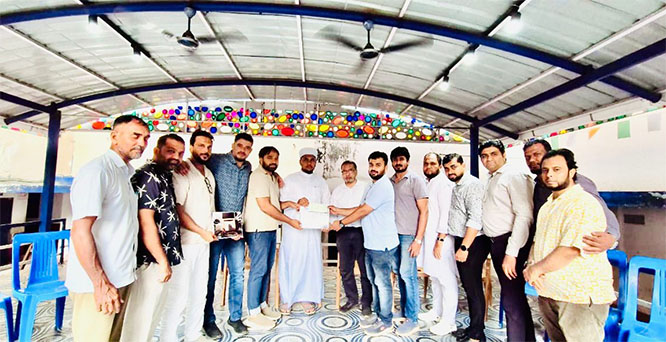
Mangaluru: The Phase I project of Badria Vision 2028 was formally launched at a ceremony held at the Badria Campus on January 17, marking an important step in the institution’s long-term development roadmap.

The programme was attended by P.B. Abdul Hameed, Secretary of the MEA, and P.C. Hasir, Correspondent of the MEA, who presided over the event and underscored the institution’s commitment to growth and academic excellence.

Office-bearers of the Badria Alumni Association were present in large numbers, including A.K. Sajid (President), Shamsuddin and S.M. Farooq (Vice-Presidents), Shaheed (General Secretary), and Khaleel (Treasurer), reflecting strong alumni engagement in the initiative.

The gathering was blessed by Sayyid Shamsuddeen Basith Thangal Kukkaje, Qateeb of Zeenat Yatheem Bakshi, who led a special dua seeking divine guidance and success for the project.

The ceremony also witnessed the participation of prominent alumnus and local corporate professional Abdul Latheef, along with alumni members Naushad, Kalandar, Safwan, members of the core committee, and several other former students.

A key moment of the event was the formal handover of a cheque to Ameen Woodland Architect, signalling the immediate commencement of construction work under Phase I of the project.

Organisers said the launch of Phase I reflects a shared vision, institutional unity, and collective resolve to realise the objectives of Badria Vision 2028.

Comments

Add new comment

  • Coastaldigest.com reserves the right to delete or block any comments.
  • Coastaldigset.com is not responsible for its readers’ comments.
  • Comments that are abusive, incendiary or irrelevant are strictly prohibited.
  • Please use a genuine email ID and provide your name to avoid reject.